The Largest Antelope Species in Africa Ranked by Mass
Understanding the absolute scale of wildlife on the savanna begins with identifying the largest antelope species in africa. From the dense rainforests of Central Africa to the arid expanses of the Namib Desert, these magnificent bovids display incredible diversity in adaptation, behavior, and physical stature.
Below is an in-depth breakdown ranking the heaviest and most formidable of these iconic African herbivores.
1. Giant Eland (Taurotragus derbianus)
Sitting undisputed at the very top of this titan lineup is the Giant Eland, a colossal beast that can tip the scales at over 2,000 pounds (900 kg). Despite its name, the “Giant” designation refers to its impressive horns rather than vast body size difference from its southern relative.
-
Weight Range: 900 to 2,200 lbs (400 to 1,000 kg)
-
Key Features: Massive, tightly spiraled V-shaped horns stretching over four feet long, prominent neck dewlap, and vertical white body stripes.
-
Habitat & Behavior: Naturally cautious and constantly alert, they lead a nomadic lifestyle across the open woodlands and savannas of Central and West Africa, roaming vast territories to browse on leaves, branches, and fruits.
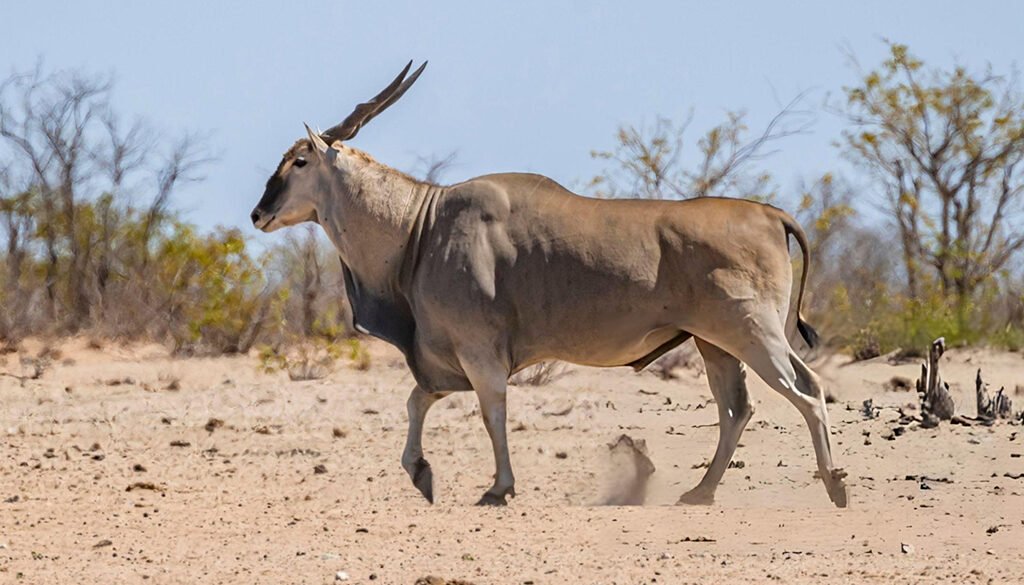
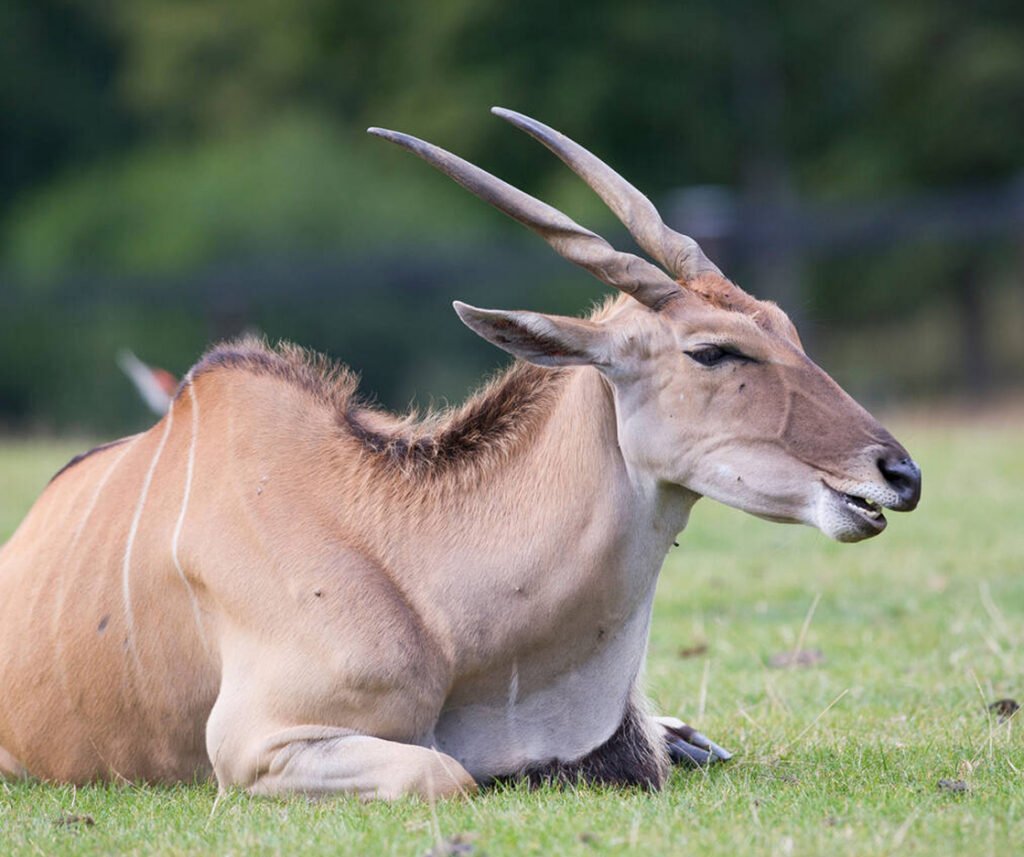
2. Common Eland (Taurotragus oryx)
Runner-up for the crown is the Common Eland, also known as the Southern Eland. Weighing up to an astonishing 2,070 pounds (940 kg), an adult male easily rivals an ox in pure physical mass.
-
Weight Range: 600 to 2,070 lbs (300 to 940 kg)
-
Key Features: Pale tan-to-bluish-grey coats, short spiral horns, and a heavy flap of skin hanging from their necks called a dewlap.
-
Habitat & Behavior: Found across the open plains and dry woodlands of southern and eastern Africa. Remarkably, despite their heavy build, they can effortlessly leap clear over a six-foot fence from a standing start.
3. Bongo (Tragelaphus eurycerus)
Deep within the dense tropical rainforests of Central and West Africa lurks the third contender for the title of largest antelope species in africa: the secretive Bongo. Tipping the scales at up to 890 pounds (405 kg), it stands as a true jungle giant.
-
Weight Range: 530 to 890 lbs (240 to 405 kg)
-
Key Features: Vivid chestnut-red coat painted with bright white vertical stripes for camouflage, heavy spiraled horns present in both sexes.
-
Habitat & Behavior: Inhabiting thick tropical jungles, they tilt their heads back while running so their horns lie flat against their neck, preventing them from getting tangled in dense foliage.
4. Greater Kudu (Tragelaphus strepsiceros)
Standing tall above many others on our list is the Greater Kudu, universally recognized as one of the most majestic creatures in the African bushland.
-
Weight Range: 400 to 700 lbs (180 to 315 kg)
-
Key Features: Spectacular spiral horns twisting into two or three dramatic turns, long lean bodies, and subtle vertical white stripes.
-
Habitat & Behavior: They inhabit dense woodland thickets and rocky hillsides. Despite carrying heavy headwear, bulls can jump over obstacles eight feet high without breaking stride.
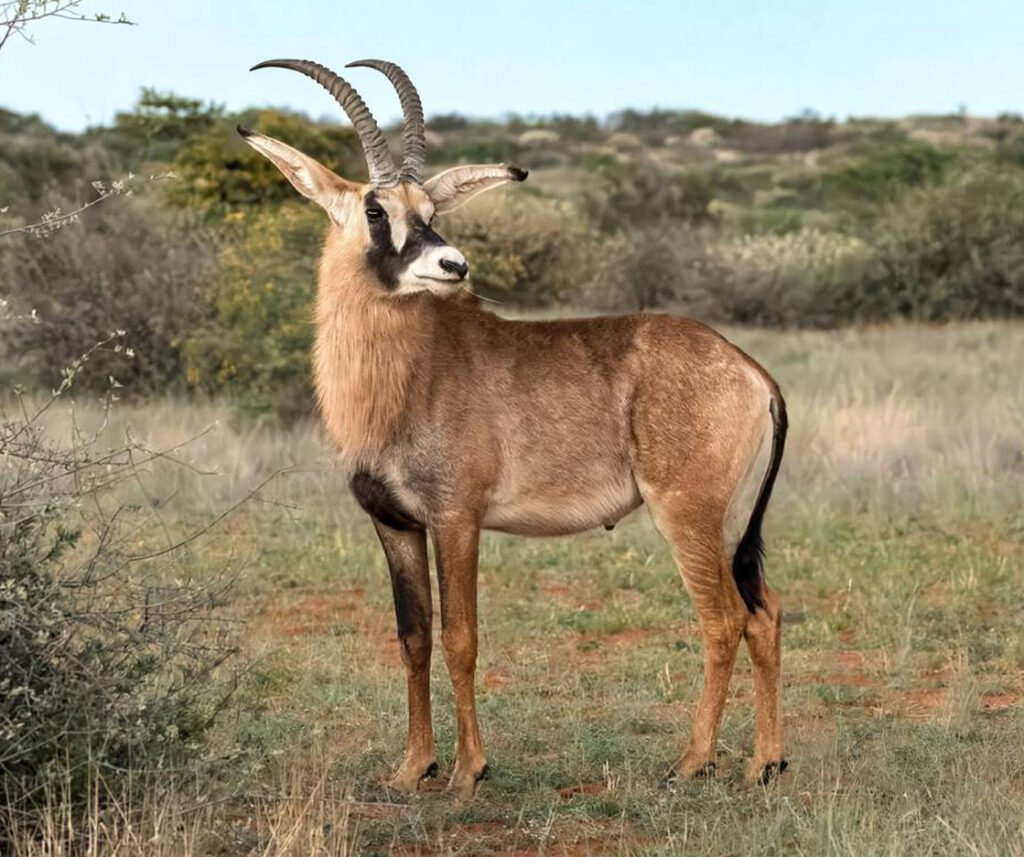
5. Roan Antelope (Hippotragus equinus)
Fifth on our list is the powerful Roan Antelope, a close relative of the sable. Males regularly reach weights up to 660 pounds (300 kg), standing as one of the tallest antelopes on the continent.
-
Weight Range: 500 to 660 lbs (225 to 300 kg)
-
Key Features: Distinctive reddish-brown coat, tufted ears, and a clown-like black-and-white facial mask.
-
Habitat & Behavior: Living in small harems led by a dominant female, they are generally shy. However, when threatened, they use their backward-curving horns with lethal agility to fend off predators.
6. Blue Wildebeest (Connochaetes taurinus)
Next comes one of Africa’s most famous animals: the Blue Wildebeest (or White-bearded Gnu). Weighing up to 640 pounds (290 kg), these muscular grazers form the ecological backbone of eastern and southern grasslands.
-
Weight Range: 300 to 640 lbs (135 to 290 kg)
-
Key Features: Broad snouts, dark vertical shoulder stripes, shaggy beards, and curved, cow-like horns.
-
Habitat & Behavior: Millions form the beating heart of the Great Migration, moving in vast herds across plains and braving crocodile-infested rivers in search of fresh grazing grounds.
7. Waterbuck (Kobus ellipsiprymnus)
Moving into wetter terrain, we encounter the Waterbuck. Tipping the scales at up to 580 pounds (260 kg), male waterbucks are easily recognized near water sources throughout Sub-Saharan Africa.
-
Weight Range: 350 to 580 lbs (160 to 260 kg)
-
Key Features: Shaggy, coarse coats, long sweeping horns, and a distinct white target-like ring surrounding their rump.
-
Habitat & Behavior: Rarely found far from riverbanks or marshes, they secrete an oily, musky substance into their fur that acts as a natural waterproof coat while repelling parasites and deterring predators.
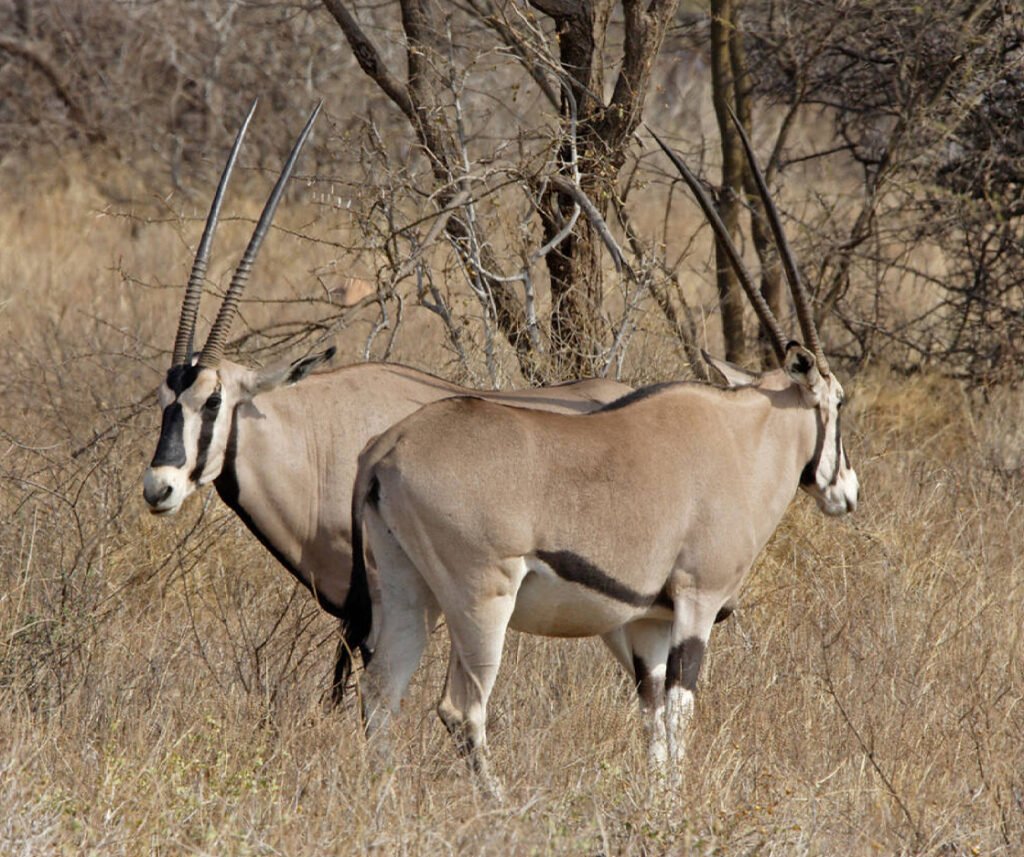
8. Gemsbok (Oryx gazella)
Weighing up to 530 pounds (240 kg), this striking desert specialist is custom-built for survival in extremely arid environments like the Namib and Kalahari deserts.
-
Weight Range: 220 to 530 lbs (100 to 240 kg)
-
Key Features: Bold black-and-white facial mask, pale grey-brown body, and long, needle-sharp straight horns up to four feet long.
-
Habitat & Behavior: They possess a unique network of blood vessels that cools blood before it reaches the brain, allowing them to thrive in extreme thermal conditions that would cause heatstroke in other large mammals.
9. Sable Antelope (Hippotragus niger)
Weighing up to 520 pounds (235 kg), the Sable Antelope is considered the true warrior of the savanna due to its bold coloration and fierce temperament.
-
Weight Range: 440 to 520 lbs (200 to 235 kg)
-
Key Features: Glossy jet-black coats on mature bulls contrasting sharply with snow-white underbellies, paired with sweeping scimitar-shaped horns.
-
Habitat & Behavior: Inhabiting wooded savannas, they are notoriously aggressive when cornered, often bringing apex predators like lions to a standstill by dropping to their knees and swinging their deadly, sweeping horns in lethal arcs.
10. Hartebeest (Alcelaphus buselaphus)
Rounding out the top ten list of heavyweights is the Hartebeest, a large, odd-looking grazer weighing up to 480 pounds (218 kg).
-
Weight Range: 220 to 480 lbs (100 to 218 kg)
-
Key Features: Long, narrow face, steeply sloping back, and complex double-curved horns set on a high pedicle.
-
Habitat & Behavior: Exceptionally fast, the Hartebeest can reach speeds up to 43 mph (70 km/h) to escape predators across open plains and shrublands.