Facts About the Waterbuck: The Water-Loving Sentinel of the Savannah
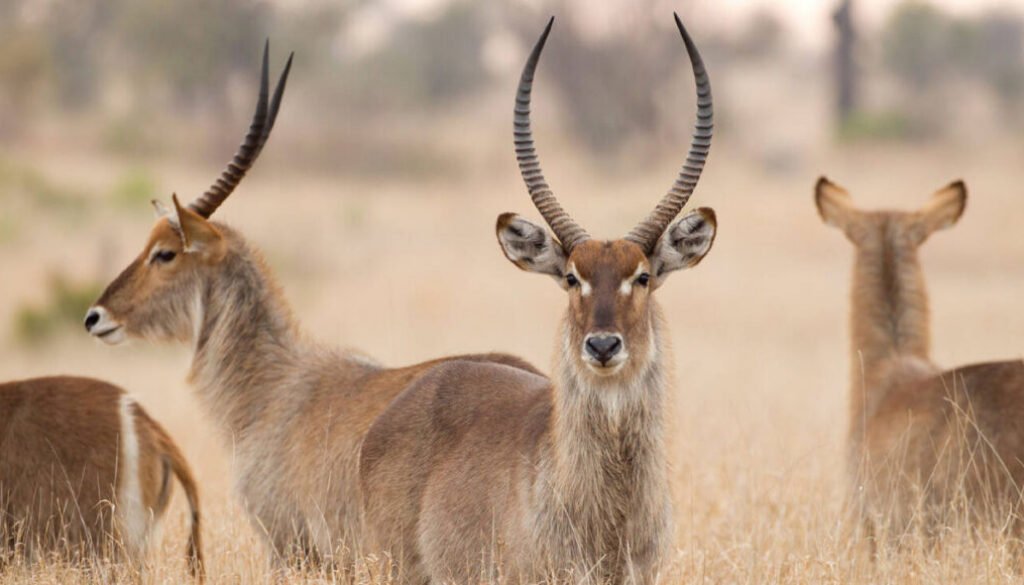
When discussing facts about the waterbuck, it is important to clarify that we are actually talking about two distinct subspecies: the Common Waterbuck and the Defassa Waterbuck.
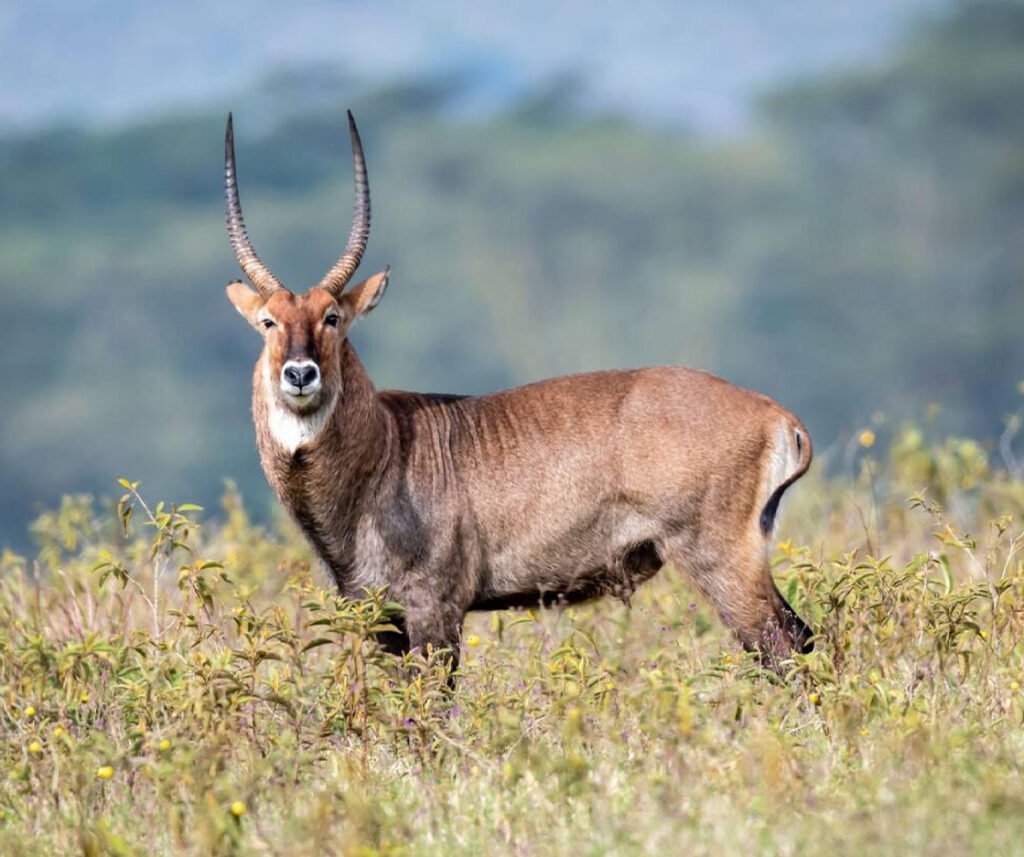
The easiest way to tell them apart is by looking at their backsides. The Common Waterbuck features a very prominent white ring on its rump—often jokingly referred to as a “toilet seat” mark. The Defassa Waterbuck, on the other hand, has solid white patches on its buttocks. While they look different, they are closely related enough to interbreed in areas where their ranges overlap, such as in parts of East Africa.
Quick Profile: The Waterbuck at a Glance
-
Common Name: Waterbuck
-
Scientific Name: Kobus ellipsiprymnus
-
Type: Mammal
-
Diet: Herbivore (primarily grazers)
-
Average Life Span in the Wild: Up to 18 years
-
Size: Head and body: 177 to 235 cm; Tail: 33 to 44 cm
-
Weight: 160 to 260 kg (Males are significantly larger)
Habitat and The Need for Hydration
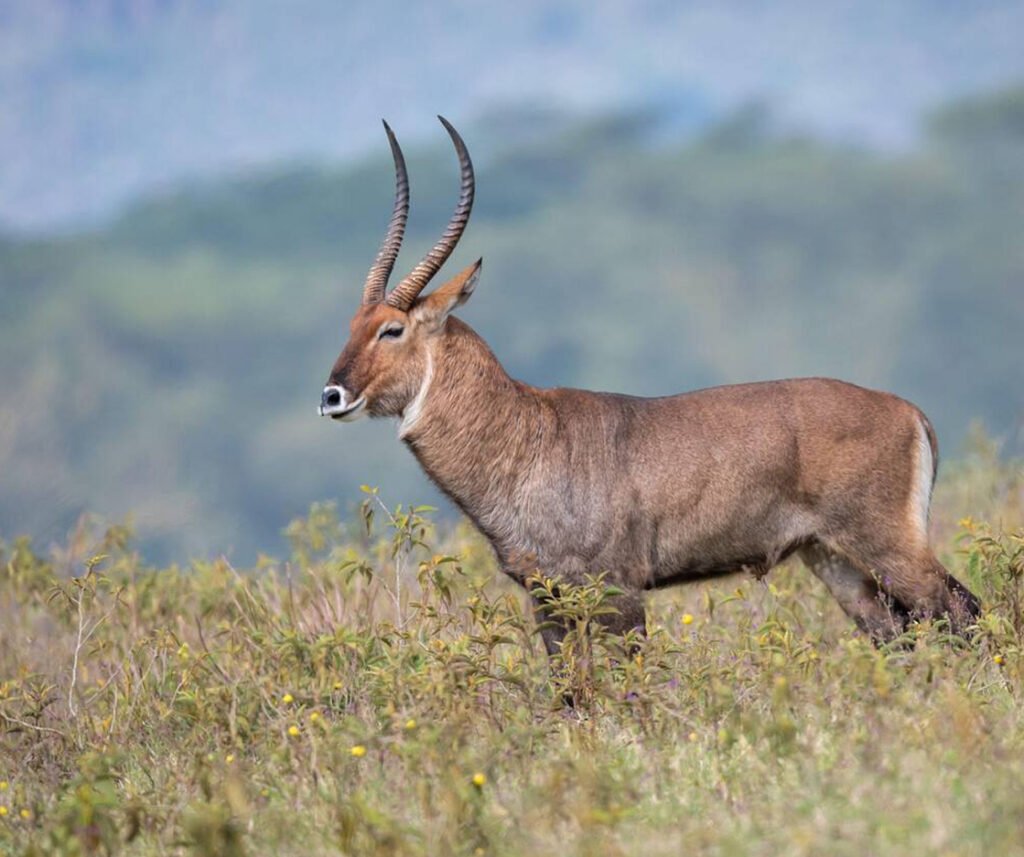
One of the most defining facts about the waterbuck is its absolute dependence on water. Unlike the Oryx or the Addax, which can survive for long periods without drinking, the waterbuck must have access to a permanent water source.
They inhabit scrublands, gallery forests, and riverine woodlands. They aren’t just there for a drink; the water serves as a primary defense mechanism. When threatened by a predator like a lion or a hyena, a waterbuck will often flee directly into deep water. They are strong swimmers, and most terrestrial predators are hesitant to follow them into crocodile-infested depths.
Built for Survival: Physical Characteristics
The waterbuck is a large, sturdy antelope. A fully grown male can stand up to 130 cm at the shoulder. Their coats are shaggy, coarse, and vary from brown to grey. This thick fur isn’t just for show; it serves as a protective layer against the damp environments they frequent.
Only the males carry horns. These horns are long, heavily ringed, and curve gracefully backward before hooking forward at the tips. They use these primarily for territorial defense and competing for mates. Interestingly, the skin of a waterbuck is exceptionally thick, providing a layer of “armor” during fights with rival males.
The “Smelly” Defense Mechanism
Perhaps the most peculiar of all facts about the waterbuck is their scent. If you’ve ever been on a safari and smelled something akin to “wet dog” or “turpentine” before seeing an animal, you were likely near a waterbuck.
They possess sweat glands that secrete an oily, musky substance. This oil serves two purposes:
-
Waterproofing: It helps keep their skin dry and protected in humid, swampy environments.
-
Repellent: The smell is incredibly pungent and is thought to deter predators. Some experts suggest that the meat of a waterbuck is less palatable to carnivores because of these secretions, though a hungry lion will rarely turn down a meal.
Social Structure and Territory
Waterbucks have a fascinating social hierarchy. Males are highly territorial. A dominant male will claim a territory near a water source, hoping to attract herds of females. These bachelor groups of younger males are often pushed to less desirable “buffer” zones.
Females and their young form loose associations. Unlike some species that migrate in massive, synchronized herds, waterbuck groups are more fluid, ranging from 5 to 30 individuals. Because they stay close to water year-round, they don’t need to participate in the Great Migration seen in wildebeest or zebras.
Diet and Nutrition
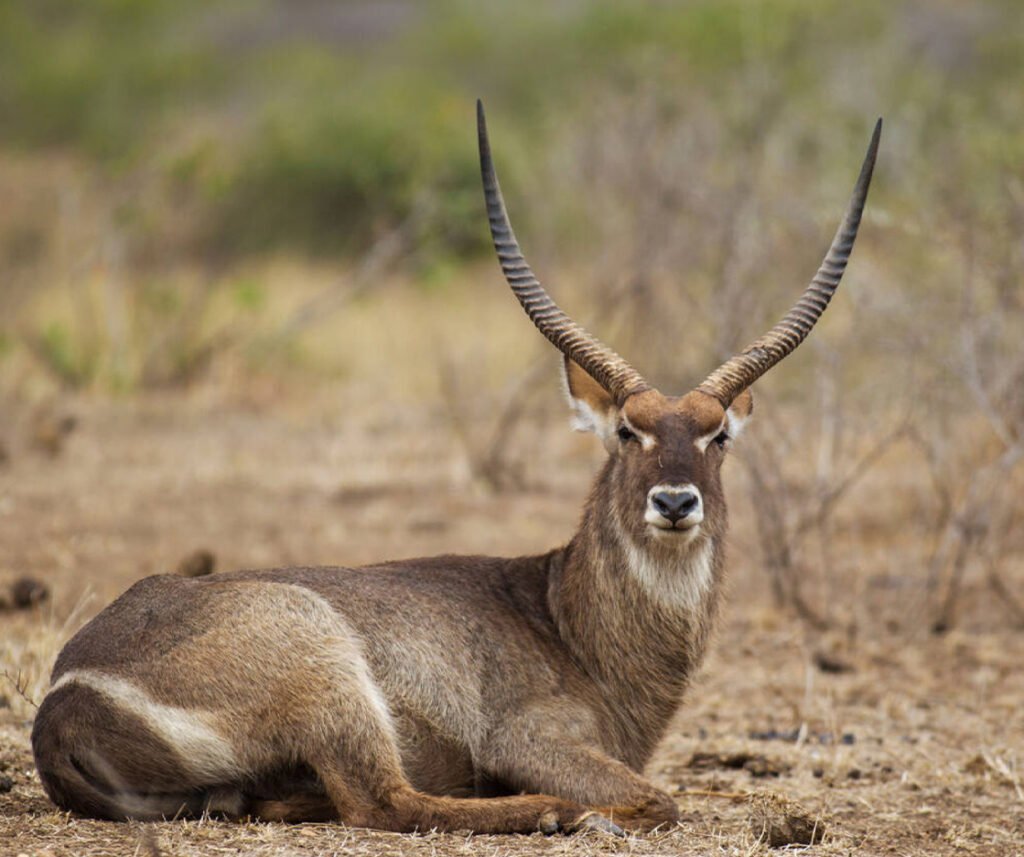
As specialized grazers, these animals spend a significant portion of their day eating. These facts about the waterbuck highlight their dietary niche: they prefer protein-rich grasses. While they are primarily grazers, they will occasionally browse on leaves or herbs if grass becomes scarce during the dry season.
Because grass is difficult to digest, they are ruminants. This means they have a four-chambered stomach and “chew the cud,” fermenting their food to extract every possible nutrient.
Life Cycle and Reproduction
There is no specific breeding season for waterbucks; they can mate year-round, though births often peak during the rainy season when food is most abundant. A mother will gestate for about nine months before giving birth to a single calf.
Survival for a calf is tough. For the first few weeks of life, the calf remains hidden in dense vegetation while the mother grazes nearby. This “hiding” phase is crucial for avoiding the eyes of leopards and cheetahs. The calf will stay with its mother for about eight or nine months before joining a bachelor herd or striking out on its own.
Conservation Status
Currently, the waterbuck is listed as Least Concern by the IUCN, but that doesn’t mean they are out of the woods. Their populations are declining in many areas due to habitat loss and poaching. Because they stay near water, they are easy targets for snares set near riverbanks. Conservation efforts in national parks across South Africa, Kenya, and Tanzania remain vital to ensuring these unique antelopes continue to thrive.