Facts About the Common Eland: Africa’s Heavyweight Antelope
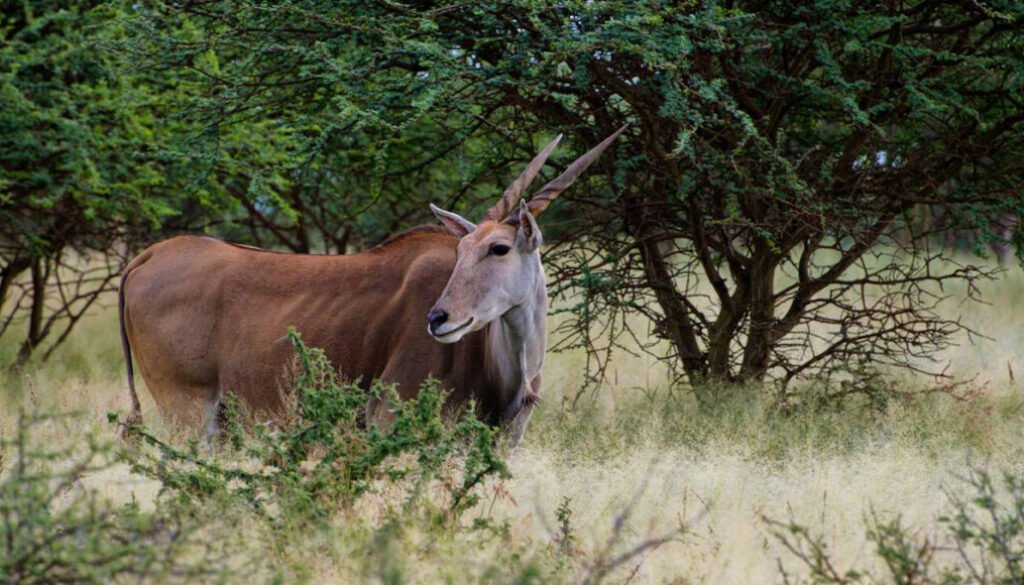
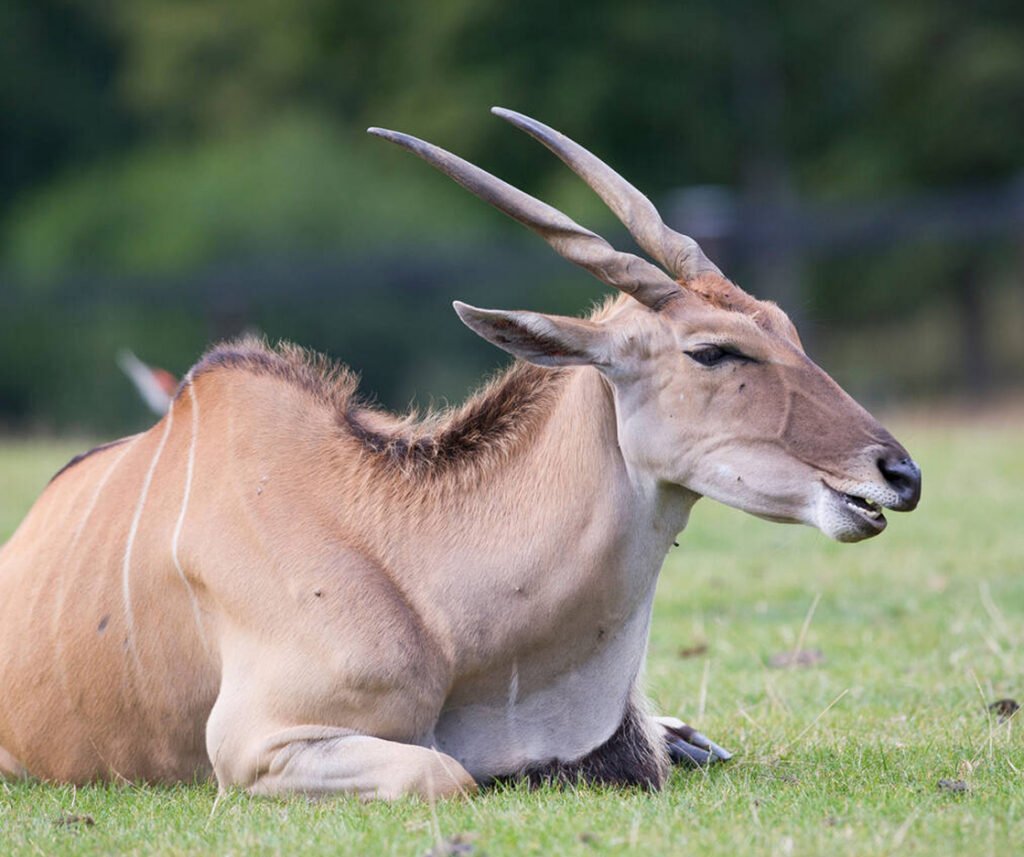
When discussing facts about the common eland, the first thing that strikes anyone is their sheer scale. They are the second-largest antelope in the world (surpassed only by their cousin, the Giant Eland). A large male can weigh as much as a small car, yet they carry this weight with a surprising grace.
Unlike many other antelopes that rely on sheer speed to escape predators, the common eland uses its bulk and formidable horns for defense. However, don’t let the weight fool you. One of the most mind-blowing facts about the common eland is their jumping ability. Despite weighing a ton, an adult eland can leap over a 1.5-meter (5-foot) fence from a standing start. Younger, lighter individuals have been known to clear heights of up to 2.5 meters.
Essential Common Eland Quick Facts
-
Common Name: Common Eland
-
Scientific Name: Taurotragus oryx
-
Type: Mammal
-
Diet: Herbivore (Browser and Grazer)
-
Average Life Span in the Wild: 15 to 20 years
-
Size (Head and Body): 6.6 to 11.5 feet
-
Weight: 880 to 2,100 lbs
Built for the African Heat
Living across the East and Southern African plains requires serious thermal regulation. One of the most interesting biological facts about the common eland is how they manage their body temperature. During the heat of the day, they can actually allow their body temperature to rise by several degrees to avoid sweating, which conserves precious water.
The “Clicking” Mystery
If you are ever walking near a herd, you might hear a distinct clicking sound. For a long time, people weren’t sure what caused it. Scientific research into facts about the common eland eventually revealed that the sound comes from the animal’s knees!
As the eland walks, its tendons or bones in the forelegs produce a loud click. While it might seem like a disadvantage for a prey animal to make noise, researchers believe it serves as a form of communication. The volume of the click is often linked to the size and dominance of the male; essentially, the louder the click, the more intimidating the bull.
A Diet of Versatility
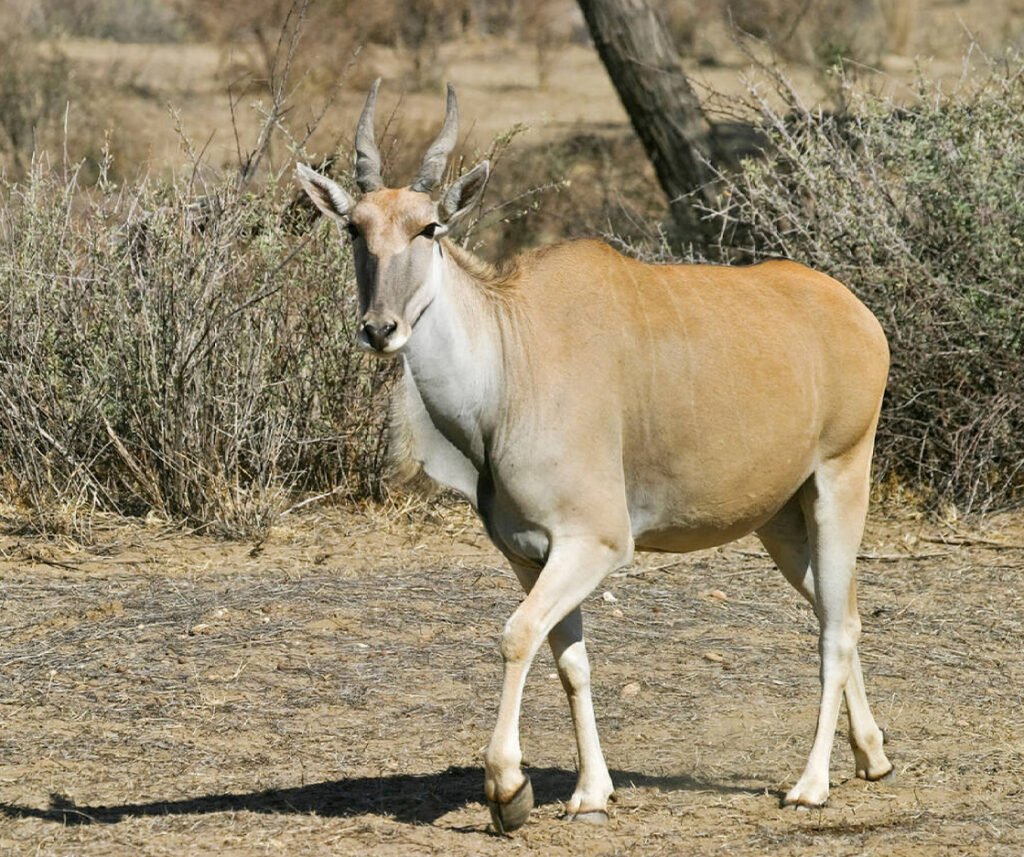
The common eland is not a picky eater. Being a “selective feeder,” they are both grazers (eating grass) and browsers (eating leaves and shrubs). This flexibility is key to their survival. When the grass dries up during the harsh African winter, they use their powerful horns to hook and break high branches that other antelopes can’t reach.
They are also incredibly water-efficient. While they will drink if water is available, they can survive for long periods without it by consuming succulent plants and tubers that store moisture. This allows them to inhabit semi-arid environments where other herbivores might struggle.
Social Dynamics and Nursery Groups
Socially, these animals are fascinating. They tend to live in herds of 25 to 60 individuals, but these groups are fluid. However, one of the most heartwarming facts about the common eland is the existence of “nursery groups.”
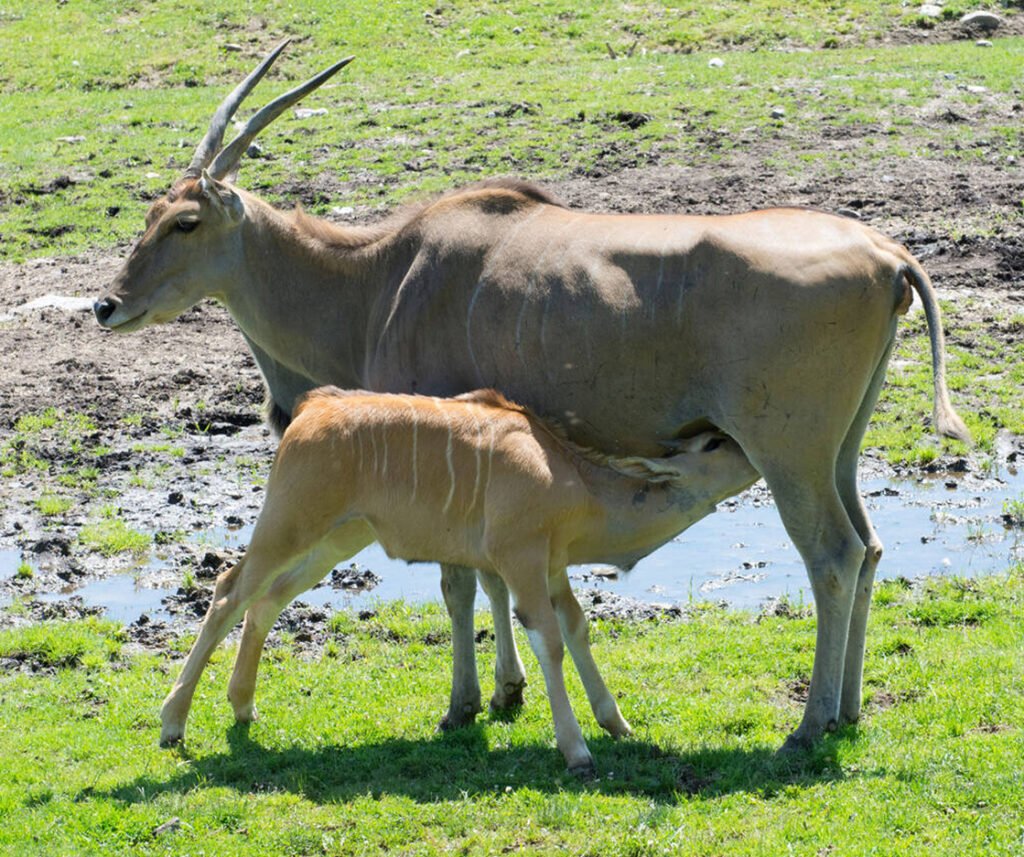
When calves are born, they aren’t just left to fend for themselves. After a few weeks of hiding, calves join a nursery group where they spend their time playing and socializing under the watchful eyes of several adult females. This “daycare” system allows mothers to move further away to find better grazing while ensuring the youngsters are protected from predators.
The Spiral Horns: Not Just for Show
Both males and females possess horns, which is a bit of a rarity in the antelope world. The horns are tightly spiraled (resembling a screw) and can grow quite long. In males, the horns are shorter but much thicker and more robust, used primarily for wrestling during the mating season.
Female horns, on the other hand, are thinner and often longer. They use them primarily to defend their calves from jackals or cheetahs. These horns are a primary focal point in many facts about the common eland discussions because they are so iconic to the species’ silhouette.
Interaction with Humans and Conservation
Historically, the common eland has had a deep connection with human cultures. They are prominently featured in the rock art of the San people in Southern Africa, who viewed them as sacred animals with spiritual significance.
Today, their conservation status is “Least Concern,” but that doesn’t mean they aren’t facing challenges. Habitat loss and overhunting for their high-quality meat and leather are ongoing issues. Because they are relatively docile compared to Cape Buffalo, there have even been attempts to domesticate them for milk and meat production. Eland milk is remarkably high in fat and can be stored for much longer than cow’s milk, making it a valuable resource in hot climates.