3 Big Cats, 1 Territory: The Epic Masterclass in Big Cats Niche Partitioning
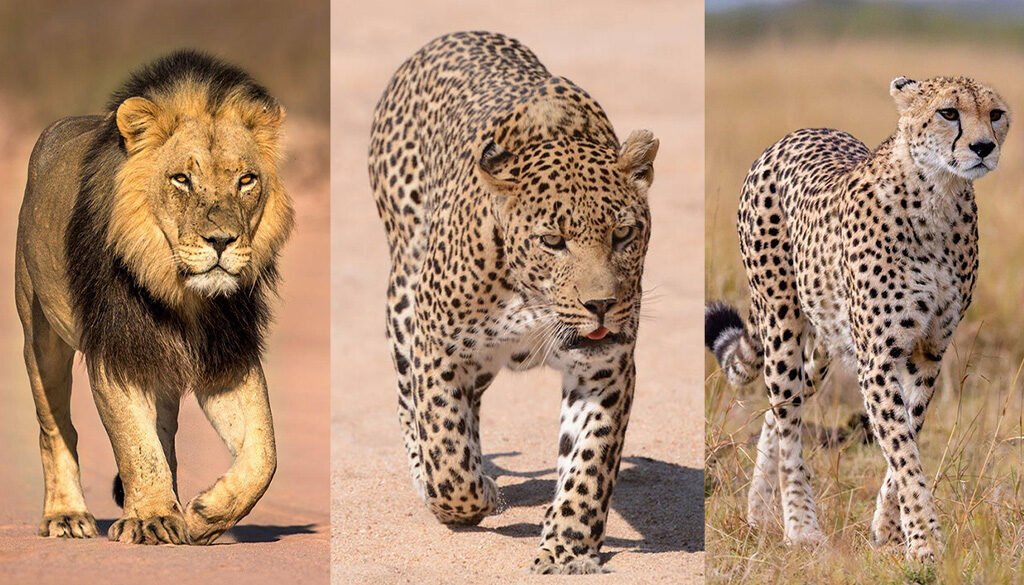
What makes big cats niche partitioning so fascinating lies in a masterclass of evolutionary diplomacy. Rather than engaging in constant, suicidal warfare for identical resources, these apex predators have carved out distinct lifestyles across time, space, and hunting strategy. They do not merely hunt different prey species; they hunt at different hours of the day, utilize completely different terrain features, and rely on vastly different physical adaptations. Through subtle spatial avoidance and specialized behaviors, big cats niche partitioning preserves the delicate ecological balance of Africa’s wild ecosystems.
The Lion: Dominance Through Power and Social Structure
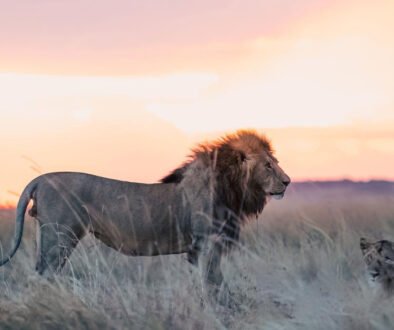
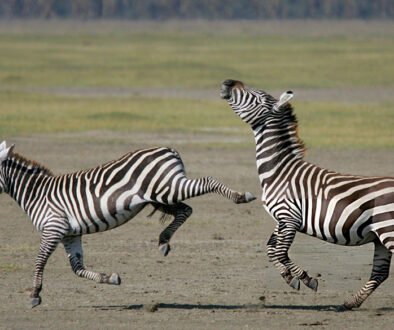
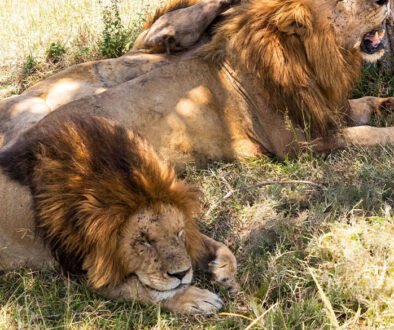
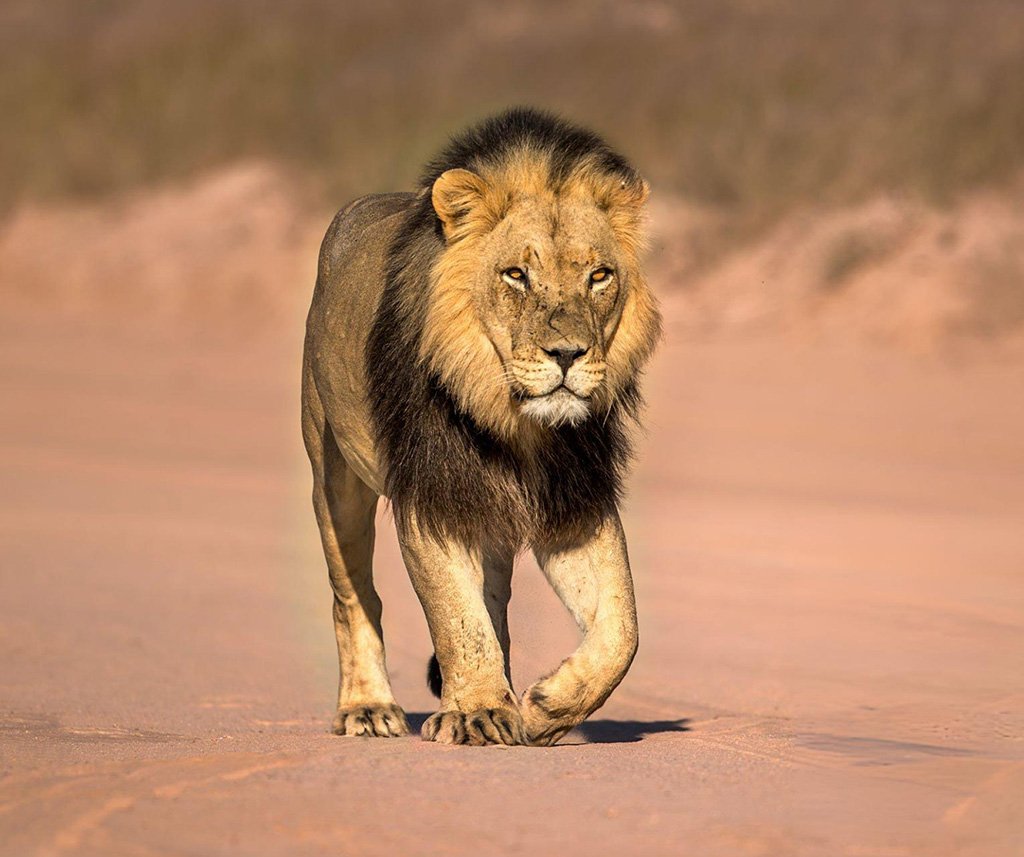
Tipping the scales at over four hundred pounds, lions do not rule solely by brute force, they rule through complex social structure. As the only truly social big cats, living in prides allows them to claim the richest, most prey-dense territories surrounding primary rivers, lakes, and waterholes. Their hunting strategy relies heavily on cooperative ambushes and overwhelming physical power, targeting massive herbivores like zebra, wildebeest, Cape buffalo, and giraffes.
Because of their immense physical size and pride strength, lions dominate the ecological hierarchy through direct interference competition. Lions frequently kleptoparasitize, or outright steal, kills from smaller, solitary predators. Furthermore, lions will actively track down and eliminate leopard cubs or adult cheetahs if given the opportunity. In essence, lions occupy the central, most lucrative real estate of the African ecosystem. This dominant presence forces all other sympatric carnivores to adapt around them, setting the structural foundation for big cats niche partitioning.
The Leopard: Vertical Leverage and Stealth Survival
So how does a solitary leopard (Panthera pardus) survive directly in the shadow of such a formidable giant? The leopard’s secret weapon in big cats niche partitioning is structural complexity—specifically, vertical forest space and dense cover. Weighing roughly half as much as an adult lion, a leopard cannot match a pride in a face-to-face ground fight. Instead, leopards have mastered the art of solitary stealth, camouflage, and arboreal agility. While lions dominate open grasslands and clearings, leopards thrive in rocky outcrops, dense riverine woodlands, and tall groves where environmental cover is plentiful.
Their hunting strategy is hyper-localized: a masterclass in patient, silent stalking, closing the physical distance to within just a few meters before launching an explosive pounce. However, their most crucial evolutionary adaptation comes after the kill is made. Using immensely strong neck and shoulder muscles, a leopard can haul an antelope weighing significantly more than its own body high into the branches of an acacia tree. By hoisting their hard-earned meals high into the forest canopy, leopards effectively remove their food from the reach of ground-bound lions and spotted hyenas, securing a private dining room well above the danger zone.
The Cheetah: Blinding Speed and Temporal Avoidance
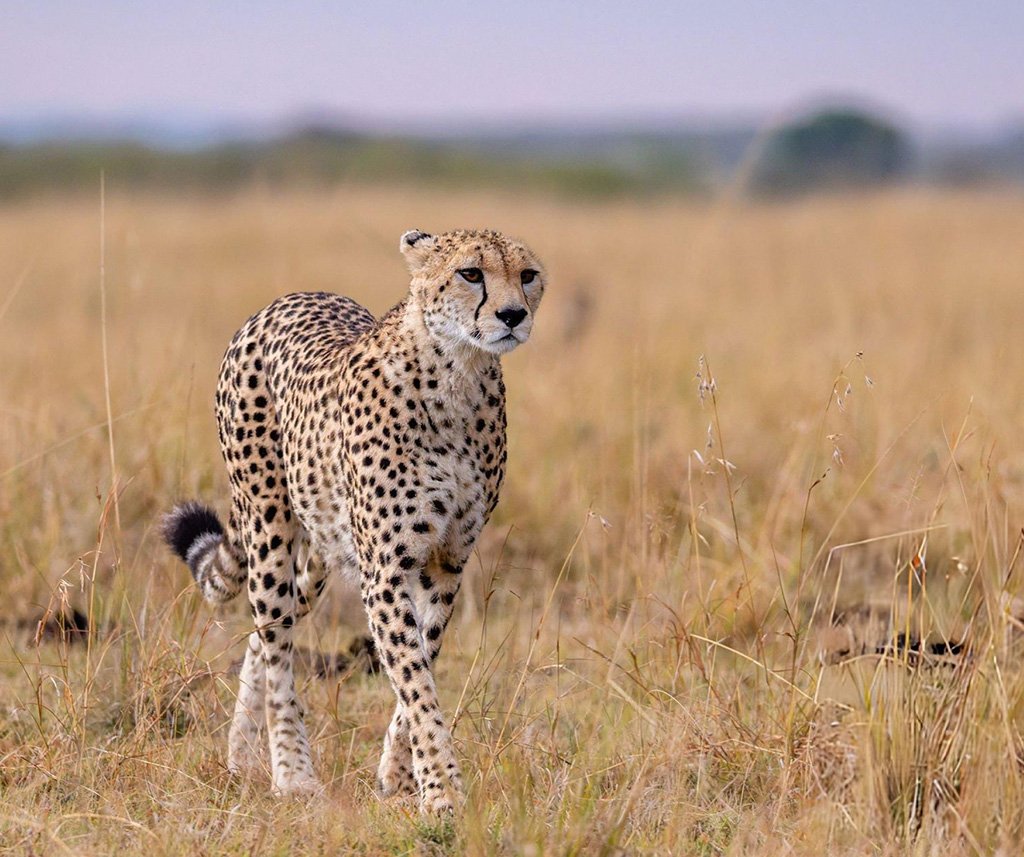
Then there is the cheetah (Acinonyx jubatus), a feline built for an entirely different tactical game. Lightweight, slender, and aerodynamically refined, the cheetah sacrificed raw muscular power and vertical climbing ability in exchange for unmatched, explosive speed. Because a cheetah cannot fight off a lion pride or haul a heavy carcass up an acacia tree, its entire survival strategy relies on temporal and spatial maneuverability within the framework of big cats niche partitioning.
While lions and leopards are primarily nocturnal or crepuscular hunters—doing the vast majority of their hunting under the cover of dusk, dawn, and complete darkness—cheetahs are strictly diurnal predators. They actively hunt during the blistering heat of midday when larger competitors are resting in the shade. Furthermore, cheetahs actively avoid the dense thickets favored by leopards and the strategic riverbanks guarded by lion prides. Instead, cheetahs stick to wide-open, flat plains where their blinding speed—reaching up to seventy miles per hour—can be fully unleashed against agile, fast-moving prey like Thomson’s gazelles and impalas.
Yet, even with these remarkable adaptations, a cheetah’s life is a continuous race against time and exhaustion. After a high-speed sprint, a cheetah becomes utterly depleted, its core body temperature elevated to dangerous levels, requiring up to twenty minutes of complete rest before it can safely consume its prey. This vulnerable post-hunt window is when lions or hyenas frequently step in to steal the kill. To compensate, cheetahs consume their meals rapidly and abandon the kill site long before larger threats arrive, prioritizing immediate survival over defending a carcass.
The 3 Primary Axes of Big Cats Niche Partitioning
This delicate coexistence among Africa’s top predators is a classic real-world illustration of competitive exclusion principles in community ecology. If two species compete for the exact same limited resource in the exact same manner, one will inevitably drive the other to local extinction. To prevent this competitive collapse, big cats niche partitioning divides the landscape along three primary axes:
-
Diet and Prey Size: Lions target large, heavy game; leopards capture medium-sized mammals in thick vegetation; cheetahs target smaller, highly agile gazelles on open terrain.
-
Habitat Preference and Spatial Use: Lions control open grasslands and waterholes; leopards utilize trees and dense woodlands; cheetahs roam open plains.
-
Daily Activity Patterns: Lions and leopards operate under dark cover at night; cheetahs hunt in full daylight.