7 Fearless African Animals Immune to Snake Venom
Discovering which species qualify as animals immune to snake venom reveals one of nature’s most extraordinary evolutionary arms races. A single strike can deliver a neurotoxic payload capable of paralyzing respiratory systems within minutes, or a cytotoxic brew designed to dissolve muscle tissue from the inside out. Yet, in this relentless environment, evolution has forged a select group of apex predators and tough scavengers that look at these lethal reptiles not with fear, but as a quick afternoon snack.
The Molecular Armor Behind Venom Resistance
Before diving into the ultimate gladiators of the savanna, it helps to understand how biological immunity functions. Snake neurotoxins target nicotinic acetylcholine receptors, the chemical locks on muscle cells that allow nerve signals to pass through. When a snake bites a typical mammal, the venom acts like a broken key jammed in a lock, permanently blocking neurochemical transmission, causing complete paralysis and eventual asphyxiation.
Certain mammals have developed genetic mutations that alter the molecular shape of these receptors. Because the venom molecule can no longer latch onto the cell receptor, the nerve impulse continues firing normally. Coupled with physical defenses like impenetrable hides or dense fur, these species have transformed deadly snakes into manageable prey.
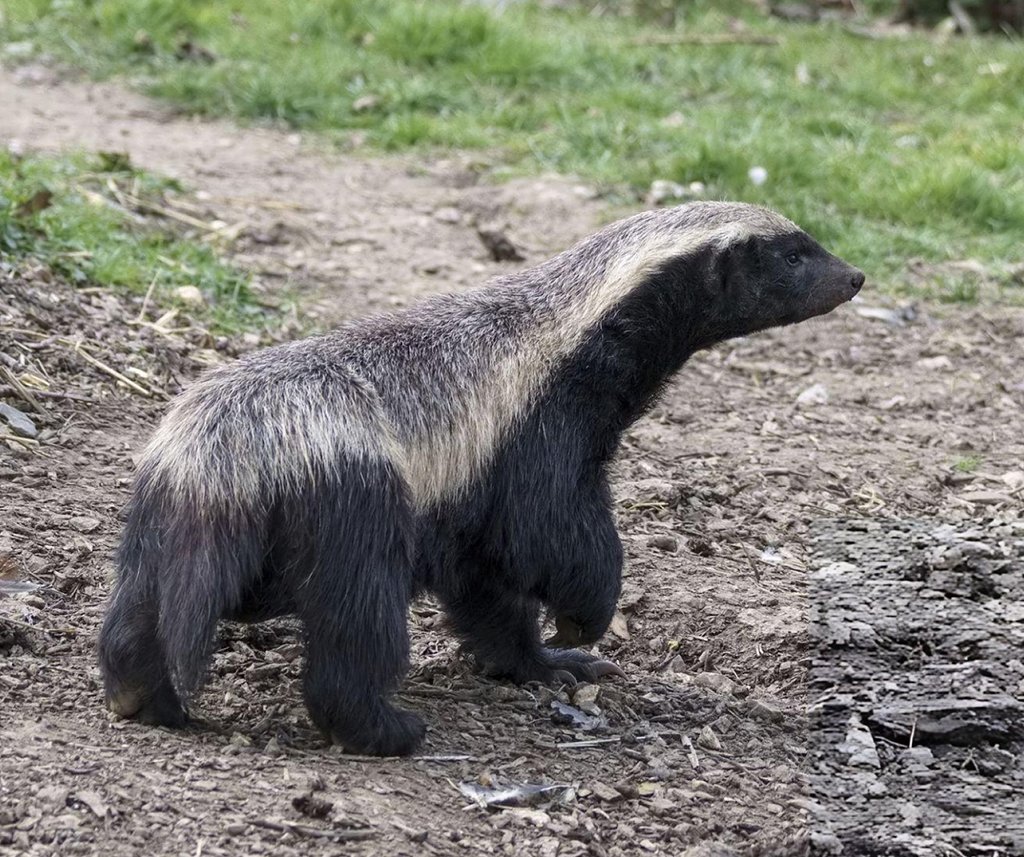
1. The Honey Badger: The Undisputed King of Venom Resistance
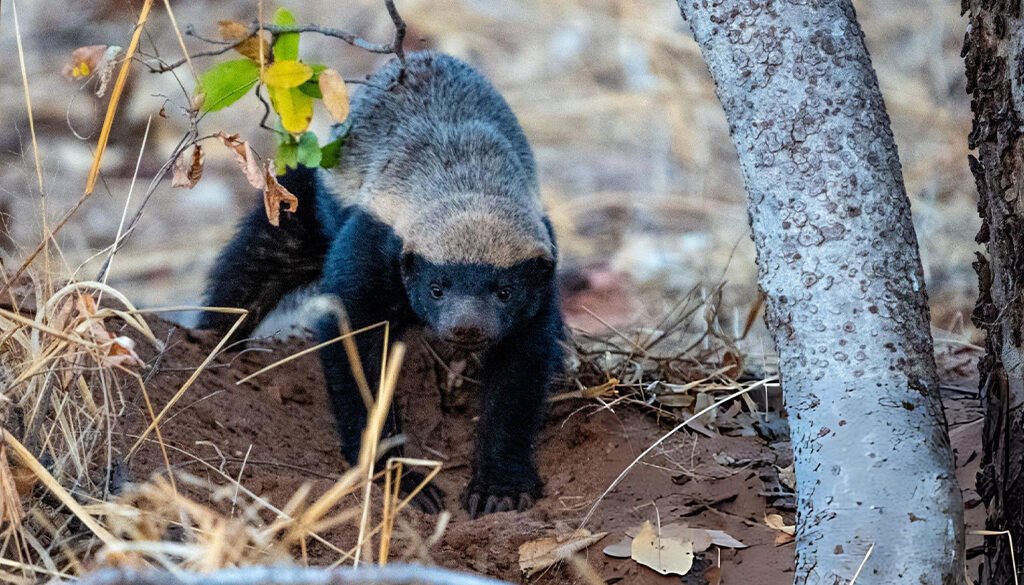
When discussing animals immune to snake venom, the honey badger (Mellivora capensis) stands far above the rest as the undisputed heavyweight champion.
The honey badger looks less like a sleek hunter and more like a heavily armored battering ram. Weighing anywhere between 13 and 30 pounds, it possesses short, powerful legs, formidable digging claws, and rubbery skin so thick that standard snake fangs struggle to even puncture it. Furthermore, its skin is loosely attached to its muscular body frame. If a snake manages to sink its fangs into the badger’s back or neck, the badger can literally twist around inside its own skin and bite the snake right back.
When hunting deadly species like puff adders or Cape cobras, the honey badger skips any elaborate dodge-and-weave routines. It marches directly toward its prey with brute-force confidence, routinely receiving direct strikes to its face or muzzle.
A massive bite from a puff adder might send a honey badger into a brief, hour-long comatose slumber while its body neutralizes the toxin payload. Once the biological storm passes, the badger wakes up, shakes off the hangover, and finishes eating the very snake that bit it.
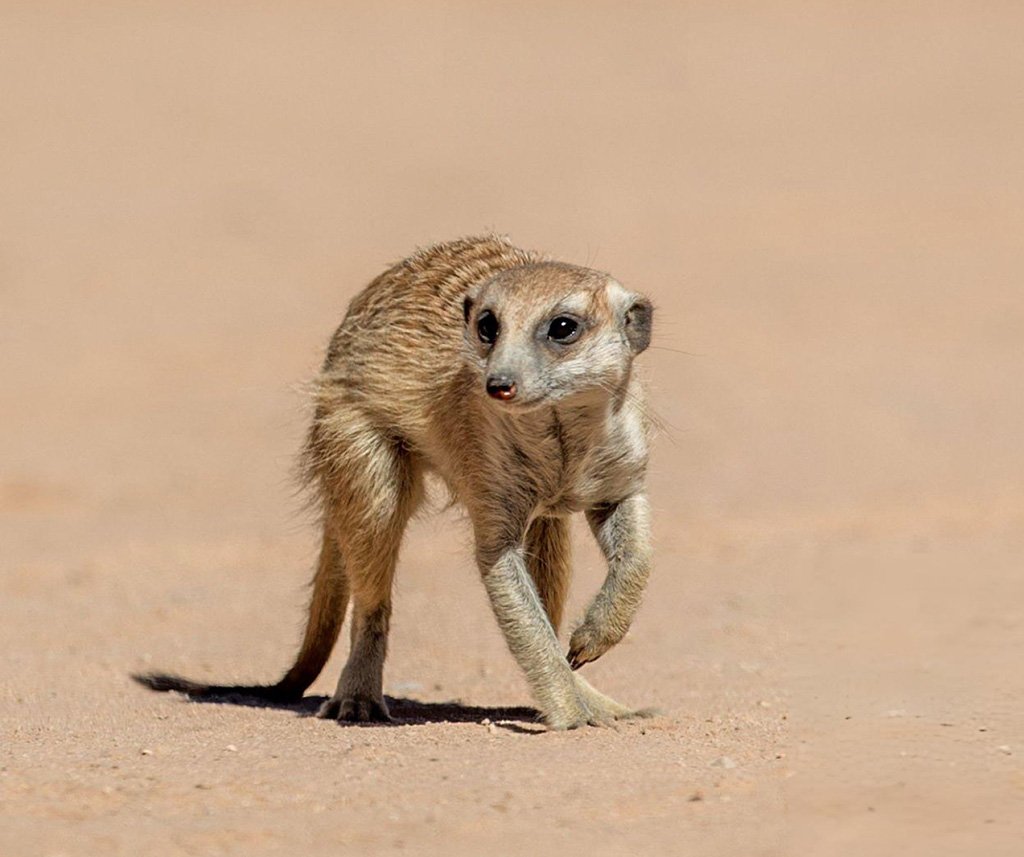
2. The African Mongoose: The Lightning-Fast Fencer
The African mongoose approaches a snake fight like an expert fencer. While it belongs to the elite group of animals immune to snake venom, its primary defense remains lightning speed, acute reflexes, and bristled fur that deceives the snake’s depth perception.
It dances around the serpent, baiting strikes, dodging backward, and tiring the reptile out until it can dart in for a crushing bite to the base of the skull. On a cellular level, mutations in its nicotinic acetylcholine receptors prevent cobras’ neurotoxins from binding efficiently. However, a mongoose’s physiological resistance is not infinite. If it absorbs a massive payload of venom from a large puff adder or suffers multiple bites, the toxins can eventually overcome its cellular defenses. Thus, it relies on agility to avoid testing its biological limits.
3. The Secretary Bird: Long-Legged Snake Stomper
Standing over four feet tall on long, scaled legs, the secretary bird (Sagittarius serpentarius) hunts venomous reptiles across the open grasslands. While its body possesses a degree of natural biochemical tolerance, its primary defense is mechanical armor.
-
Heavy Leg Scales: Thick interlocking scales protect its lower legs, rendering small snake fangs utterly useless.
-
Kick Force: Strikes with a crushing impact force equal to five times its own body weight in a fraction of a second.
-
Wings as Shields: Expands its large feathered wings to distract and blind the snake during an attack.
4. The Hedgehogs of North Africa
Both the desert hedgehog (Paraechinus aethiopicus) and the four-toed hedgehog (Atelerix albiventris) regularly prey on scorpions and venomous snakes. Their primary defense is physical—a dense canopy of sharp keratin spines that forces snakes to strike blindly against painful barbs.
Biologically, hedgehogs demonstrate up to 35 to 40 times higher resistance to viper venom than standard laboratory mice. Their blood serum contains specialized proteins that partially neutralize proteolytic and hemorrhagic toxins, granting them significant survival margins if a snake manages to bypass their spiny barrier.
5. The African Porcupine: Unpierceable Defense
While not a active hunter of snakes, the crested porcupine (Hystrix cristata) ranks high among animals immune to snake venom purely due to its defensive capabilities and internal biochemical tolerances.
When threatened by vipers, the porcupine raises its hollow, razor-sharp quills and executes a backwards charge. Venomous snakes attempting to bite a porcupine frequently impale their own mouths, making envenomation almost impossible. Genetic studies confirm that porcupines also carry partial resistance to hemorrhagic neurotoxins common in African vipers.
6. The Snouted Cobra: Cannibalistic Resistance
Snake venom resistance isn’t limited to mammals and birds; snakes themselves have evolved internal neutralizing proteins to hunt rival reptiles. The snouted cobra (Naja annulifera) is a notorious ophiophage—a snake that specializes in eating other snakes.
Because its diet includes highly venomous puff adders, mambas, and other cobras, its blood plasma contains specific antivenom antibodies. These blood proteins bind directly to ingested or accidentally injected venom molecules, neutralizing them before they can reach critical target organs.
7. The Ground Hornbill: Teamwork and Armor
The southern ground hornbill (Bucorvus leadbeateri) is a massive, turkey-sized bird that patrols African savannas in cooperative family groups. When hunting venomous reptiles like mambas or cobras, these birds utilize a combination of heavy physical defense and coordinated group tactics.
-
Dagger Beak: Uses a massive, sharp beak to strike precise, fatal blows to the snake’s head from a safe distance.
-
Feathered Defense: Holds out heavy wing feathers to block strikes, absorbing fangs harmlessly in dense plumage.
-
Physiological Resistance: Possesses moderate innate immunity to neurotoxic venom, preventing fatal reactions from grazing bites.