Facts About the Leopard Tortoise
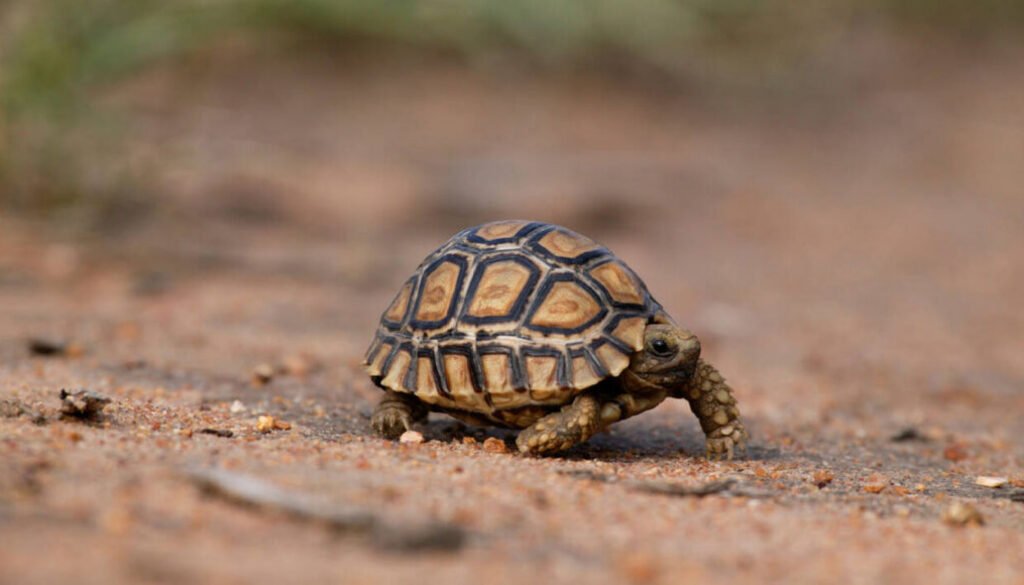
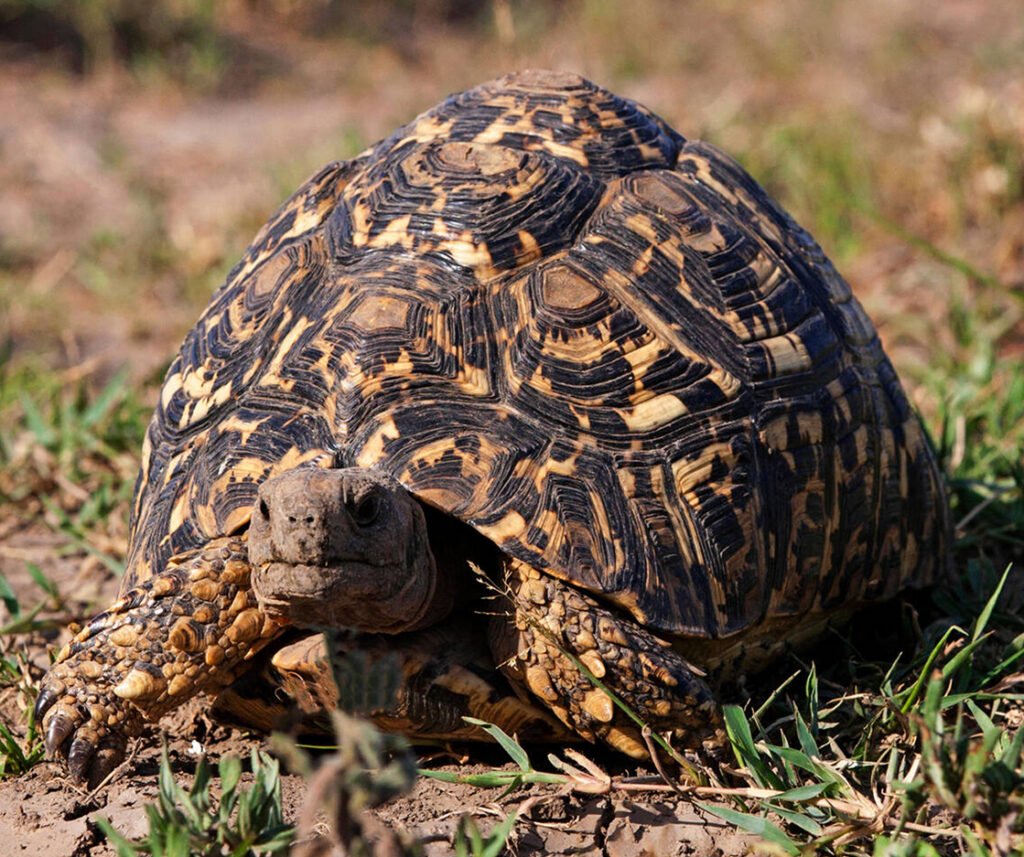
The first thing anyone notices when researching facts about the Leopard Tortoise is their stunning aesthetic. Their high-domed carapace (upper shell) is marked with yellow and black spots, blotches, or even dashes. Interestingly, no two tortoises have the exact same pattern—much like a human fingerprint or the spots on the big cat they are named after.
As they age, these markings often fade into a more uniform tan or gray, helping them blend into the dusty landscapes of their natural habitat. While the average specimen is manageable in size, the “giant” varieties found in Ethiopia and Somalia can reach weights exceeding 100 pounds, making them the fourth-largest tortoise species in the world.
Essential Facts About the Leopard Tortoise
- Common Name: Leopard Tortoise
-
Scientific Name: Stigmochelys pardalis
-
Type: Reptile
-
Diet: Herbivore
-
Average Life Span in the Wild: 80 to 100 years
-
Size (Head and Body): 16 to 18 inches (up to 28 inches in giants)
-
Weight: 29 to 40 pounds (up to 120 pounds)
Habitat and Range
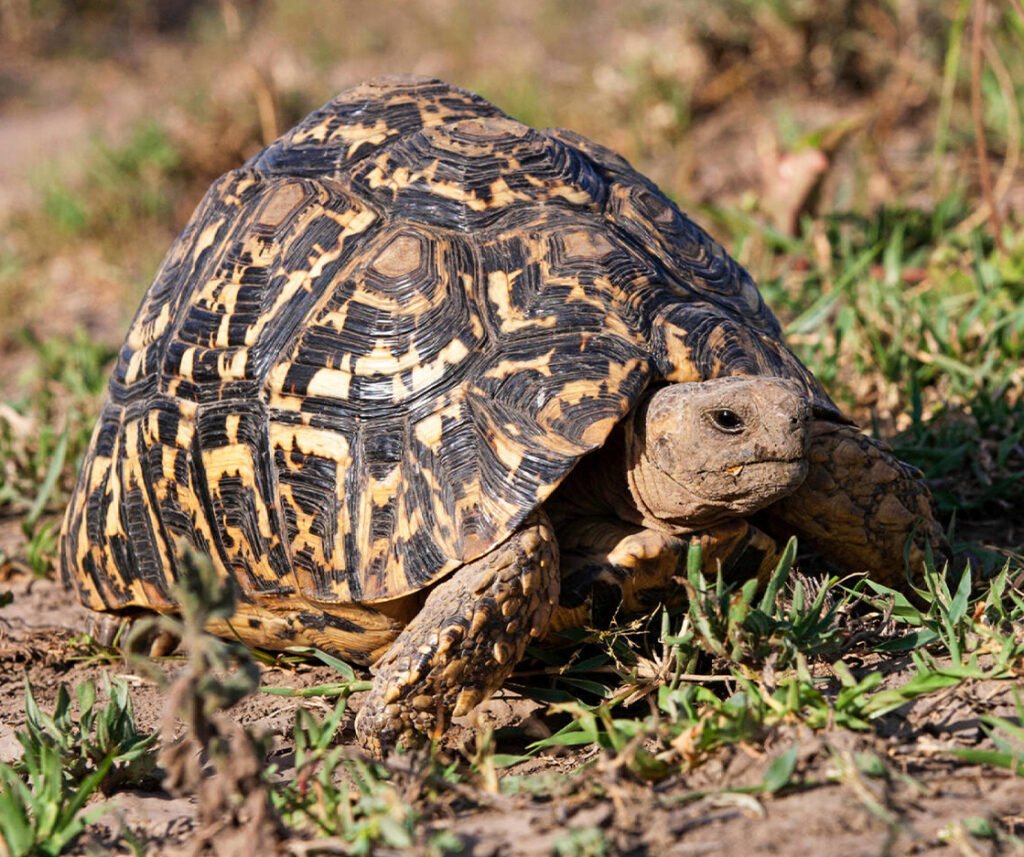
Unlike many other tortoise species that prefer very specific micro-climates, the Leopard Tortoise is remarkably adaptable. They are found across a massive range in Eastern and Southern Africa, spanning from Sudan down to the Cape of Good Hope.
They thrive in:
-
Semi-arid grasslands
-
Thorn scrub
-
Savannahs
-
Coastal forests
One of the most interesting facts about the Leopard Tortoise is their ability to handle varied temperatures. While they are ectothermic (relying on external heat), they are known to seek refuge in abandoned aardvark or jackal burrows to escape the midday heat or the chill of a desert night.
Diet and Nutrition: The Savannah Grazer
In the wild, these tortoises are dedicated herbivores. Their diet consists almost entirely of succulents, thistles, and dry grasses. Because their natural environment can be harsh and nutrient-poor, they have evolved a highly efficient digestive system.
They are particularly fond of the Opuntia (prickly pear) cactus, which provides both nutrition and essential hydration. One of the lesser-known facts about the Leopard Tortoise is their occasional “calcium-seeking” behavior. To maintain their thick, heavy shells, they have been observed chewing on old bones or even hyena feces to supplement their mineral intake.
Diet and Nutrition: The Savannah Grazer
In the wild, these tortoises are dedicated herbivores. Their diet consists almost entirely of succulents, thistles, and dry grasses. Because their natural environment can be harsh and nutrient-poor, they have evolved a highly efficient digestive system.
They are particularly fond of the Opuntia (prickly pear) cactus, which provides both nutrition and essential hydration. One of the lesser-known facts about the Leopard Tortoise is their occasional “calcium-seeking” behavior. To maintain their thick, heavy shells, they have been observed chewing on old bones or even hyena feces to supplement their mineral intake.
Conservation and Human Impact
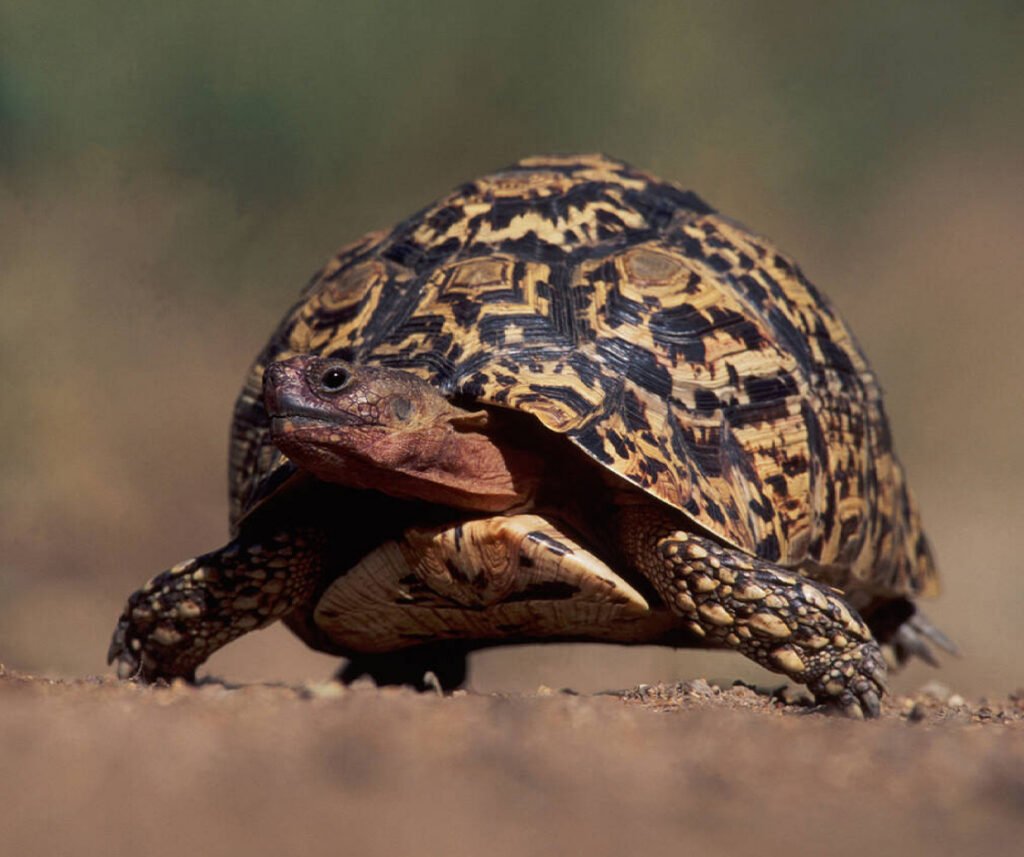
Currently, the Leopard Tortoise is listed as “Least Concern” by the IUCN, but that doesn’t mean they are free from threats. Habitat loss due to agriculture and the illegal pet trade are constant pressures. Because they are slow-moving, they are also frequently victims of brush fires and road accidents.
In many African cultures, these tortoises are respected as symbols of wisdom and patience. Conservation efforts focus on protecting the sprawling savannahs they call home, ensuring that future generations can witness these “living tanks” in the wild.
Behavior and Personality
Despite their rugged exterior, Leopard Tortoises are known for being quite shy. When threatened, they retract their head and limbs into their shell, often emitting a loud hissing sound. This isn’t a vocalization but rather the sound of air being squeezed out of their lungs as they tuck themselves away for safety.
They are also surprisingly good swimmers. While they don’t live in water, they have been observed crossing small streams by holding their breath and floating—a rare trait among heavy-bodied land tortoises.