
How Do Leopard Tortoises Survive in the Wild?
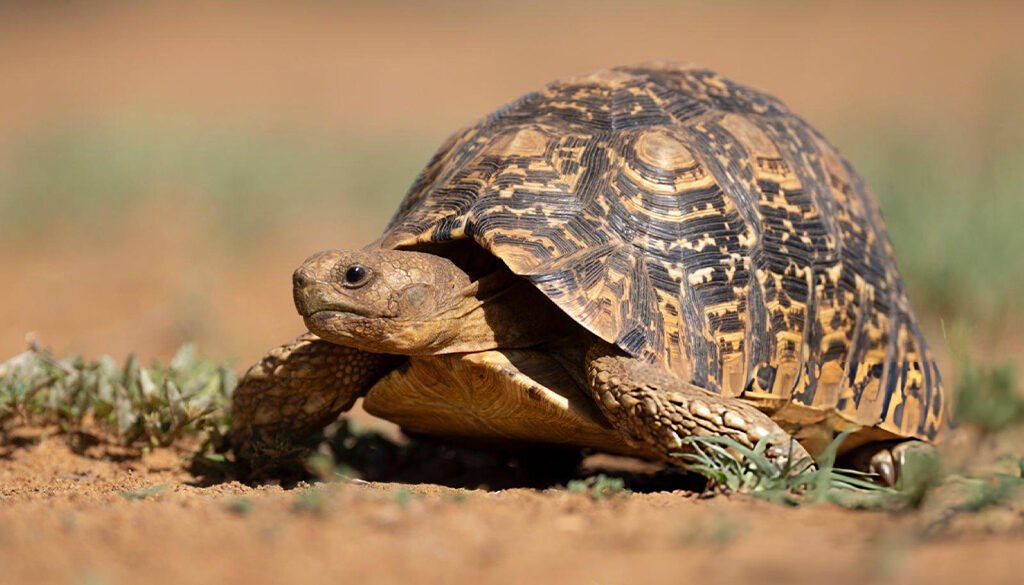
How Do Leopard Tortoises Survive in the Wild? They do so by combining a fortress-like physical defense with extraordinary physiological adaptations that allow them to extract water and nutrients from the harshest terrains, outlasting both environmental extremes and hungry predators for up to a century.
1. Disruptive Camouflage as a Natural Shield
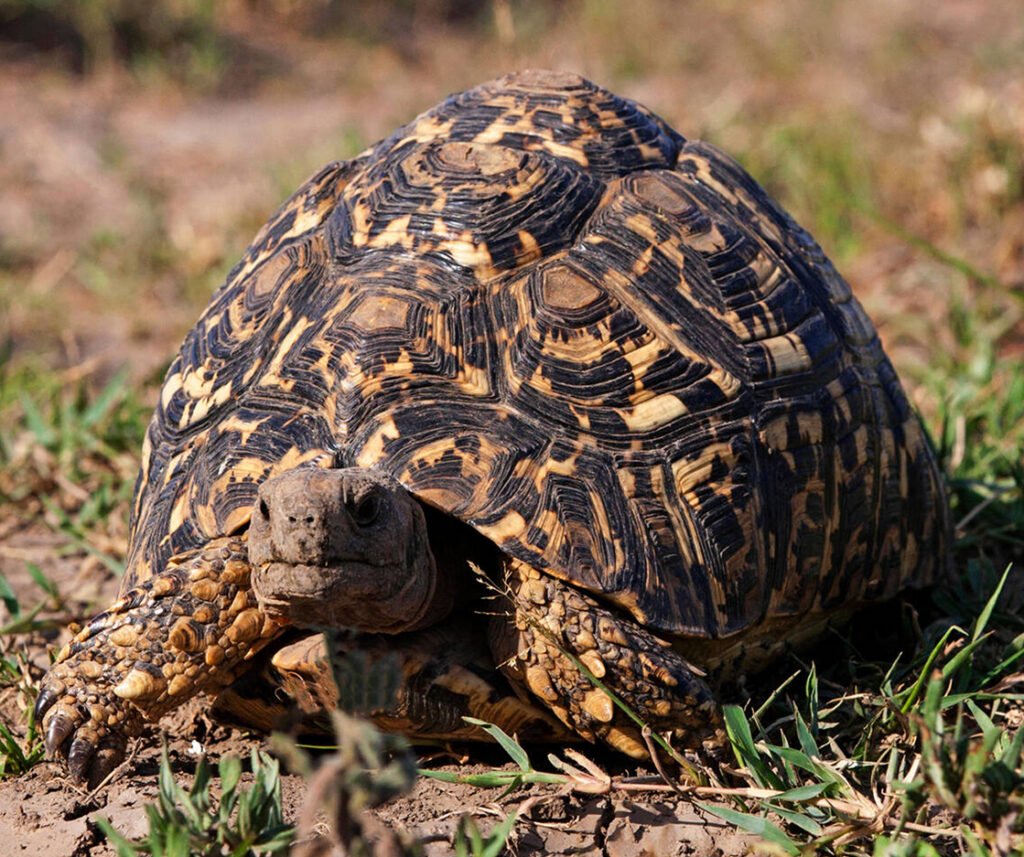
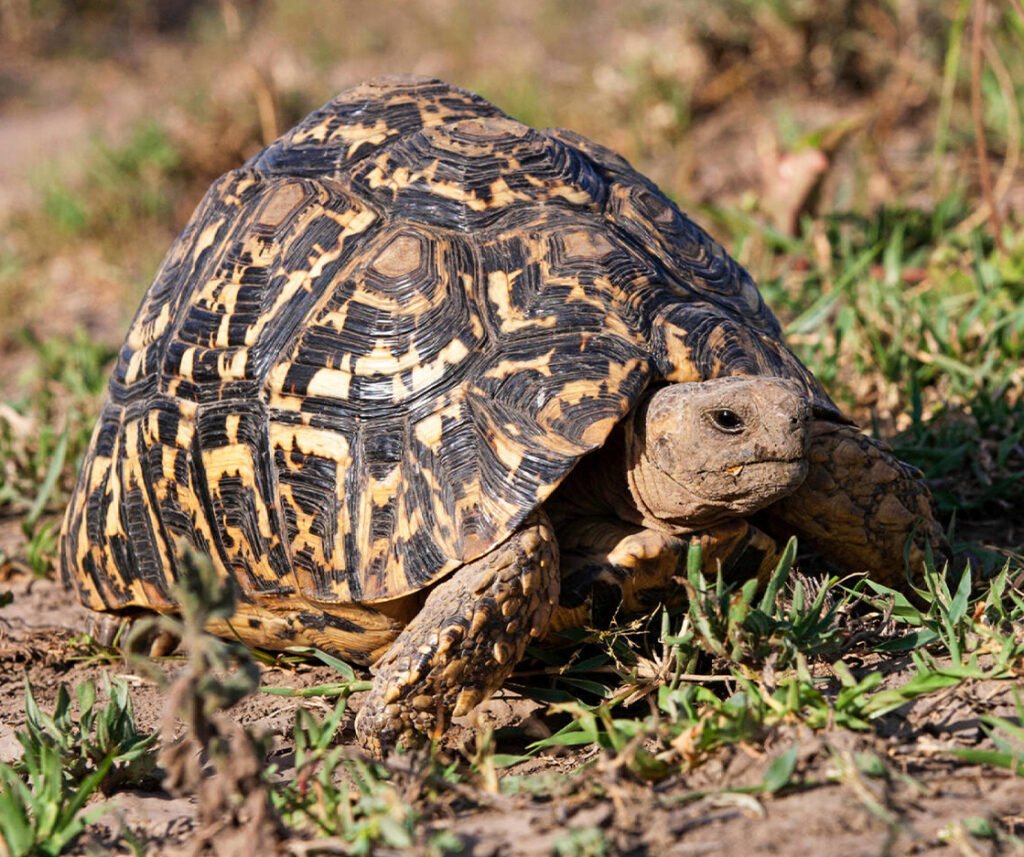
At the heart of this survival strategy is the very feature that gives the species its name: its high-domed, intricately patterned shell. Adorned with striking blotches, spots, and streaks of black, yellow, and cream, the shell mirrors the dappled light filtering through dry savanna grasses. Young tortoises boast the sharpest, most defined patterns, perfectly blending into the patchy shade of scrub brush where they hide from sharp-eyed raptors and small carnivores. As they age, these markings weather into a softer, granite-like camouflage, making a resting adult look remarkably like an ordinary rock sitting under the blazing midday sun. By remaining completely still when threat levels increase, they often pass entirely unnoticed by large mammals roaming the plains.
2. A Fortress Shell Built to Resist Apex Predators
When camouflage fails and a predator approaches, the leopard tortoise deploys its primary defensive maneuver, withdrawing its head, limbs, and tail entirely inside its heavy carapace. Unlike some smaller tortoise species, leopard tortoises lack a hinged shell to seal themselves in completely. Instead, they rely on sheer structural strength. Their thick, scaly forelegs form an armored shield over the front opening, while the heavy, bony dome can withstand tremendous pressure from the jaws of desperate predators. Large carnivores, such as hyenas, lions, and leopards, often bite at the dome only to slip off its smooth, steep sides, eventually giving up in search of far easier prey.
3. Internal Water Reservoirs for Prolonged Droughts
Surviving predators, however, is only half the battle on the African savanna; surviving the harsh, fluctuating climate is a continuous daily trial. Extreme heat and prolonged droughts can dry up surface water sources for months at a time. So, how do leopard tortoises survive in the wild when surface water vanishes completely? The leopard tortoise addresses this challenge through remarkable internal water conservation. When water is plentiful—such as during brief seasonal rains—they drink deeply, expanding their bladders to store substantial amounts of fluid. In times of severe drought, their bodies draw upon these internal reserves, allowing them to go extended periods without finding a single droplet to drink. Additionally, they reabsorb moisture from their waste before excretion to prevent unnecessary fluid loss.
4. Smart Behavioral Thermoregulation
To further protect themselves from scorching temperatures, leopard tortoises rely heavily on behavioral thermoregulation throughout the day. Because they are cold-blooded ectotherms, they cannot regulate their internal body temperature thermally through sweat or shivering. During the cool early morning hours, they seek out sunny patches to bask, absorbing thermal energy to kickstart their metabolic processes. But as the midday sun beats down on the open landscape, they seek refuge in abandoned mammal burrows, under dense thorn bushes, or inside hollow logs. By retreating underground during peak heat, they avoid dangerous overheating and minimize water loss through evaporation.
5. Entering Brumation and Estivation to Save Energy
When seasonal conditions become too harsh—whether through freezing winter temperatures or searing, bone-dry summer droughts—the leopard tortoise can enter a state of metabolic dormancy known as brumation or estivation. By slowing their heart rate and metabolic processes to a crawl, they conserve vital energy and internal moisture, resting safely out of sight until gentle rain calls them back to active life. This ability to pause active living until environmental conditions improve is one of the chief reasons why leopard tortoises maintain such impressive lifespans across diverse wilderness zones.
6. A Tough Digestive System Tailored for Fiber
Feeding in a landscape dominated by tough, fibrous vegetation requires another unique physiological adaptation. Leopard tortoises are strict herbivores, specializing in a diet composed primarily of wild grasses, succulents, thorny shrubs, and fallen fruits. Lacking traditional teeth, they use a sharp, horny beak to shear off tough plant fibers with high precision. Their digestive systems have evolved to break down high-fiber, low-nutrient vegetation that other animals cannot easily process. Digestion takes place over several days, allowing specialized intestinal bacteria to ferment complex plant matter and extract every possible bit of nutrition, metabolic energy, and moisture from their food.
7. Mineral Gathering and Calcium Hydration
Building and maintaining a thick, heavy shell requires continuous access to essential dietary minerals. Leopard tortoises actively seek out calcium-rich resources in their natural habitat, gnawing on weathered animal bones, mineral-rich rocks, and even snail shells. Female tortoises require even greater calcium intake during the nesting season to produce strong, protective eggshells for their offspring. By pairing mineral foraging with strategic egg-laying during seasonal rains, young hatchlings emerge precisely when fresh plant shoots are most abundant, giving the next generation the best possible start in an unpredictable environment.