Facts About the Leatherback Sea Turtle
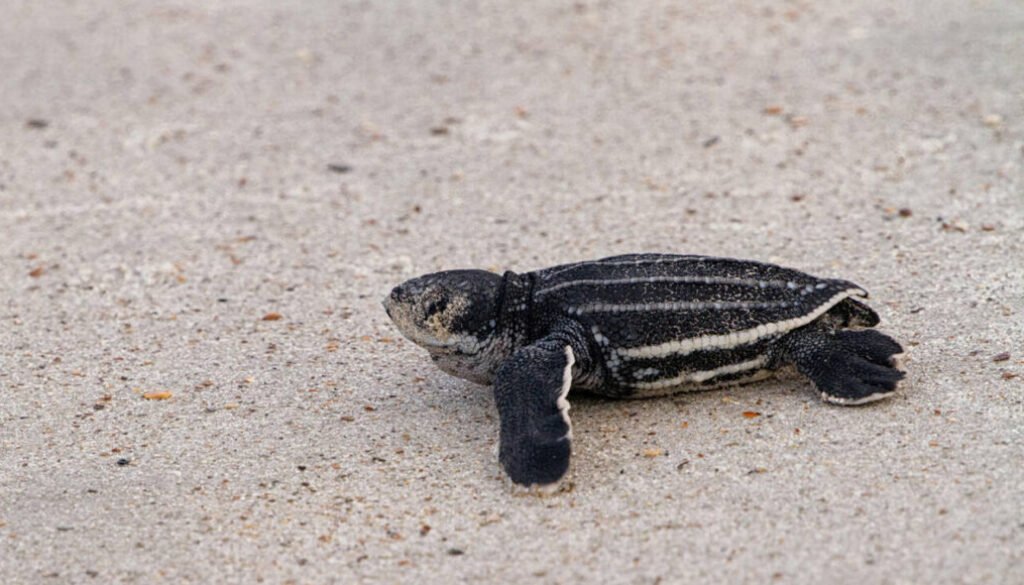
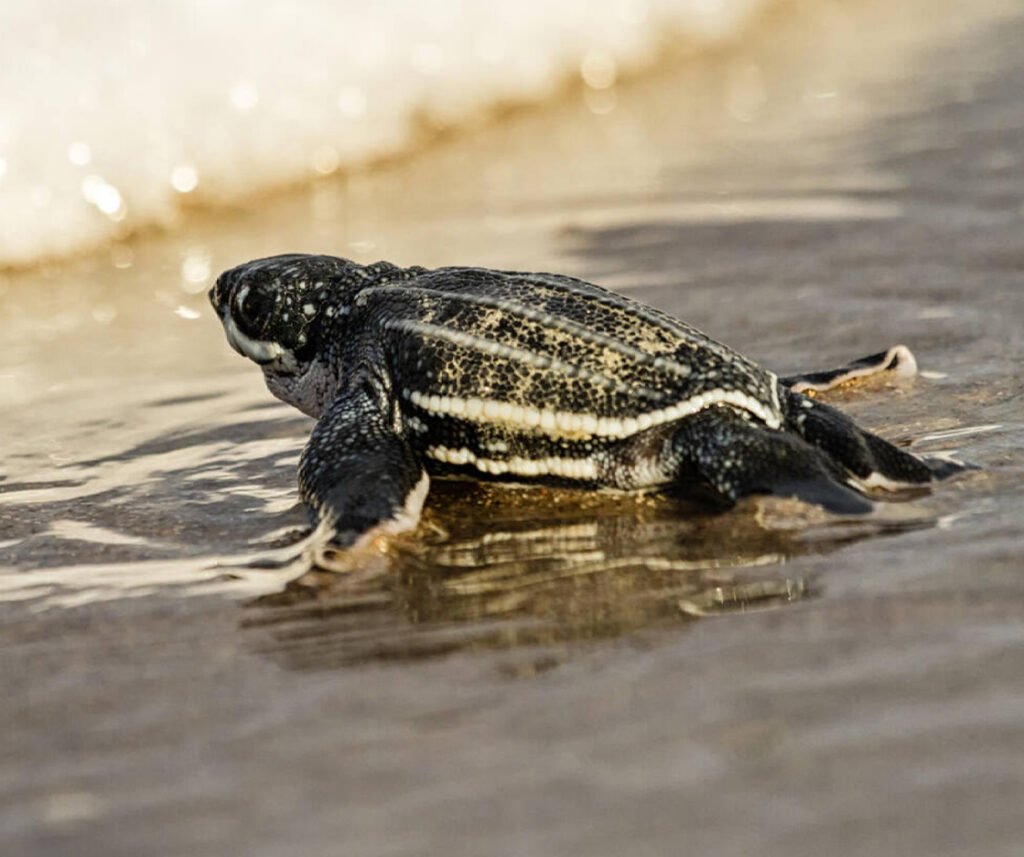
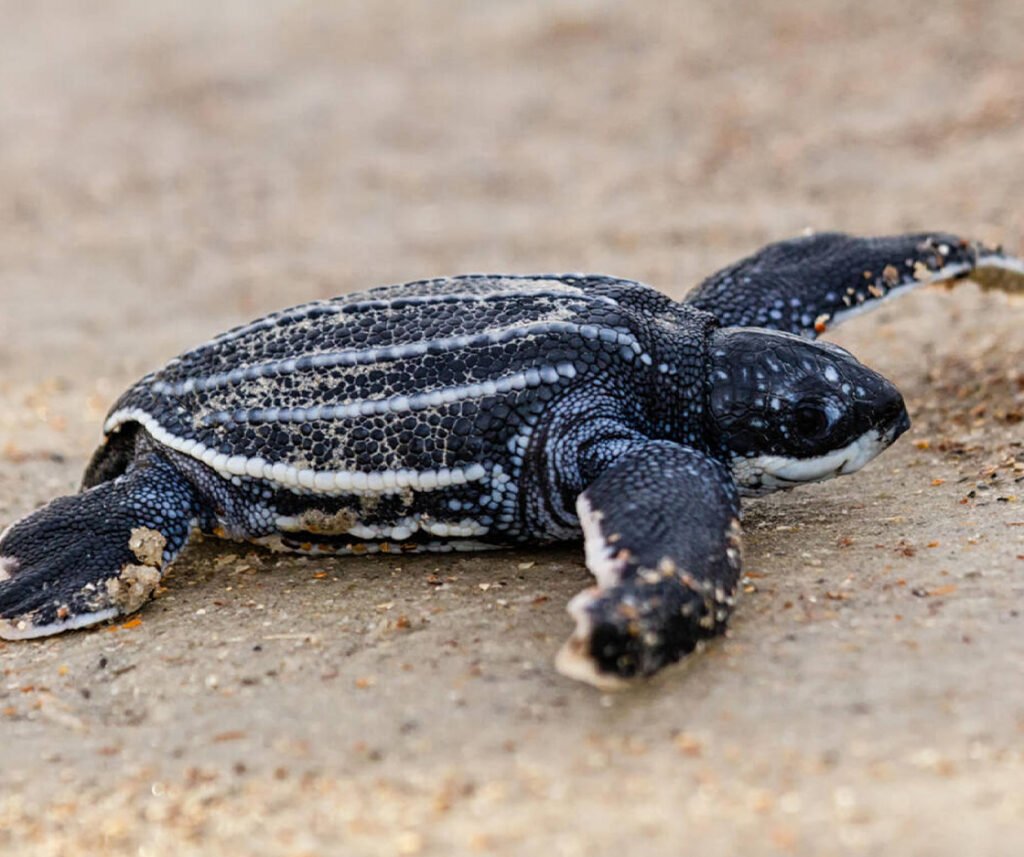
One of the most interesting facts about the Leatherback Sea Turtle is that it lacks a typical “shell.” Instead of scales or scutes, its back is covered by a thick, leathery skin embedded with tiny bone plates called osteoderms. This gives the turtle a flexible, rubbery texture.
This evolutionary trait isn’t just for show. The flexibility of the shell allows the turtle to withstand immense pressure when it dives to depths of over 4,000 feet. A rigid shell would likely crack under such conditions, but the leatherback’s “soft” design is built for the deep.
Essential Facts About the Leatherback Sea Turtle
- Common Name: Leatherback Sea Turtle
-
Scientific Name: Dermochelys coriacea
-
Type: Reptile
-
Diet: Carnivore (primarily soft-bodied invertebrates)
-
Average Life Span in the Wild: 45 to 50 years (estimated)
-
Size (Head and Body): 4 to 6 feet (1.2 to 1.8 meters)
-
Weight: 600 to 1,500 pounds (272 to 680 kilograms)
Masters of the Deep Dive
While most sea turtles stay in relatively shallow, warmer waters, the leatherback is a world-class diver. They can reach depths of nearly 1,280 meters (4,200 feet). To put that in perspective, that is deeper than many whale species can dive.
Their ability to maintain a high body temperature in cold, deep water is a biological miracle known as gigantothermy. Because of their massive size and a thick layer of fat, they can retain body heat far more effectively than their smaller, hard-shelled cousins.
The Great Migrators
The leatherback is the most migratory of all sea turtle species. These animals are known to cross both the Atlantic and Pacific oceans to move between their nesting beaches and their feeding grounds. Some individuals have been tracked traveling over 10,000 miles in a single year.
This nomadic lifestyle is driven by their specific diet. If you are looking for facts about the Leatherback Sea Turtle regarding their nutrition, you might be surprised to learn that these 1,000-pound giants survive almost exclusively on jellyfish.
A Specialized Diet
Despite their intimidating size, leatherbacks have relatively fragile jaws. They cannot eat hard-shelled prey like crabs or mollusks. Instead, they focus on soft-bodied organisms like jellyfish and salps.
To help them keep their slippery prey down, their esophagus is lined with backward-pointing spines called papillae. These spikes act like a one-way conveyor belt, ensuring that once a jellyfish is swallowed, it cannot float back out while the turtle expels excess saltwater.
Temperature-Dependent Sex Determination
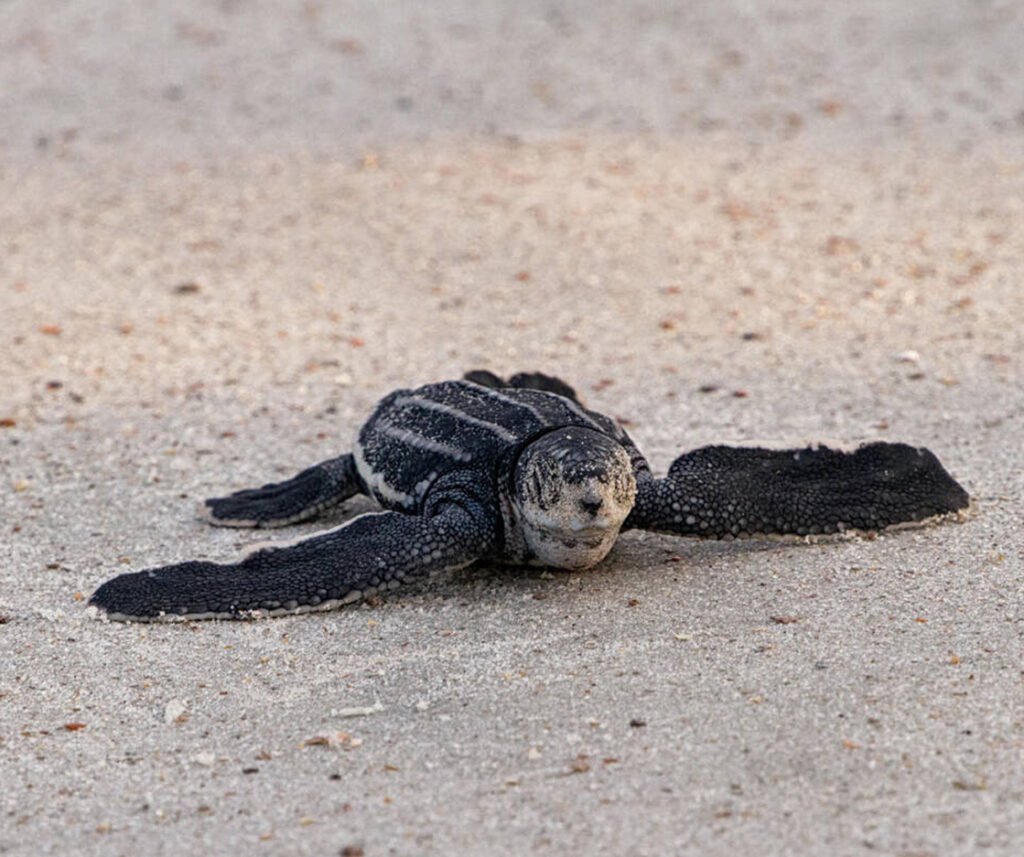
Like many reptiles, the sex of a leatherback hatchling is not determined by chromosomes, but by the temperature of the sand where the eggs are buried. This is a critical point when discussing facts about the Leatherback Sea Turtle in the context of climate change.
-
Warmer sand typically produces more females.
-
Cooler sand typically produces more males.
-
The “pivotal temperature” that produces an even 50/50 split is roughly 29.5°C (85.1°F).
Ancient Survivors in Danger
The leatherback has been swimming in our oceans for over 100 million years. They shared the Earth with the Tyrannosaurus rex, yet today, they face extinction. The primary threats are human-related:
-
Plastic Pollution: Because they eat jellyfish, leatherbacks often mistake plastic bags for food. Ingesting plastic causes internal blockages and often leads to death.
-
Bycatch: Many turtles get tangled in commercial fishing nets or hooked on longlines.
-
Habitat Loss: Coastal development destroys the quiet, dark beaches they need for nesting.
Global Distribution
You can find these turtles almost everywhere. While they nest on tropical beaches, they are found as far north as Alaska and Norway and as far south as the tip of New Zealand. Their specialized circulatory system—a “counter-current heat exchanger”—allows them to keep their core warm even in near-freezing polar waters.
Conservation: Why We Must Act
The decline of the leatherback is a warning sign for the health of our oceans. As apex predators of jellyfish, they keep jellyfish populations in check. Without them, we could see a massive imbalance in marine ecosystems, potentially impacting fish stocks and coral reef health.