Are There All-White Zebras? Albino & Leucistic Zebra Facts
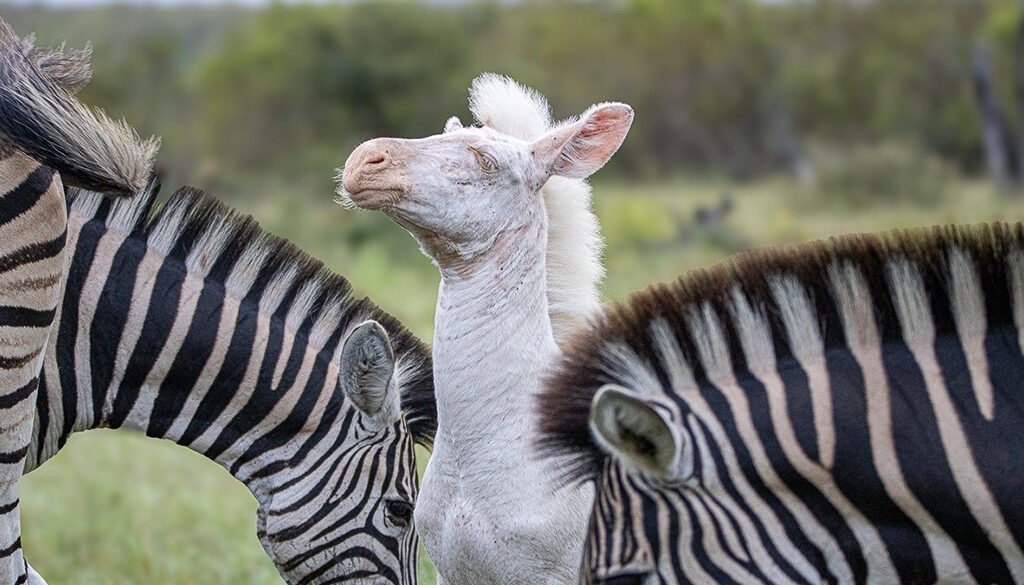
Is there actually such a thing as an all-white zebra? Absolutely, white zebras do exist in the wild, though they are among the rarest and most extraordinary creatures on Earth. They are not a separate species, nor are they a trick of the light. Instead, these ghostly phantoms of the plain are the result of remarkable genetic mutations that hijack the animal’s natural pigmentation process.
Cellular Pigmentation
At the cellular level, every zebra starts out as a dark canvas. During embryonic development, specialized pigment-producing cells called melanocytes travel through the skin and deposit melanin—the pigment responsible for dark hair, skin, and eyes—into the growing hair follicles. In a typical zebra, this process is strictly regulated, creating the high-contrast pattern we all recognize. But when genetics throw a curveball, that pigmentation process breaks down.
Leucism vs. Albinism in White Zebras
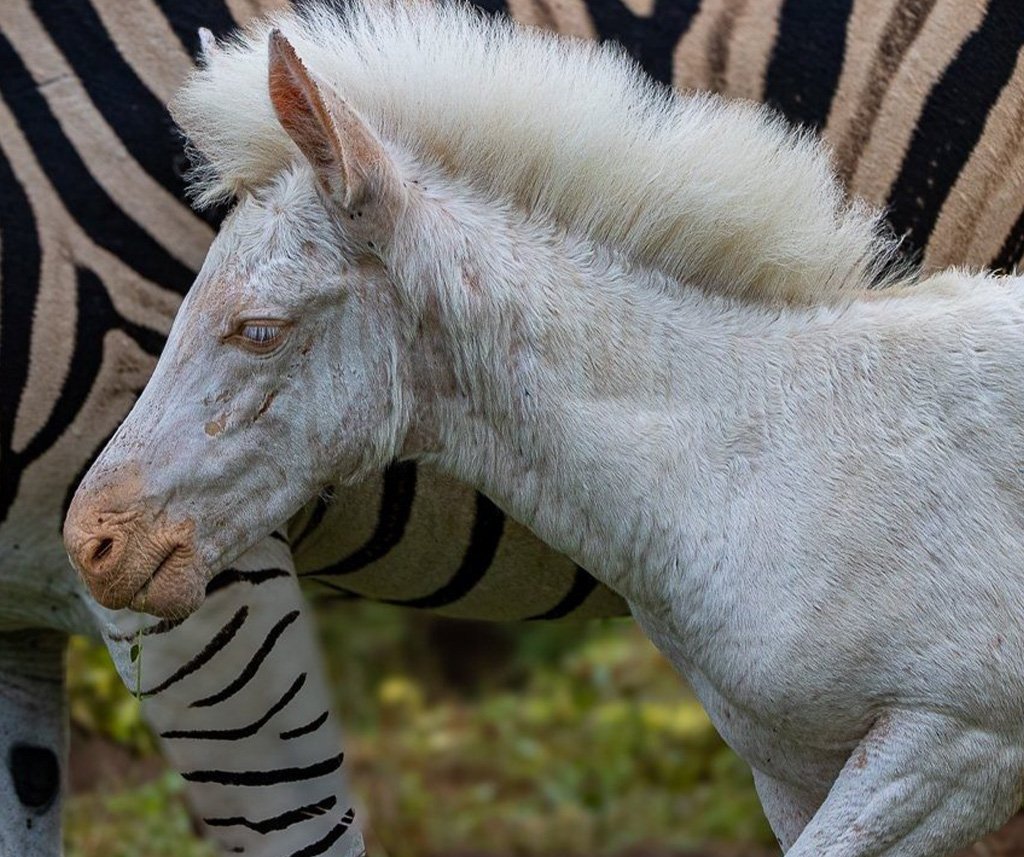
The most common reason for white zebras is a condition known as leucism. Unlike albinism, which halts all melanin production across the entire body, leucism is a partial loss of pigmentation. A leucistic zebra will fail to develop or distribute melanocytes properly across its coat.
The result is an animal that can range from having faint, faded, blonde-looking stripes to being almost completely white. Because leucism doesn’t affect pigment in the eyes, these white zebras often retain their normal dark eyes or feature striking, pale blue eyes, giving them a ghostly yet healthy appearance.
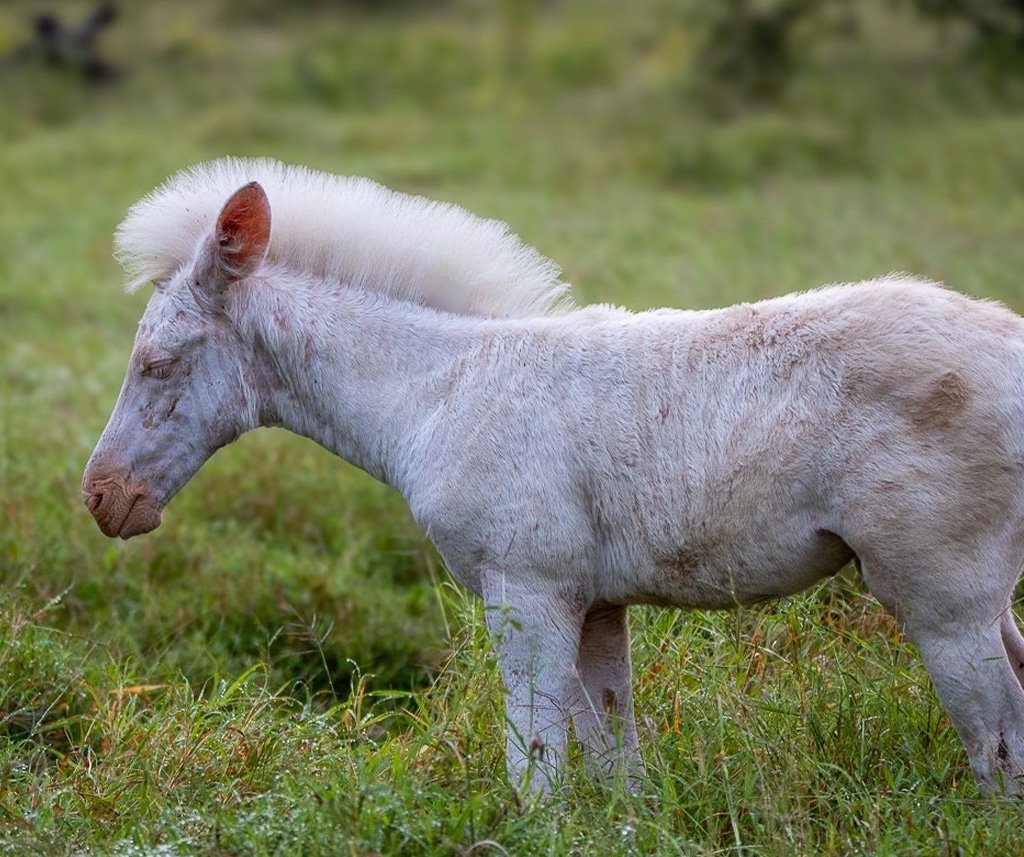
On the other end of the genetic spectrum is true albinism, as well as amelanism. Albino white zebras are unable to produce melanin at all. Their stripes become virtually invisible, faint golden-tan ghost lines, or vanish altogether, leaving behind a stark white coat paired with pale, reddish, or washed-out blue eyes that are sensitive to the intense glare of the equatorial sun.
Survival Challenges on the Savanna
For a long time, scientists and wildlife enthusiasts wondered how white zebras could possibly survive in the harsh, competitive environment of the African bush. A zebra’s stripes are not just decorative; they are vital survival gear. When a group of zebras—known as a dazzle—runs together, their overlapping stripes create an optical illusion that confuses predators like lions, making it difficult to pick out a single target. Recent research also shows that those high-contrast stripes repel blood-sucking biting flies and help regulate body temperature in the scorching heat.
By all logic of evolutionary biology, white zebras should be at a massive disadvantage:
-
Loss of Camouflage: Lacking dark stripes removes the protective visual chaos of the herd, causing the animal to stand out to predators miles away.
-
Sun Sensitivity: Pale skin leaves the zebra vulnerable to severe sunburn and skin damage under equatorial sunlight.
-
Vision Impairment: Unpigmented eyes struggle with depth perception and optics in bright daylight.
Acceptance Within the Herd
Yet, against all odds, nature keeps proving us wrong. A leucistic or albino zebra is not ostracized; it grazes side by side with its mother, plays with other foals, and travels miles across the savanna surrounded by the protective warmth of its dazzle.
Seeing white zebras in the wild is like catching a glimpse of a living miracle. It is a powerful testament to the unpredictability of nature and the resilience of life. While they may be missing the black stripes that define their species, these pale wanderers carry on, keeping pace with the herd and reminding us that beauty in the wild comes in every pattern—even none at all.