Mara River Crocodile Attacks: The Great Migration’s Most Brutal Hazard
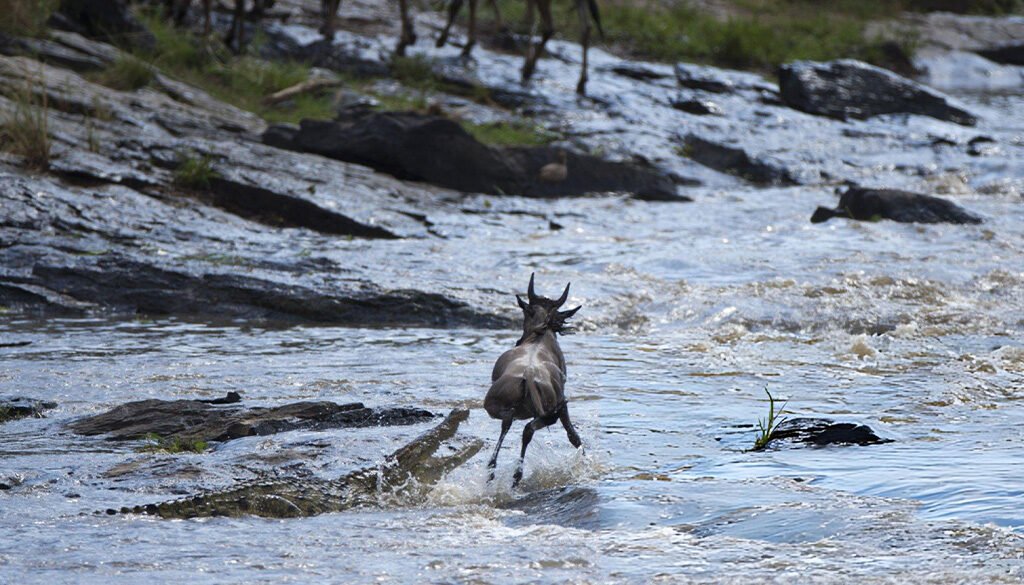
The Mara River crocodile attacks represent some of the most dramatic and brutal predatory events anywhere on Earth.
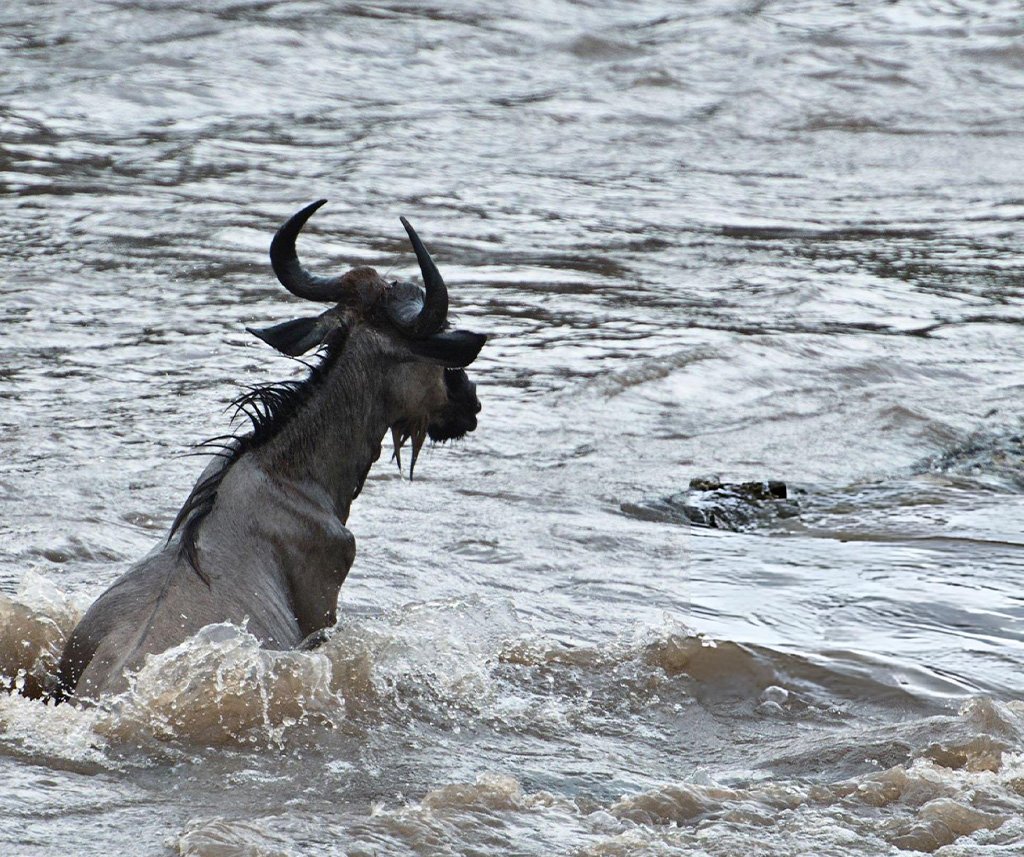
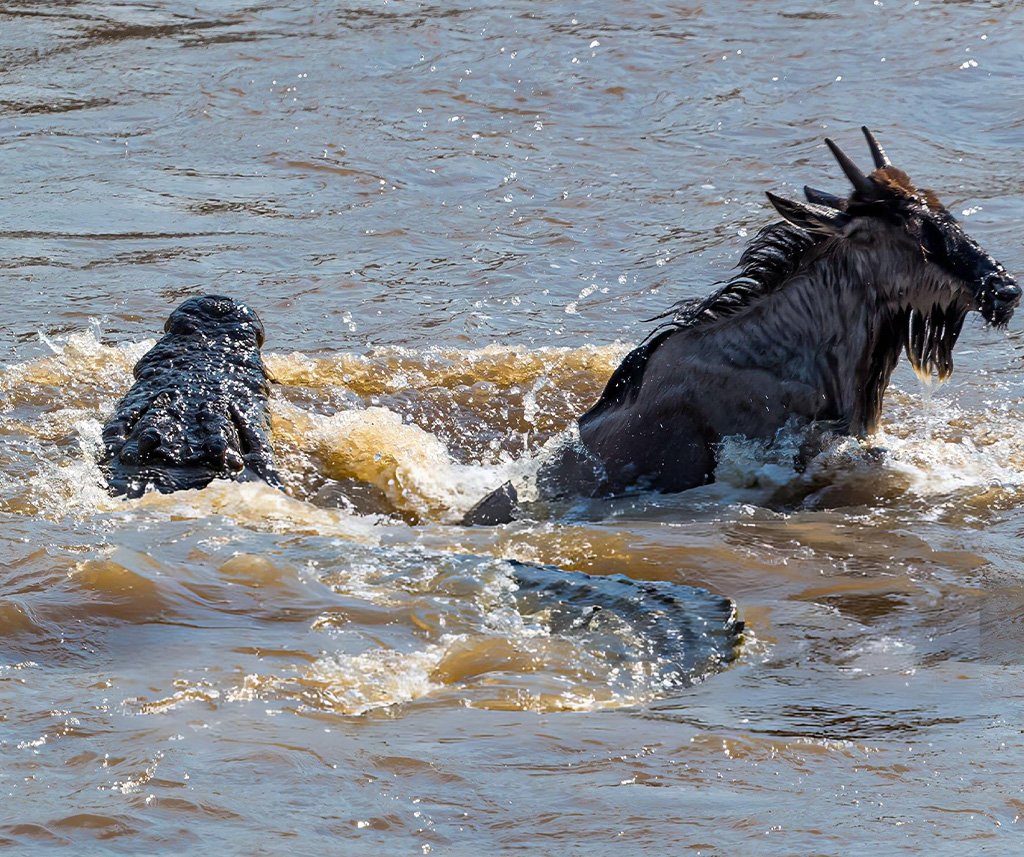
As the water churns with thousands of frantic, splashing hooves, dark logs suddenly begin to move against the raging current. The reptilian giants strike with blinding speed and terrifying physical power. A sudden burst of spray, a flash of leather-bound jaws, and an unsuspecting animal is pulled beneath the surface in a matter of mere seconds. The water turns to a violent red froth, serving as a stark, uncompromising reminder of the raw, unyielding reality of the natural world.
The tactical approach of these aquatic giant reptiles is refined by millions of years of evolutionary adaptation:
-
Patience: Crocodiles lie motionless along the riverbed for hours, conserving vital energy until the crossing reaches a chaotic fever pitch.
-
Stealth: Only their nostrils and eyes remain exposed above the waterline, blending seamlessly with floating debris and submerged logs.
-
Ambush Power: Using powerful, muscular tails, they propel themselves upward in explosive bursts to clamp down on legs or muzzles.
-
Drowning Mechanics: Once a target is secured in their massive grip, they drag it into deep water and execute a violent “death roll” to disorient and subdue their prey.
Evolutionary Defense: The Strategy of Motion Dazzle
For the zebras, their iconic black and white stripes—often thought by casual observers to be a simple visual treat—become an indispensable tool for survival in this overwhelming chaos. In the swirling dust of the riverbanks and the churned-up spray of the water, those dazzling geometric patterns merge together, creating a disorienting visual effect widely known as motion dazzle.
To a waiting predator beneath the surface or an opportunistic hunter waiting on the far bank, it becomes immensely difficult to pick out an individual zebra from the massive, shifting wall of moving stripes. It functions as a subtle evolutionary advantage, a piece of living armor engineered for a profoundly dangerous world. Wildebeests, lacking this visual advantage, rely instead on sheer strength in numbers, flooding the river crossings in overwhelming waves to dilute individual risk.
Escalating Danger: The Treacherous Muddy Banks
Even for the fortunate animals that manage to dodge terrifying mara river crocodile attacks and fight their way through the crushing river currents, the ordeal is far from over. The opposite bank presents its own immediate, deadly physical challenge. Muddy, slippery cliffs rise sharply from the water’s edge, worn slick by the wet, frantic bodies of the panicked herd members preceding them.
Mass panic sets in as tired, trembling legs try to find a secure foothold on the crumbling clay slopes. Many animals, utterly exhausted from the arduous swim, struggle to climb the steep incline. They frequently slide backward into the churning water or suffer broken, trampled limbs as the surging, relentless mass behind them continues to push relentlessly forward.
Ecological Engine of the East African Ecosystem
The river crossing is easy to view solely as a tragedy—a dark place of violence, panic, and catastrophic loss. Yet, in the grand design of the vast East African ecosystem, mara river crocodile attacks and the crossing itself form a crucial, life-sustaining mechanism. The migration acts as a dynamic biological engine that nourishes an entire continent.
The inevitable losses sustained by the herd sustain the ancient crocodiles, land-based lions, opportunistic hyenas, and soaring vultures. This dramatic event transfers massive amounts of vital energy from the lush grasslands of the Serengeti all the way through the complex terrestrial and aquatic food chains. Furthermore, the nutrients introduced by carcasses entering the river system nourish aquatic insect populations, fish species, and riverbank vegetation for months afterward.
Survival and the Continuous Cycle of the Migration
Yet, despite the staggering physical odds stacked against them, the unstoppable tide of life pushes onward. Thousands of weary survivors spill out onto the lush green banks of the Masai Mara, dripping river water, breathless, and caked in thick, drying mud. Young foals are joyfully reunited with their anxious mothers, and the wide herd regroups in the relative safety of the open, sunlit grass. Behind them, the river slowly settles back into its natural, quiet rhythm, carrying the memory of the immense struggle downstream.
When the dust finally clears and the waters run calm once more, the survivors spread out across the expansive, fertile fields. They have paid an extraordinarily heavy price, but they have earned what they traveled so far to secure: life, rich nourishment, and another season on the open plains. They will graze peacefully until the seasonal rains shift once again, and the endless cycle of survival demands that they turn back to brave the treacherous river once more.