What to Do If You Encounter a Cape Buffalo?
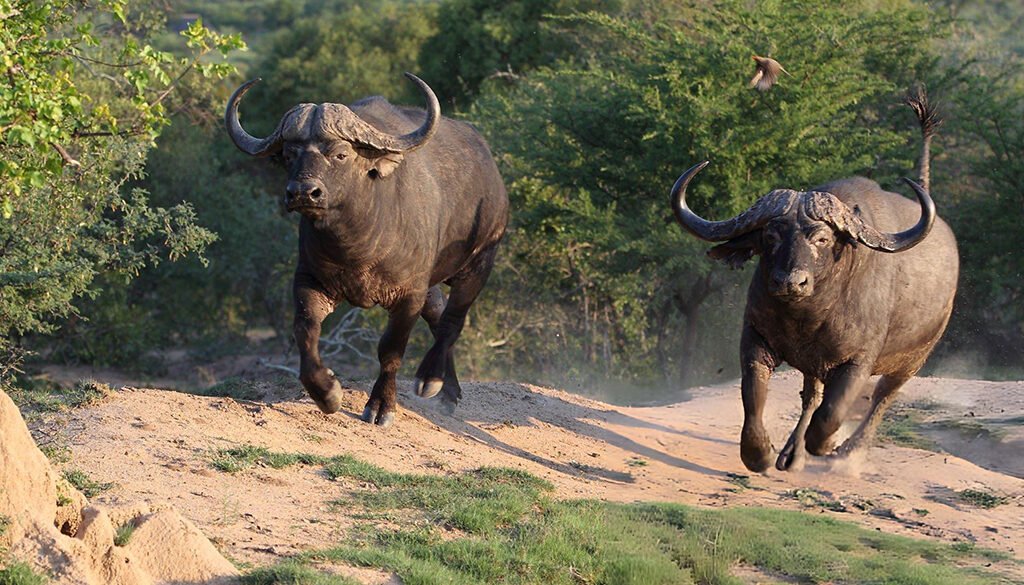
If you ever find yourself eye-to-eye with a Cape buffalo in the African wilderness, your absolute best chance of survival boils down to three swift decisions: do not run in a straight line, immediately scan for a heavy obstacle or an ascendable tree, and be prepared to throw yourself behind cover at a sharp, sudden angle. It sounds deceptively simple, but when nearly a ton of pure, muscle-bound fury is bearing down on you at thirty miles an hour, those few split seconds will mean the difference between an unforgettable story and a tragic end.
1. Spotting a Buffalo from a Safe Distance
If you spot a Cape buffalo from a distance and the animal has not yet noticed your presence, the rule of engagement is absolute stillness followed by a slow, silent retreat.
-
Check the Wind: Check the wind direction immediately; buffaloes have an exceptionally sharp sense of smell, and if the breeze carries your scent toward them, their head will snap up in an instant.
-
Maintain Low Visibility: Avoid making sudden movements, pointing frantically, or making high-pitched noises that might startle them or draw unwanted attention.
-
Back Away Slowly: Step back slowly, placing generous distance and thick vegetation between you and the animal, keeping your eyes fixed on its posture the entire time.
2. Deciphering Pre-Charge Signals
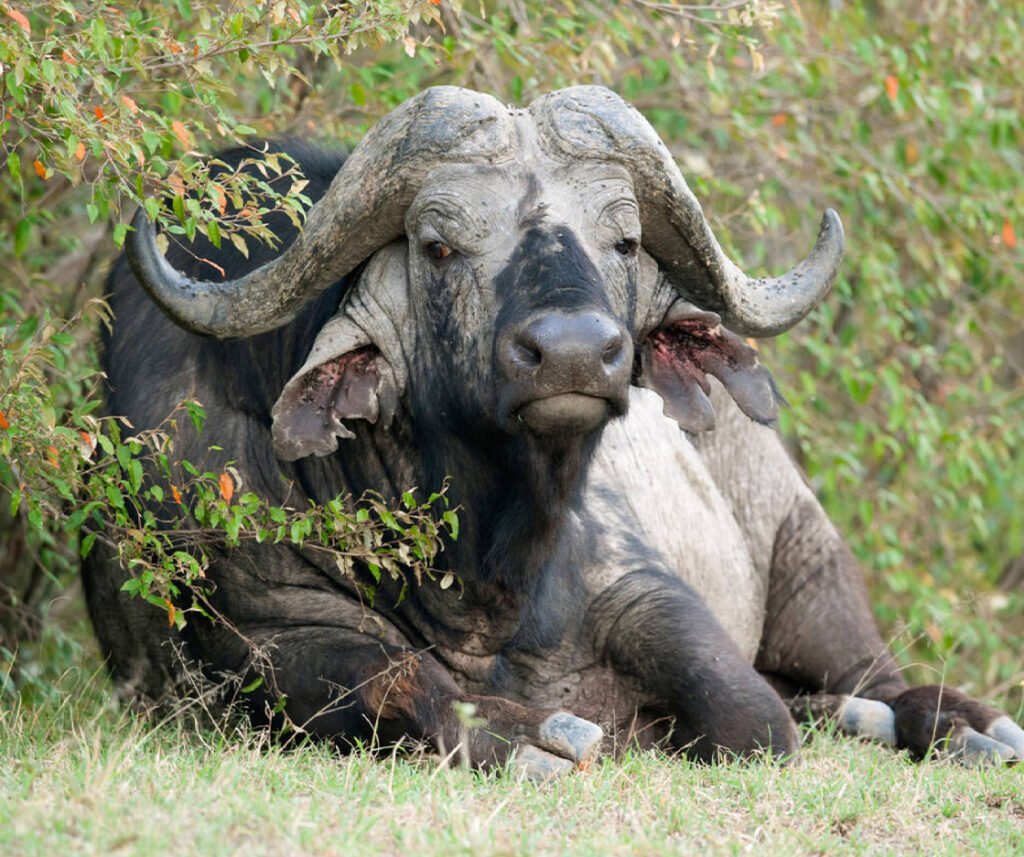
However, if the animal is already staring directly at you, the situation becomes critical. A buffalo contemplating a charge will lower its head, stare intently with a heavy, unblinking gaze, and often toss its head sideways or aggressively paw the dirt. It is actively measuring you and calculating its attack path. At this moment, remaining composed is your ultimate weapon. Do not make direct, aggressive eye contact, as this can easily be interpreted as a direct challenge to its authority.
3. Resist the Urge to Sprint Openly
Do not turn your back and sprint away across open ground. Humans cannot outrun a buffalo under any circumstances; a healthy bull can reach speeds of 35 mph (56 km/h). Running in open terrain simply triggers the animal’s deep-seated predatory instinct to chase, overtake, and destroy you within seconds.
4. Immediate Tactics When a Charge Begins
When a buffalo actually initiates a charge, you must act without a single moment’s hesitation. Look frantically for immediate physical cover in your surrounding environment. A sturdy tree trunk, a massive granite boulder, or a dense termite mound can literally save your life.
       [ Cape Buffalo Charging ]
                  │
                  ▼ (30+ mph straight line)
                  │
        [ Wait for Last Second ]
                  │
      ┌───────────┴───────────┐
      ▼                       ▼
 [ Dive 90° Sideways ]   [ Climb High Tree ]
5. Utilizing Trees and High Ground
If there is a tree nearby with low branches you can reach, climb as high and as fast as you possibly can. While some buffaloes will simply wait underneath a tree for hours out of sheer frustration, being stranded high above a frustrated bull is vastly preferable to being on the ground with one. Make sure you climb high enough so that its massive, fused horns cannot reach your feet if the animal rears up on its hind legs.
6. Using Momentum and Sideways Evasion
If there are no suitable trees nearby, your next best option is to use the animal’s own physical momentum against it. Cape buffaloes are built like armored tanks; they are devastatingly fast in a straight line, but their immense weight makes it extremely difficult for them to make tight, sharp turns.
As the buffalo closes the distance, wait until the absolute last possible second and then dive or sprint sideways at a sharp ninety-degree angle. The animal’s immense momentum will force it to overshoot its mark, buying you precious seconds to scramble behind rocks, bushes, or another obstacle.
7. Last-Resort Defensive Measures
In the absolute worst-case scenario, where you are caught in wide-open terrain with zero cover and the charge is completely unavoidable, survival becomes a matter of raw instinct and aggressive damage control. Drop your backpack or camera gear to create a distraction if possible. If hit, ball up into a tight fetal position, covering your head, neck, and vital organs with your arms and hands. The animal may step on you, hook at you with its horns, or toss you into the air, but staying as still and compact as possible minimizes the surface area exposed to lethal strikes until the animal loses interest and departs.
Being properly prepared and respecting wildlife boundaries remains the absolute best defense against big game encounters. Understanding precisely what to do if you encounter a Cape buffalo equips you with the knowledge needed to survive one of nature’s most formidable forces.