Facts About the Oryx: The Desert’s Most Resilient Icon
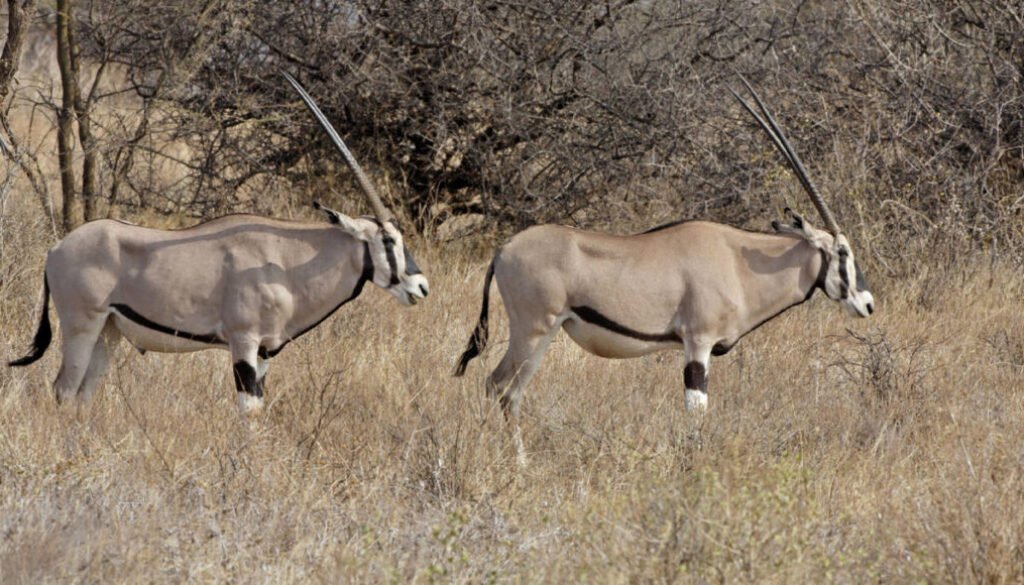
One of the most impressive facts about the oryx is their extreme physiological adaptation to heat. Unlike most mammals that would perish in the midday sun of the Kalahari or the Arabian Peninsula, the oryx has a specialized network of fine blood vessels in its nose. This “carotid rete” acts as a biological cooling system, chilling the blood before it reaches the brain. This allows their body temperature to rise to levels that would be fatal to other animals, reaching up to 116°F (46.5°C) without causing organ damage.
Quick Reference: Oryx Profile
Before we dive into the deep details, here is a snapshot of the oryx at a glance:
-
Common Name: Oryx (includes Gemsbok, Scimitar-horned, East African, and Arabian species)
-
Scientific Name: Oryx gazella (Gemsbok), Oryx dammah (Scimitar-horned), Oryx beisa (East African), Oryx leucoryx (Arabian)
-
Type: Mammal
-
Diet: Herbivore
-
Average Life Span in the Wild: 18 to 20 years
-
Size: Head and body: 5 to 7.7 feet; Tail: 17.7 to 35.4 inches
-
Weight: 220 to 450 pounds
The “Unicorn” Connection
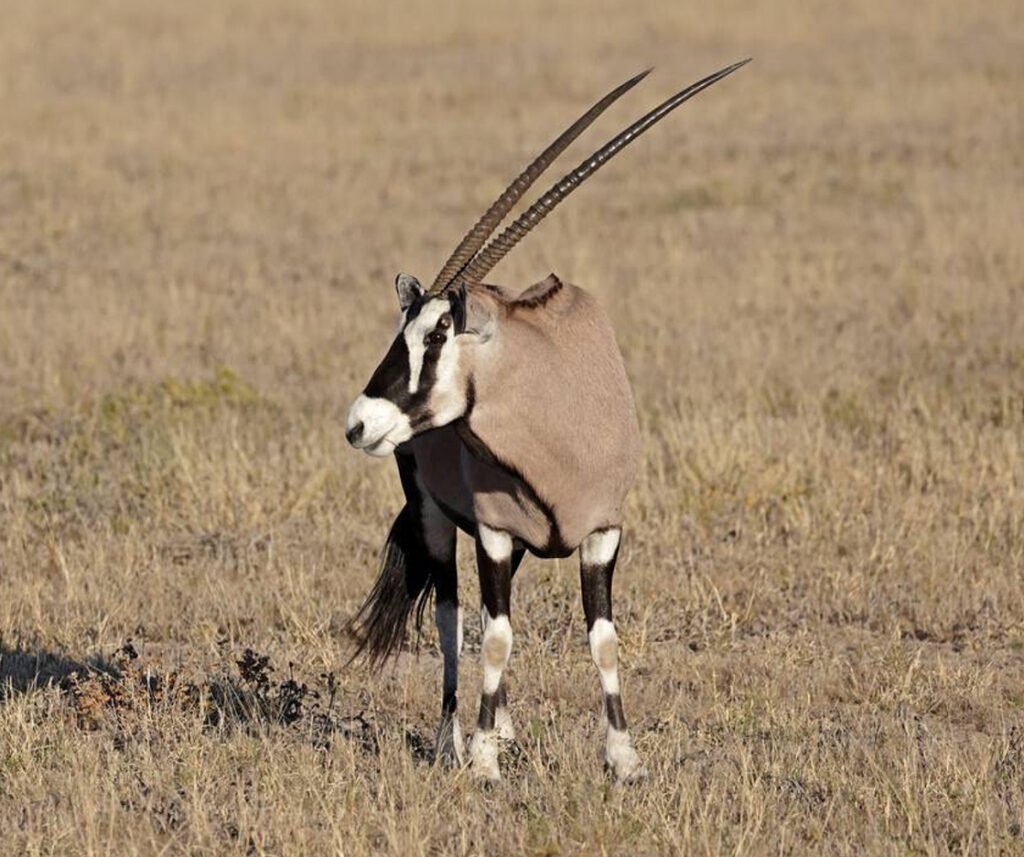
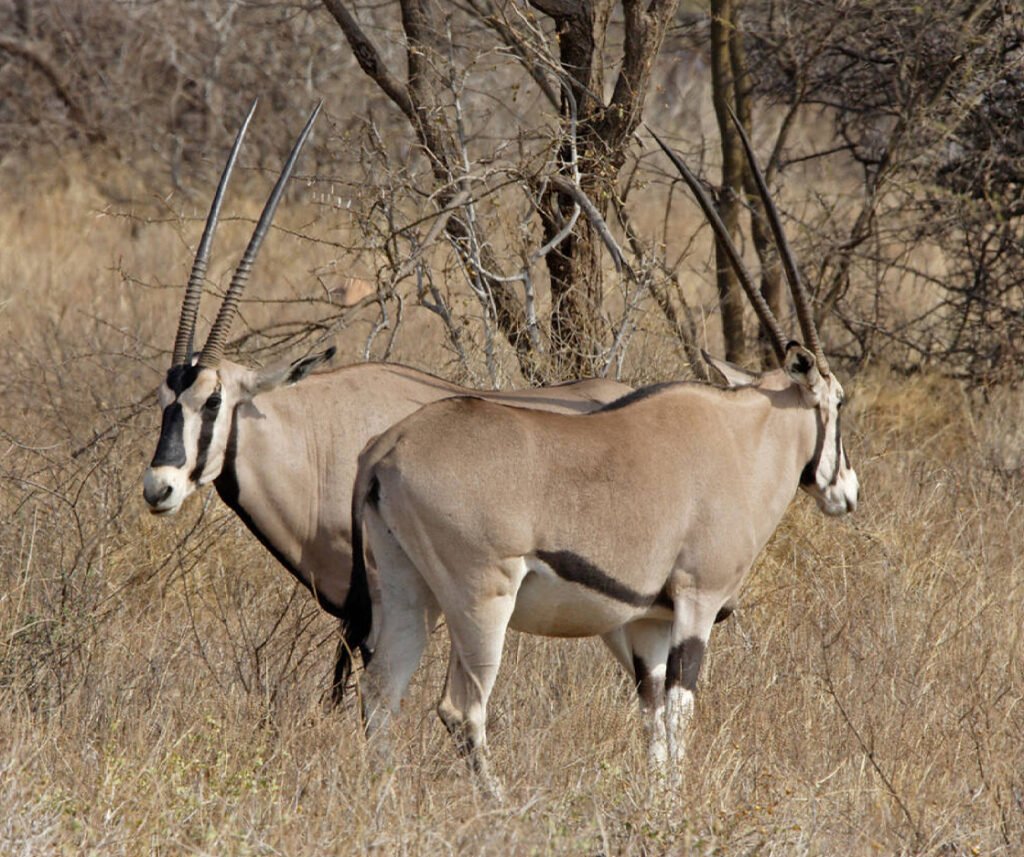
If you’ve ever wondered where the myth of the unicorn originated, many historians point toward the Arabian oryx. When viewed in profile, their two long, straight horns can appear as one. These horns are permanent and made of hollow bone, unlike the deciduous antlers of deer. One of the tragic facts about the oryx is that their horns were highly prized by hunters, leading to a massive decline in their population during the 20th century.
A Diet of Necessity
As herbivores, oryx aren’t picky. Their diet consists of desert grasses, thorny shrubs, and various herbs. One of the fascinating facts about the oryx is their “night-owl” eating habit. Because desert plants absorb moisture from the air during the cooler night hours, oryx often graze at dusk or dawn to maximize their water intake from the vegetation.
Built for Combat
Those spectacular horns aren’t just for show. Both males and females possess them, though the female’s horns are often thinner and longer. They use these weapons to defend their territory and their young against predators like lions, hyenas, and leopards. Interestingly, while they can be lethal, oryx rarely use them to kill their own kind; instead, they engage in ritualized sparring to establish dominance within the herd.
The Scimitar-Horned Oryx Success Story
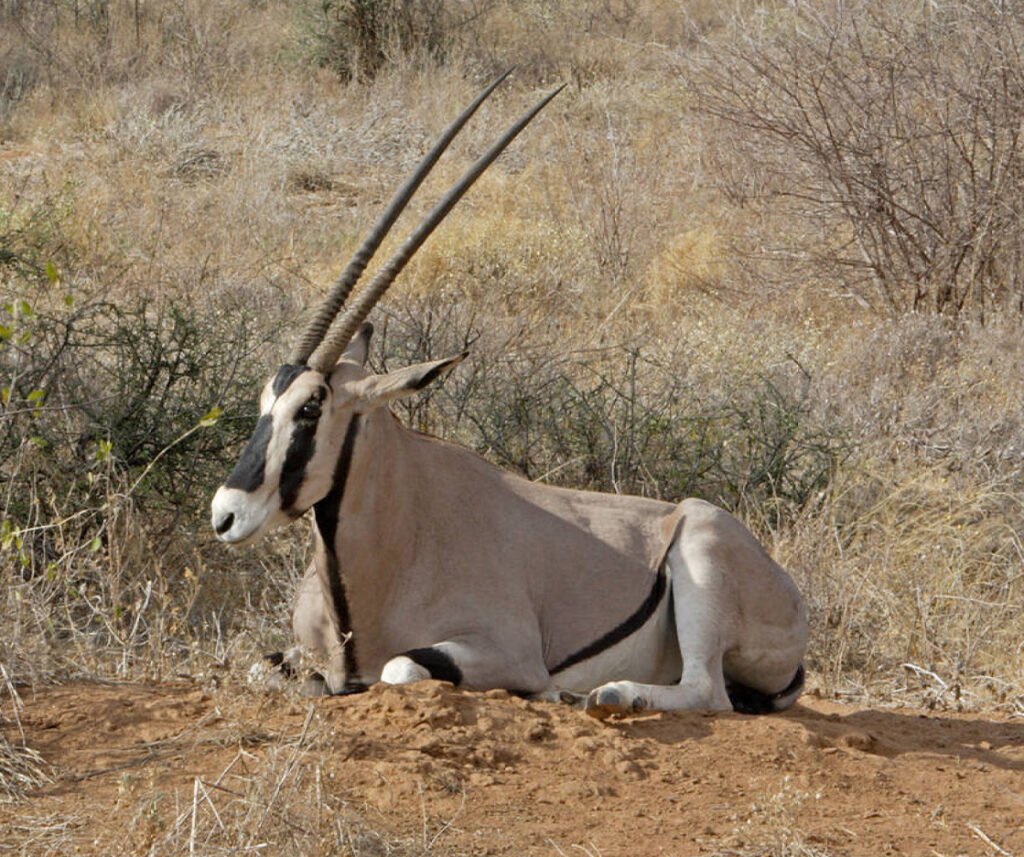
One of the most inspiring facts about the oryx concerns the Scimitar-horned variety. By the year 2000, this species was declared extinct in the wild. However, thanks to aggressive “Operation Oryx” breeding programs in zoos and private reserves, they have been successfully reintroduced to protected areas in Chad and Tunisia. It is a rare example of humanity successfully reversing a self-inflicted ecological disaster.
Social Structures and Herd Life
Oryx are social animals, but their herds are fluid. A typical group consists of 10 to 40 individuals, led by a dominant male. However, when resources are scarce, they can congregate in the hundreds to follow the scent of rain. One of the little-known facts about the oryx is their incredible sense of smell; they can detect rainfall from many miles away, migrating across vast distances to find fresh grass.
Unique Thermoregulation
How does an oryx keep its brain cool while its body temperature soars? They utilize a biological “radiator” known as the rete mirabile. This is a network of fine blood vessels in the nasal passages. As the oryx breathes in, the air cools the blood in the nose, which then passes through this network to cool the blood headed for the brain. This keeps the animal’s most vital organ safe while the rest of the body handles the heat.
Calving and Early Life
Female oryx have a gestation period of about 8.5 to 9 months, usually giving birth to a single calf. For the first few weeks of life, the calf remains hidden in the brush, camouflaged by its dull brown coat. The mother returns several times a day to nurse. This “hiding” phase is one of the essential facts about the oryx life cycle, ensuring the vulnerable young aren’t spotted by roaming predators.
Speed and Agility
Despite their somewhat bulky appearance, oryx are remarkably fast. They can reach speeds of up to 37 mph ($60\text{ km/h}$). This speed, combined with their endurance, allows them to outrun many predators over long distances. In the flat gravel plains, their pace is their primary defense alongside their formidable horns.
Distinctive Markings
Most oryx species feature bold, “war-paint” style markings on their faces and legs. These black and white patches are thought to serve several purposes: they may help individuals recognize one another, or they may act as a visual signal of the animal’s health and fitness to potential mates and rivals.
Current Conservation Status
The status of the oryx varies by species. While the Gemsbok is currently listed as “Least Concern,” the Arabian Oryx is “Vulnerable,” and the Scimitar-horned Oryx is still in the “Endangered” or “Extinct in the Wild” (reintroduction pending) categories. These facts about the oryx serve as a reminder that even the toughest animals on Earth need our protection to survive the modern age.