Facts About the Boomslang
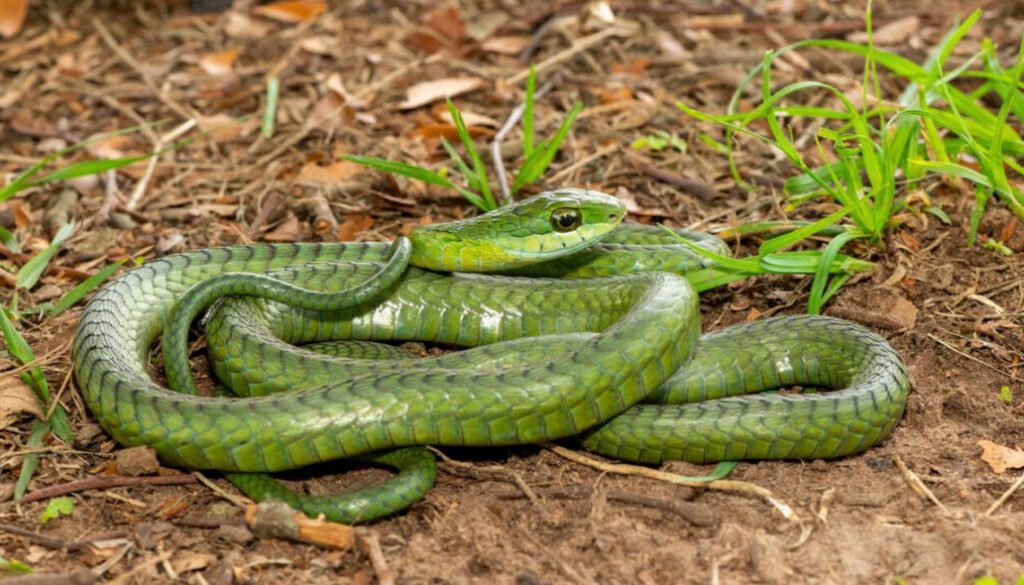
One of the most interesting facts about the Boomslang starts with its name. “Boomslang” is derived from the Dutch and Afrikaans words boom (tree) and slang (snake). As the name suggests, they spend the vast majority of their lives in trees and shrubs, rarely descending to the ground except to bask or forage.
Essential Facts About the Boomslang
-
Common Name: Boomslang (Afrikaans for “tree snake”)
-
Scientific Name: Dispholidus typus
-
Type: Reptile (Colubrid)
-
Diet: Carnivore (Chameleons, lizards, birds, and frogs)
-
Average Life Span in the wild: 8 to 15 years
-
Size (Head and body): 3 to 5 feet (up to 1.5 meters)
-
Weight: 0.3 to 1.1 lbs (175 to 500 grams)
A Master of Camouflage
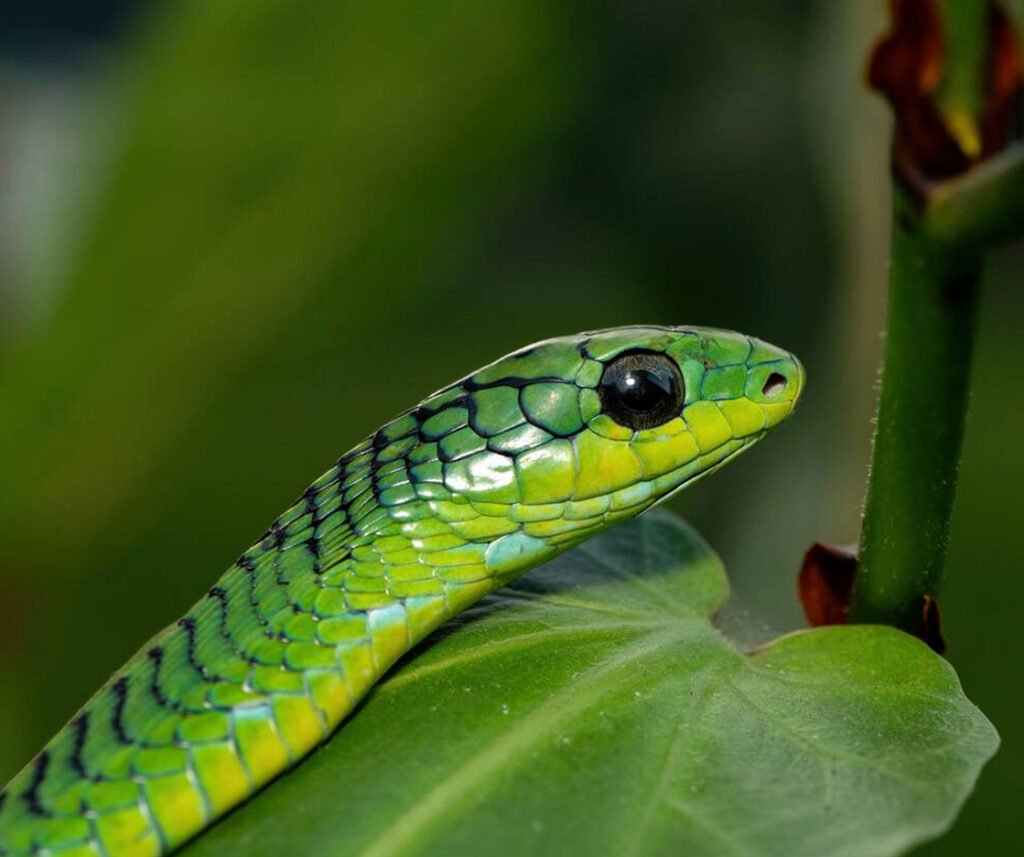
In the world of predators, blending in is a superpower. The Boomslang exhibits sexual dimorphism, meaning males and females look significantly different. Males are often bright green with black or blue scale edges, while females are typically a duller brown or olive. This allows both sexes to blend into different parts of the canopy—males among the leaves and females against the bark.
The Rear-Fanged Exception
Most highly venomous snakes, like cobras or vipers, are front-fanged. However, one of the critical facts about the Boomslang is that it is a member of the family Colubridae, which are traditionally considered “harmless” rear-fanged snakes. The Boomslang is the exception to the rule. Its fangs are located further back in the mouth, roughly below the eye, requiring the snake to open its jaw up to 170 degrees to deliver a full bite.
Hemotoxic Venom: A Silent Danger
The venom of a Boomslang is a potent hemotoxin. Unlike neurotoxins that attack the nervous system and cause immediate paralysis, hemotoxins destroy red blood cells and disrupt the clotting process. A bite from a Boomslang can lead to internal and external bleeding. The terrifying part? Symptoms often take several hours to manifest, leading victims to believe they are fine before the serious complications begin.
Large, Expressive Eyes
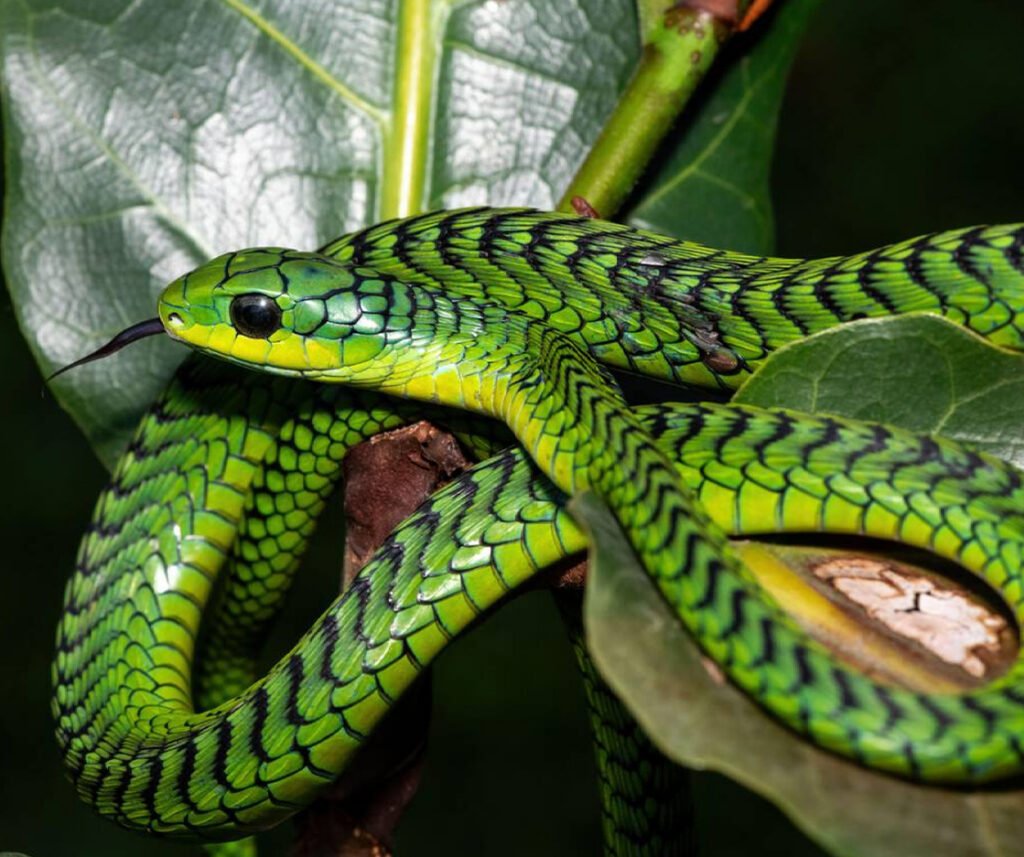
Among the most distinct facts about the Boomslang is its visual acuity. Unlike many snakes that rely primarily on scent (via the Jacobson’s organ), the Boomslang has exceptionally large eyes and excellent eyesight. This is a vital adaptation for an arboreal hunter that needs to track fast-moving birds and chameleons through a complex 3D environment.
Diet and Hunting Tactics
While many snakes are opportunistic, the Boomslang is a specialized predator. Its favorite meal is the chameleon. Because the Boomslang can remain perfectly still for hours, it often catches chameleons off guard. Once it strikes, it holds onto its prey until the venom takes effect, preventing the meal from falling out of the trees.
Egg-Laying Habits (Oviparous)
Many people assume all venomous snakes give birth to live young, but the Boomslang is oviparous. A female will typically lay between 8 and 25 eggs in hollow tree trunks or rotting vegetation, where the humidity helps incubation. The hatchlings are about 20 centimeters long and are venomous from the moment they emerge.
Defensive Display: The “Puff”
When threatened, the Boomslang has a specific defense mechanism. It will inflate its neck, making itself look much larger than it actually is. This display often reveals bright skin colors between the scales, acting as a warning to predators. If this doesn’t work, the snake is more likely to flee than to strike.
Geographic Distribution
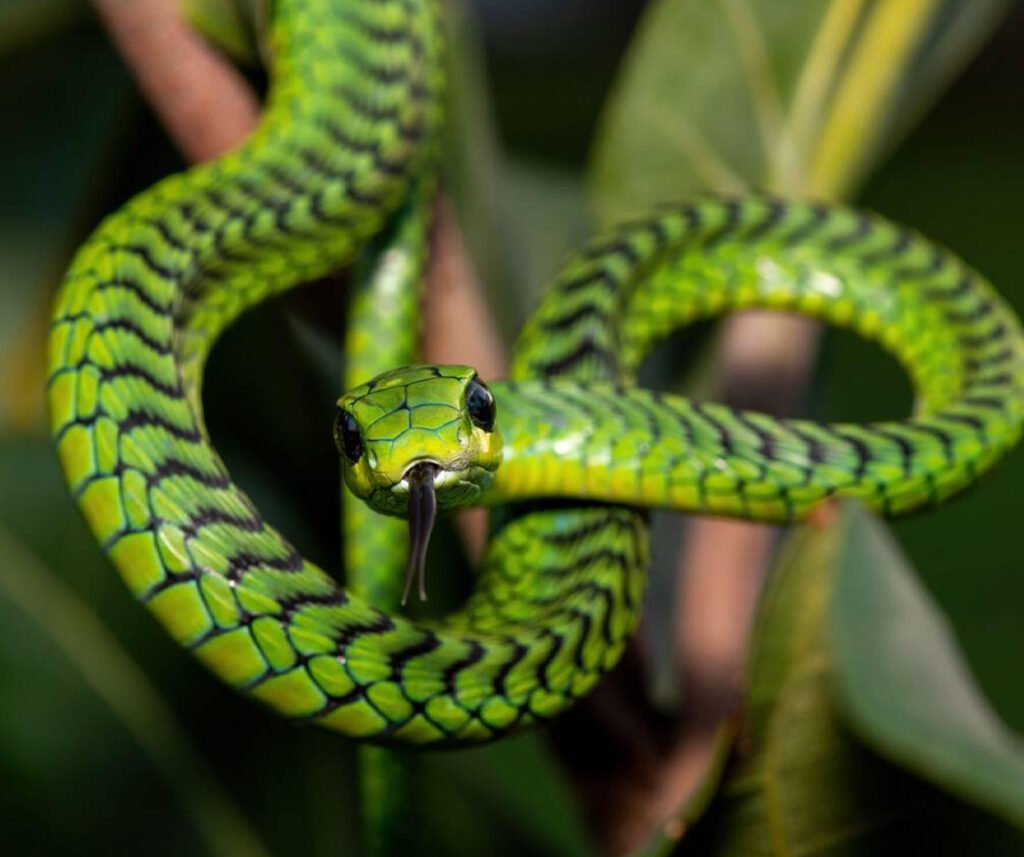
While many people search for facts about the Boomslang while planning safaris, they should know these snakes are widespread. They inhabit a variety of environments across sub-Saharan Africa, including karoo scrub, arid savannas, and lowland forests. However, they strictly avoid true desert regions and dense rainforests.
Interaction with Humans
Despite their lethal potential, human deaths from Boomslang bites are incredibly rare. This is due to their shy nature and the location of their fangs. Most bites occur when people attempt to handle or kill the snake. In the herpetology world, the most famous victim was Karl Schmidt, a renowned herpetologist who documented his own symptoms after a bite in 1957.
Molting and Growth
As they grow, Boomslangs must shed their skin. During the molting process, their eyes may turn a cloudy blue (a stage called “in opaque”), and they become more reclusive and irritable because their vision is temporarily impaired.
Ecological Importance
The final entry in our list of facts about the Boomslang is its role as a population controller. By preying on birds and lizards, they help maintain the balance of the African canopy ecosystem. Without these “tree snakes,” certain bird and lizard populations could explode, leading to a collapse in local insect and plant diversity.