Cape Buffalo Facts: More Than Just Horns
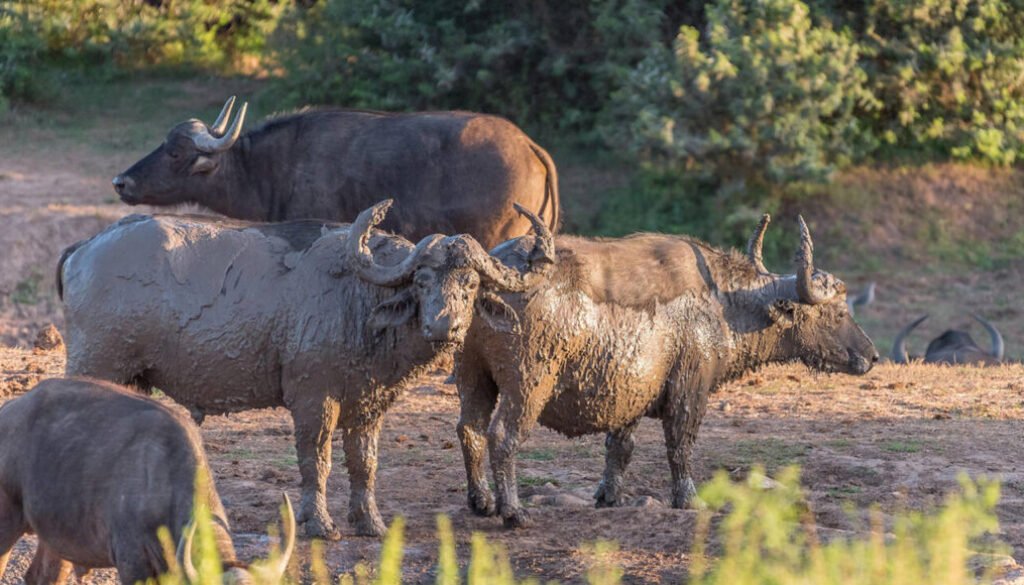
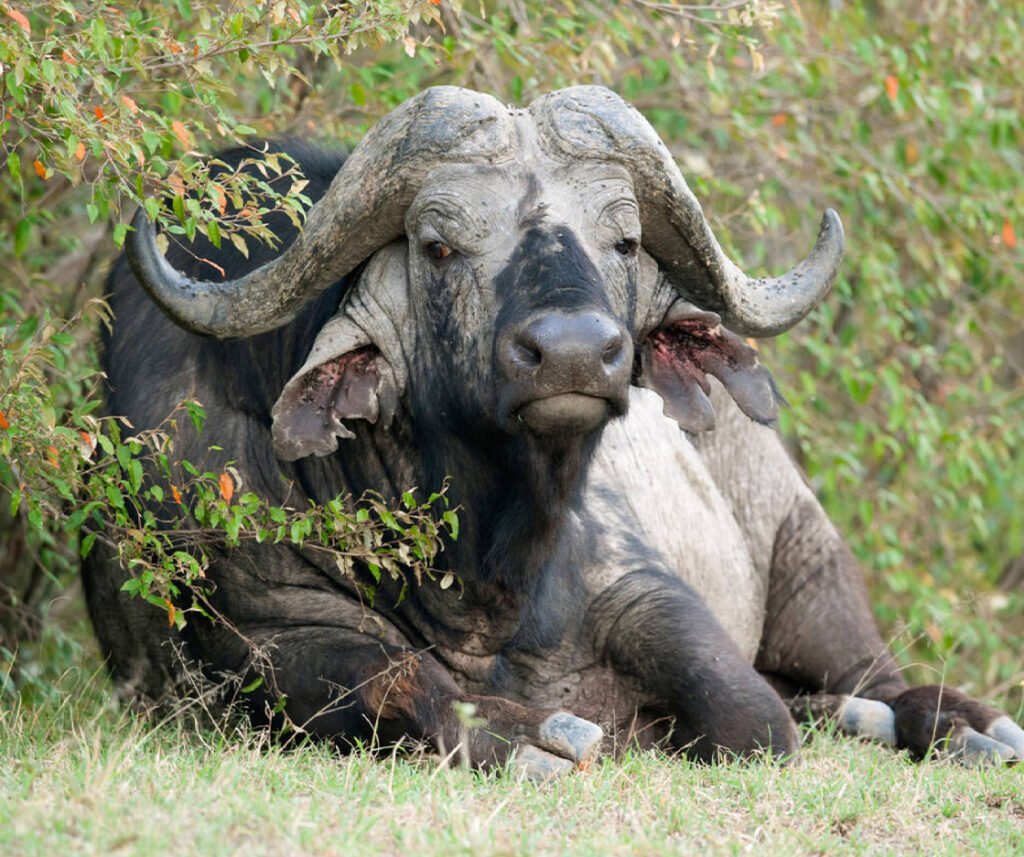
One of the most striking Cape Buffalo Facts is the unique structure of their horns. In adult males, the horn bases grow so close together that they actually fuse, creating a continuous bone shield across the top of the head known as a “boss.”
This isn’t just for show. The boss acts as a helmet, protecting the skull during high-speed collisions when males fight for dominance. These horns are incredibly efficient defensive weapons; they curve outward and upward, ending in sharp points that can easily gully a lion or flip a predator into the air. Interestingly, you can often tell the age and sex of a buffalo by its horns—females have narrower horns and lack the thickened, hardened boss of the males.
Quick Profile: The Basics
Before we jump into the details, here is the essential data on these heavyweights:
-
Common Name: Cape Buffalo (also known as the African Buffalo)
-
Scientific Name: Syncerus caffer
-
Type: Mammal
-
Diet: Herbivore (Grazer)
-
Average Life Span in the Wild: 15 to 25 years
-
Size: Head and body: 6.8 to 11 feet; Tail: 2.3 to 3.6 feet
-
Weight: 660 to 1,840 lbs (300 to 835 kg)
Why They Are Called “Black Death”
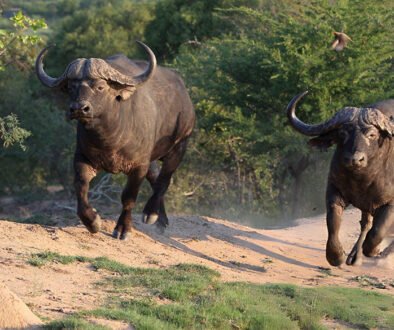
You might wonder why a herbivore would earn such a grim nickname. It stems from their legendary temperament. Unlike many other African mammals, the Cape Buffalo is notoriously unpredictable and has never been successfully domesticated.
When wounded or threatened, they don’t always flee. Instead, they are known to circle back and ambush their pursuers. They are responsible for more human fatalities in Africa than almost any other large animal (excluding the hippo). This aggressive streak is a key component of Cape Buffalo Facts that hunters and guides respect above all else. They are one of the few animals that will actively protect a fallen member of the herd, turning the tables on predators with a coordinated counter-attack.
A Complex Social Structure
While they have a reputation for being “loners” (specifically the older, grumpier bulls known as “dagga boys”), Cape Buffalo are actually highly social. They live in herds that can range from a few dozen to over a thousand individuals.
Within these herds, there is a fascinating “voting” behavior. When the herd is ready to move, researchers have observed adult females standing up, looking in a specific direction, and then sitting back down. The direction that gets the most “looks” is usually the direction the herd travels next. This collective decision-making helps ensure the safety of the group, particularly the vulnerable calves.
The Specialized Diet of a Grazer
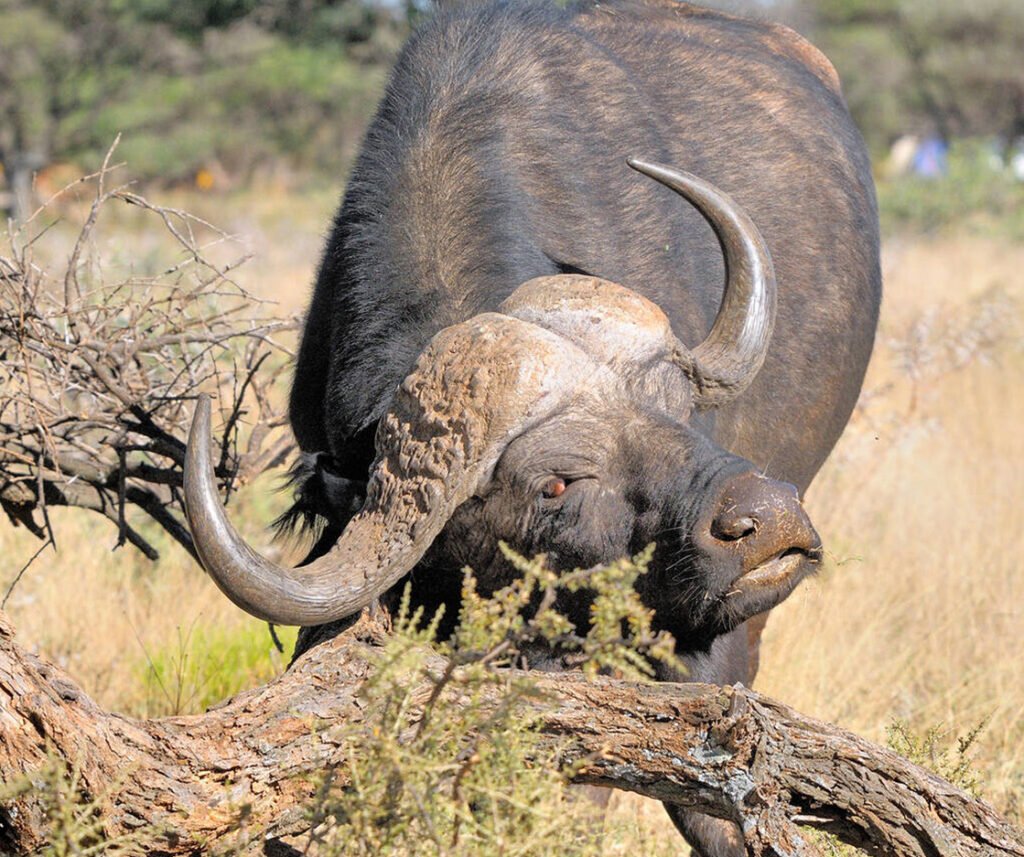
Despite their intimidating size, Cape Buffalo are strict herbivores. They require a massive amount of food to sustain their bulky frames, and they aren’t particularly picky. They play a vital role in the savanna by grazing on long, coarse grasses that other, more selective grazers (like zebras or antelopes) cannot eat.
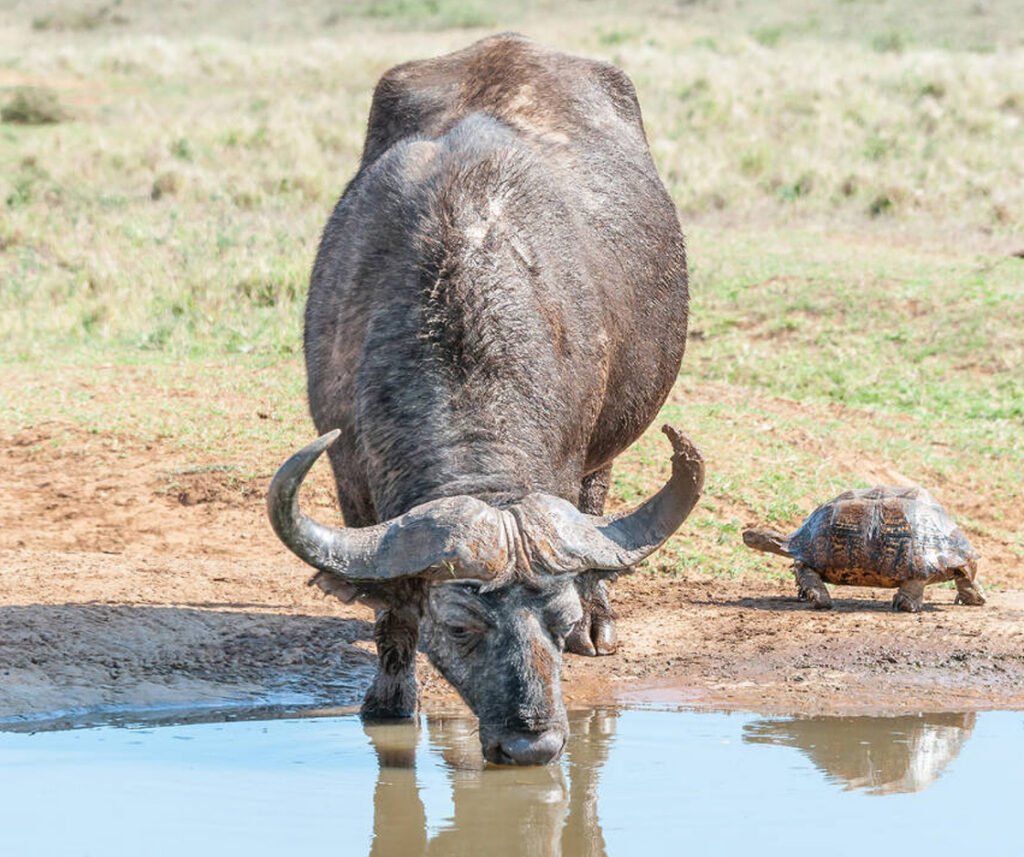
By “mowing” down these tall grasses, they open up the landscape for other species to access the shorter, more nutritious sprouts underneath. However, their massive size comes with a catch: they are water dependent. A Cape Buffalo must drink at least once a day, meaning they are never found too far from a reliable water source.
Nature’s Cleaning Service: The Symbiotic Bond
If you look closely at a photo of a buffalo, you’ll often see small birds perched on its back or pecking at its ears. These are Oxpeckers. This relationship is one of the most interesting Cape Buffalo Facts regarding symbiosis.
The birds get a steady diet of ticks, flies, and maggots found on the buffalo’s hide, while the buffalo gets a free grooming session and a pest-control service. Furthermore, the birds act as an early warning system; they often hiss or fly upward when they sense approaching danger, alerting the buffalo to predators that might be stalking through the tall grass.
Survival Against Predators
The primary predator of the Cape Buffalo is the lion. However, taking down a full-grown buffalo is no easy feat even for a pride of lions. It often takes several lions and a significant amount of time to subdue one.
In many cases, the buffalo wins. There is incredible footage from across Africa showing “The Battle at Kruger,” where herds have successfully rescued calves from the jaws of lions and crocodiles. Their strength is immense—a single buffalo can exert enough force to toss a 400-pound lion like a ragdoll. Their thick skin, which can be up to 2 centimeters thick in some areas, acts as natural armor against claws and teeth.
Conservation and the Future
Currently, the Cape Buffalo is listed as Near Threatened by the IUCN. While their populations are relatively stable in protected parks and reserves, they face significant threats from habitat loss and diseases transmitted by domestic cattle, such as bovine tuberculosis and foot-and-mouth disease.
Because they are so vital to the ecosystem—both as “landscape engineers” and as a food source for large carnivores—protecting their habitats is crucial for the health of the African wilderness.