Why Do Hippos Spray Poop? The Explosive Science of Dung Showering
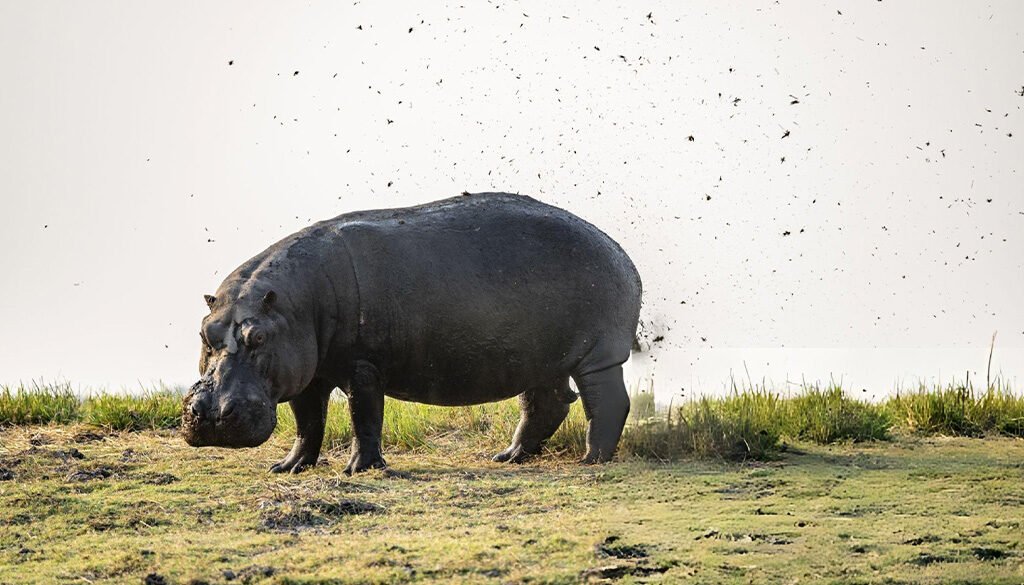
Hippos spray poop primarily to mark territory, establish social dominance, and communicate chemically within their pod using a behavior called “dung showering.”
By rapidly propeller-spinning their short, flat tails during defecation, a dominant bull can fling excrement up to two meters across riverbanks, bushes, and water pathways to signpost his presence to rivals and potential mates.
1. Marking Territorial Boundaries
Hippos are fiercely territorial mega-herbivores, particularly when securing space in bodies of water. Dominant males (bulls) control stretches of riverbanks, lakeshores, or wallowing pools called pods.
To signal ownership without engaging in dangerous physical fights every hour, a bull marks his perimeter. So, why do hippos spray poop across rocks, bushes, and water currents?
-
Visual Signposts: Huge, splattered mounds of manure line the edges of a bull’s territory, warning roving bachelors that the area is occupied.
-
Scent Barriers: The olfactory mark lingers in the hot African sun, allowing scent signals to carry across long distances in air and water.
2. Asserting Social Dominance
Within a hippo pod, which can range from 10 to over 100 individuals, hierarchy is everything. The dominant bull sits atop the social ladder, and he uses dung showering as a non-verbal display of power.
-
Submissive Spraying: Younger males and subordinate bulls also spray poop, but often in a lower-intensity, submissive manner when approaching a dominant male. They may flick their tails while backing up, signalling respect and avoiding a fatal clash of tusks.
-
Dominant Over-Spraying: The alpha bull will routinely cover the manure of other males with his own, demonstrating superior rank to the entire group.
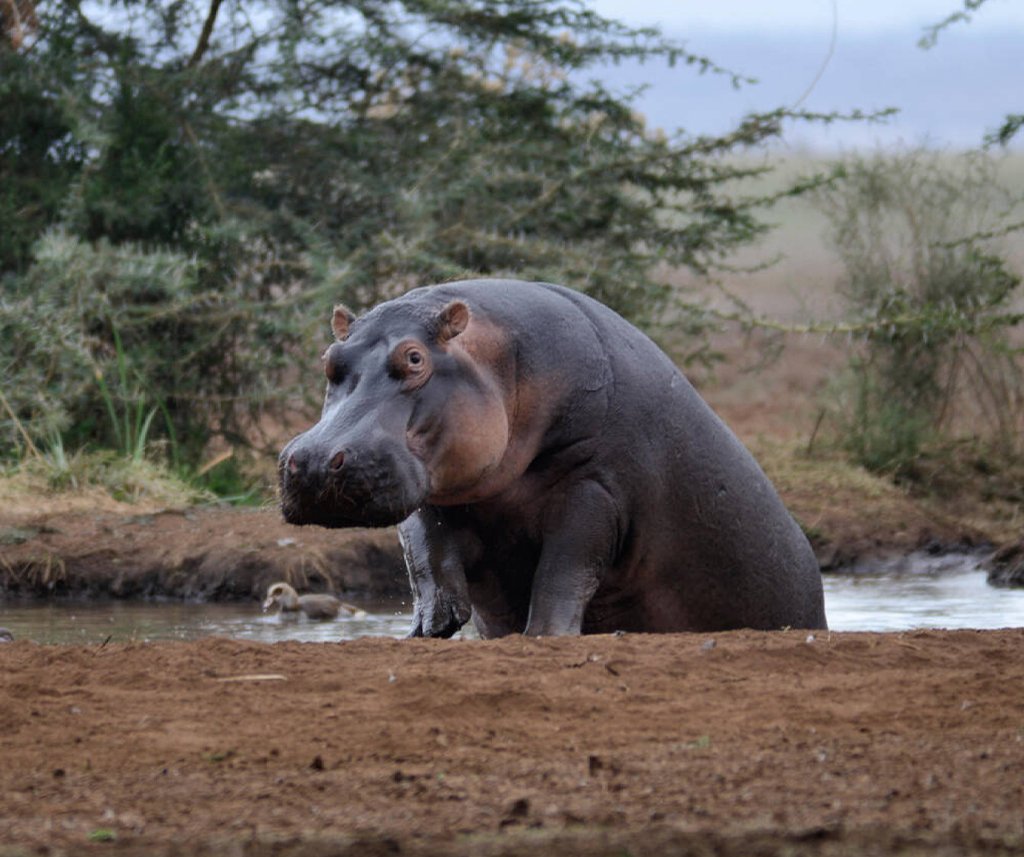
3. Mapping Pathways and Grazing Trails
Hippos are nocturnal grazers. Every night, they emerge from the water and trudge up to 3 to 5 miles (5 to 8 kilometers) inland to consume up to 80 pounds (35 kilograms) of grass.
Navigation in pitch darkness requires reliable orientation systems. Hippos construct “dung highways”—cleared paths leading from water sources to grazing grounds, heavily marked with scattered excrement.
-
Scent Trail Following: The familiar smell guides hippos back to the safety of deep water before sunrise.
-
Obstacle Marking: Landmarks along complex terrain are marked so grazing pods don’t become disoriented in dense brush.
4. Reproductive Communication and Mating Signals
Chemical communication plays a major role in hippo reproduction. A female (cow) will inspect a male’s territory and assess his fitness through visual and chemical cues.
When considering why do hippos spray poop during the breeding season, researchers note several reproductive factors:
-
Hormonal Broadcast: A hippo’s manure contains hormones that convey age, health status, and reproductive readiness.
-
Attracting Females: Dominant bulls display vigorous tail-spinning in front of females to assert their health and breeding viability.
5. Biomechanical Specialization: How the “Propeller Tail” Works
The physical mechanism behind dung showering is a marvel of evolutionary anatomy.
6. Environmental Impact: Fertilizing Aquatic Ecosystems
While dung showering is driven by social behaviors, it serves a crucial ecological function in African river networks like the Mara and Okavango rivers.
-
Nutrient Influx: Tons of hippo dung enter the water system daily, delivering carbon, nitrogen, and phosphorus.
-
Supporting the Food Web: Microbes, aquatic insects, and fish feed directly on dung organic matter, sustaining entire river ecosystems.
7. Defense and Threat Displays
When confronted by rivals, predators, or human vehicles on safari, a hippo may spray poop as an aggressive display. Combined with open-mouth “yawning” (showing off sharp 20-inch canine teeth), dung showering communicates immediate stress and readiness to charge.