What Are Lions Afraid Of? The Surprising Apex Predator Fear Science
If you want to know what are lions afraid of most, the answer is not a larger predator—it is Humans. For millennia, humans have hunted, displaced, and killed lions using tools, fire, and firearms. This evolutionary pressure has instilled a deep, innate fear of human cues in African wildlife.
The Sound of Human Speech
Recent landmark studies conducted in Greater Kruger National Park demonstrated that human presence induces far greater fear in lions than the roars of apex rivals or the sounds of hunting dogs.
-
The Experiment: Researchers broadcasted various audio clips at waterholes, including human conversations in local languages, lion roars, barking dogs, and neutral bird calls.
-
The Result: Lions were twice as likely to abandon waterholes immediately upon hearing calm human speech compared to hearing lion roars. Furthermore, they fled 40% faster when human voices were played.
This fear isn’t limited to physical encounters. Lions actively practice temporal and spatial avoidance:
-
Nocturnal Shifts: Lions living near human settlements shift their hunting schedules entirely to the dark hours to avoid human contact.
-
Boundary Avoidance: They frequently abandon kill sites early if human scent, vehicle engine noise, or footsteps are detected nearby.
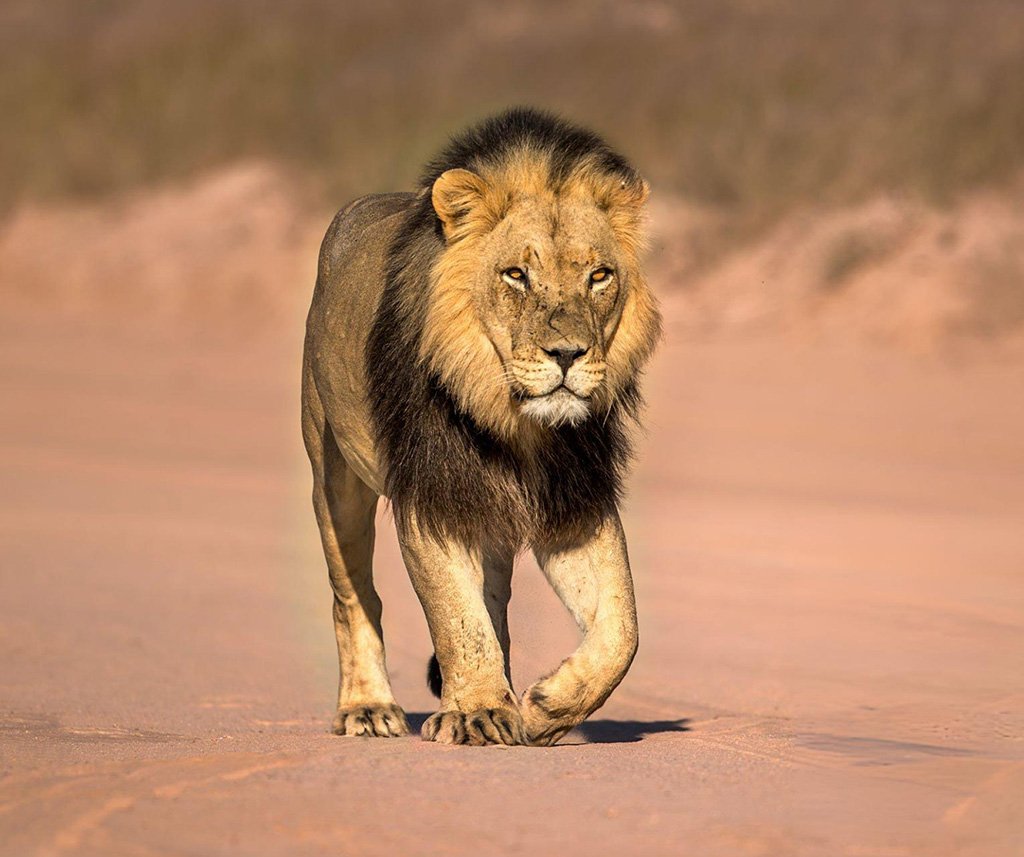
2. Megafauna: When Size Trumps Predatory Skill
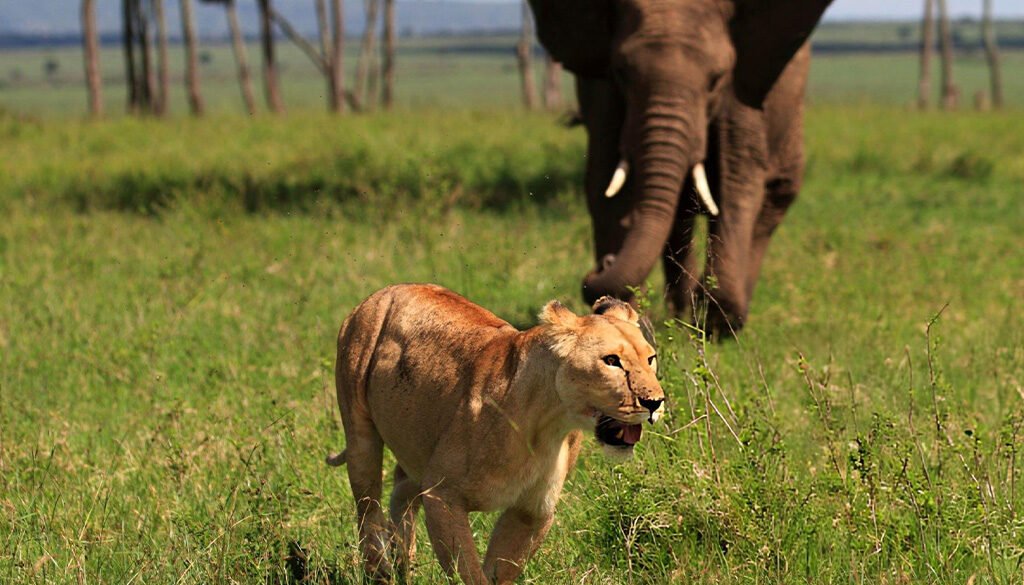
While lions routinely hunt medium-to-large ungulates like zebras and wildebeests, megaherbivores represent a lethal hazard. Understanding what are lions afraid of requires looking at animals whose sheer size makes them virtually unkillable by a single pride without immense risk.
Megafauna Threat | Defensive Capability | Lion Avoidance Behavior |
Adult Elephants | Trunks capable of crushing bones, 6-ton mass | Lions will give way immediately to matriarch-led herds or adult bulls; solitary lions flee when charged. |
Rhinoceroses | Thick armor-like hide, lethal horns | Prides rarely attempt attacks; lions clear out when a rhino aggressively asserts territory. |
Hippopotamuses | Massive bite force (approx. 1,260 PSI), thick skin | On land, lions respect their aggression; in water, lions avoid hippos completely due to vulnerability. |
Cape Buffaloes | Sharp horns, mobbing behavior | Known as "The Black Death," buffalo herds actively chase, mob, and trample lions, targeting vulnerable cubs. |
3. Numerical Superiority: Competitors and Rivals
In the wild, fear is heavily tied to simple arithmetic. Lions understand numbers, and numerical disadvantage triggers extreme risk aversion.
Hyena Clans
Spotted hyenas and lions occupy the same ecological niche, leading to intense interference competition. While a single lion can easily overpower a single hyena, a clan of 10 to 15 hyenas presents a mortal threat to isolated lions.
-
Resource Theft: Hyenas actively mob solitary lionesses or young males to steal kills.
-
Lethal Mobbing: If a lion is outnumbered by a ratio greater than 4 to 1, it will retreat, show submissive vocalizations, or climb trees to escape.
Rival Lion Prides
The most common cause of non-natural mortality in adult lions is conflict with other lions. Pride territories are fiercely defended.
-
Intruder Fear: Nomadic males or wandering lionesses show severe fear responses—such as staying low in dense bush, avoiding vocalizing, and fleeing immediately—when entering another pride’s territory.
-
Roar Count Logic: Studies show that before responding to an intruder’s roar, a pride “counts” the number of callers. If the intruding group outnumbers them, the pride retreats silently rather than engaging.
4. Environmental and Instinctual Fear Triggers
Beyond living creatures, lions exhibit strong aversion and fear reactions to specific environmental phenomena and physiological hazards:
-
Wildfires: Like most savanna species, lions possess an instinctual dread of grass fires. The sound and scent of smoke cause immediate displacement.
-
Venomous Strikes: Lions display noticeable caution around venomous snakes like puff adders or black mambas, as a single bite can prove fatal.
-
Deep Water: While capable swimmers, lions avoid deep, slow-moving rivers due to the threat posed by Nile crocodiles, which easily pull lions under.