Facts About the Puff Adder
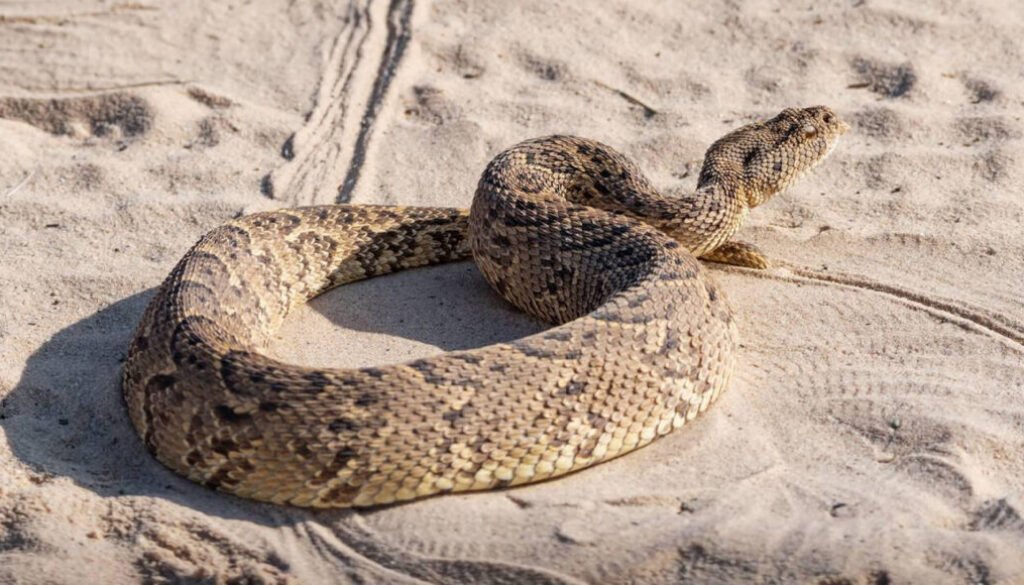
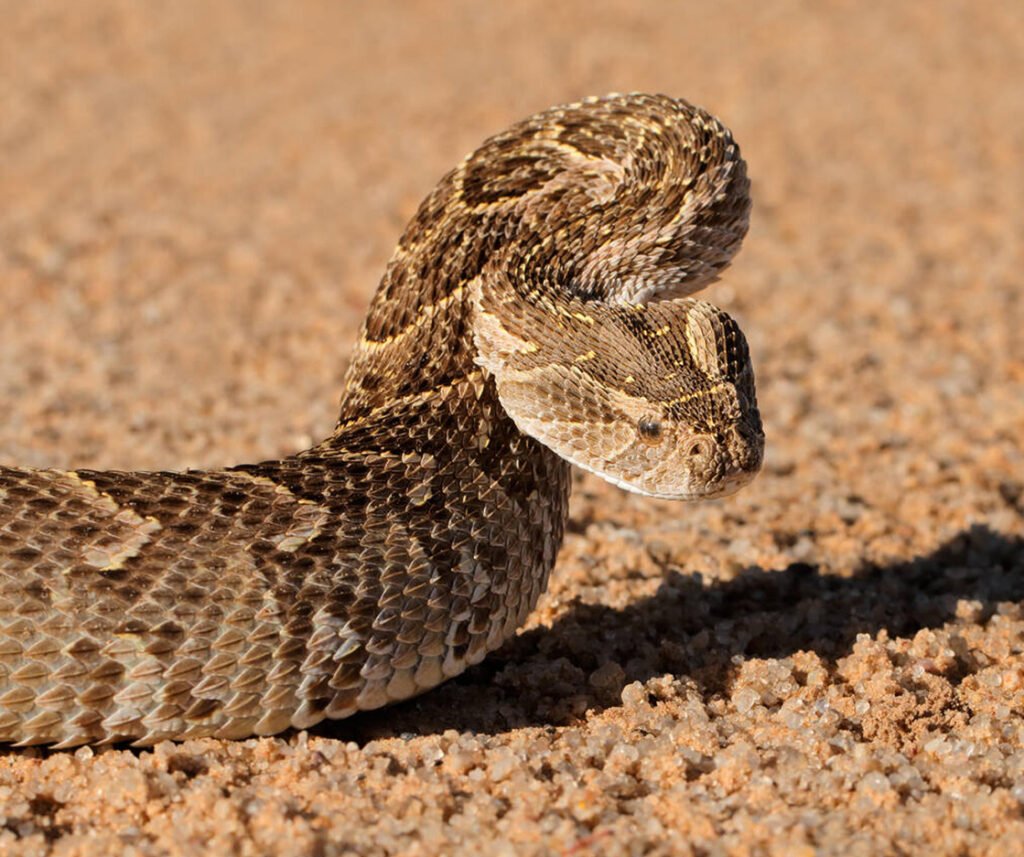
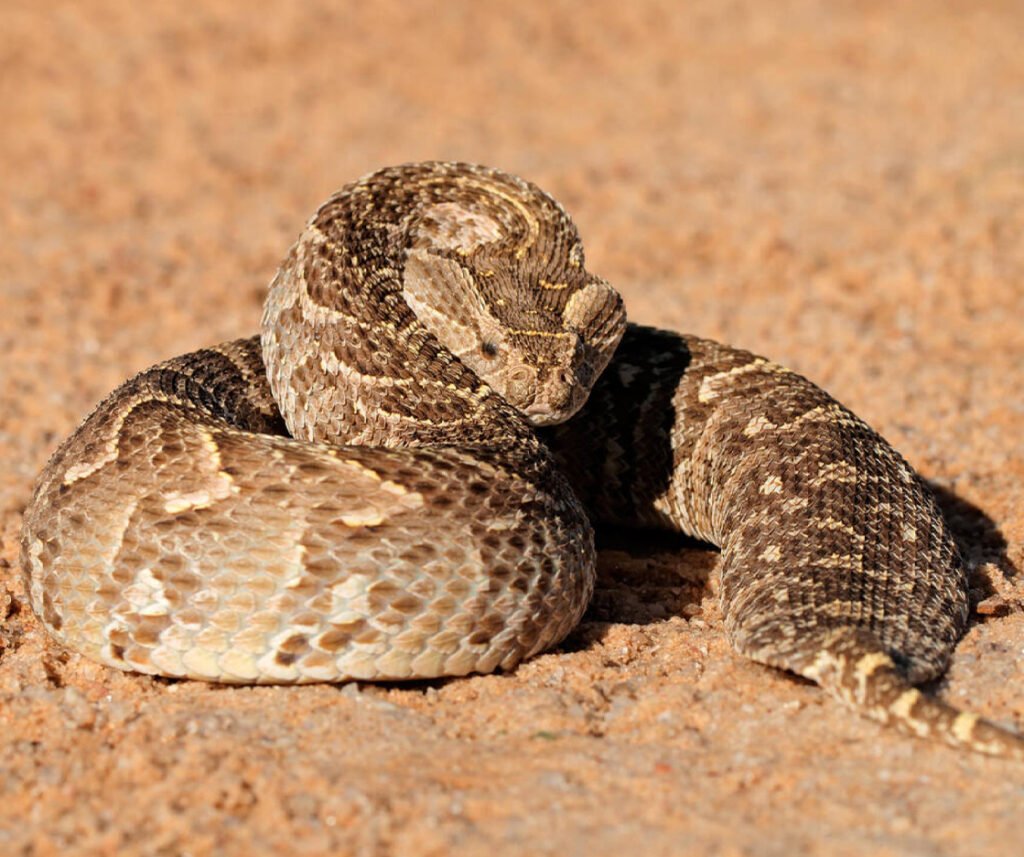
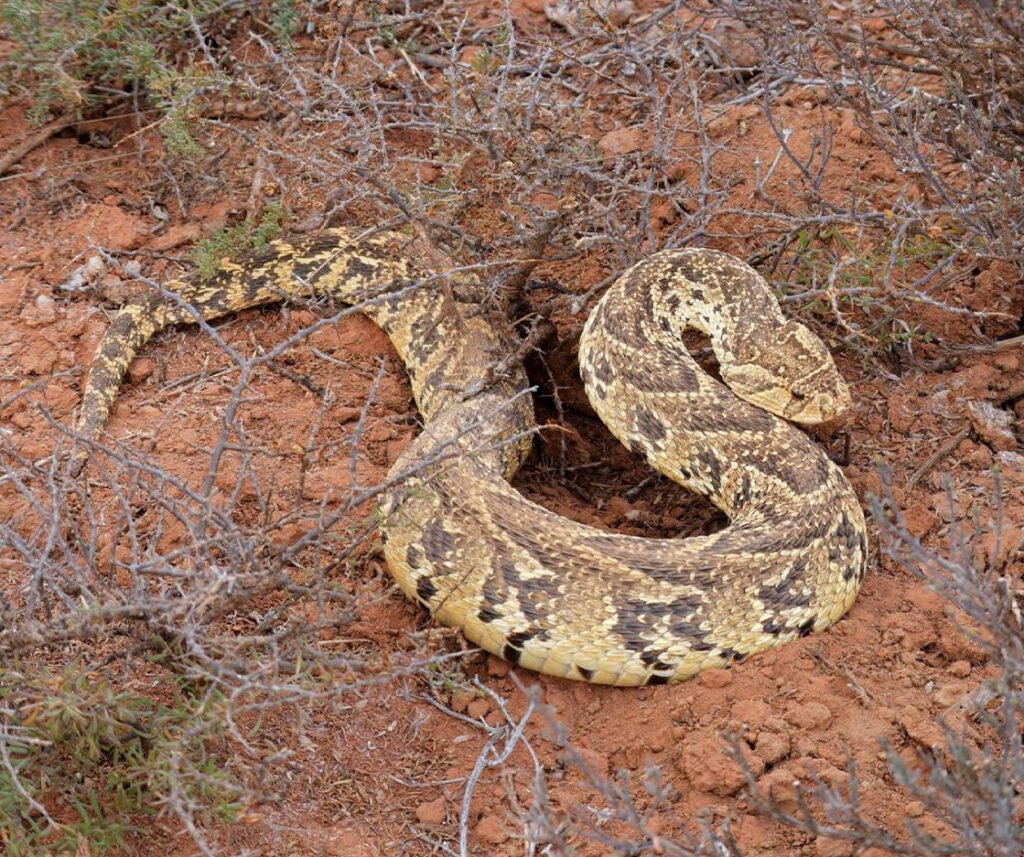
One of the most critical facts about the Puff Adder is its reliance on crypsis. Unlike snakes that actively hunt their prey, the Puff Adder is a classic “sit-and-wait” predator. Its body is adorned with a pattern of chevron-shaped dark brown to black bars on a yellowish or light brown background.
This pattern breaks up the snake’s outline perfectly against the leaf litter and sandy soils of the African savannah. Research has shown that Puff Adders can remain in the exact same spot for weeks, waiting for a meal to pass within striking distance. Their patience is unmatched in the reptile world.
Essential Facts About the Puff Adder
-
Common Name: Puff Adder
-
Scientific Name: Bitis arietans
-
Type: Reptile (Venomous Snake)
-
Diet: Carnivore (Rodents, birds, amphibians, and lizards)
-
Average Life Span in the Wild: 12 to 15 years
-
Size (Head and Body): 90 to 110 cm (3 to 3.5 feet) on average; can reach 190 cm.
Why is it Called a “Puff” Adder?
The name “Puff Adder” is derived from the snake’s primary defense mechanism. When threatened, the snake inflates its body with air and releases it in a series of loud, rhythmic hisses or “puffs.” This serves as a potent auditory warning to any perceived intruder.
Because they are heavy-bodied and relatively slow-moving, they cannot easily flee from danger. Instead, they stand their ground. Many bites occur because the snake relies so heavily on its camouflage that it won’t move even when stepped on, leading to a defensive strike as a last resort.
The Fastest Strike in Africa
While the snake moves slowly across the ground using a rectilinear motion (moving in a straight line like a caterpillar), its strike is a different story. Among the many facts about the Puff Adder, its strike speed is legendary. It can strike at a fraction of a second, often reaching its target before the human eye can register the movement.
The Puff Adder’s strike is not just fast; it is powerful. It possesses long, hinged fangs that can penetrate deep into the muscle tissue of its prey, delivering a large volume of cytotoxic venom.
Understanding the Potency of Its Venom
The venom of a Puff Adder is primarily cytotoxic, meaning it destroys tissue and blood cells. In the context of facts about the Puff Adder and human safety, this snake is responsible for more fatalities in Africa than any other species. This isn’t necessarily because its venom is the most toxic, but because of its wide distribution and tendency to frequent footpaths where humans walk.
A bite causes severe swelling, extreme pain, and, if left untreated, tissue necrosis. Modern antivenoms are highly effective, but the key to survival and limb preservation is the speed of medical intervention.
A Diverse and Opportunistic Diet
The diet of this viper is surprisingly varied. While small mammals like rats and mice make up the bulk of their caloric intake, they are opportunistic. Large specimens have been known to take down hares or even small monkeys.
Interestingly, younger Puff Adders are known to use “lingual luring”—flicking their tongues to mimic a worm or insect to draw in unsuspecting frogs or lizards. As they grow, they transition into the heavy-set ambush hunters that dominate the grassland floors.
Reproductive Giants: The Birth of Many
When discussing facts about the Puff Adder, their reproductive capacity is often a surprise. They are ovoviviparous, meaning the females carry eggs inside their bodies until they are ready to hatch, eventually giving birth to live young.
A single female can give birth to a massive litter, typically between 20 and 40 neonates. However, record-breaking litters of over 150 young have been documented. These young are born fully “armed” with venom and are independent from the moment they enter the world.
Geographic Range and Habitat
The Puff Adder is incredibly hardy and can be found in almost every habitat across Africa and parts of the Arabian Peninsula, excluding only the harshest deserts and densest rainforests. Whether it is the rocky outcrops of South Africa or the sprawling plains of East Africa, the Puff Adder finds a way to thrive.
Their ability to adapt to different environments—from sea level to altitudes of 2,000 meters—makes them one of the most successful viper species on the planet.