Facts About the African Rock Python
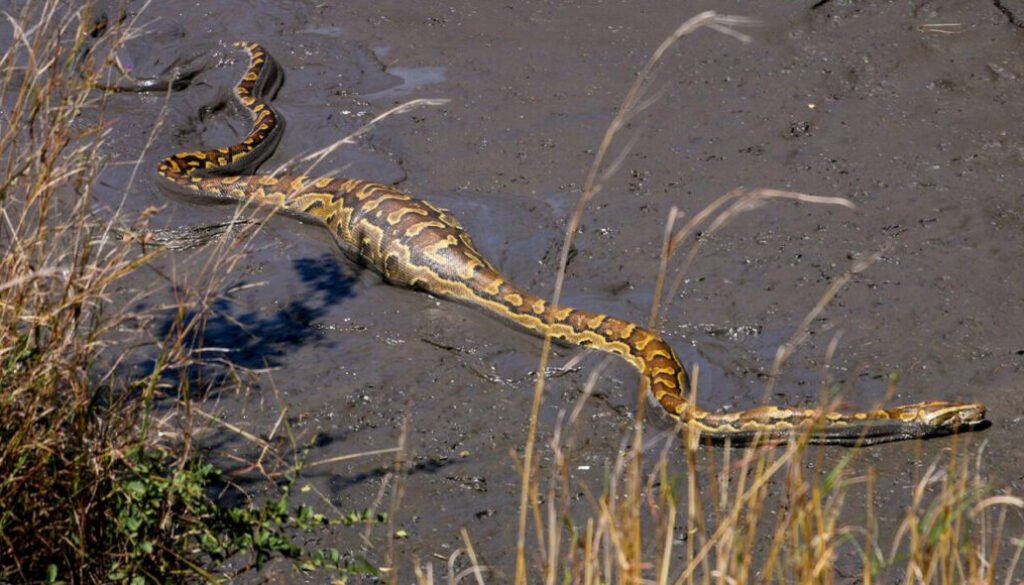
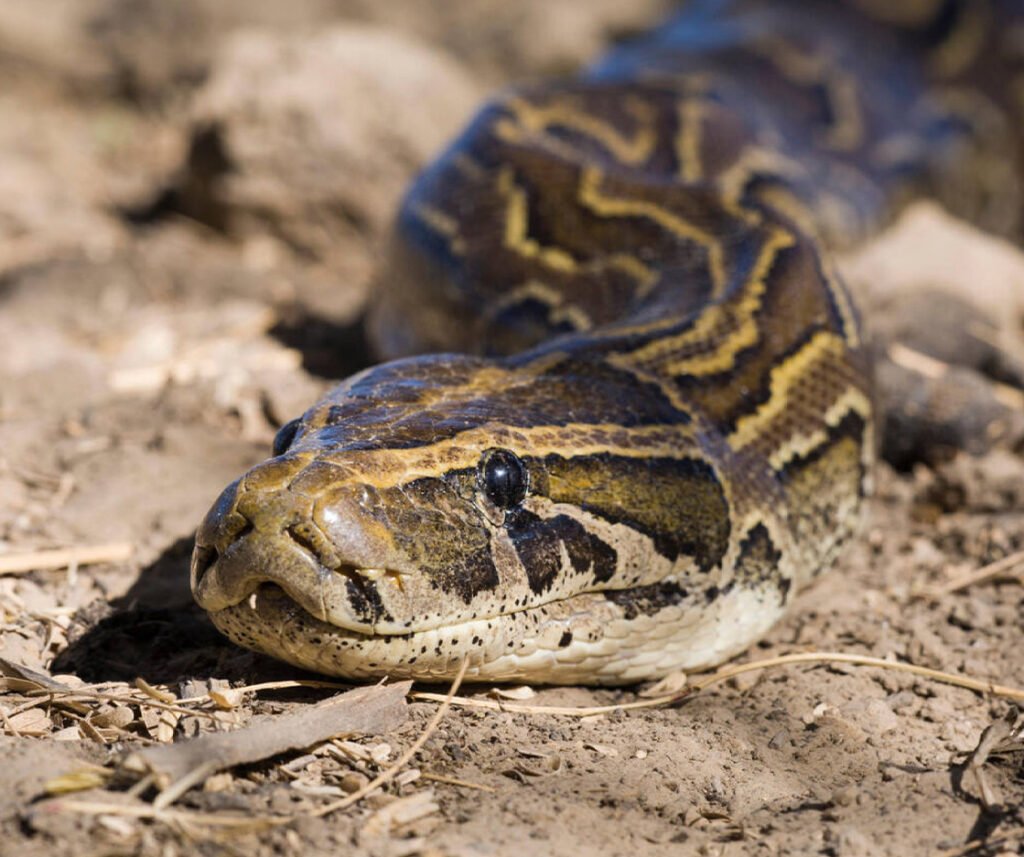
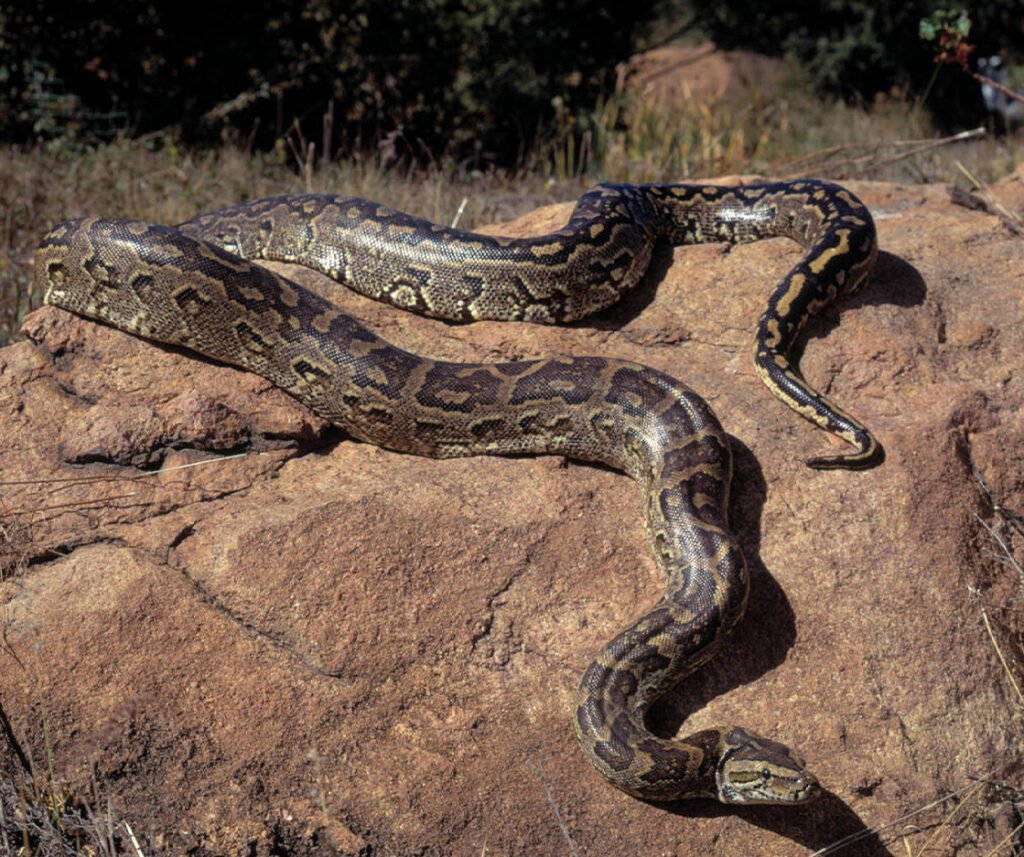
One of the most essential facts about the African Rock Python is its distinctive appearance. These snakes possess a thick, muscular body covered in intricate patterns of brown, olive, and tan. These blotches are often outlined in black and white, providing the perfect camouflage against the leaf litter and muddy riverbanks where they often lie in wait.
Their heads are triangular, marked with a dark “spearhead” shape on the top and heat-sensing pits along the lips. These pits allow the python to detect the infrared radiation emitted by warm-blooded prey, even in total darkness.
Essential Facts About the African Rock Python
-
Common Name: African Rock Python
-
Scientific Name: Python sebae
-
Type: Reptile
-
Diet: Carnivore
-
Average Life Span in the Wild: 12 to 15 years (up to 30 in captivity)
-
Size (Head and Body): 9.1 to 16.5 feet (records up to 20+ feet)
-
Weight: 70 to 121 pounds (exceptionally large females can exceed 200 pounds)
The Diet of a Giant
Understanding the facts about the African Rock Python requires looking at their impressive diet. Being non-venomous constrictors, they rely on sheer physical strength. They strike with lightning speed, gripping the prey with rows of sharp, backward-curving teeth, and then quickly coil their massive bodies around the victim.
Their diet is incredibly varied. Juveniles typically feed on rodents and small birds, but as they grow, their appetite scales. Adult pythons are known to take down:
-
Thomson’s Gazelles and Impalas
-
Warthogs
-
Vervet Monkeys
-
Monitor Lizards and even small Crocodiles
After a particularly large meal, a python may not need to eat again for several months as its highly efficient metabolism slowly breaks down the bone, fur, and flesh of its prize.
Reproduction and Maternal Care
In the reptile world, parental care is rare, but the African Rock Python is a notable exception. Females lay between 20 and 100 large, leathery eggs, usually in an abandoned animal burrow or a hollow tree. Unlike many other snakes, the female will coil herself around her eggs to protect them from predators like hyenas or monitor lizards. While she does not “brood” them with metabolic heat like some other python species, her presence is a fierce deterrent to anything looking for an easy snack.
Size and Scale: Debunking the Myths
When researching facts about the African Rock Python, you will often encounter legends of snakes reaching 7 or 8 meters. While historically some specimens may have reached such lengths, modern sightings typically top out at around 5 to 6 meters. Even at “only” 5 meters, the sheer girth of an African Rock Python is staggering. A snake of this size can weigh as much as a grown man, with a body thick enough to rival a human thigh.
Behavior and Temperament
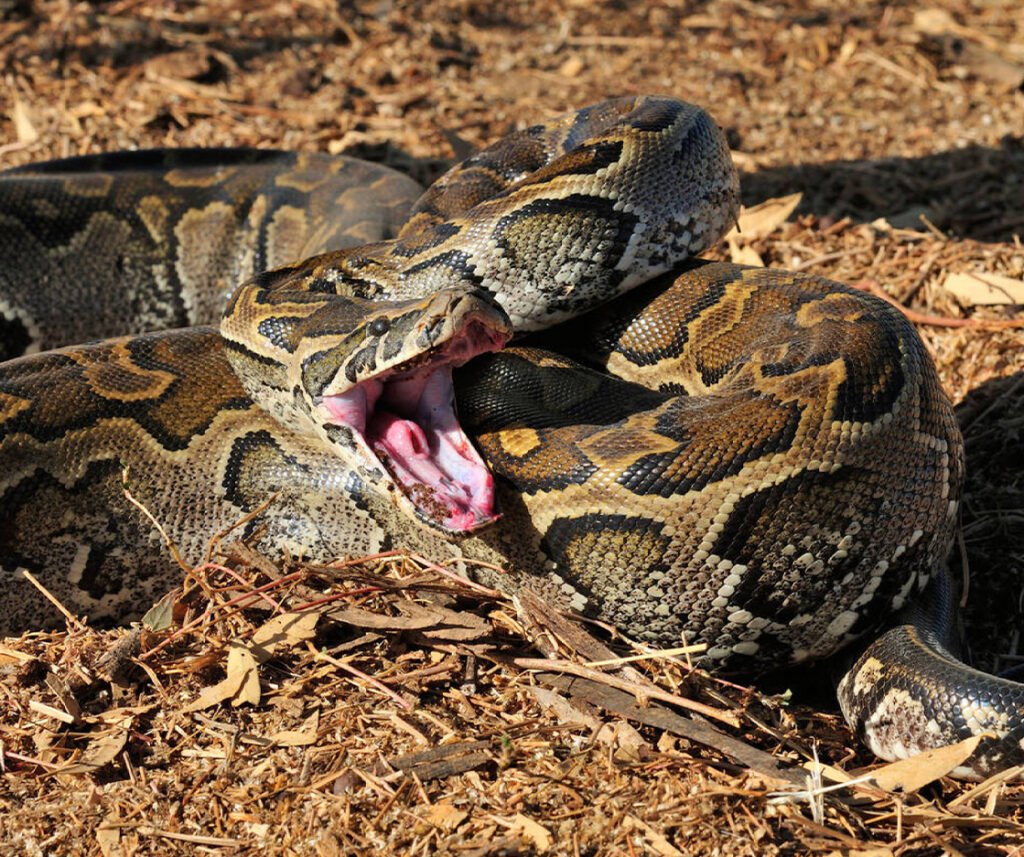
These pythons are famously “grumpy” compared to their cousins, the Burmese or Reticulated Pythons. They are highly territorial and defensive. If cornered, they will not hesitate to strike repeatedly. This aggressive temperament has helped them survive in environments populated by some of the world’s most dangerous predators, including lions and leopards.
Conservation Status and Human Interaction
As human populations expand, the African Rock Python faces challenges. Habitat loss and the bushmeat trade are significant threats. Furthermore, they are often killed out of fear or to protect livestock. However, they are currently listed as “Near Threatened” or “Least Concern” in various regions, partly because they are so elusive and wide-ranging.
Efforts in wildlife education are crucial. By sharing accurate facts about the African Rock Python, we can foster a better understanding of their role as natural pest controllers. They keep rodent populations in check, which in turn protects human grain stores and reduces the spread of certain diseases.