Facts About the Klipspringer: The Ballerina of the African Rocks
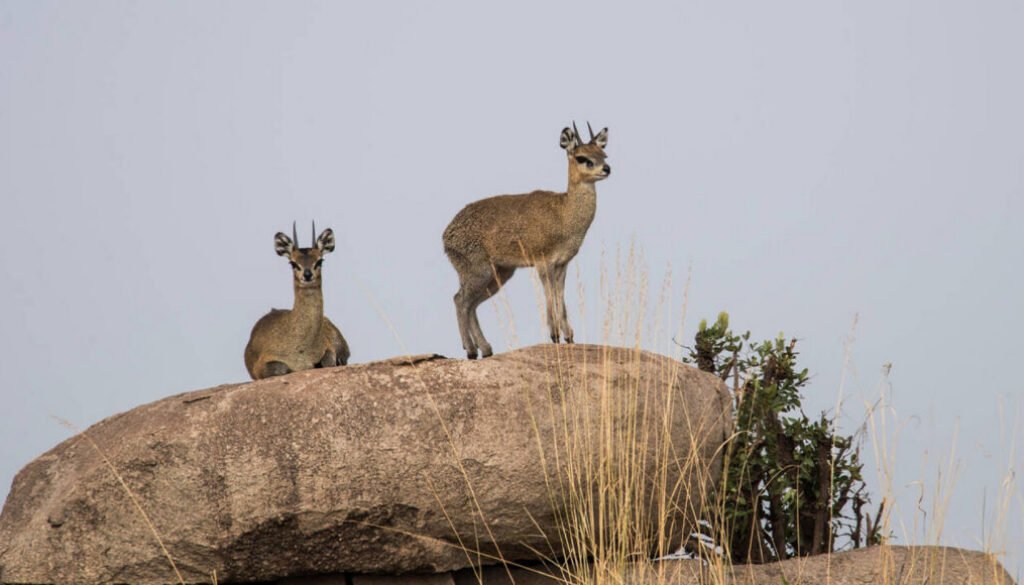
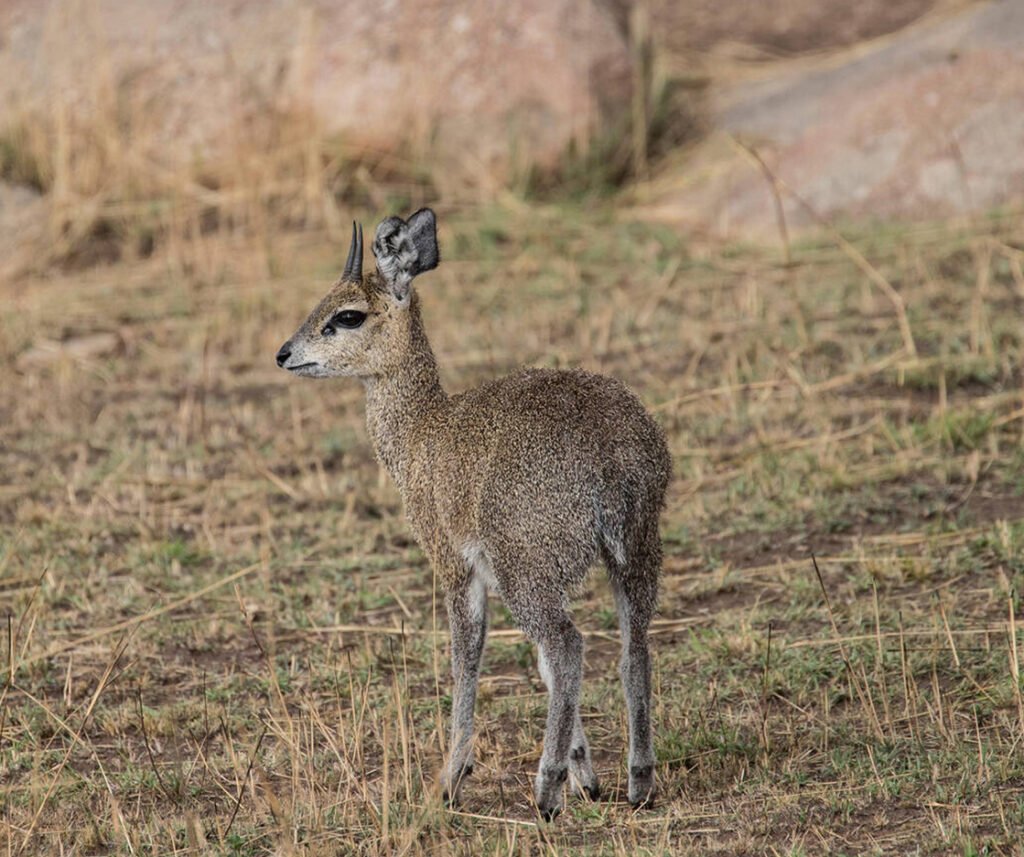
One of the most fascinating facts about the klipspringer is their unique physical adaptation. Unlike most antelopes that walk on the flat of their hooves, the klipspringer stands on the very tips of its hooves. This gives them a permanent “ballerina” stance. These hooves have a rubbery center that acts like a shock absorber, providing unparalleled grip on slick, vertical granite surfaces.
Their coat is another marvel of evolution. It is composed of hollow, brittle hairs that are incredibly thick. This serves two purposes:
-
Thermoregulation: The hollow hairs insulate them against the extreme temperature swings of the high-altitude rocky ridges.
-
Cushioning: If a klipspringer falls or scrapes against a sharp rock, the thick hair acts as a protective “buffer” against injury.
Fast Facts: Klipspringer at a Glance
-
Common Name: Klipspringer
-
Scientific Name: Oreotragus oreotragus
-
Type: Mammal
-
Diet: Herbivore
-
Average Life Span in the Wild: 10 to 12 years
-
Size (Head and Body): 30 to 35 inches
-
Weight: 18 to 40 pounds
Diet and Survival Strategies
As herbivores, klipspringers are highly selective browsers. They don’t just eat any grass they find; they seek out succulents, high-protein young plants, fruits, and seeds. Interestingly, because they live in arid, rocky environments where water is scarce, they have adapted to get almost all their hydration from the plants they eat. They can go for months without a direct drink of water.
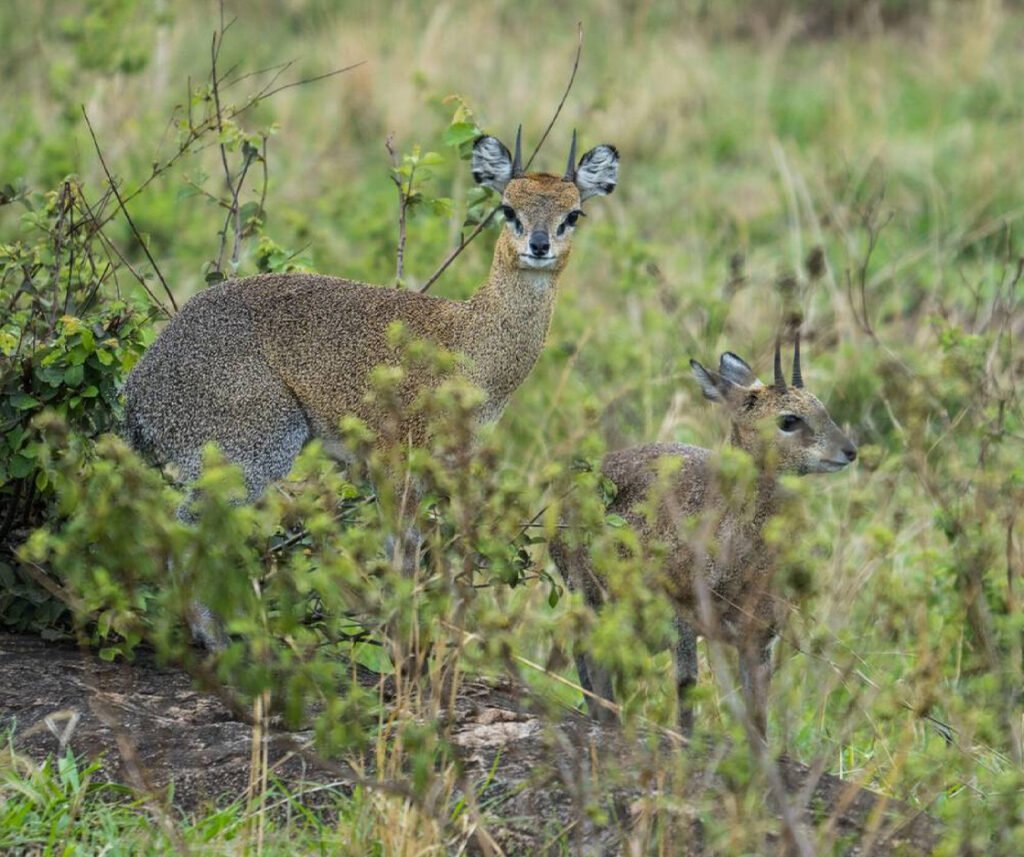
In terms of social structure, these animals are famously monogamous. They form lifelong pair bonds and spend roughly 90% of their time within just a few meters of their partner. While one feeds, the other acts as a sentry, watching for predators like leopards, caracals, or eagles. If a threat is spotted, the lookout lets out a shrill, whistle-like alarm call, and the pair vanishes into the rocks with astonishing speed.
Why They Matter to the Ecosystem
Beyond being a marvel of biology, the klipspringer plays a vital role in its niche habitat. By grazing on specific rocky flora, they help manage plant growth in areas that larger herbivores cannot reach. They also serve as a crucial food source for Africa’s mountain predators, maintaining the delicate balance of the “koppies” (rocky hills).
The more you learn the facts about the klipspringer, the more you realize that size doesn’t determine strength. These animals are resilient, specialized, and perfectly designed for a life on the edge
Conservation Status
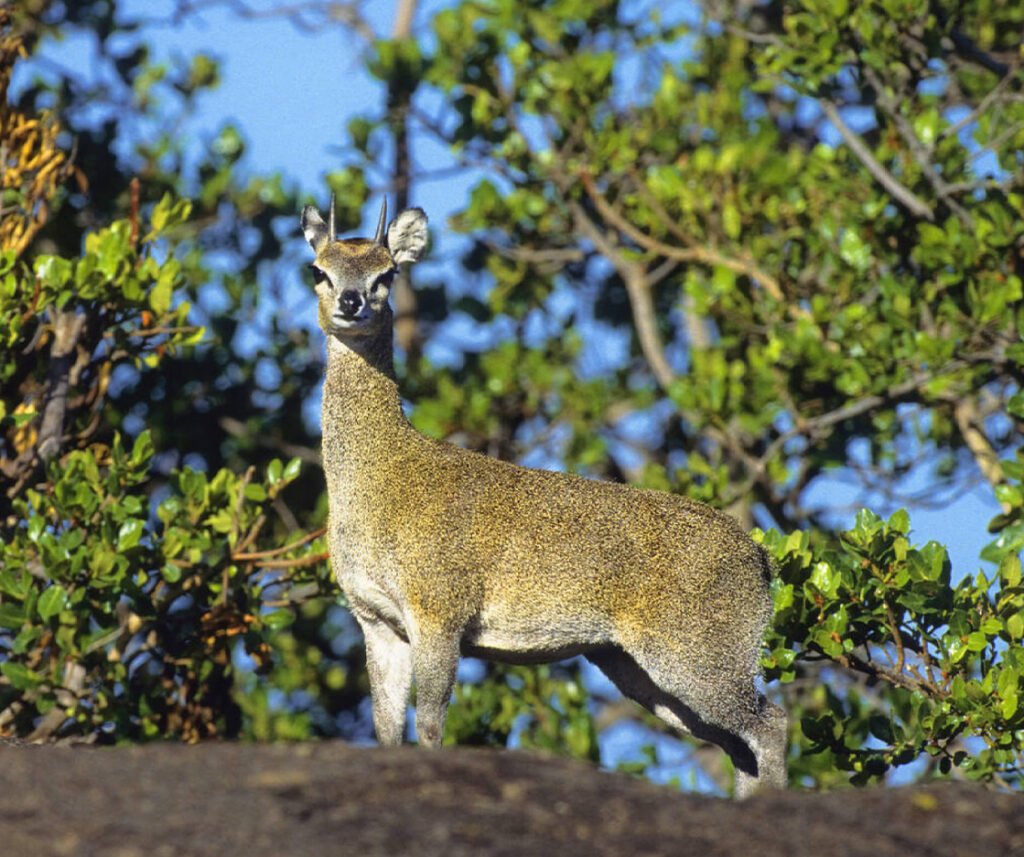
Currently, the klipspringer is listed as “Least Concern” by the IUCN. Because they live in such inaccessible, rocky terrain, they aren’t as easily hunted by humans as plains-dwelling animals. However, they still face threats from habitat loss and competition with domestic livestock in certain regions.