Facts About the Bushbuck: The Shy “Prince” of the African Forest
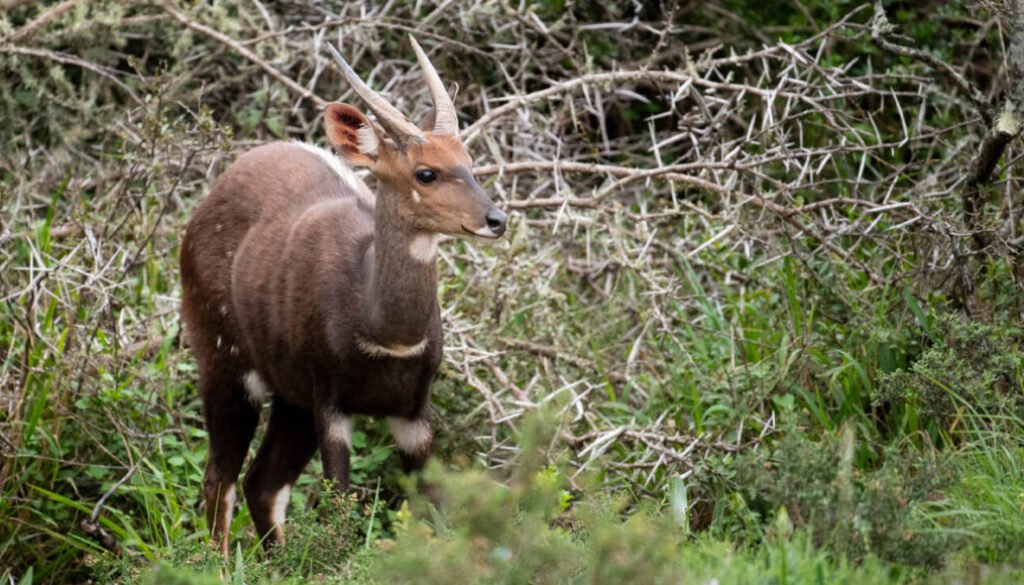
When discussing facts about the bushbuck, the first thing to note is their incredible ability to hide in plain sight. Unlike the vast herds of wildebeest or springbok, the bushbuck is a solitary “skulker.” They prefer the dense cover of riverine forests and thick bushveld, where their dappled coat acts as the perfect camouflage against the flickering sunlight.
Quick Profile: The Bushbuck at a Glance
-
Common Name: Bushbuck
-
Scientific Name: Tragelaphus scriptus (Kéwel) and Tragelaphus sylvaticus (Imbabala)
-
Type: Mammal
-
Diet: Herbivore
-
Average Life Span in the Wild: 12 to 15 years
-
Size (Head and Body): 110 to 150 cm (approx. 43 to 59 inches)
-
Weight: 25 to 80 kg (55 to 176 lbs)
Habitat and Adaptability
One of the most impressive facts about the bushbuck is their sheer resilience. Unlike many antelope that require vast, open plains, the bushbuck is a master of the “edge.” They thrive in thickets, riverine forests, and even suburban gardens.
-
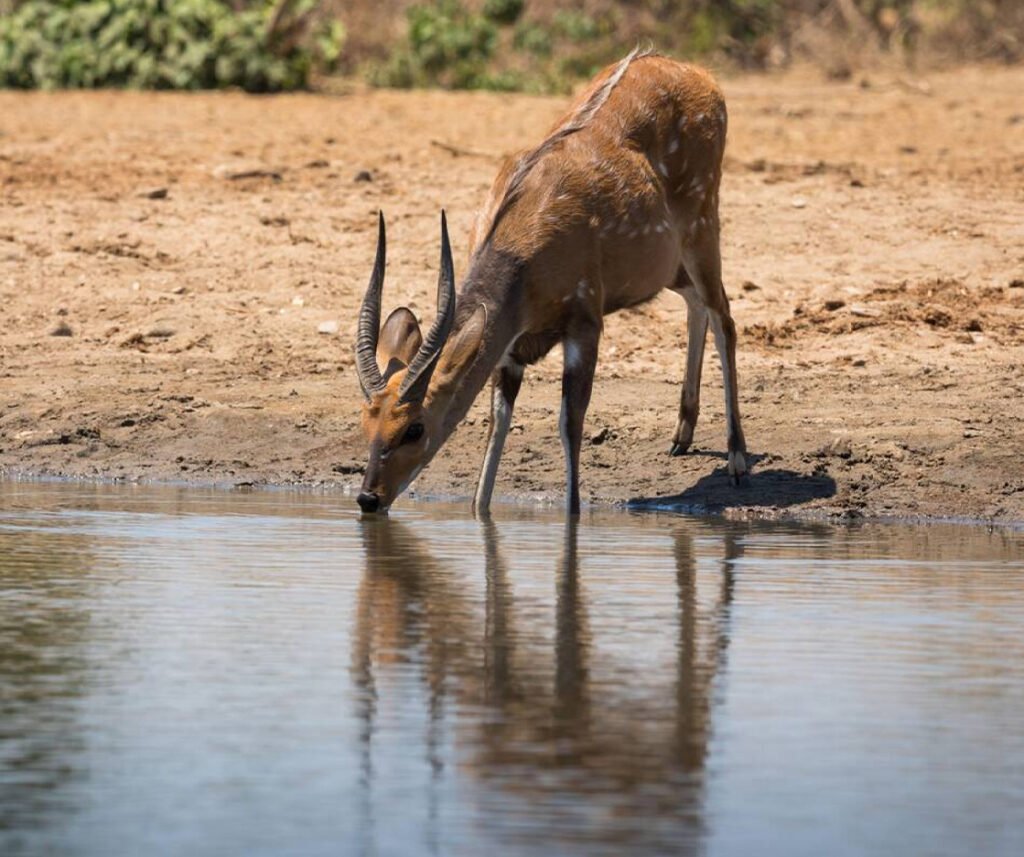
Water Dependency: They are never found far from a permanent water source.
-
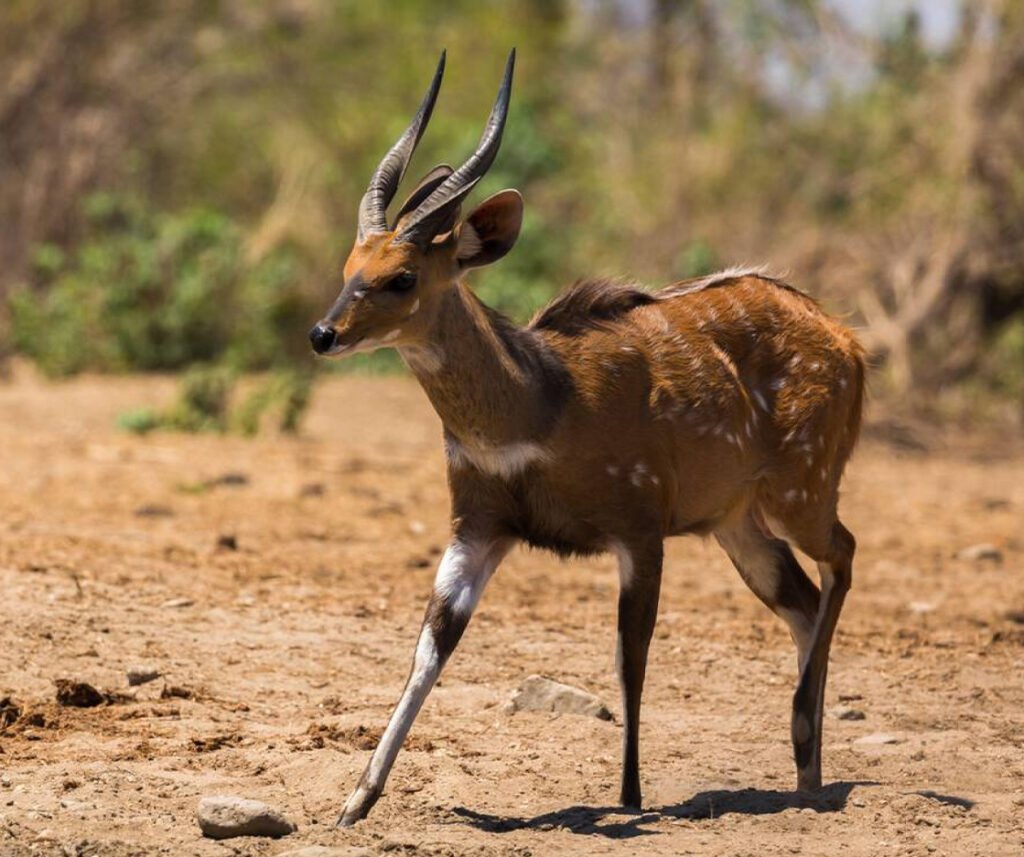
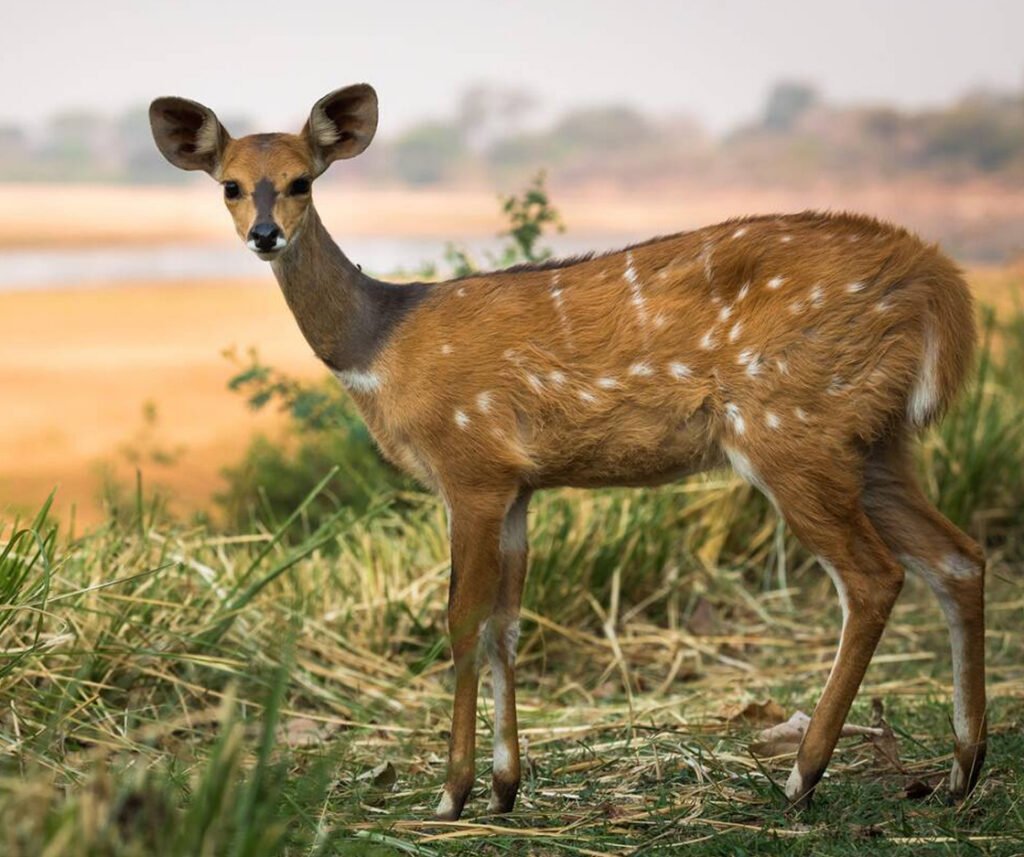
Camouflage: Their coat pattern—a mix of chestnut brown and white spots—mimics the dappled sunlight filtering through forest canopies, making them nearly invisible to predators.
-
Altitude: They have been recorded at elevations as high as 4,000 meters in the mountains of Ethiopia.
Diet and Foraging Habits
As herbivores, their diet is remarkably diverse. They are primarily “browsers,” meaning they prefer leaves, shoots, and shrubs over grass. Here are some dietary facts about the bushbuck that highlight their opportunistic nature:
-
Selective Feeding: They are known to pick the most nutritious parts of a plant, such as the buds or new flowers.
-
Fruit Lovers: They often follow troops of baboons or monkeys, scavenging the fruit dropped from the canopy.
-
Garden Visitors: In areas where human settlements encroach on their habitat, they are notorious for raiding vegetable gardens, showing a particular fondness for roses and legumes.
Behavior and Social Structure
Unlike the social herds of Impala or Wildebeest, the bushbuck is famously solitary. You will rarely see more than two together, and when you do, it is usually a mother with her calf or a mating pair.
Because they live in dense cover, they don’t rely on the “safety in numbers” strategy. Instead, they rely on stealth. When threatened, a bushbuck will freeze in place. If the predator gets too close, they explode into a series of powerful leaps to escape into the thickest brush imaginable.
Interestingly, while they are generally shy, they are known to be one of the most dangerous small antelopes when cornered. A wounded or trapped male can be incredibly aggressive, using its sharp, straight horns to defend itself against predators—including humans and leopards.
The Life Cycle of a Bushbuck
The life of a bushbuck begins in deep cover. To protect the newborn from predators, the mother hides her calf in a secluded thicket for the first several weeks of its life. She returns only to nurse and clean the calf, even eating the calf’s dung to ensure no scent is left behind for a leopard or hyena to find.
-
Gestation: Approximately 6 to 7 months.
-
Maturity: Females reach sexual maturity at about one year, while males take longer to reach the size and strength required to compete for mates.
-
Communication: They communicate primarily through a loud, series of “barks” that sound surprisingly like a dog. This bark serves as an alarm call to other animals in the forest.
Predators and Survival
Survival in the African bush is no easy feat. The primary predator of the bushbuck is the leopard, which shares its preference for dense riverine habitats. Other threats include lions, hyenas, and African wild dogs. Even large pythons and crocodiles pose a threat when the bushbuck comes to the water’s edge to drink.
However, the greatest threat to the bushbuck remains habitat loss and illegal hunting. Because they are often found near human settlements, they are frequently targeted for bushmeat. Despite this, because they do not require massive ranges, they have proven more resilient to human expansion than many other African mammals.
Why the Bushbuck Matters
Collecting facts about the bushbuck helps us understand the health of our riverine ecosystems. As browsers, they help manage the growth of undergrowth, and as prey, they support the populations of Africa’s great carnivores. They are a testament to the beauty of specialization—thriving in the shadows where others cannot survive.
Whether you are a seasoned safari-goer or an armchair naturalist, the bushbuck represents the quiet, enduring spirit of the wild. They remind us that you don’t have to be the biggest or the loudest to be one of the most successful survivors in nature.