Facts About the Greater Kudu: The “Grey Ghost” of the African Bush
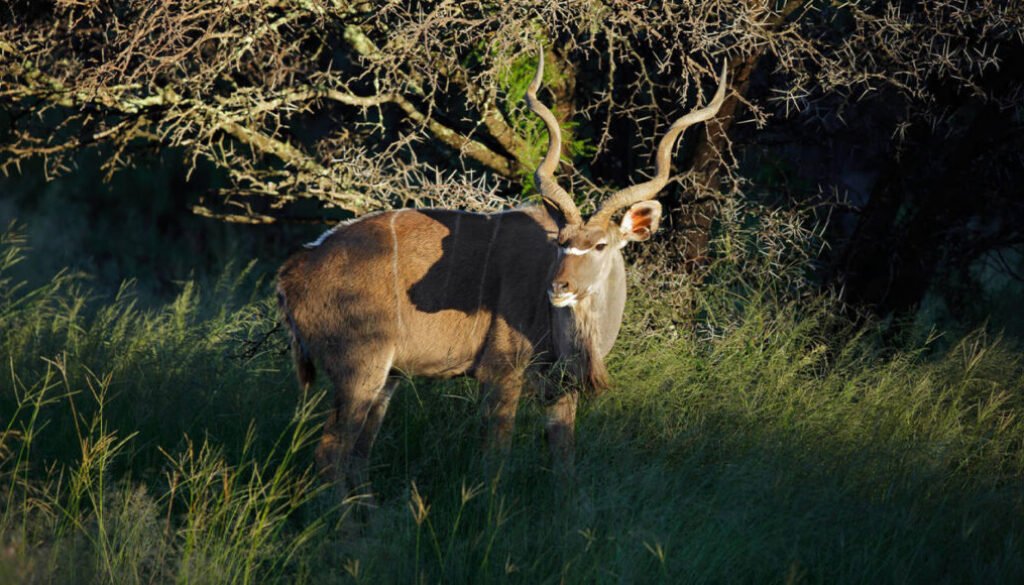
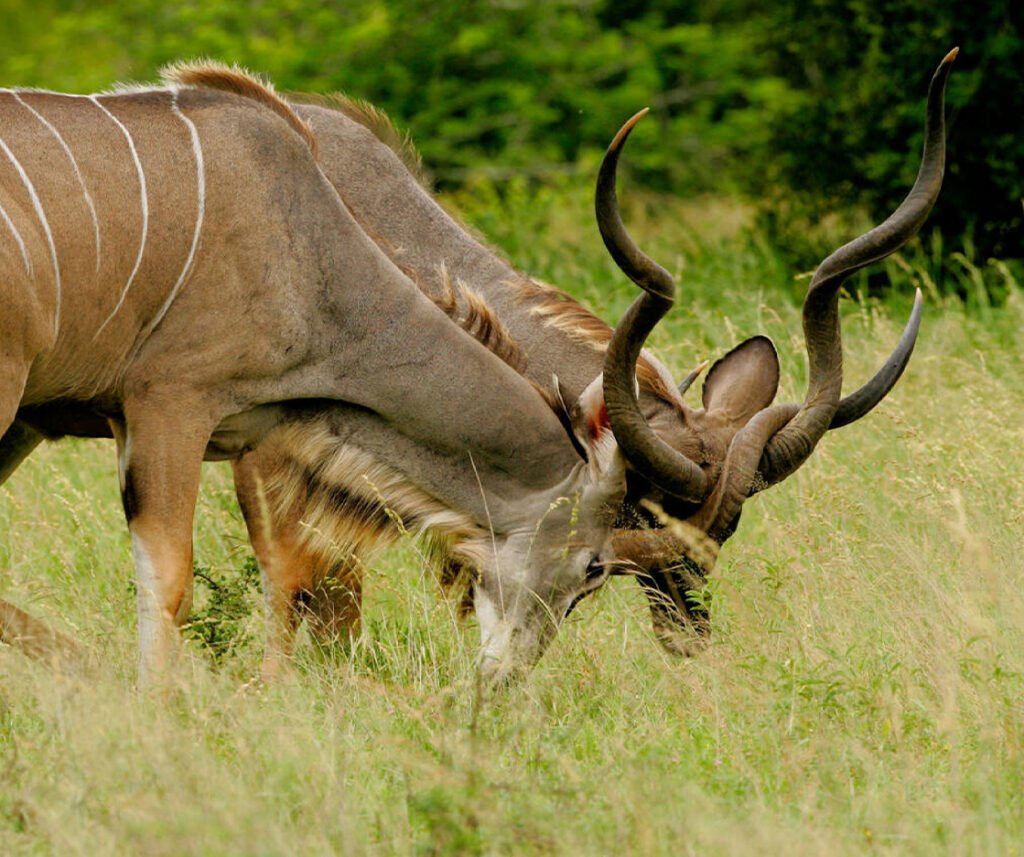
One of the most striking facts about the greater kudu is the male’s headgear. Unlike many other antelopes with straight or curved horns, the Greater Kudu sports spectacular corkscrew-shaped horns. These aren’t just for show; they are formidable weapons used during the rutting season.
A male’s horns can grow up to 72 inches long if measured along the curve. Interestingly, these horns do not begin to grow until the bull is about 6 to 12 months old. They form their first spiral at age two and reach their full two-and-a-half twists by the time the bull is six. When males fight, they sometimes interlock their spirals so tightly that they cannot break free, leading to a tragic end for both competitors.
The Greater Kudu at a Glance
Before we dive into the long-form secrets of the savanna, let’s look at the “id card” for this magnificent beast.
-
Common Name: Greater Kudu
-
Scientific Name: Tragelaphus strepsiceros
-
Type: Mammal
-
Diet: Herbivore (Browser)
-
Average Life Span in the Wild: 7 to 8 years (up to 15 in captivity)
-
Size: Head and body: 6 to 8 feet; tail: 12 to 22 inches
-
Weight: 260 to 690 pounds
The Architectural Marvel: Those Iconic Horns
One of the most striking facts about the greater kudu is the male’s headgear. Unlike many other antelopes with straight or curved horns, the Greater Kudu sports spectacular corkscrew-shaped horns. These aren’t just for show; they are formidable weapons used during the rutting season.
A male’s horns can grow up to 72 inches long if measured along the curve. Interestingly, these horns do not begin to grow until the bull is about 6 to 12 months old. They form their first spiral at age two and reach their full two-and-a-half twists by the time the bull is six. When males fight, they sometimes interlock their spirals so tightly that they cannot break free, leading to a tragic end for both competitors.
Masters of Stealth: The Grey Ghost
Despite being one of the largest antelopes in Africa, the Greater Kudu is surprisingly difficult to spot. Their coats range from reddish-brown to blue-grey, marked with 6 to 12 thin white vertical stripes. These stripes serve as “disruptive coloration,” breaking up the animal’s silhouette against the vertical lines of branches and tall grass.
When a Kudu senses danger, it doesn’t always bolt. Instead, it stands perfectly still. This freezing behavior, combined with their camouflage, makes them nearly invisible to lions and leopards. If they do decide to run, they emit a loud, barking alarm call—the loudest of any antelope species—to warn the rest of the herd.
The Specialized Diet of a Browser
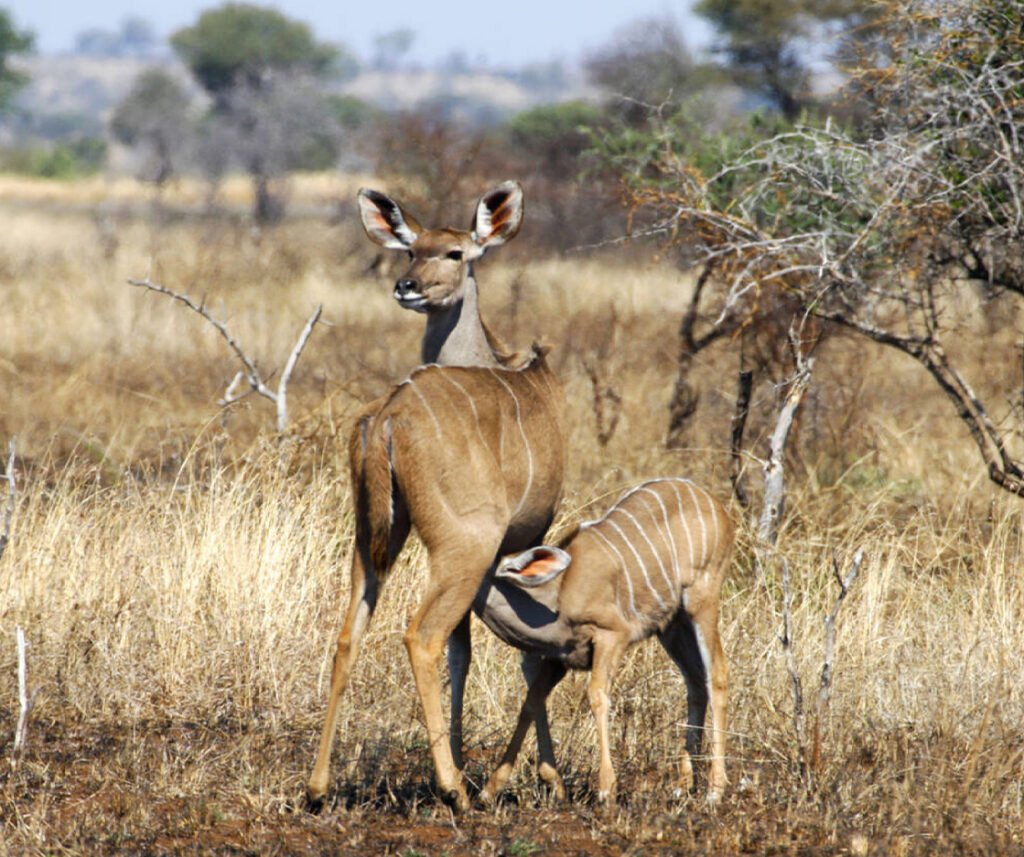
When discussing facts about the greater kudu, we must mention their picky eating habits. Unlike grazers (like zebras) that eat grass, Kudu are browsers. They use their long necks and large ears to navigate thickets in search of leaves, shoots, tubers, and even fruits.
They have a particular affinity for succulents and can survive for long periods without a standing water source, as they derive much of their hydration from the plants they consume. However, during the dry season, they will travel long distances to find water holes, making them more vulnerable to predators during these commutes.
Social Dynamics and “Bachelor Pads”
The social structure of the Greater Kudu is fascinating. Females (cows) and their offspring live in small, cohesive groups of about 6 to 10 individuals. This provides safety in numbers and communal “babysitting” for the calves.
Males, on the other hand, are much more solitary. Young males form “bachelor herds,” but as they age, they become increasingly loners, only seeking out female groups during the mating season. This separation reduces competition for food resources within the habitat, ensuring the calves and mothers have the best access to nutrition.
Incredible Leaping Ability
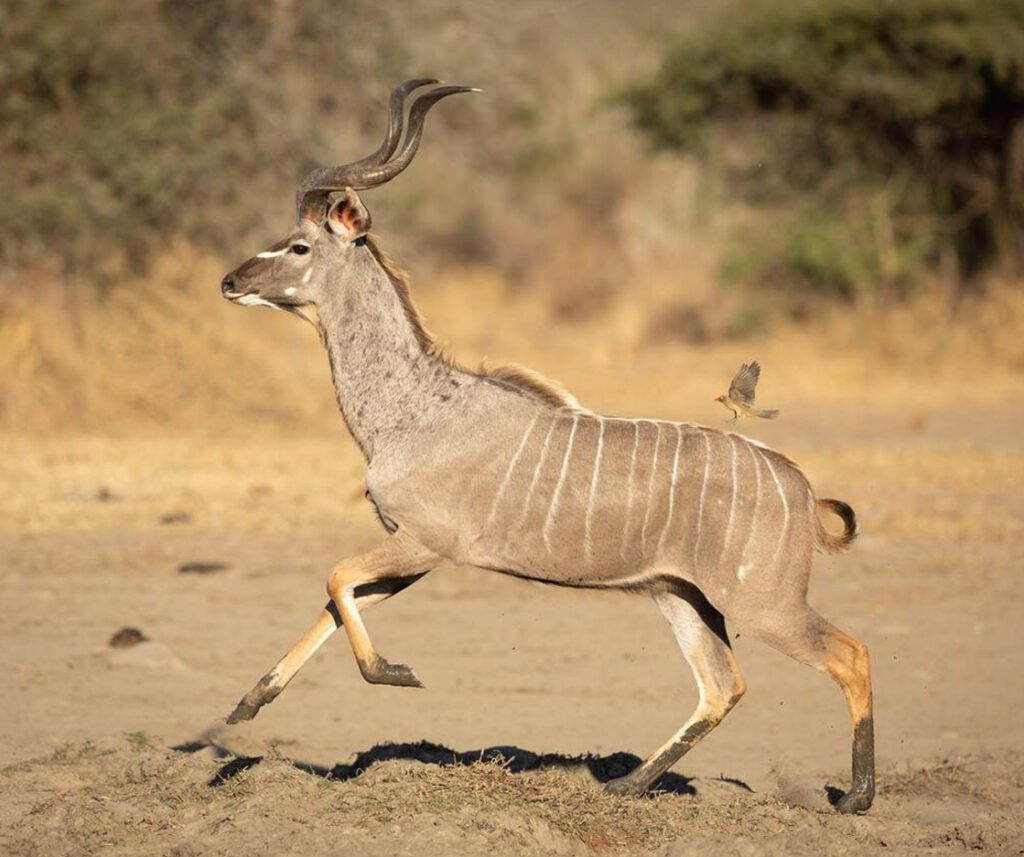
Don’t let their bulky frame fool you. One of the most impressive facts about the greater kudu is their athleticism. A Greater Kudu can jump a fence or a bush over 8 feet high from a standing start. This vertical leap is their primary escape mechanism. When fleeing, they tilt their chin up so their horns lie flat against their backs, preventing them from getting snagged on low-hanging branches as they disappear into the thicket.
Range and Habitat: Where to Find Them
Greater Kudu are widely distributed across Southern and Eastern Africa. They prefer rugged, hilly terrain or dense woodland areas over open plains. You can find them in countries like South Africa, Namibia, Botswana, and north into Ethiopia. Their preference for “bushveld” or scrubby environments is exactly why they evolved those beautiful stripes—the open savanna is simply too exposed for a creature that relies on hiding.
Conservation Status
Currently, the Greater Kudu is listed as “Least Concern” by the IUCN. However, they aren’t without their challenges. Habitat loss due to expanding agriculture and poaching for their meat and impressive horns are constant threats. Furthermore, they are highly susceptible to the rinderpest virus, which has caused significant population dips in the past.