Facts About the Springbok: The High-Jumping Icon of the Savannah
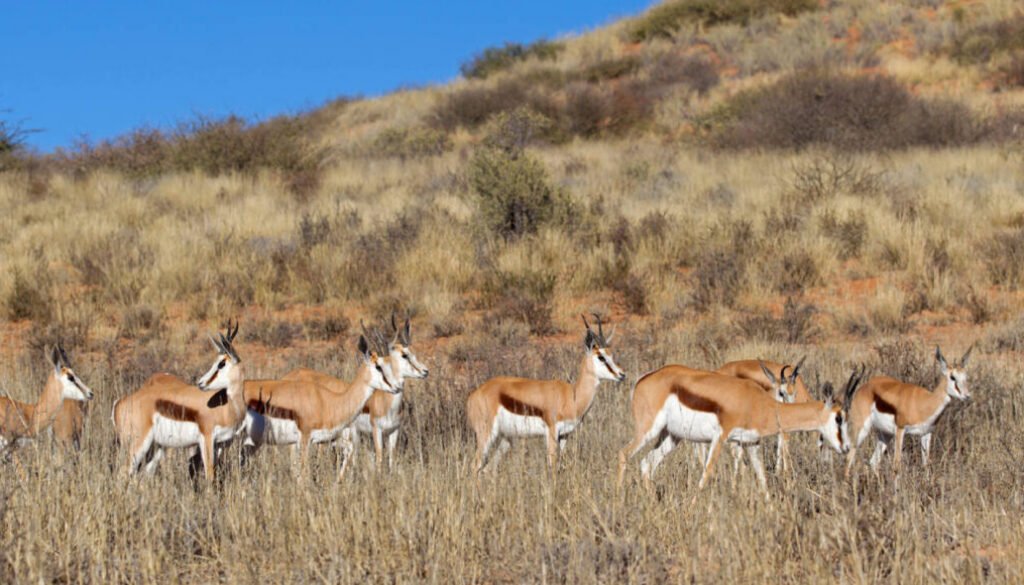
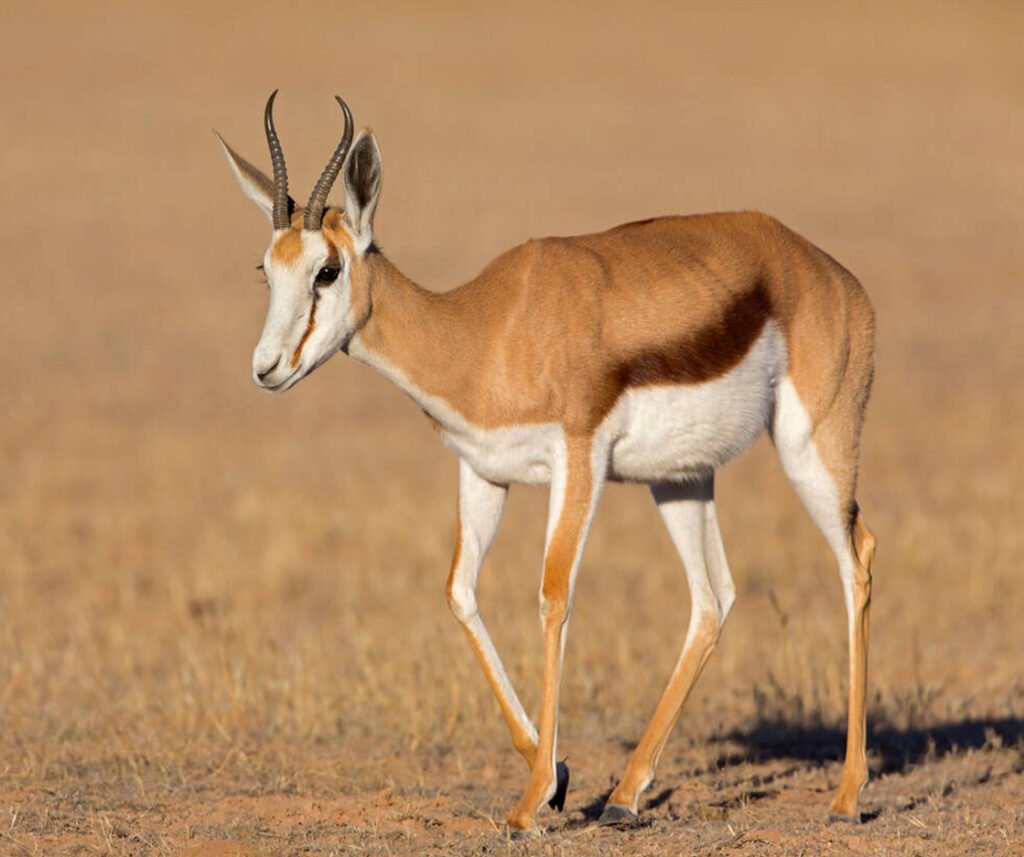
When discussing facts about the springbok, we have to start with its cultural impact. This animal isn’t just a resident of the veld; it is a national symbol. The springbok is the mascot of South Africa’s national rugby team, embodying the speed, agility, and toughness required for the sport. Beyond the pitch, it appears on the South African coat of arms and was previously the symbol of the national airline. This deep-seated respect stems from the animal’s ability to thrive in harsh, arid environments where others might falter.
Springbok Vital Statistics
-
Common Name: Springbok
-
Scientific Name: Antidorcas marsupialis
-
Type: Mammal
-
Diet: Herbivore (Browser and Grazer)
-
Average Life Span in the Wild: 7 to 10 years
-
Size: Head and body: 4 to 5 feet; Tail: 6 to 11 inches
-
Weight: 60 to 105 pounds
The Meaning Behind the Name
The name “Springbok” comes from the Afrikaans and Dutch words spring (jump) and bok (antelope or buck). It is a literal description of their most famous behavior. However, their scientific name, Antidorcas marsupialis, hides a secret. The “marsupialis” part doesn’t mean they have a pouch like a kangaroo; instead, it refers to a pocket-like skin fold on their back. When the springbok is excited or frightened, it flips this fold open to reveal a crest of white hair, signaling to others in the herd.
Master of the “Pronk”
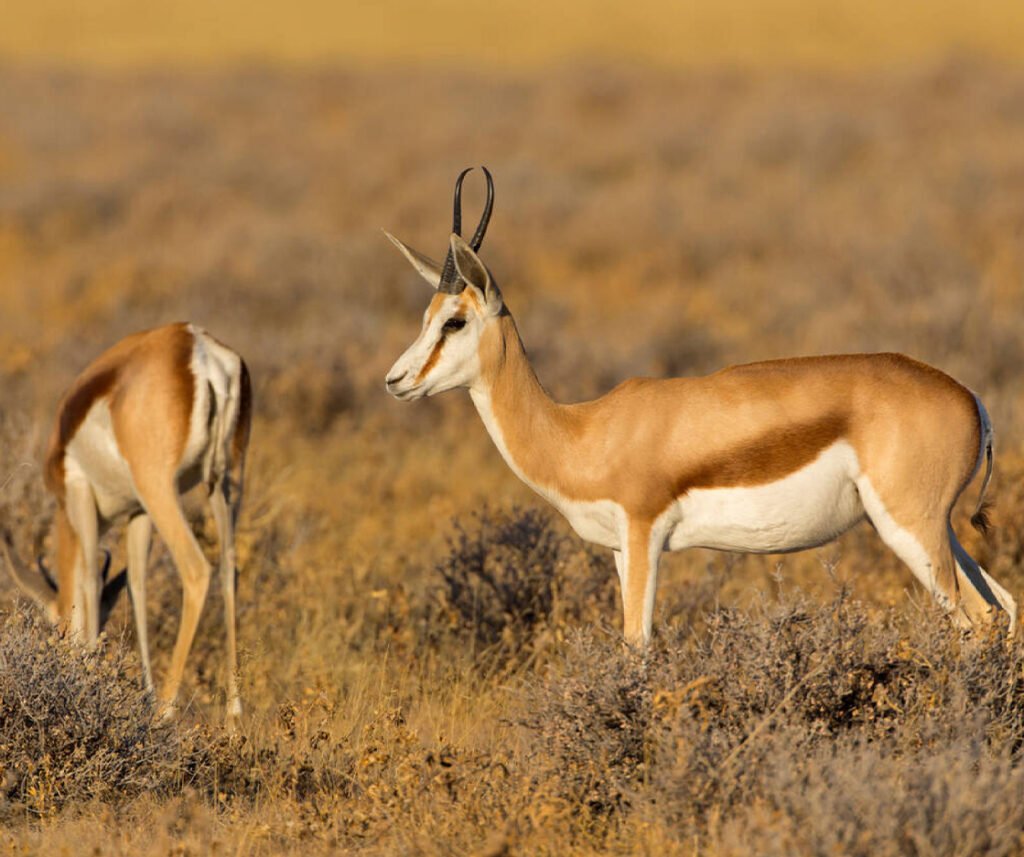
Perhaps the most mesmerizing of all facts about the springbok is their ability to “pronk.” Pronking comes from the Afrikaans word pronk, meaning to show off or strut. During a pronk, the springbok leaps straight into the air—up to 6.5 feet high—with a stiff-legged posture and an arched back.
While it looks like a joyous dance, it serves a functional purpose. It is a “stotting” behavior that tells predators like cheetahs or lions: “I am so fit and fast that you shouldn’t even bother trying to catch me.” It’s a high-stakes game of psychological warfare played out on the grasslands.
Incredible Speed and Agility
In the race for survival, the springbok is a top-tier contender. It is ranked among the fastest land animals in the world, capable of reaching speeds up to 55 miles per hour (88 km/h). While the cheetah holds the crown for the absolute fastest sprint, the springbok has better endurance and can make sharp, unpredictable turns that leave predators frustrated. This combination of velocity and maneuverability makes them one of the most difficult targets in the animal kingdom.
A Unique Approach to Hydration
Living in the Kalahari and other semi-desert regions requires specialized survival tactics. One of the most fascinating facts about the springbok is their independence from standing water. While they will drink water if it’s available, they can survive for years without it.
They achieve this by selecting succulent plants and tubers that are high in moisture. Interestingly, they often feed at night or in the early hours of the morning when the vegetation reabsorbs moisture from the air, providing them with a “hidden” water source that evaporates during the heat of the day.
Social Structures and Treks
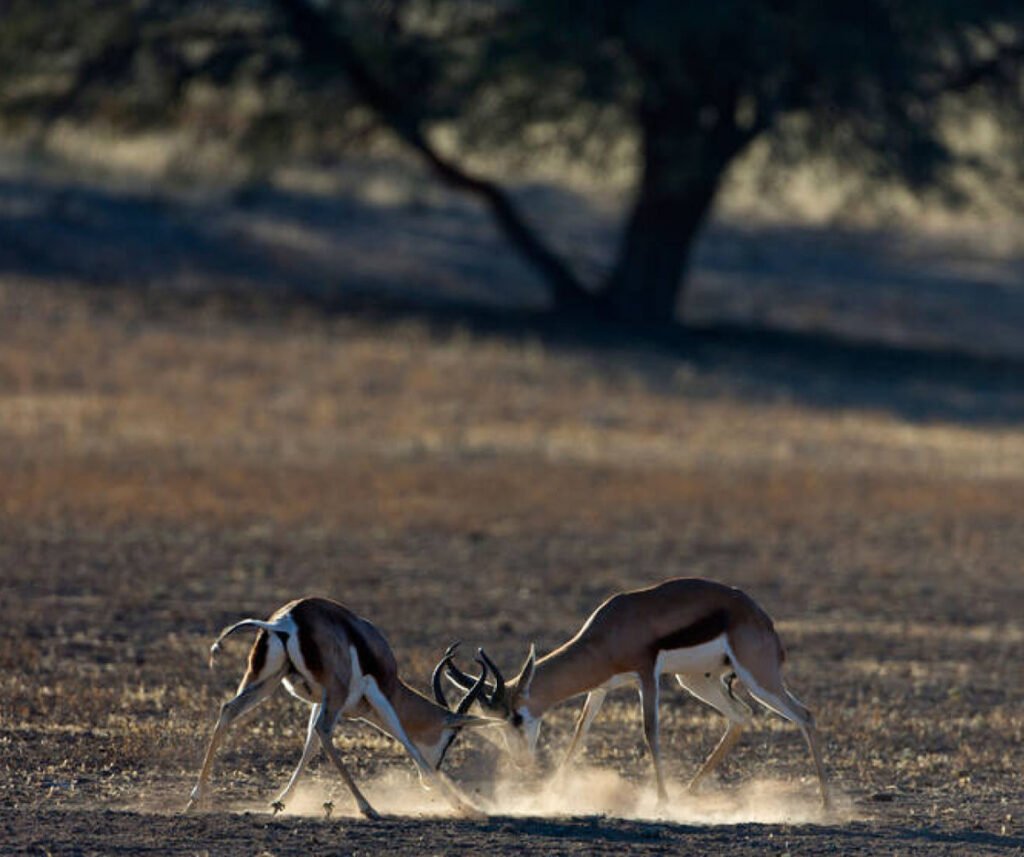
Springboks are highly social animals. They typically live in mixed-sex herds during the winter and split into nursery herds (females and young) and bachelor herds (young males) during the summer. Historically, springboks were famous for “trekbokke”—massive migrations involving hundreds of thousands of individuals moving across the landscape in search of fresh grazing. While modern fencing has largely curtailed these massive migrations, the instinct to move in large, coordinated groups remains a core part of their identity.
Specialized Eaters (Mixed Feeders)
Most herbivores are either grazers (eating grass) or browsers (eating leaves and shrubs). The springbok is both. This dietary flexibility is a massive evolutionary advantage. During the rainy season, they feast on fresh green grasses. When the dry season turns the landscape brown, they switch to browsing on hardy shrubs and succulents. This “opportunistic” eating habit ensures they stay well-nourished regardless of the season.
Breeding and Resilience
Nature has a way of ensuring the springbok persists. They are “opportunistic breeders,” meaning they can mate at any time of the year, though they often time births to coincide with the arrival of the rains when food is most abundant. A single lamb is born after a gestation period of about six months. These lambs are remarkably precocious; they can stand and move within hours of birth, a necessary trait when predators are always on the lookout for a weak link in the herd.