Facts About the Reticulated Giraffe: The Ultimate Guide
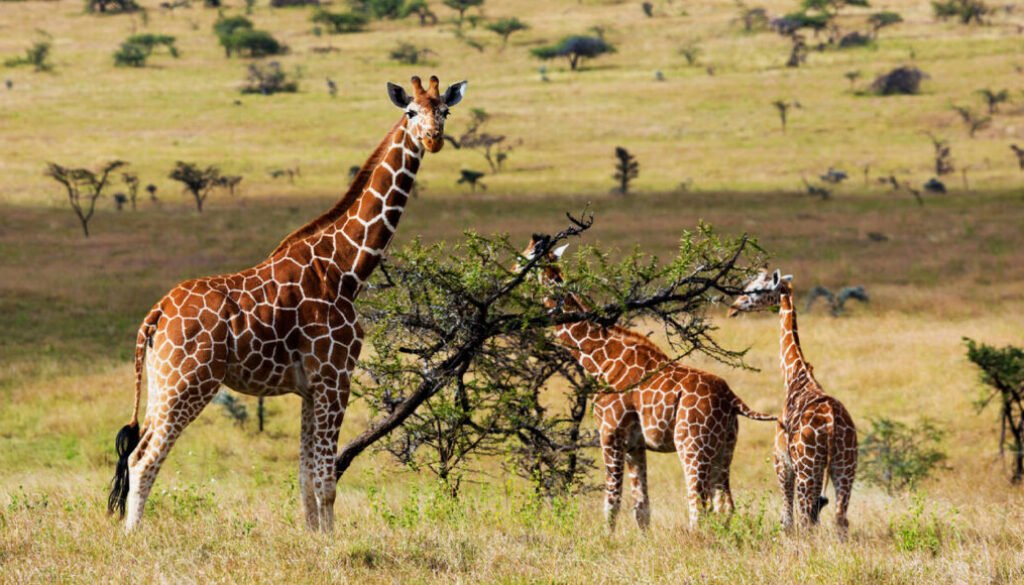
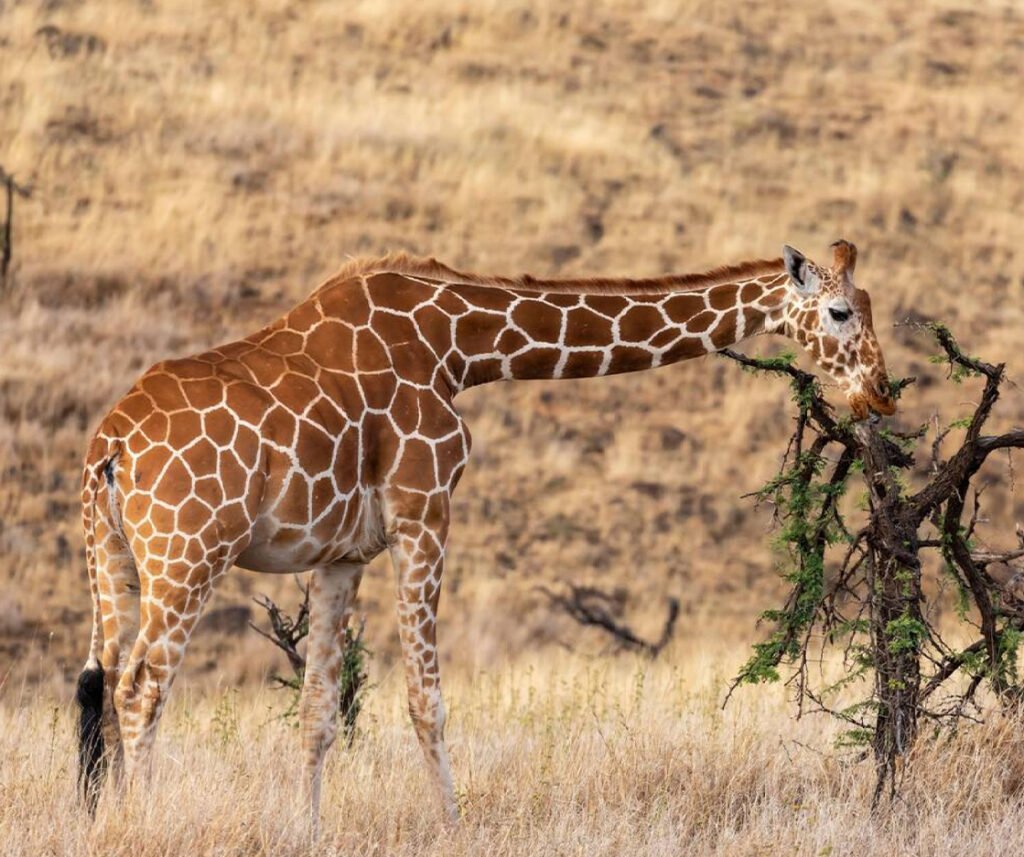
One of the most fascinating facts about the reticulated giraffe is the origin of its name. The word “reticulated” refers to a net-like pattern. Unlike other giraffe subspecies that may have jagged or star-shaped spots, the reticulated giraffe possesses large, polygonal liver-colored spots outlined by sharp, white lines.
This isn’t just for show. These patterns act as a sophisticated camouflage system, breaking up the giraffe’s outline against the dappled light of the acacia trees. Furthermore, scientists believe these spots act as thermal windows. Beneath each patch lies a complex network of blood vessels that allow the giraffe to dissipate heat, a vital adaptation for surviving the scorching Kenyan heat.
Reticulated Giraffe: At a Glance
-
Common Name: Reticulated Giraffe (also known as the Somali giraffe)
-
Scientific Name: Giraffa camelopardalis reticulata
-
Type: Mammal
-
Diet: Herbivore
-
Average Life Span In The Wild: 15 to 25 years
-
Size: Head and body: 13 to 18 feet
-
Weight: 1,700 to 4,200 pounds
The Engineering of a Giant: Height and Weight
When we discuss facts about the reticulated giraffe, we cannot ignore their staggering proportions. Standing up to 18 feet tall, they are the tallest land mammals on Earth. A newborn giraffe is already 6 feet tall at birth—taller than most adult humans!
Their weight is equally impressive. A large male can weigh over 4,000 pounds. To support this massive frame, the giraffe possesses a heart that weighs roughly 25 pounds and is about 2 feet long. This powerful pump must generate enough pressure to move blood all the way up that long neck to the brain. To prevent a massive head rush when the giraffe lowers its head to drink, a specialized valve system called the rete mirabile regulates blood flow.
Diet and the Art of High-Altitude Eating
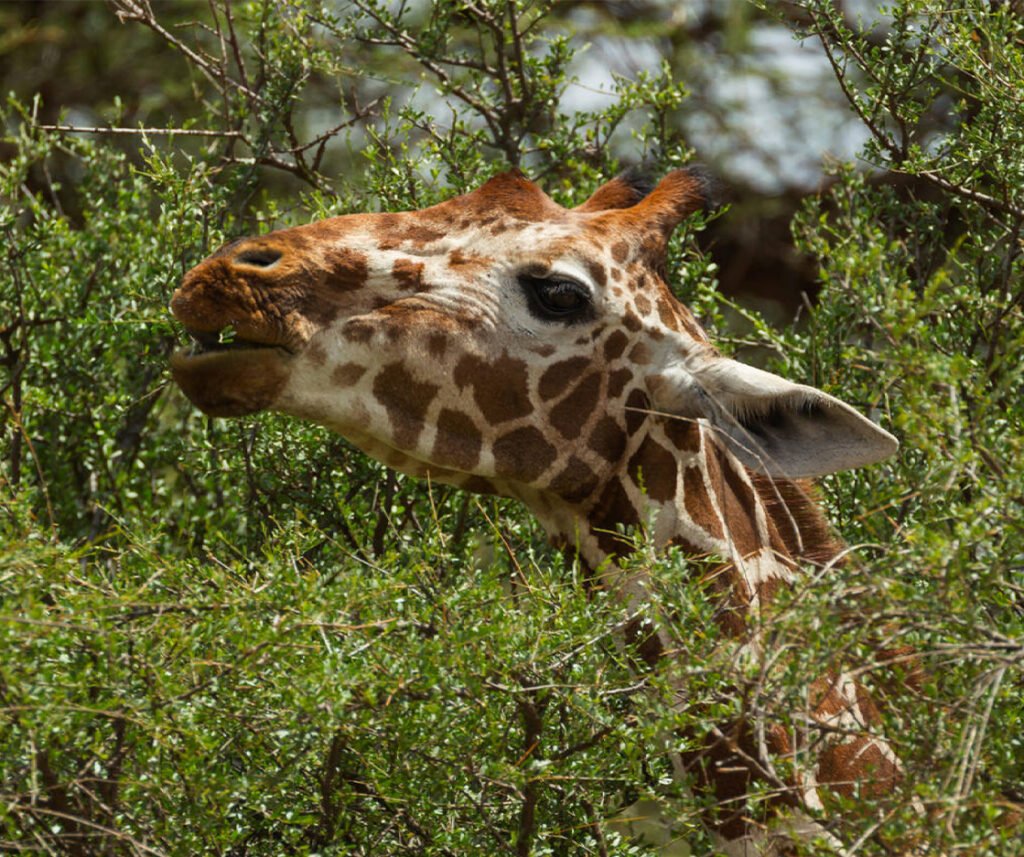
As strict herbivores, reticulated giraffes have a very specific palate. Their diet consists primarily of leaves, shoots, and fruits from trees, with a particular fondness for the acacia.
One of the coolest facts about the reticulated giraffe is the anatomy of their mouth. They possess a prehensile tongue that can stretch up to 18 inches long. This tongue is bluish-purple or black, which protects it from getting sunburned while the giraffe spends hours stripping leaves from high branches. Additionally, their mouths are toughened with thick tissue to protect against the formidable thorns of the acacia tree.
Because their food source is moisture-rich, giraffes can go days without drinking water. This is a lucky trait, as the act of drinking is their most vulnerable moment; they must splay their front legs in an awkward “tripod” position, making them easy targets for predators like lions.
Social Life and “Tower” Dynamics
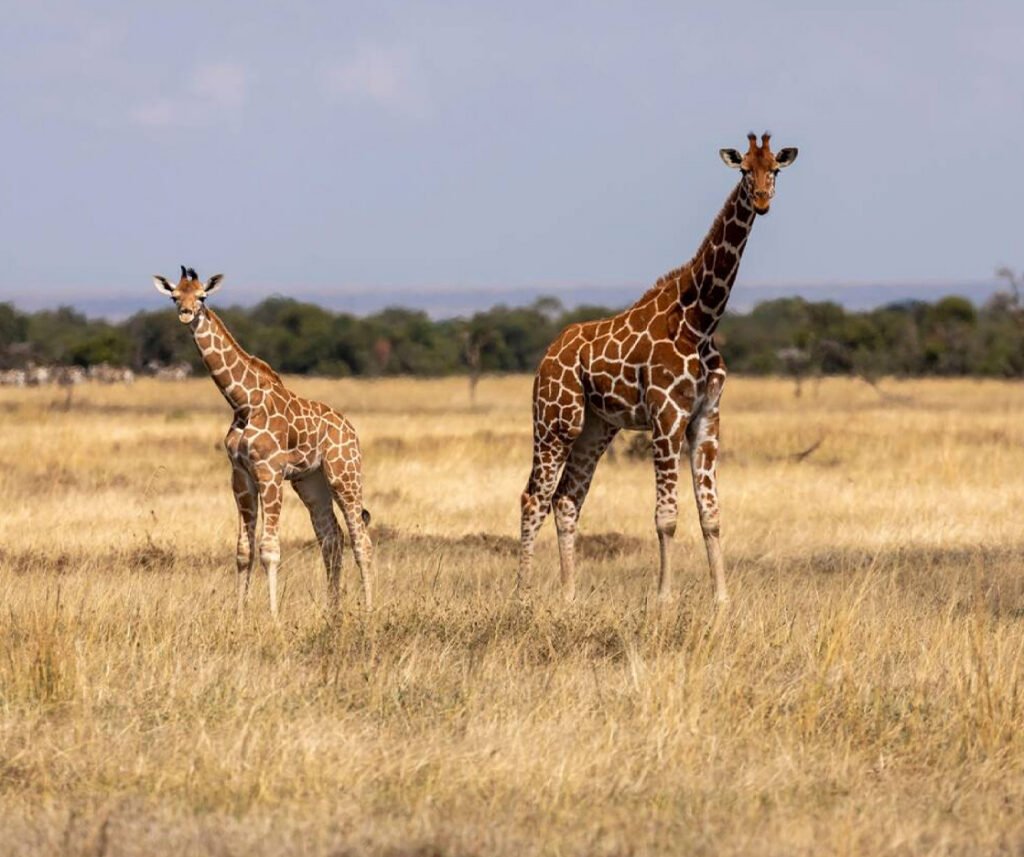
In the wild, a group of giraffes is aptly called a “tower.” However, their social structure is far more fluid than that of elephants or lions. These are “fission-fusion” societies, meaning individuals join and leave groups as they please.
Interesting facts about the reticulated giraffe social behavior include “necking.” This is a form of ritualized combat between males (bulls). They swing their heavy necks like sledgehammers, clashing heads to establish dominance. While it looks violent, it rarely results in serious injury, though the winner earns the right to mate with the local females.
Reproduction and the Long Journey to Adulthood
The life cycle of a reticulated giraffe is a testament to endurance. A mother giraffe is pregnant for about 15 months. When it is time to give birth, she does so standing up. This means the calf’s first experience in the world is a 6-foot drop to the ground!
Remarkably, the calf is usually standing and walking within thirty minutes. This “hit the ground running” strategy is essential for survival on the savannah. Despite this, the mortality rate for calves is high; nearly 50% do not survive their first year due to predation by lions, hyenas, and leopards.
Conservation: Protecting the Mosaic
Perhaps the most somber facts about the reticulated giraffe involve their current population status. While once roaming in vast numbers across Ethiopia, Somalia, and Northern Kenya, their numbers have plummeted by over 50% in the last thirty years.
Habitat loss, civil unrest, and illegal poaching are the primary threats. Because they are large and relatively easy to track, they are often hunted for their meat and hides. Fortunately, organizations like the Giraffe Conservation Foundation are working tirelessly to track populations using satellite collars and community-led initiatives to ensure these “watchtowers of the savannah” do not disappear.