What Are the Samburu Special Five?
What are the Samburu Special Five? They are five rare, beautifully adapted species uniquely tailored to thrive in the rugged, semi-desert wilderness of northern Kenya: the Reticulated Giraffe, Grevy’s Zebra, Beisa Oryx, Somalian Ostrich, and . Together, they form an exclusive wildlife ensemble that rivals any classic safari lineup, telling a story of evolutionary brilliance and survival against the odds.
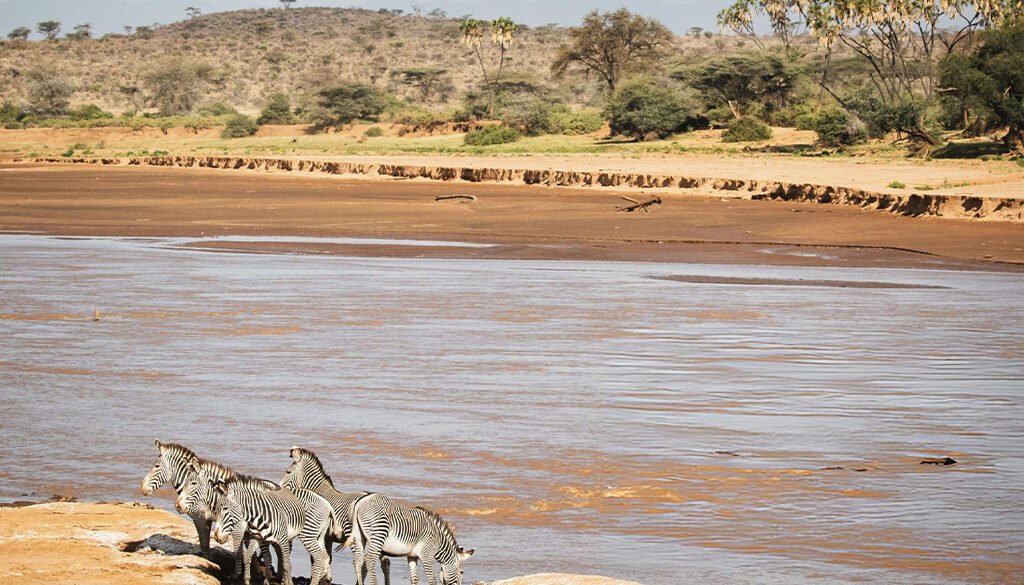
To truly understand what makes these animals so captivating, you have to picture the land they call home. Samburu is a breathtaking landscape of red earth, acacia scrublands, and dramatic granite outcrops, bisected by the lifeline of the Ewaso Nyiro River. Unlike the lush, rolling grasslands of the Masai Mara, water here is scarce, and the heat is intense. To survive in such an unforgiving environment, nature had to innovate. The Samburu Special Five are not merely variations of familiar African animals; they are specialized masterpieces of adaptation, each equipped with distinct features, striking patterns, and remarkable behaviors that allow them to flourish where others would struggle.
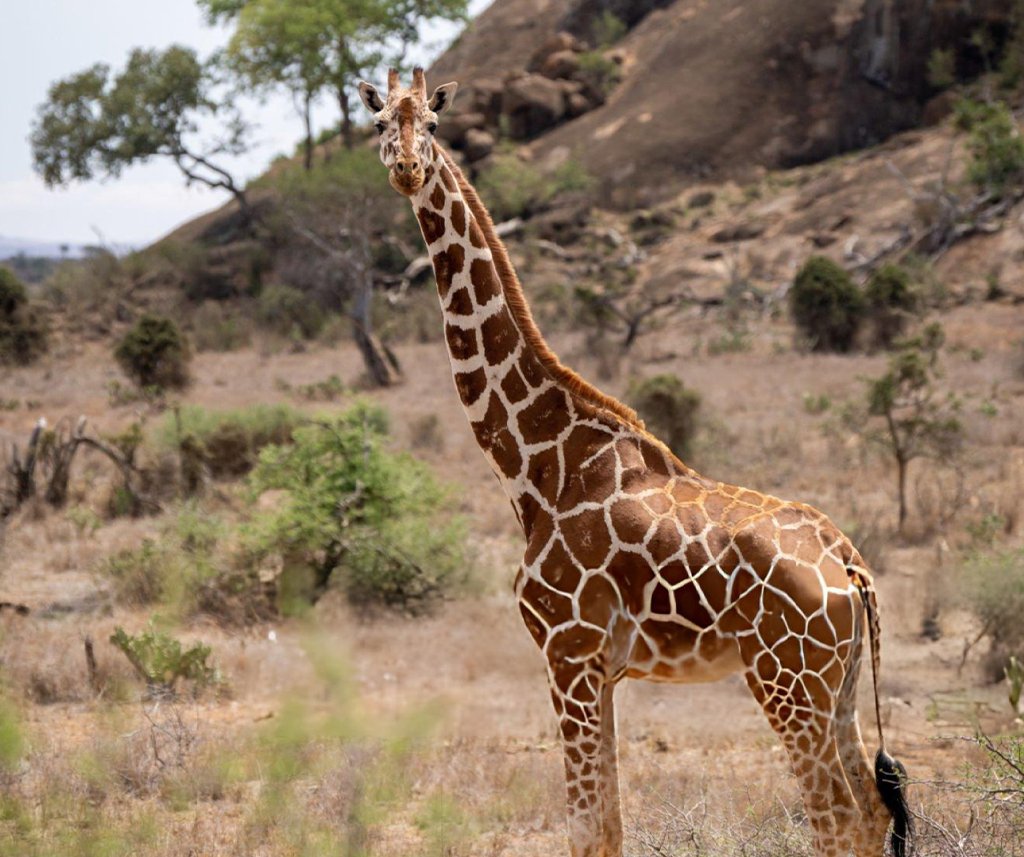
1. The Reticulated Giraffe: Nature’s Geometric Masterpiece
Take a moment to picture the first member of this exclusive club, the Reticulated Giraffe. While you may have seen giraffes before, the Reticulated Giraffe is instantly recognizable by its breathtaking geometric pattern. Unlike the jagged, irregular blotches of the southern or Maasai giraffes, the Reticulated Giraffe features crisp, deep reddish-brown polygons separated by bright, sharp white lines. Looking at one is like admiring a hand-paved mosaic or a piece of living artwork moving gracefully across the savanna. They stride through the acacia thickets like towering sentinels, using their exceptionally long, prehensile tongues to pick tender leaves from thorny branches without getting scratched. In the harsh sunlight of Samburu, their bold patterns even help break up their silhouette, blending them seamlessly into the dappled shade of the thorn trees.
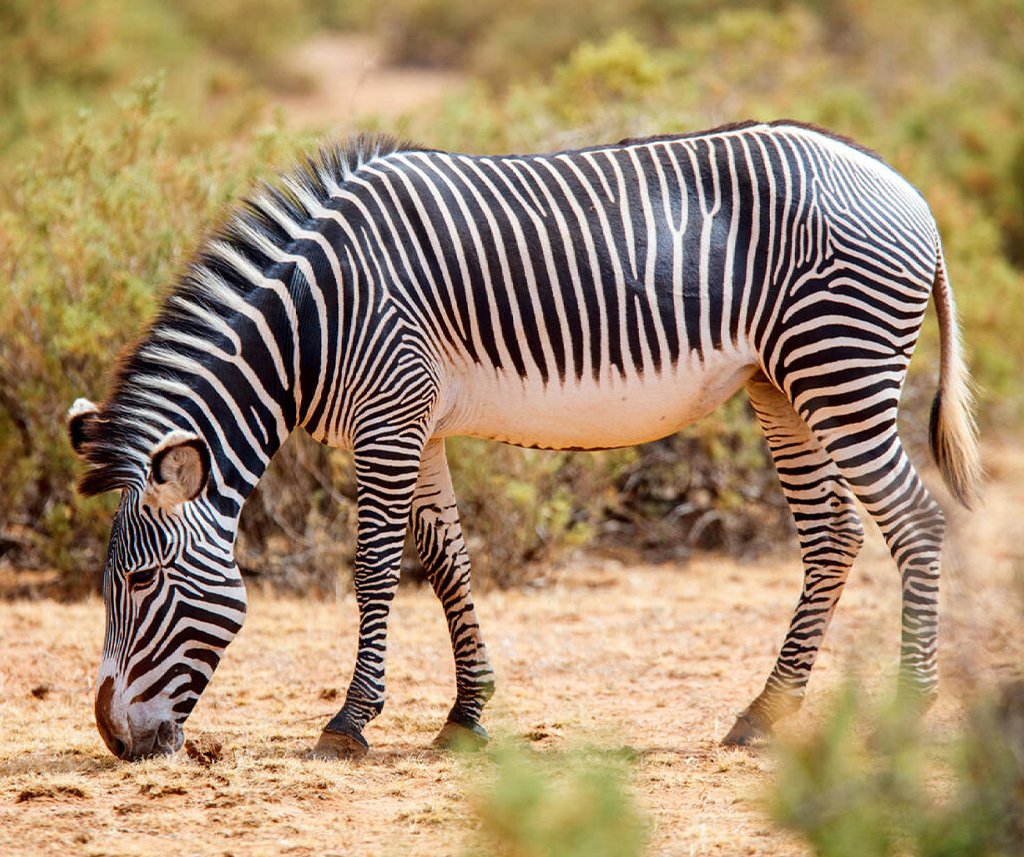
2. The Grevy’s Zebra: The Regal Equid of the Arid North
As you sweep your gaze across the dry scrubland, a second member steps into view—the Grevy’s Zebra. If you think all zebras are alike, a single glance at a Grevy’s will change your mind forever. Named after a former president of France who received one as a gift in the late nineteenth century, the Grevy’s Zebra is the largest and most endangered of all wild equids. It stands taller and prouder than the common plains zebra, with large, rounded, mule-like ears that sweep the air to catch the faintest sounds of approaching predators. But what truly sets it apart is its coat. The Grevy’s zebra possesses fine, narrow, hair-like black and white stripes that create a shimmering optical effect in the heat haze. They look almost regal, possessing a quiet dignity as they graze upon the tough, dry grasses that other grazers leave behind.
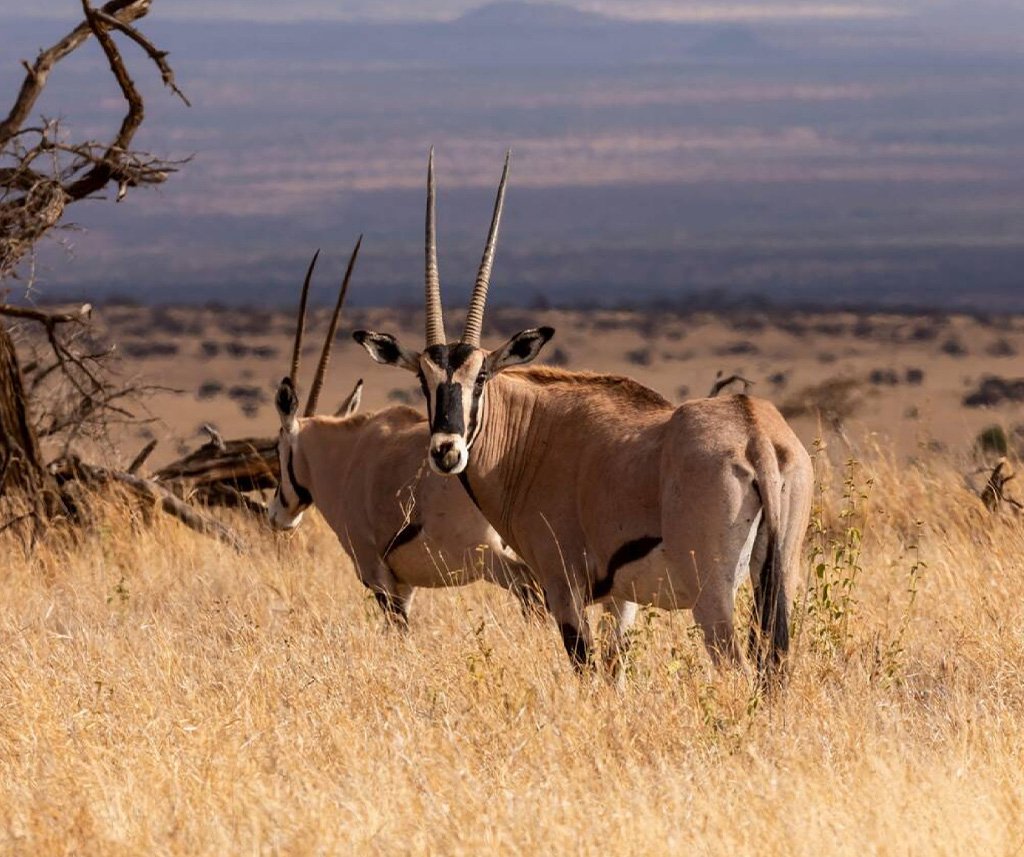
3. The Beisa Oryx: The Legendary Desert Warrior
Moving further into the open plains, you might spot a creature that looks like a warrior in armor: the Beisa Oryx. This stunning antelope is built for extreme drought. With its pale grey coat, striking black facial markings that look like a protective mask, and two long, straight, spear-like horns pointing skyward, the Beisa Oryx is a sight to behold. Legend has it that viewed from a distance in profile, the single visible horn of an oryx gave rise to the myth of the unicorn. Beyond its mythic appearance lies an extraordinary physiological superpower: the Beisa Oryx can tolerate internal body temperatures that would prove fatal to most mammals. By allowing its core temperature to rise during the heat of the day, it conserves precious moisture by avoiding the need to sweat. It can survive for weeks or even months without drinking a single drop of water, extracting every bit of moisture it needs from dry foliage and underground tubers.
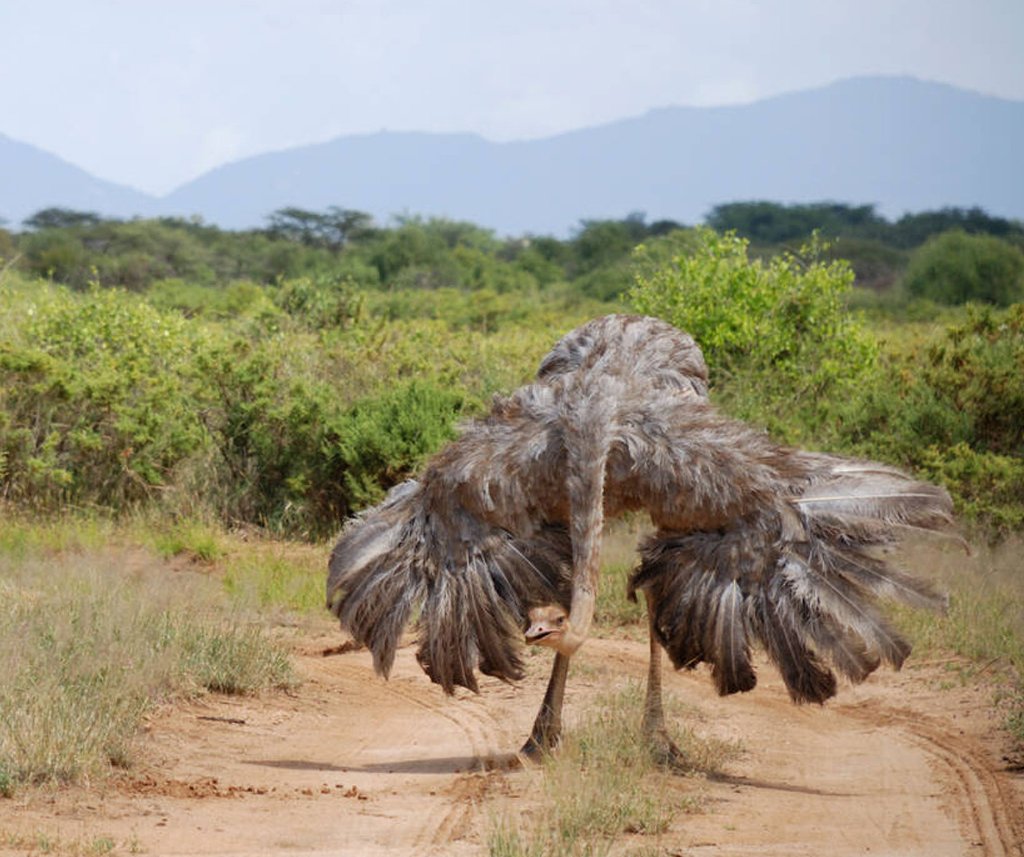
4. The Somalian Ostrich: The Indigo Speed Demon
Then, out on the open flats, a massive blue-necked bird struts with an air of absolute confidence. This is the Somalian Ostrich, the fourth iconic species of this desert group. While most people are familiar with the common ostrich, the Somalian Ostrich is a distinct species with a striking color palette. The males feature bare skin on their necks and thighs that glows with a vivid indigo-blue, especially during the breeding season when they perform dramatic courtship dances to win over females. Standing up to nine feet tall, these birds are speed demons of the desert, capable of running across the dusty terrain at speeds exceeding forty miles per hour. Their powerful legs are not just built for running; a single kick from a Somalian Ostrich carries enough force to fend off an hungry predator like a lion or hyena.
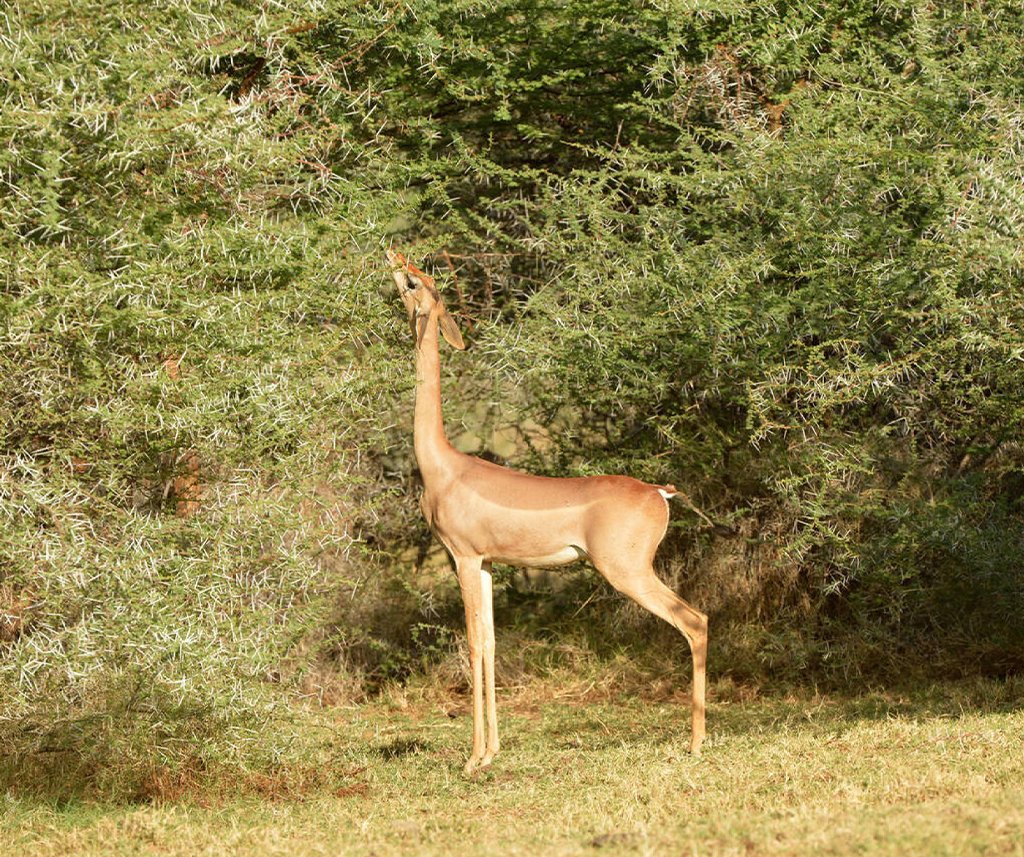
5. The Gerenuk: The Bipedal Browsing Wonder
Finally, you come to perhaps the most unusual and delightful member of the group: the Gerenuk. Its name comes from the Somali language, meaning “giraffe-necked,” and one look at this slender antelope explains why. The Gerenuk possesses an impossibly long, thin neck and a delicate, dainty head. But its true claim to fame is how it feeds. While other antelopes graze near the ground, the Gerenuk rears up on its hind legs, balancing completely upright like a human standing on tip-toes. Using its front feet to pull down high branches, it uses its long upper lip to nibble on tender green leaves that are far out of reach for other small herbivores. Watching a Gerenuk perform this standing balance act amidst the thorn bushes is one of the most magical and surreal spectacles in all of African wildlife viewing.
Why the Samburu Special Five Belong on Your Safari Bucket List?
Together, the Samburu Special Five represent the beating heart of northern Kenya’s natural heritage. Visiting Samburu and tracking down the Reticulated Giraffe, Grevy’s Zebra, Beisa Oryx, Somalian Ostrich, and Gerenuk is more than just ticking boxes on a safari checklist; it is an immersive journey into a fragile ecosystem where life has learned to bend, adapt, and triumph in the face of adversity. Seeing the Samburu Special Five in their natural habitat offers a truly extraordinary adventure.
The next time you picture an African adventure, look beyond the well-trodden paths of the south, and listen for the call of the north—where the Samburu Special Five wait to show you a side of the wild you will never forget.