How Do Giraffes Eat Acacia Trees? Thorns, Tannins & Tongue Science
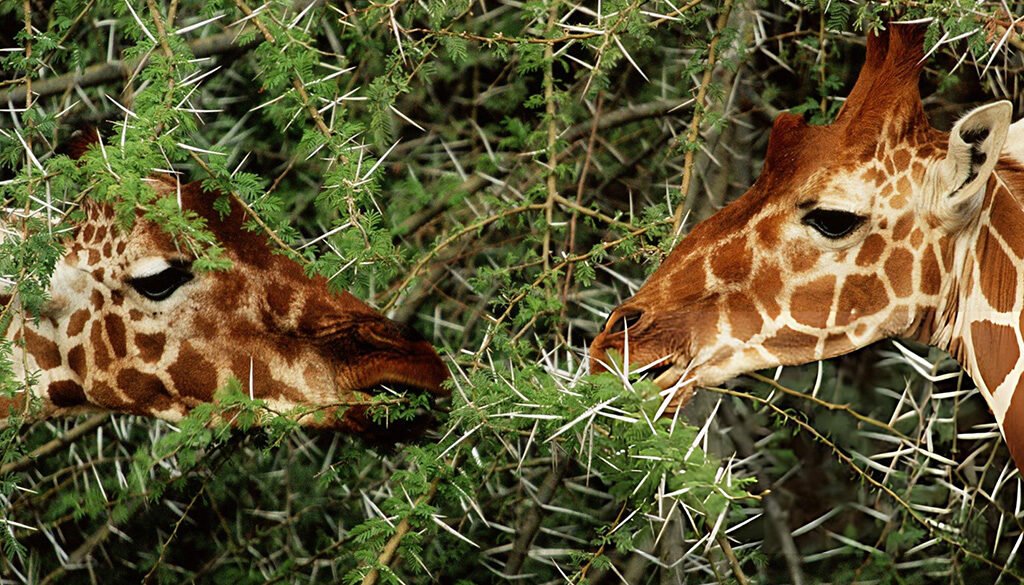
Giraffes eat acacia trees using a combination of specialized physical adaptations—including 18-inch prehensile tongues, thick saliva, and leathery mouth linings—and behavioral tactics that bypass the tree’s chemical defenses.
Anatomy of the Feeder: Tongue & Oral Adaptations
Understanding how giraffes eat acacia trees starts with their specialized mouth structure. The African acacia produces two main types of physical armor: long, straight, hollow white spines (up to 3 inches long) and smaller, curved “hooked” thorns. To navigate this botanical minefield, giraffes rely on specialized anatomical tools:
-
Prehensile Tongue: Ranging between 18 to 20 inches (45–50 cm) in length, the tongue acts like a flexible hand. It can wrap around branches to strip foliage clean while entirely bypassing sharp thorns.
-
Melanin Sunscreen: The front portion of the tongue is dark blue, purple, or black. This heavy concentration of melanin prevents sunburn during the 12+ hours a day giraffes spend feeding under the African sun.
-
Leathery Papillae & Thick Tissue: The inside of the mouth, lips, and tongue are covered in hardened, calloused papillae and a tough, dense lining that resists punctures from sharp spines.
-
Viscous Saliva: Giraffes produce thick, sticky saliva that coats any thorn that manages to slip past their lips, allowing swallowed spines to pass smoothly through the digestive system without lacerating organs.
The Plant’s Counter-Attack: Tannins & Chemical Signaling
Acacia trees do not rely solely on physical thorns. When damaged by browsers, the tree initiates a rapid chemical defense system designed to poison or deter herbivores.
When a giraffe begins stripping leaves, the tree releases bitter tannins into its foliage within minutes. In high concentrations, tannins bind to proteins, making the leaves indigestible and toxic in large quantities.
Simultaneously, the stressed tree releases an airborne plant hormone called ethylene gas. Nearby acacias detect this signal on the wind and preemptively flood their own leaves with tannins before the browser even arrives.
The Giraffe’s Tactical Workaround
Giraffes have developed clever behavioral counter-strategies to outsmart the tree’s chemical alarm system:
-
Upwind Feeding: Giraffes consistently browse upwind. By moving against the wind, they reach new trees before the ethylene gas signal can travel downwind to warn them.
-
Short Browsing Bursts: A giraffe rarely stays at a single acacia tree for more than 10 to 15 minutes. They eat quickly and move on before tannin levels inside the leaves reach dangerous concentrations.
The Acacia Ant Defense (Symbiosis)
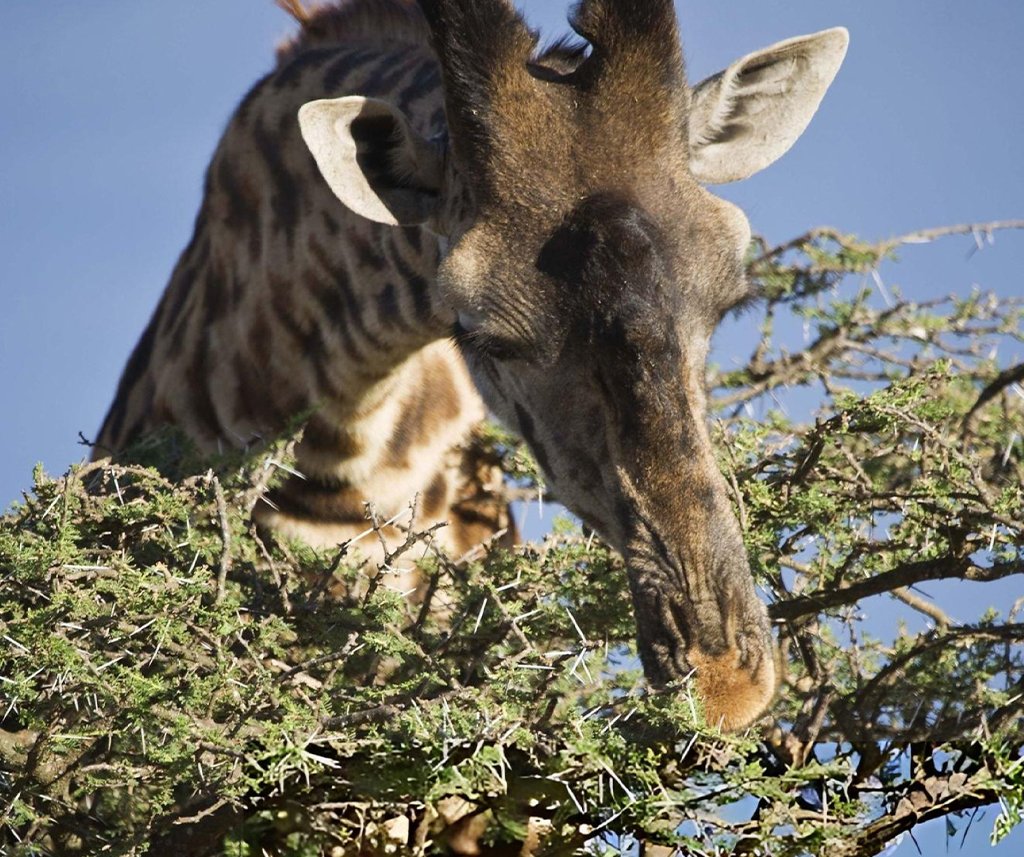
Certain species, such as the Vachellia drepanolobium (Whistling Thorn), host colonies of aggressive Crematogaster ants inside swollen thorn bases. In exchange for nectar and housing, these ants attack any animal attempting to eat the leaves by swarming the mouth and nostrils, delivering painful bites.
To bypass ant colonies, giraffes use their long, sensitive lips to gently pluck leaves from the tips of outer branches where ant density is lowest. If a swarm activates, the giraffe simply moves to another tree section.
Evolutionary Arms Race: Giraffe vs. Acacia
Defensive Barrier | Structural Role | Functional Benefit |
Physical Armor | 3-inch straight spines & curved thorns | 18-20" prehensile tongue, thick papillae, viscous saliva |
Chemical Toxicity | Rapid tannin surge in leaves | Short 10-minute feeding windows per tree |
Tree Communication | Ethylene gas signals to neighboring trees | Browsing upwind to target unwarned trees |
Biological Bodyguards | Symbiotic Crematogaster ant swarms | Delicate lip dexterity targeting branch tips |