
Are Bats Blind? The Truth Behind the ‘Blind as a Bat’ Myth Explained
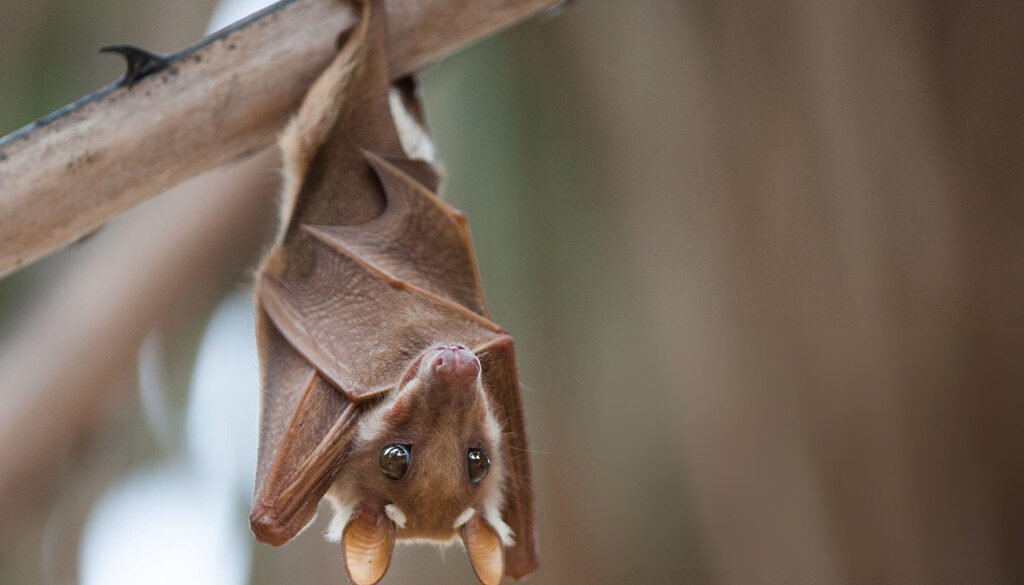
Are bats blind? Here is the truth right up front: bats are not blind. In fact, not a single species among the more than fourteen hundred bat species known to science is blind. Far from living in total darkness, many bats possess visual acuity that rivals or even exceeds our own, especially when the night sets in.
Why People Ask “Are Bats Blind?”
The origin of the myth comes down to a simple case of human misunderstanding. When we watch a bird fly, its path is smooth, predictable, and graceful. Birds navigate primarily by sight during the day, riding air currents and making sweeping turns. Bats, on the other hand, fly with an erratic, fluttering movement that looks frantic and uncoordinated to human eyes. To an observer standing in the dusk centuries ago, it looked as though the bat was blundering around blindly, barely avoiding trees and human hair by sheer luck.
Add to that the fact that bats emerge from pitch-black caves, hollow logs, and dark attics long after the sun has set, and it was easy for early naturalists to assume that eyes were useless to such creatures. People naturally questioned, are bats blind, simply because their flight patterns look so different from daytime animals.
However, modern biology paints a radically different picture. When asking are bats blind, science divides these remarkable mammals into two broad groups: the smaller, insect-hunting microbats, and the larger fruit-eating megabats, often known as flying foxes. Each group has evolved visual capabilities tailored perfectly to its unique lifestyle.
Microbats: Echolocation and Sight Working Together
Let us start with the microbats, because they are the main reason people ask if bats are blind in the first place. Microbats are the famous acoustic acrobats of the animal kingdom. They hunt mid-flight insects like moths and mosquitoes in pitch-black darkness using echolocation. To do this, a microbat emits extremely high-frequency sound bursts through its mouth or nose. These sound waves travel through the air, bounce off surrounding objects, and bounce back to the bat’s remarkably sensitive ears. By processing these returning echoes in real time, the bat creates an extraordinarily detailed three-dimensional acoustic map of its surroundings. The system is so precise that a microbat can detect an object as thin as a single human hair in complete darkness and calculate the exact speed and trajectory of a fleeing moth in a fraction of a second.
Because echolocation is so dominant when microbats hunt up close, early researchers assumed their small eyes were mere evolutionary leftovers, non-functional relics of their land-dwelling ancestors. While a microbat’s eyes may be small, they are fully functional. Echolocation is an extraordinary tool, but it has a built-in limitation: sound waves fade quickly over long distances. High-frequency sonar gives a bat an exquisite view of what is five or ten feet in front of it, but it cannot reveal a mountain range miles away or tell the bat where the horizon lies.
That is where vision takes over. Microbats use their eyes for long-range navigation, guiding themselves across vast landscapes by tracking the silhouettes of tree lines, river valleys, and mountain ridges against the night sky. They also rely on their vision to register changes in daylight, ensuring they know precisely when dusk arrives so they can leave their roosts to hunt. In short, echolocation acts as their close-up radar, but vision is their long-distance GPS.
Megabats: Large Eyes Built for the Night
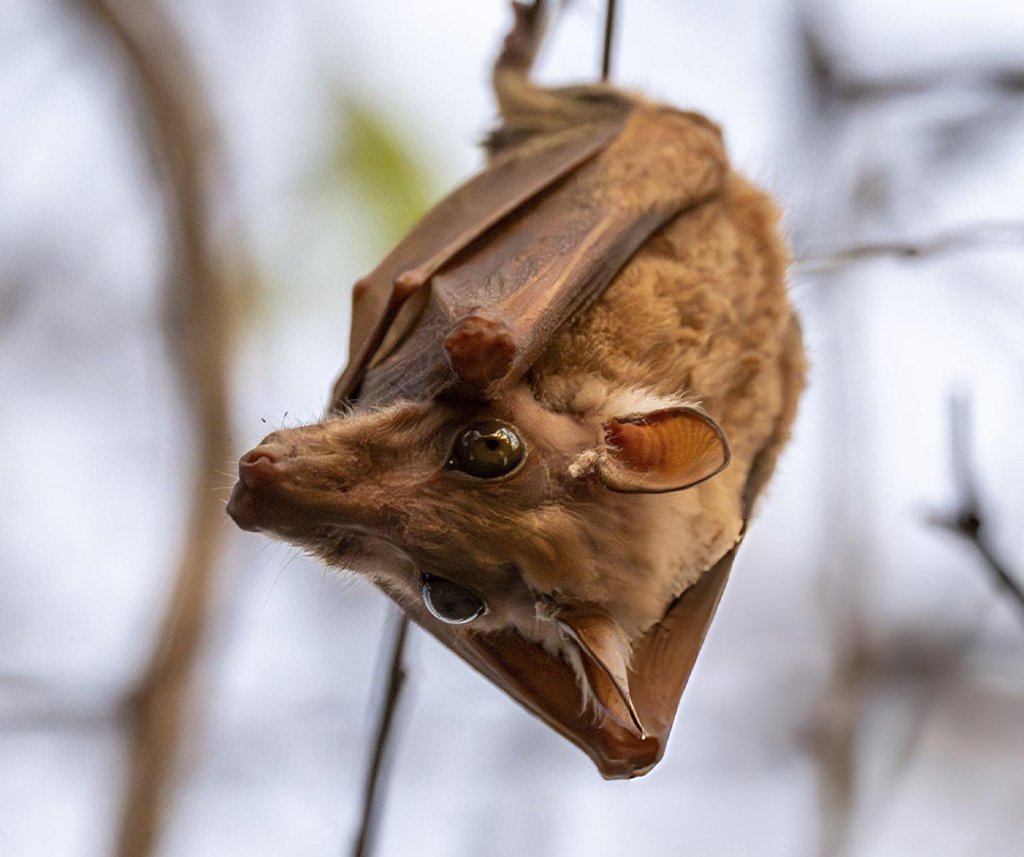
If microbats prove that sonar and sight can comfortably coexist, the larger megabats shatter any lingering doubts when asking they are blind. Megabats—such as fruit bats and flying foxes—do not even possess the ability to laryngeally echolocate. They do not navigate with sound at all. Instead, they rely almost entirely on large, prominent, highly developed eyes, working in harmony with a powerful sense of smell.
If you look at a flying fox, you will notice its eyes are large, forward-facing, and surprisingly fox-like. These eyes are packed with a high density of light-sensitive photoreceptor cells called rods, making them masterfully adapted for low-light conditions. In the faint glimmer of moonlight or starlight, a megabat can navigate dense jungle canopies, spot ripening fruit hanging from branches hundreds of yards away, and avoid flying predators with ease. Their night vision is easily comparable to that of an owl or a nocturnal cat.
Ultraviolet Vision and Advanced Sensory Integration
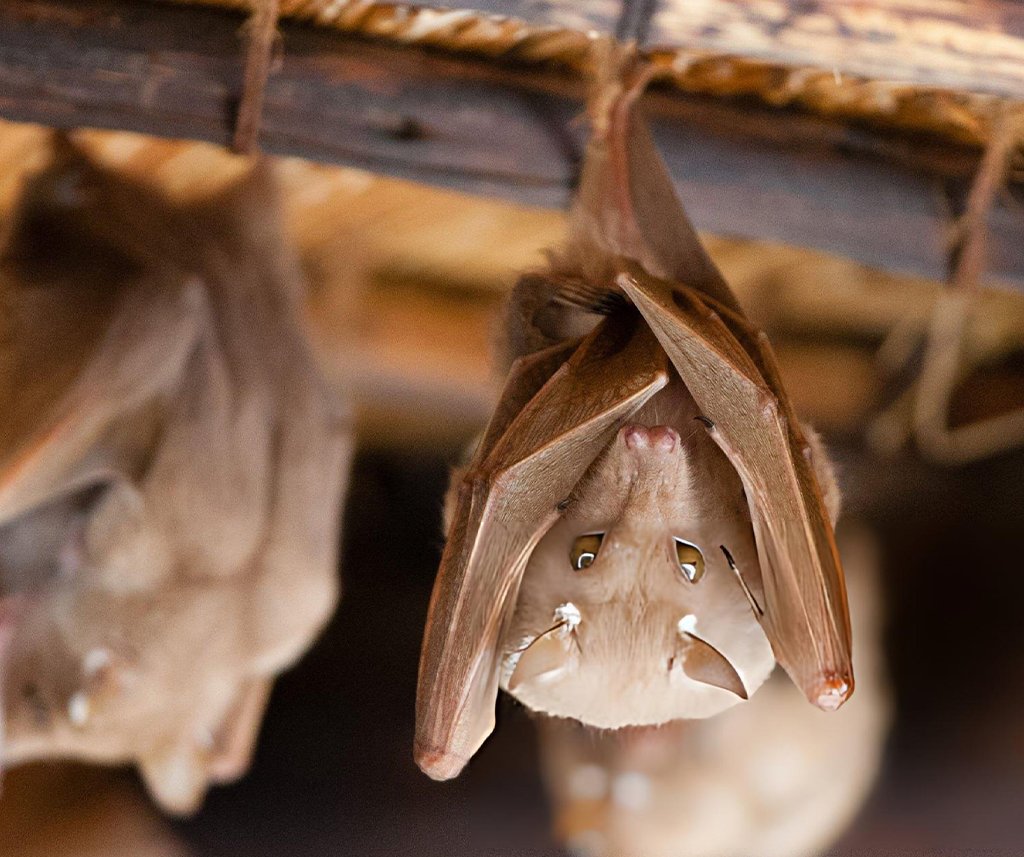
In fact, recent scientific discoveries have revealed that when examining bats, some species actually possess visual abilities that humans cannot even fathom. Certain species of nectar-feeding bats have eyes capable of perceiving ultraviolet light. To the human eye, a flower blooming at midnight might look dull and hidden in the dark. But to a nectar-feeding bat, that flower reflects ultraviolet wavelengths, glowing like a beacon against the dark foliage. The flower effectively advertises its location in a visual spectrum designed exclusively for the bat’s eyes, guiding the creature directly to its sweet reward while aiding in pollination.
Bat Group | Primary Sensing Method | Visual Capability | Main Food Source |
Microbats | Echolocation + Night Vision | Long-range landscape navigation, UV perception | Insects, small prey |
Megabats | High-Acuity Vision + Smell | Superior low-light night vision | Fruit, nectar, pollen |
Far from being a liability, the combination of senses available to bats makes them some of the most sensorially equipped creatures on Earth. When a bat takes to the sky at dusk, it is not trapped in an abyss of blindness. It experiences the world through a rich, multi-layered sensory matrix where light, shadow, scent, and echoing sound weave together into a complete picture of the night. Sight gives the broad outline of the landscape, smell leads to food sources, and echolocation paints the immediate details with pinpoint precision.
The phrase “blind as a bat” endures in our everyday vocabulary, but it is nothing more than a historical mistake born of human observation errors. The next time you step outside at twilight and catch a glimpse of a dark silhouette darting through the air, remember that you are not watching a blind animal blundering through the night. You are watching a master of navigation who can see the world in ways we are only beginning to understand—a creature that uses eyes, ears, and mind to turn the dark sky into its personal playground.