What is the Hardest Animal to See on Safari?
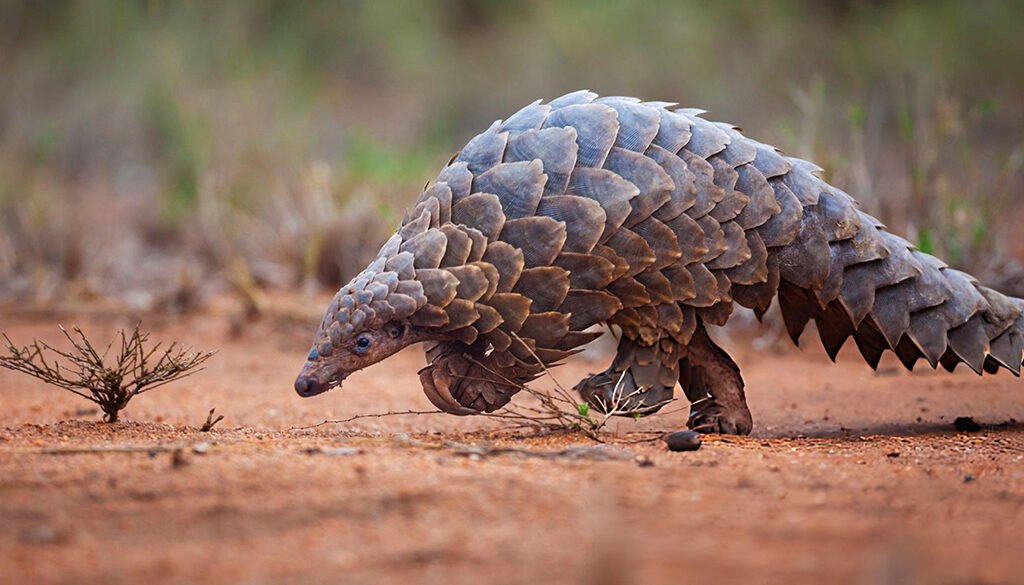
If you ask any veteran tracker for the absolute hardest animal to see on safari, the answer is almost always unanimous. It is the elusive pangolin.
The pangolin—specifically Temminck’s ground pangolin in sub-Saharan Africa—holds the undisputed title of the continent’s ultimate ghost. Covered in overlapping armor plating made of pure keratin (the same material as human fingernails), this solitary, scaly mammal looks like a living pinecone or a creature straight out of a prehistoric era. They spend their days tucked deep inside underground burrows, emerging only under the complete cover of darkness to forage for ants and termites.
Because they are strictly nocturnal, incredibly quiet, and leave very little scent trail for tracking dogs or big cats to follow, spotting a wild pangolin on a game drive is a once-in-a-lifetime miracle. In fact, many professional safari guides who have spent decades living and working in the bush have only seen one or two in their entire careers.
Quick Guide: Africa’s Most Elusive Safari Wildlife
Animal | Primary Habitat | Main Reason It's Hard to Spot |
Ground Pangolin | Savannahs & arid woodlands | Strictly nocturnal, burrowing, highly secretive |
African Leopard | Riverine forests & dense canopy | Flawless camouflage, arboreal resting habits |
African Wild Dog | Vast open plains & bushveld | Nomadic, covers up to 50 km per day |
Aardvark | Arid scrublands & grasslands | Deep burrowing, skittish nocturnal behavior |
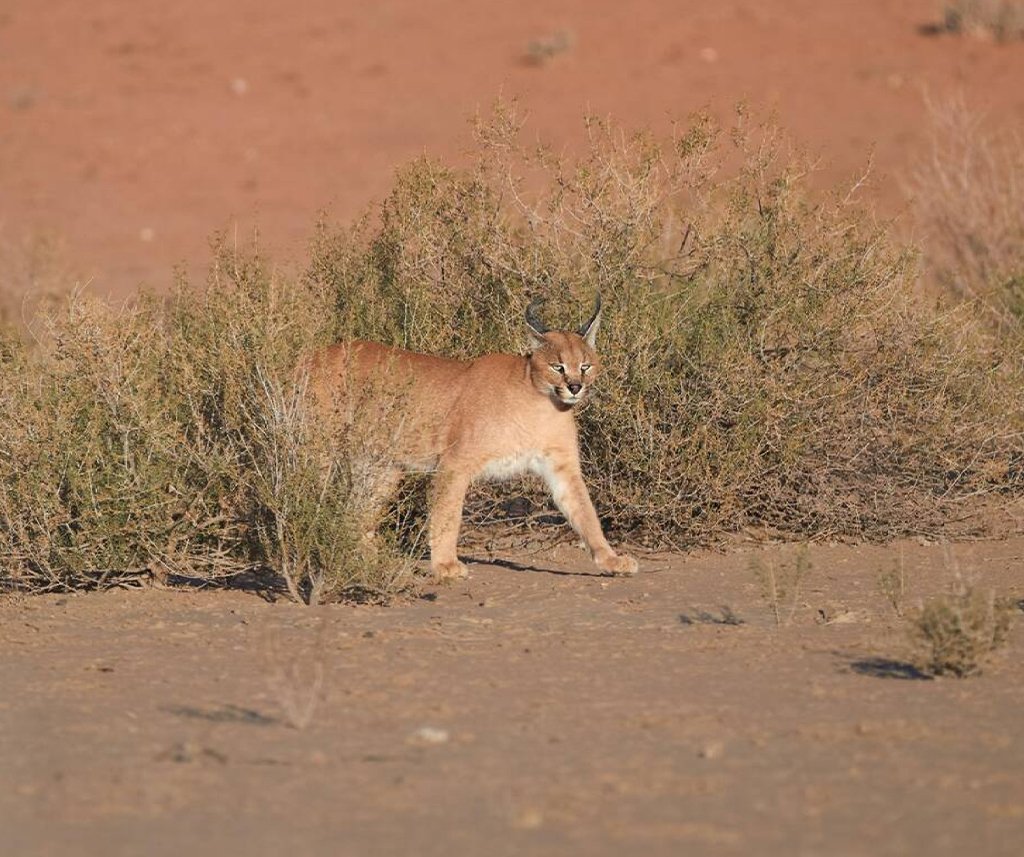
Serval / Caracal | Tall grasslands & rocky kopjes | Low-profile movement, shy and solitary |
Why Are Elusive Animals So Difficult to Spot?
While the pangolin takes the crown as the hardest animal to see on safari overall, Africa’s vast wilderness hides an entire cast of shadowy creatures that test the patience of even the most experienced trackers. Understanding why these species are so difficult to find comes down to a clever mix of behavior, habitat preference, nocturnal habits, and sheer evolutionary genius.
1. The Leopard: Master of Aerial Stealth
Consider the leopard, an icon of the famous Big Five that regularly tops the list of animals travelers desperately want to see, yet frequently miss. Among the big cats, leopards are the undisputed masters of stealth. A lion might sprawl lazily in the middle of an open dirt track, but a leopard blends seamlessly into the dappled light of an acacia branch.
Their rosette-patterned coats act as flawless camouflage against the thick canopy, allowing them to rest just feet above a passing open-top safari vehicle without anyone inside realizing they are being watched from above. Add to that their solitary nature and preference for hunting between dusk and dawn, and finding a leopard becomes a masterclass in tracking subtle visual clues—a tail hanging down like a creeping vine, or the frantic alarm calls of vervet monkeys echoing through the riverine forest.
2. The African Wild Dog: The Perpetual Nomad
Moving from the leafy canopy to the open grasslands, another phantom of the bush is the African wild dog, also known as the painted hound. Unlike resident leopards that maintain relatively stable territories, wild dogs are perpetual wanderers.
A single pack of wild dogs can cover home ranges spanning hundreds of square miles in just a few days. You might spend three days searching a private reserve where a pack was active yesterday, only for them to have trotted thirty miles overnight in search of impala. When they do appear, their incredible hunting speed means a sighting can vanish as quickly as it began, leaving behind only swirling dust and quiet bushveld.
3. Creatures of the Night: Aardvarks and Aardwolves
If you venture out on a specialized night drive with a spotlight, you enter the realm of Africa’s secretive nocturnal specialists. The aardvark, with its long snout, rabbit-like ears, and powerful digging claws, is a subterranean architect that reshapes the ecosystem. Like the pangolin, the aardvark lives almost entirely underground during the day and wanders vast distances at night searching for termite mounds.
Its distant cousin in appearance, the aardwolf, may look like a miniature striped hyena, but it survives purely on insects, consuming up to 300,000 termites in a single evening. Both species are skittish, possess acute hearing, and vanish into the brush the second a light beam or vehicle motor disturbs them.
4. The Grassland Felids: Serval and Caracal
Even among smaller predators, some species remain almost mythically obscure. Take the serval and the caracal, two small-to-medium wild cats that inhabit the long grass and rocky terrain. The serval boasts the longest legs relative to body size of any cat, using them to pounce high into the air on unsuspecting rodents hidden in tall vegetation.
The caracal, with its striking black ear tufts and fiery coat, is a lightning-fast hunter capable of plucking birds straight out of mid-air. Yet, because both species are fiercely solitary and spend most of their time moving through tall cover where vehicles cannot follow, seeing either one requires exceptional luck and a sharp-eyed guide.
The Magic of the Unseen Wilderness
The difficulty of spotting these elusive species is precisely what gives an African game drive its thrill. The wilderness does not run on a human schedule, and wild animals do not appear on command. Every safari drive is a unpredictable roll of the dice, where hours of patient searching through dusty tracks and dense thickets can suddenly culminate in a magical, fleeting moment with one of Africa’s most secret inhabitants.
Whether it’s catching the brief glance of a leopard nestled in a mahogany tree or the incredible luck of crossing paths with the hardest animal to see on safari under a star-filled sky, the challenge of the search makes the final reward truly unforgettable.