Facts About the Grant’s Gazelle: The Desert-Adapted Elite of East Africa
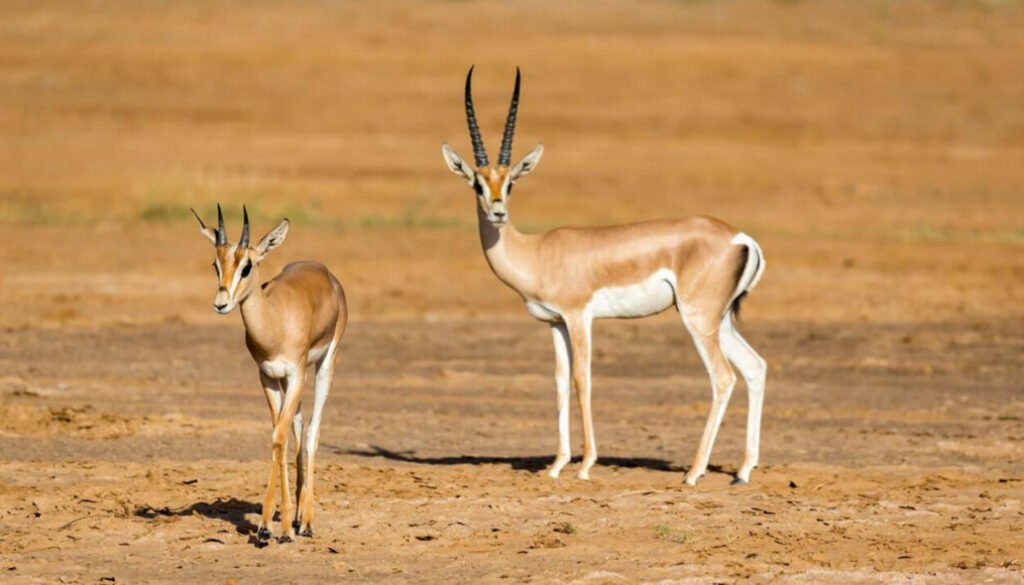
One of the most striking facts about the Grant’s gazelle is its incredible ability to thrive where others wither. While most gazelles and antelopes are tethered to water sources, the Grant’s gazelle is a drought-defying specialist. They have evolved to extract nearly all the moisture they need from the plants they consume. By feeding at night or in the early morning when plants are dew-laden, they maximize their fluid intake.
Physiologically, they are built for the heat. They can raise their core body temperature to match the sweltering African sun, reducing the need to sweat and conserve precious water. This allows them to remain in parched regions long after the zebras and Thompson’s gazelles have migrated toward greener, wetter pastures.
Essential Facts About the Grant’s Gazelle
-
Common Name: Grant’s Gazelle
-
Scientific Name: Nanger granti
-
Type: Mammal
-
Diet: Herbivore
-
Average Life Span in the Wild: 12 to 15 years
-
Size: Head and body: 120 to 170 cm; Tail: 20 to 25 cm
-
Weight: 45 to 80 kg
Distinguishing the Grant’s from the Thompson’s
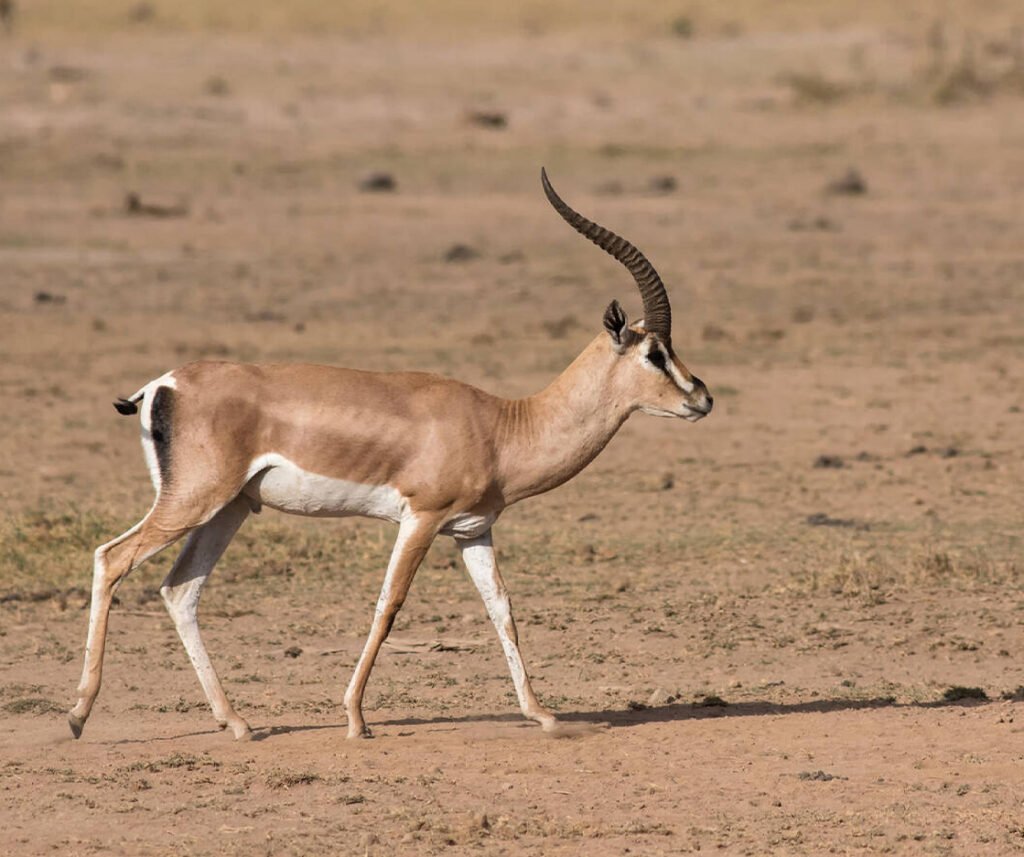
In the wild, it is easy to confuse different species, but identifying a Grant’s gazelle becomes simple once you know what to look for. One of the key facts about the Grant’s gazelle is its size; it is significantly larger and more robust than its cousin, the Thompson’s gazelle.
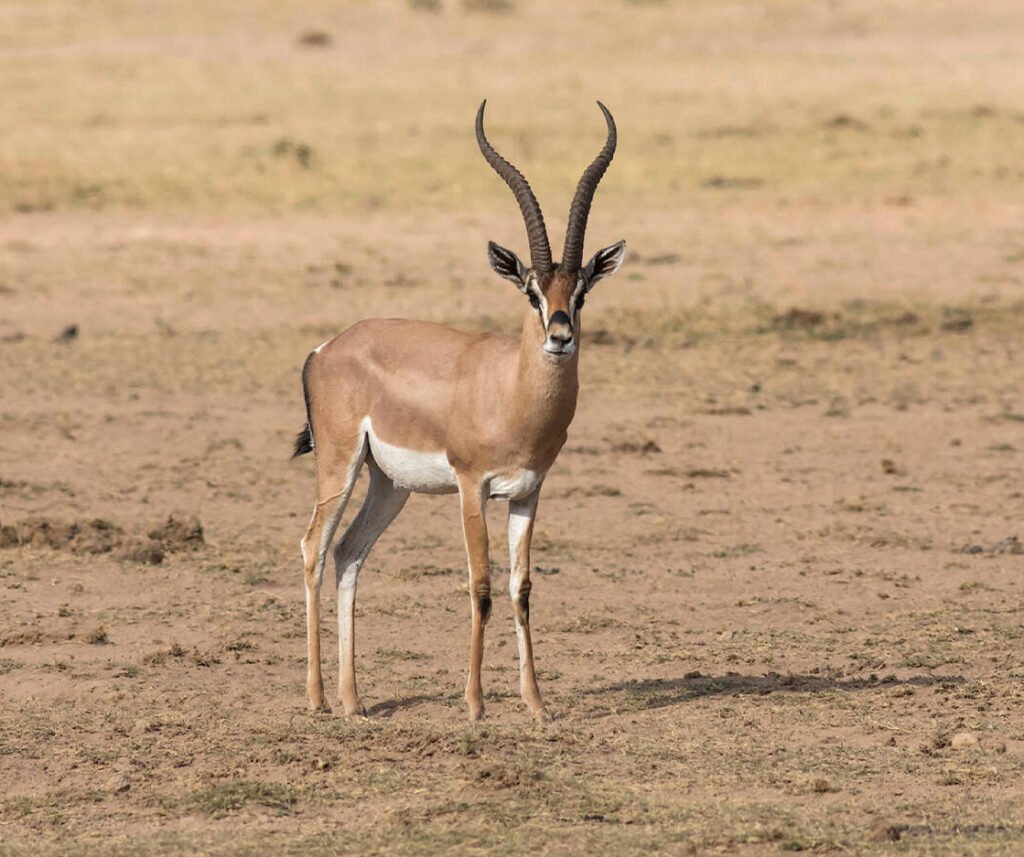
Visually, look at the “pygal” (buttocks) area. On a Grant’s gazelle, the white patch on the rump extends upward above the tail and onto the back. Additionally, while Thompson’s gazelles almost always have a bold, dark lateral stripe along their flank, this stripe is either faint or entirely absent in adult Grant’s gazelles. Their horns are also a major giveaway—they are lyre-shaped, heavily ridged, and can grow up to 30 inches long, making them a formidable sight.
Social Dynamics and Survival
The social structure of these animals is fluid and fascinating. They typically live in herds that can range from a few individuals to several hundred. These groups are often segregated by sex:
-
Bachelor Herds: Young and non-territorial males congregate to hone their sparring skills.
-
Nursery Groups: Females and their young stay together for protection.
-
Territorial Males: A dominant male will claim a patch of land, hoping to attract passing groups of females.
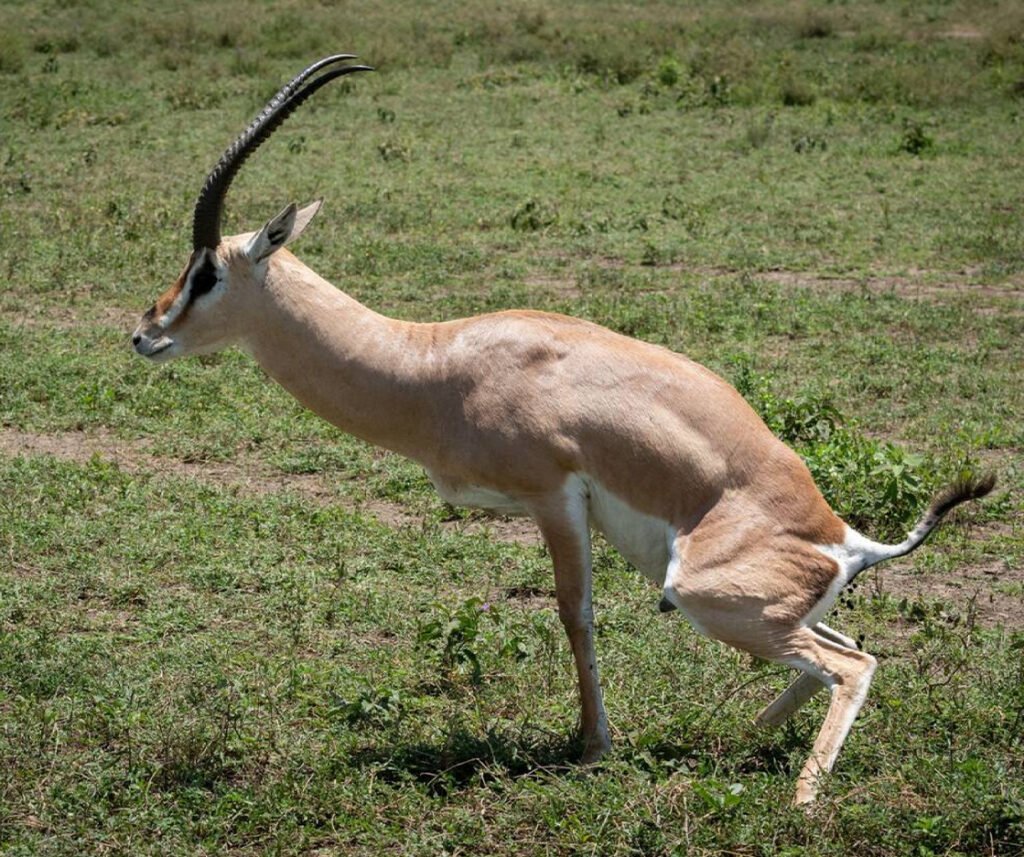
Communication is vital for survival. When a predator like a lion or hyena is spotted, the gazelles use a behavior known as “stotting” or “pronking.” They spring into the air with all four legs stiff and their backs arched. While it seems like a waste of energy, it serves as a powerful signal to the predator: “I am strong, fast, and I have seen you. Don’t bother chasing me.”
Diet and Foraging Habits
As mixed feeders, Grant’s gazelles are not picky eaters. They are both grazers (eating grass) and browsers (eating leaves and shrubs). This dietary flexibility is another reason they can survive in varied environments, from treeless plains to thornbrush thickets. During the dry season, they pivot toward browsing on hardy shrubs and herbs that retain moisture, ensuring they stay hydrated even when the grass turns to golden dust.
Reproduction and Life Cycle
Life begins precariously on the plains. After a gestation period of about seven months, a single fawn is born. For the first few weeks of its life, the fawn is a “hider.” The mother finds a patch of tall grass or a hidden thicket where the fawn lies perfectly still, camouflaged against the earth. The mother grazes nearby, returning several times a day to nurse. Once the fawn is strong enough to outrun most predators, it joins the herd, beginning its life as one of the most graceful inhabitants of the wild.
Conservation Status
Currently, the Grant’s gazelle is listed as Least Concern by the IUCN, but that doesn’t mean they are free from threats. Habitat loss due to expanding agriculture and competition with domestic livestock are ongoing challenges. However, because they are so well-adapted to semi-desert conditions, they often fare better than more water-dependent species as climates shift.