Facts About the Thomson’s Gazelle: The Cheetah-Dodging Sprinter

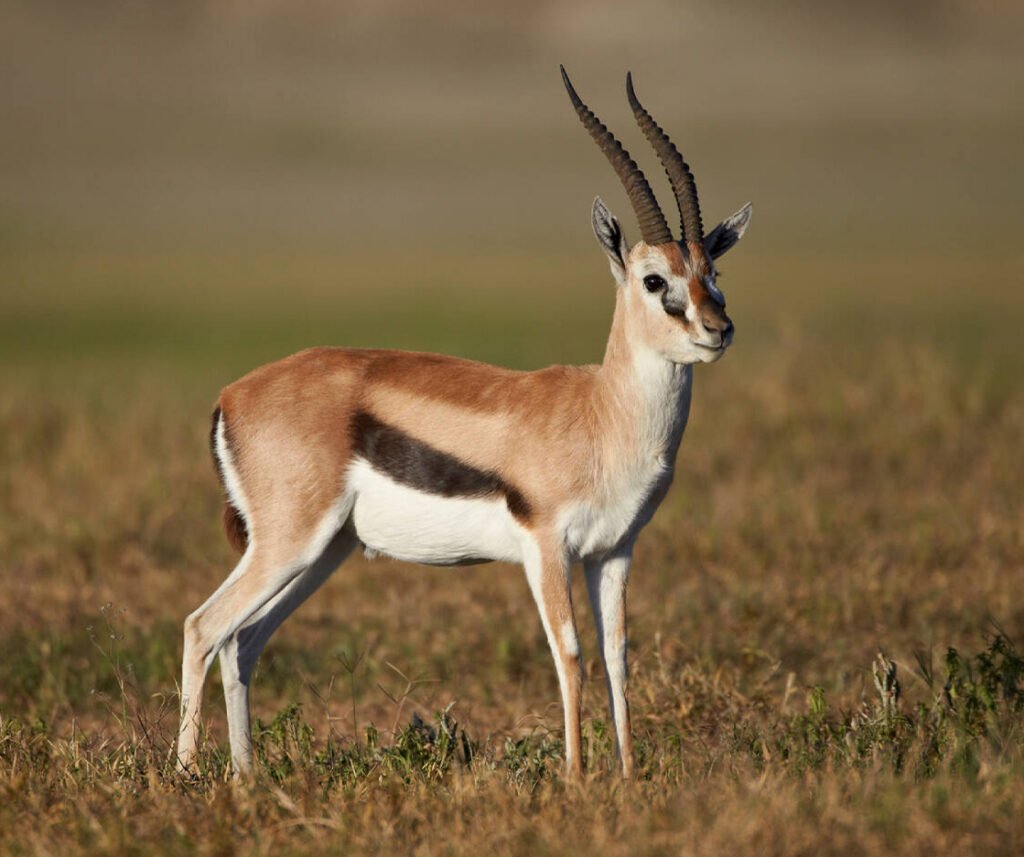
One of the most essential facts about the Thomson’s gazelle is how to distinguish them from their cousins, like the Grant’s gazelle. The “Tommie” is characterized by a bold, wide black stripe that runs horizontally across its white flanks. Their coats are a beautiful sandy brown, which provides excellent camouflage against the scorched grasses of the East African plains.
Both males and females sport horns, though they differ significantly. Male horns are long, ringed, and curve slightly backward with a forward tilt at the tips. Female horns are much shorter, thinner, and sometimes even absent or deformed. This physical distinction is a key part of their social hierarchy and defense mechanisms.
Fast Facts: Thomson’s Gazelle at a Glance
-
Common Name: Thomson’s Gazelle (often called “Tommie”)
-
Scientific Name: Eudorcas thomsonii
-
Type: Mammal
-
Diet: Herbivore
-
Average Life Span in the Wild: 10 to 12 years
-
Size: Head and body: 32 to 47 inches; Tail: 6 to 10 inches
-
Weight: 35 to 77 pounds
Built for Speed: The Savanna’s Sprinter
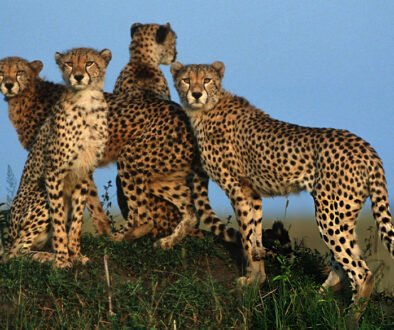
When discussing facts about the Thomson’s gazelle, their sheer athleticism is unavoidable. To survive in a landscape filled with cheetahs and leopards, you have to be fast. The Thomson’s gazelle can reach speeds of up to 43 to 50 miles per hour.
However, speed isn’t their only weapon. Unlike the cheetah, which is a sprinter that tires quickly, the Thomson’s gazelle has incredible stamina. They can maintain high speeds for longer distances, often outlasting a predator through sheer aerobic endurance. They utilize a zig-zag running pattern that makes it nearly impossible for a predator to predict their next move.
The Phenomenon of “Stotting”
Perhaps the most fascinating of all facts about the Thomson’s gazelle is a behavior known as “stotting” or “pronking.” When a gazelle senses a predator, it doesn’t always immediately bolt. Instead, it might leap stiff-legged into the air, keeping all four limbs straight.
Why would an animal waste energy jumping in the air when a predator is near? Biologists believe this is a “signal of fitness.” By stotting, the gazelle is essentially telling the predator, “Look how high I can jump and how healthy I am. You’ll never catch me, so don’t even bother trying.” Surprisingly, this tactic often works, and predators will frequently abandon the hunt in favor of less energetic prey.
Diet and Hydration: The Survivalists
As herbivores, these animals are highly selective about what they eat. Among the interesting facts about the Thomson’s gazelle is their ability to thrive during the dry season. They are primarily grazers, preferring short, green grasses. However, when the grass dies back, they transition to browsing on seeds and shrubs.
Interestingly, they have evolved to survive with very little standing water. They get much of their hydration from the vegetation they consume, allowing them to remain on the plains long after other migratory species have moved toward permanent water sources.
Social Dynamics and Bachelor Pads
The social structure of these animals is fluid. They generally live in herds that can number from ten to several hundred individuals. During the migratory season, thousands may congregate together. Within these groups, there are distinct social tiers: territorial males, bachelor groups, and female herds.
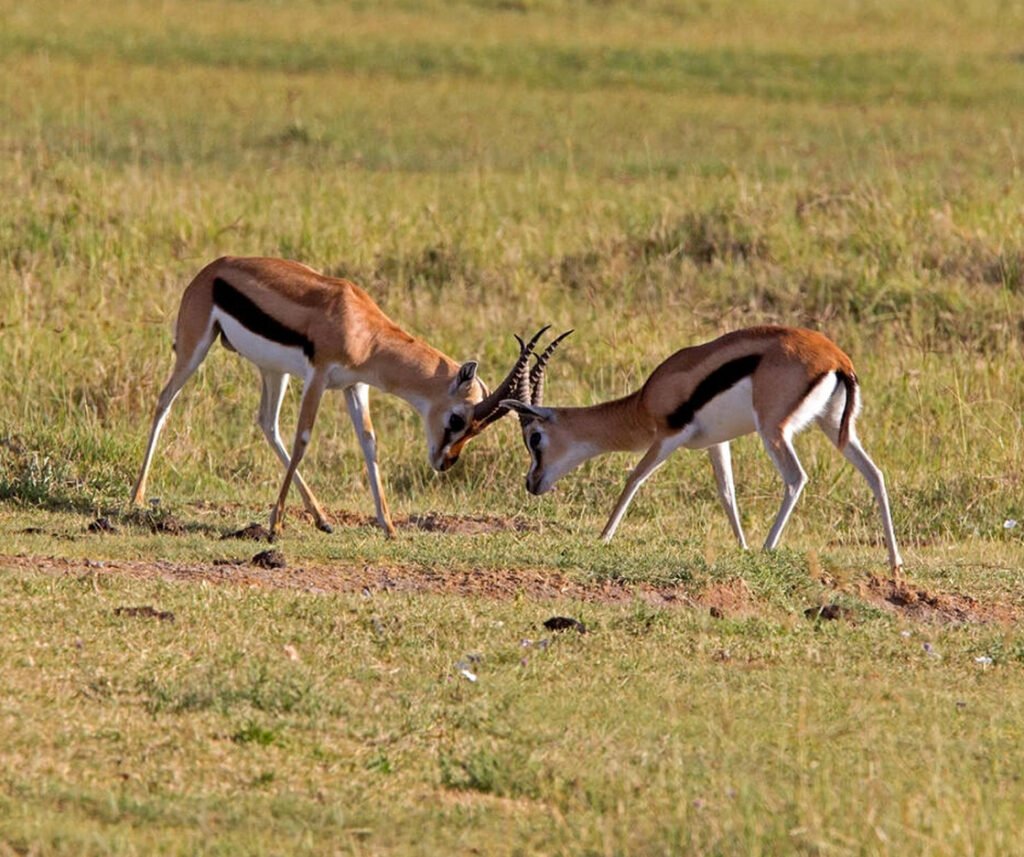
Territorial males are the “landowners.” They mark their small patches of land using preorbital glands (located near their eyes) to leave a scent on grass stems. Any female passing through is fair game for mating, while bachelor males are kept at a distance. These facts about the Thomson’s gazelle highlight the constant competition for dominance on the savanna.
The Circle of Life: Breeding and Offspring
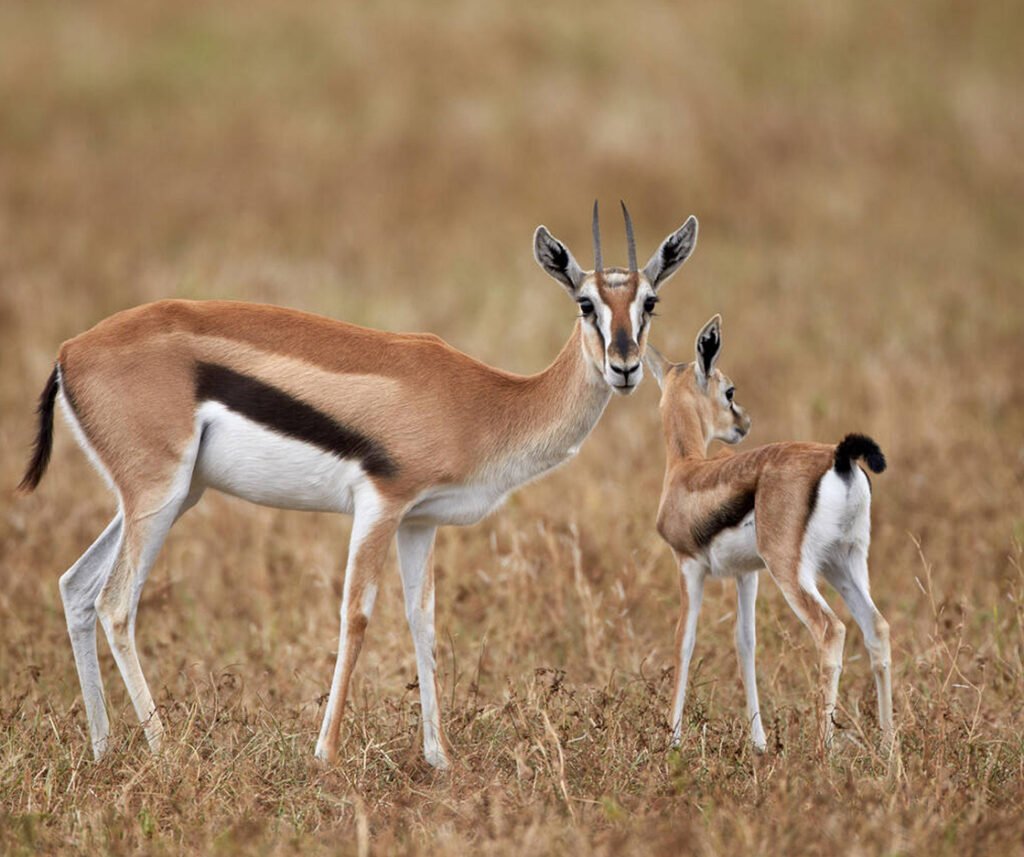
Thomson’s gazelles are prolific breeders, usually giving birth twice a year. After a gestation period of roughly six months, a single fawn is born. The timing of these births often coincides with the end of the rainy season when the grass is tallest and most nutritious.
A heartbreaking but necessary part of the facts about the Thomson’s gazelle is the vulnerability of their young. For the first few weeks, a fawn stays hidden in the tall grass, perfectly still, while the mother grazes nearby. The mother returns several times a day to nurse. Despite these precautions, nearly half of all fawns are lost to predators within their first year.
The Great Migration Role
While the Blue Wildebeest and Zebras are the “stars” of the Great Migration, the Thomson’s gazelle plays a vital supporting role. They are often the last of the major grazers to move through an area.
They follow the larger animals because wildebeests and zebras eat the long, tough stalks of grass. This exposes the short, tender shoots and clover-like herbs that the gazelles prefer. This symbiotic timing ensures that the savanna is “mowed” in stages, supporting a massive biomass of different species.
Communication Beyond Sound
While they do make grunts and bleats, much of their communication is silent. Beyond the scent marking mentioned earlier, they use visual cues. The flick of a tail or the specific posture of a leader can signal the entire herd to move or be alert. These subtle facts about the Thomson’s gazelle demonstrate how highly evolved their group coordination is.
Predators: The Constant Threat
The life of a “Tommie” is one of constant vigilance. They are the primary food source for almost every major African predator. Cheetahs, lions, spotted hyenas, leopards, and Nile crocodiles all hunt them. Even large baboons have been known to take fawns. This high level of predation is why their population has evolved to be so resilient and fast-growing.
Conservation Status
Currently, the Thomson’s gazelle is listed as “Least Concern” by the IUCN, but their populations are declining. Habitat loss due to human expansion and competition with livestock are the primary threats. Understanding the facts about the Thomson’s gazelle helps us appreciate why protecting the vast corridors of the Serengeti and Masai Mara is so vital for their continued survival.