Facts About the Wildebeest: Legends of the African Savanna
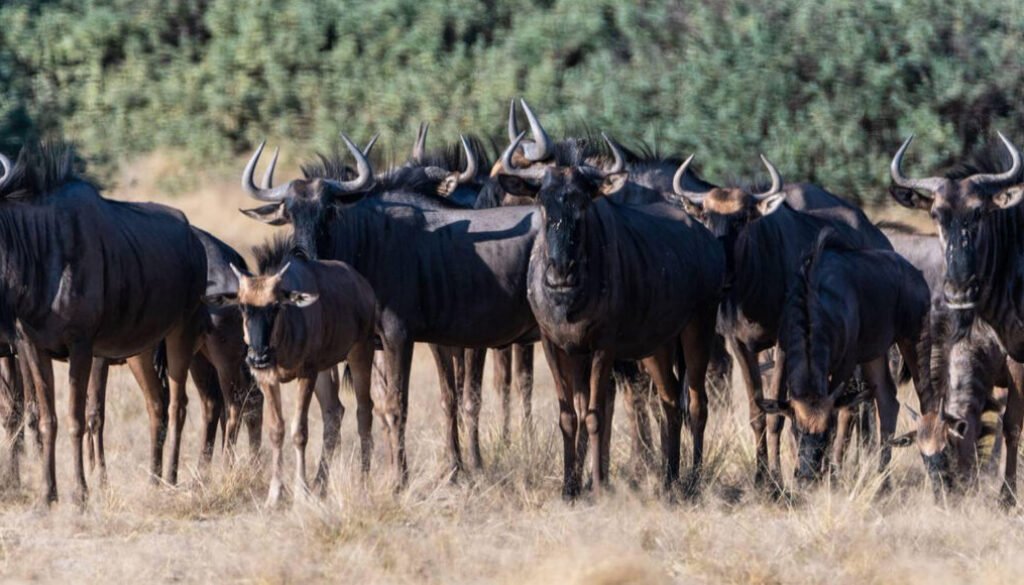
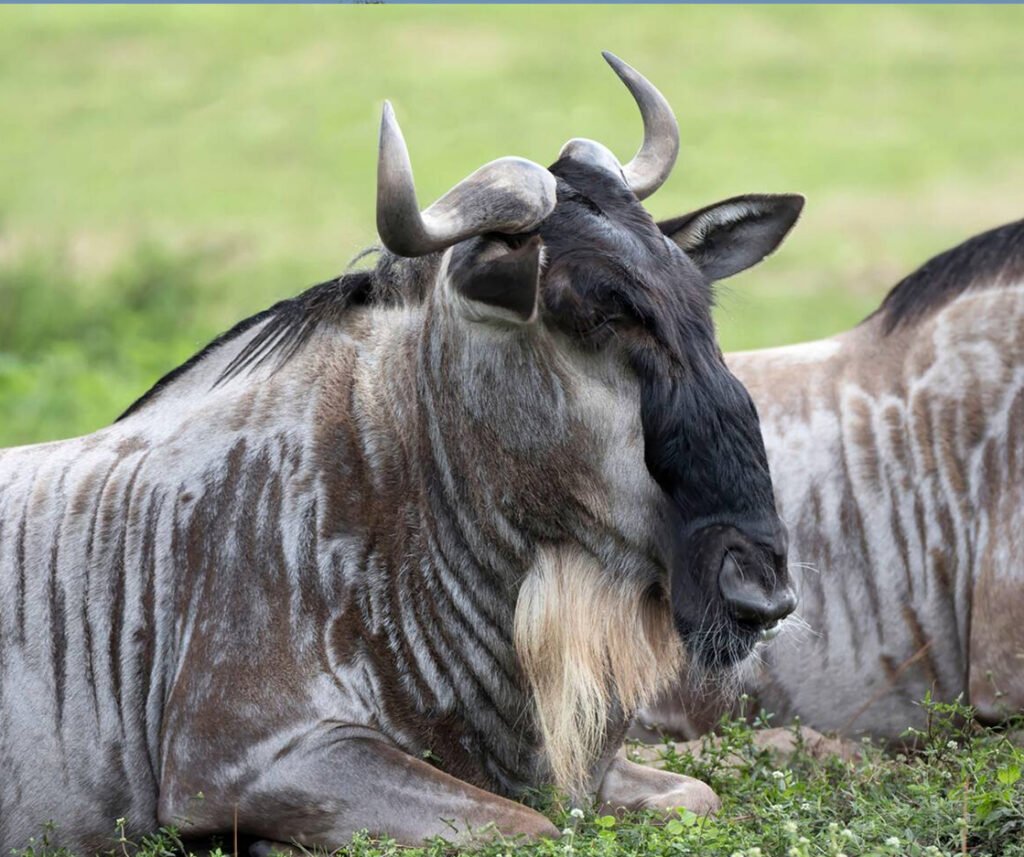
To understand the facts about the wildebeest, one must first look at their unique anatomy. There are two primary species: the Blue Wildebeest (the more common, migratory type) and the Black Wildebeest.
The name “wildebeest” originates from the Dutch “wild beest,” meaning “wild beast.” This is a fitting name for an animal that possesses a rugged, almost prehistoric appearance. They are large antelopes, yet they lack the slender elegance of a gazelle or an impala. Instead, they are built for distance. Their front ends are heavily muscled, while their hindquarters are relatively lean, a design that allows them to maintain a steady “rocking horse” gallop over hundreds of miles without exhausting themselves.
Quick Profile: The Gnu at a Glance
-
Common Name: Wildebeest (also known as the Gnu)
-
Scientific Name: Connochaetes taurinus (Blue Wildebeest) and Connochaetes gnou (Black Wildebeest)
-
Type: Mammals
-
Diet: Herbivore
-
Average Life Span in the Wild: 20 years
-
Size: Head and body: 5 to 8 feet; tail: 14 to 22 inches
-
Weight: 260 to 595 pounds
The Endless Search for Green Gold
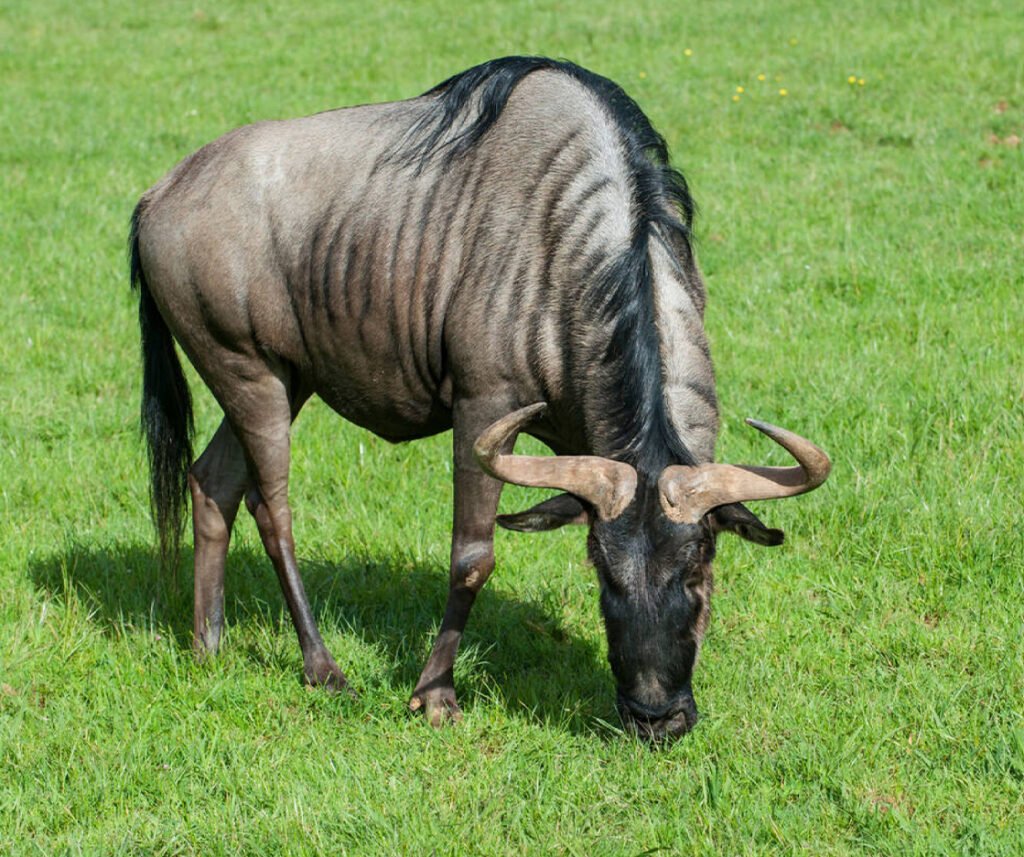
One of the most defining facts about the wildebeest is their nomadic lifestyle. They are specialized grazers, preferring short, sweet grasses that are rich in nutrients. Because the African rains are localized, the wildebeest must constantly move to follow the moisture.
Their sense of smell is incredibly acute; they can literally “smell the rain” from miles away. When the grass in one region dries up, the herds begin their trek toward the scent of damp earth and fresh sprouts. This relentless pursuit of food is what drives the Great Migration, a 500-mile loop through the Serengeti (Tanzania) and the Masai Mara (Kenya).
The Chaos of the Great Migration
You cannot discuss facts about the wildebeest without touching on the migration. This isn’t just a walk in the park; it is a gauntlet of death. Over 1.5 million wildebeest, accompanied by hundreds of thousands of zebras and gazelles, make this journey annually.
The most treacherous part of the migration is the river crossings. At the Mara and Grumeti rivers, the herds must face two primary threats:
-
Nile Crocodiles: These massive reptiles wait patiently for the “crossing season,” snapping up any animal that lingers too long in the water.
-
The Stampede: More wildebeest are often lost to the sheer panic of the crossing than to predators. The steep riverbanks can become slippery and congested, leading to tramplings and drownings.
Strength in Numbers: The Herding Instinct
A solitary wildebeest is a vulnerable wildebeest. Therefore, they live in massive herds that provide “dilution of risk.” Predators like lions, cheetahs, and hyenas find it difficult to single out an individual when surrounded by a sea of horns and hooves.
Interestingly, these herds have a symbiotic relationship with zebras. While the wildebeest has an incredible sense of smell and hearing, the zebra has superior eyesight. Together, they create a multi-sensory alarm system against predators. Furthermore, zebras prefer to eat the long, coarse tops of grass, leaving the shorter, succulent parts for the wildebeest.
The Marvel of “Synchronized Birthing”
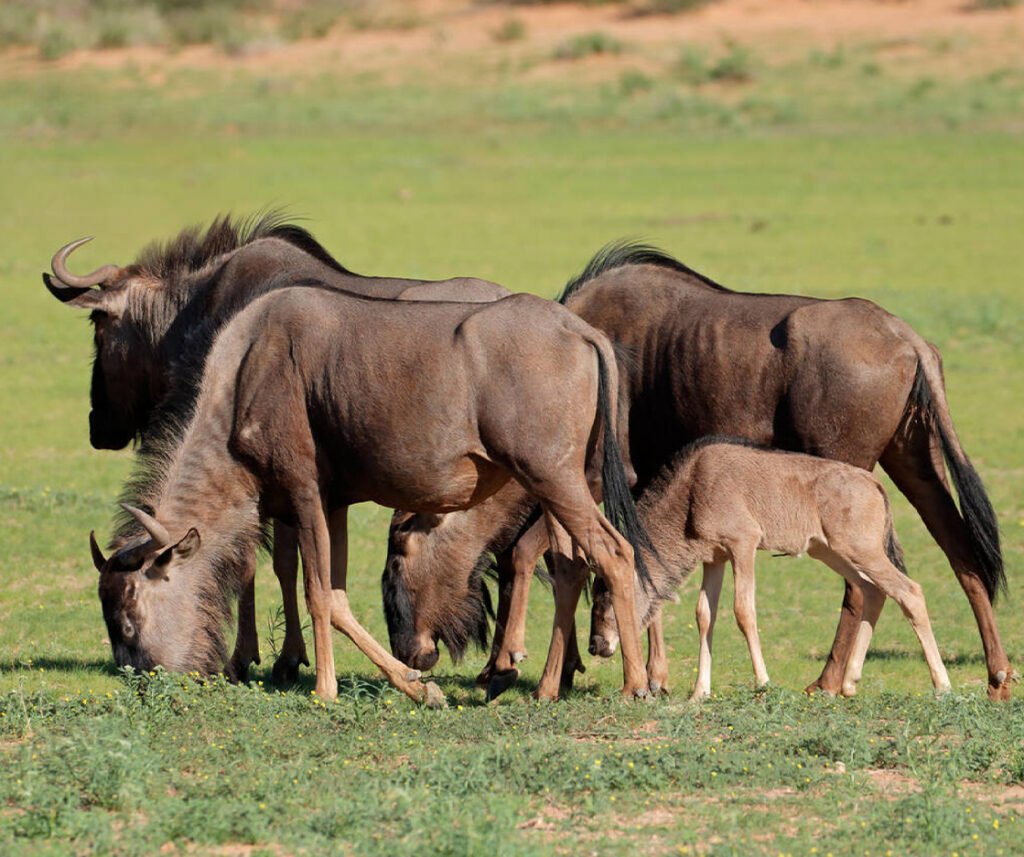
Perhaps one of the most fascinating biological facts about the wildebeest is their reproductive strategy. In a period of just two to three weeks, roughly 500,000 calves are born. This is known as “swamping” the predators. There are simply so many calves at once that the local lions and hyenas cannot possibly eat them all, ensuring a higher survival rate for the majority.
A wildebeest calf is one of the most precocious infants in the animal kingdom. Within minutes of birth, a calf can stand. Within an hour, it can run fast enough to keep up with the herd. This is a vital adaptation; a calf that cannot move is a calf that will not survive the night.
Communication and Social Behavior
If you’ve ever stood near a herd, you know that facts about the wildebeest include their noisy nature. The “gnu” gets its alternative name from the loud, nasal grunt it emits. This constant vocalization helps keep the herd together in thick brush or during the dark of night.
They are also highly territorial during the breeding season. Males, known as bulls, will mark their territory with scent glands and perform elaborate displays of “cavorting”—bucking, lunging, and shaking their heads—to ward off rivals and attract females.
Ecological Impact: The Lawn Mowers of the Savanna
The wildebeest is often called a “keystone species.” Their constant grazing keeps the grasslands healthy by encouraging new growth and preventing the savanna from becoming overgrown with woody plants. Their droppings act as a massive fertilization system, redistributing nutrients across the landscape.
Without the wildebeest, the Serengeti would look drastically different. The fire cycle would change due to the buildup of dry grass, and many other species—from the vultures that scavenge their remains to the dung beetles that process their waste—would see their populations collapse.
Conservation and the Future
While the Blue Wildebeest is currently listed as a species of “Least Concern” by the IUCN, they still face significant threats. Habitat fragmentation is the biggest worry. Fences, roads, and human settlements can block ancient migration routes, leading to mass starvation or genetic isolation.
Protecting the “corridors” between national parks is essential. When we preserve the paths of the wildebeest, we are preserving the rhythm of the entire African continent.