Facts About White Rhinos: The “White” Rhino Isn’t Actually White
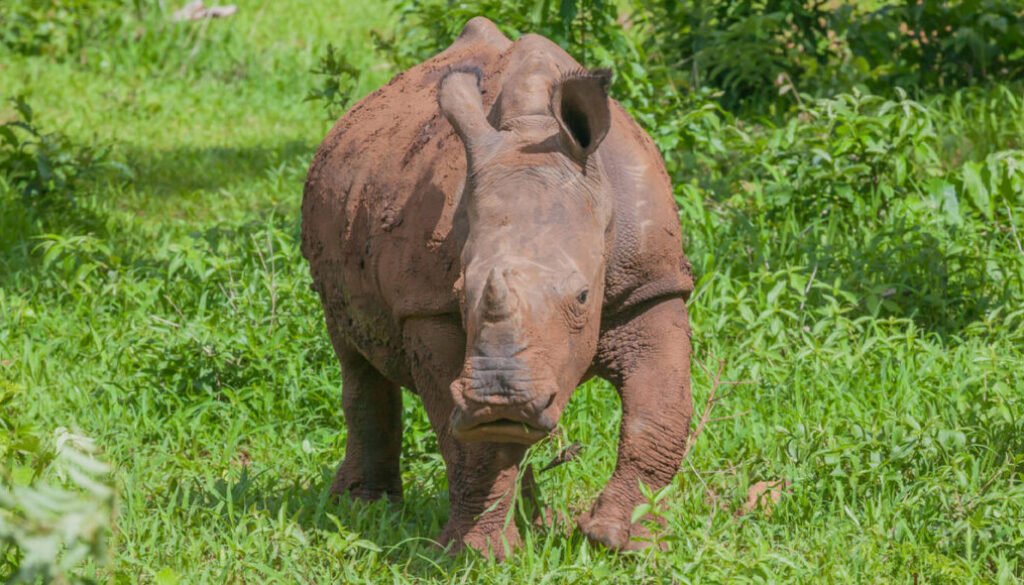
One of the most surprising facts about white rhinos is that their name has nothing to do with their color. Like the black rhino, the white rhino is actually slate gray. The name is widely believed to be a linguistic “lost in translation” moment. Early Dutch settlers in South Africa referred to the animal as having a “wyd” (wide) mouth to describe its broad, square lips. English speakers allegedly misheard “wyd” as “white,” and the name stuck.
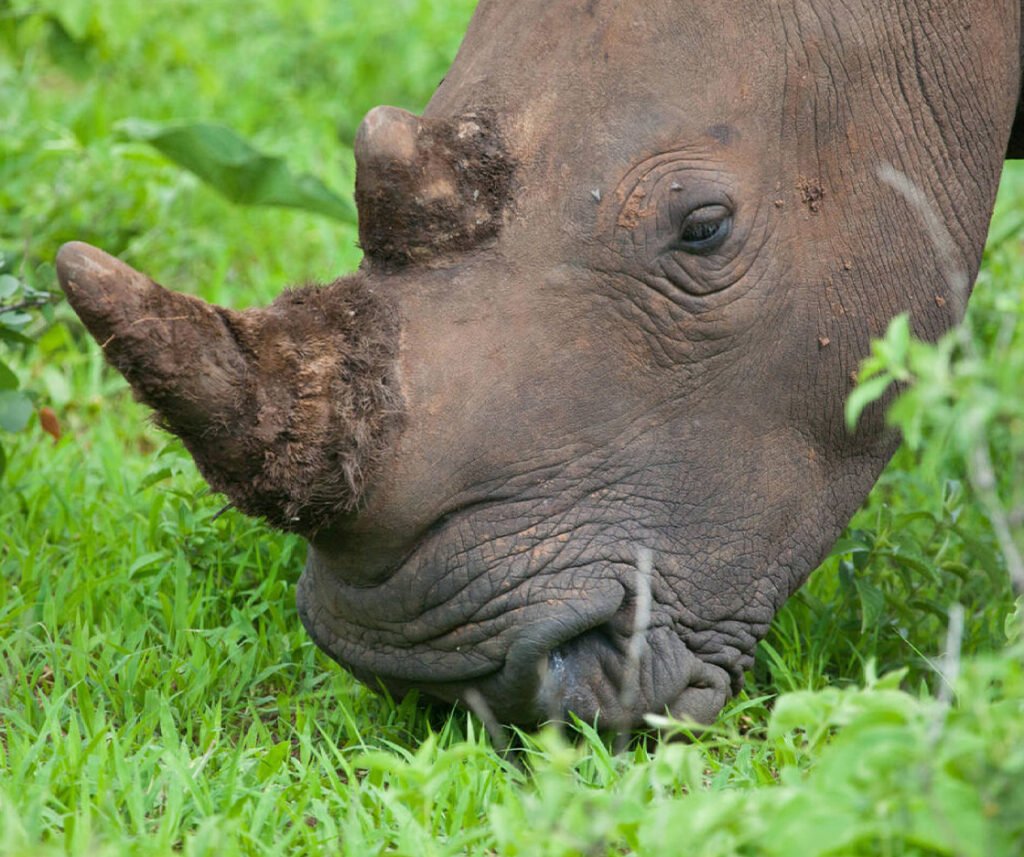
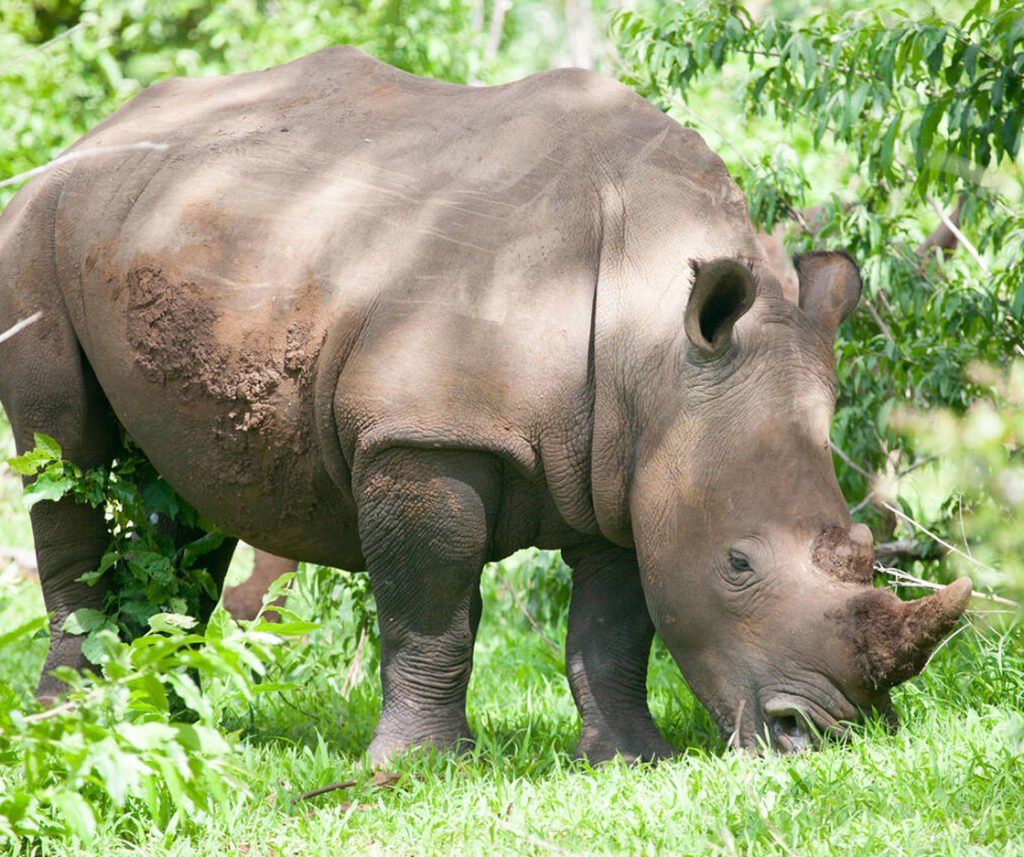
If you want to tell them apart in the wild, don’t look at the color—look at the mouth. The white rhino has a flat, lawnmower-like lip perfect for grazing, whereas the black rhino has a pointed, prehensile lip used for plucking leaves from bushes.
Quick Fact Sheet: White Rhino at a Glance
Before we dive into the deep history and behaviors of these giants, here is a breakdown of the essential facts about white rhinos:
-
Common Name: White Rhinoceros (also known as the Square-lipped rhino)
-
Scientific Name: Ceratotherium simum
-
Type: Mammal
-
Diet: Herbivore (primarily a grazer)
-
Average Life Span In The Wild: 35 to 50 years
-
Size (Head and Body): 11 to 15 feet (3.4 to 4.5 meters)
-
Weight: 3,100 to 7,900 lbs (1,400 to 3,600 kg)
They Are the Second Largest Land Mammals
After the African and Asian elephants, the white rhino holds the title for the heaviest land animal on Earth. A large male can weigh as much as three small cars. To support this massive weight, they have a distinctive hump on their neck, which is actually a large muscle that allows them to lift their heavy heads after a long day of grazing. Despite their bulk, these animals are surprisingly agile; a white rhino can reach speeds of up to 31 mph (50 km/h) when charging or fleeing.
A Social Creature in a Solitary Family
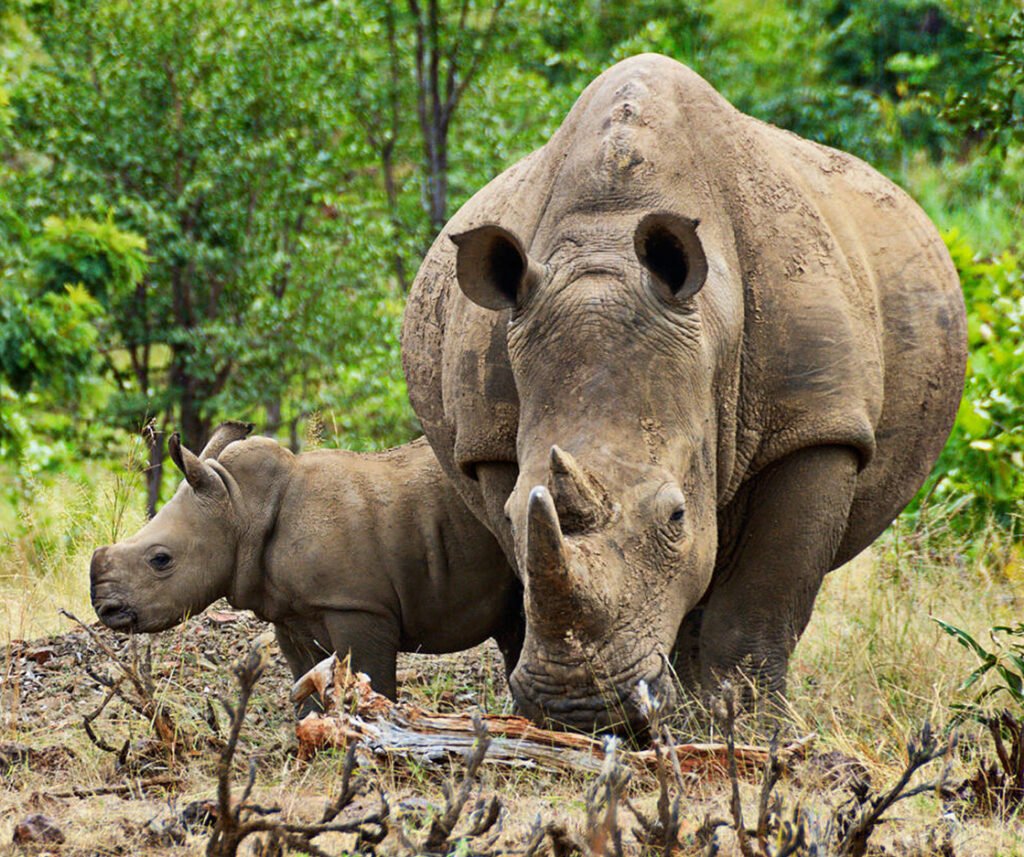
While most rhino species are famously solitary and grumpy, white rhinos are the most social of the bunch. They often live in groups known as a “crash.” These crashes usually consist of females and their calves, sometimes numbering up to 14 individuals.
Adult males, or “bulls,” tend to be more territorial and solitary, but they will often tolerate “satellite” males in their territory as long as the younger bulls remain submissive. This social structure is a key part of the facts about white rhinos that researchers study to understand their breeding habits.
The Tragic Tale of Two Subspecies
When discussing facts about white rhinos, it is impossible to ignore the divide between the Southern and Northern subspecies.
-
Southern White Rhino: Once on the brink of extinction in the early 20th century with fewer than 100 left, they are now a conservation success story with roughly 16,000 to 17,000 individuals remaining.
-
Northern White Rhino: This subspecies is functionally extinct. Only two individuals remain on the entire planet—Najin and Fatu. Both are females living under 24-hour armed guard at the Ol Pejeta Conservancy in Kenya.
Because no males remain, scientists are currently using advanced IVF (in-vitro fertilization) technology to try and save the lineage using stored genetic material.
Their Horns Are Made of Hair… Sort Of
A rhino’s horn is its most famous feature and its greatest curse. Contrary to popular belief, the horn is not made of bone. It is composed of keratin—the same protein that makes up your own hair and fingernails.
If a rhino loses its horn in a non-fatal fight or through a controlled dehorning process (done by conservationists to deter poachers), the horn will actually grow back over time, much like a very thick, hardened fingernail.
Communication Through “Middens”
White rhinos have notoriously poor eyesight; they can barely see a person standing still just 30 yards away. To compensate, they have an incredible sense of smell and hearing. They communicate with each other through “middens”—communal dung heaps.
By smelling the dung of another rhino, a bull can tell if a female is ready to mate or if a rival male has recently passed through the area. It is essentially a prehistoric version of a social media status update.
Natural Architects of the Savannah
The final entry in our list of facts about white rhinos focuses on their role as a “keystone species.” Because they eat such massive quantities of grass (up to 120 lbs a day!), they act as natural lawnmowers. This keeps the grass short, which prevents massive wildfires from spreading and allows smaller plants to grow, providing food for other animals like wildebeests and zebras. Without white rhinos, the entire African ecosystem would look—and function—very differently.
The Battle for Survival
Despite being “Near Threatened,” the white rhino faces a constant threat from organized poaching rings. Their horns are highly valued in some cultures for traditional medicine or as a status symbol, despite having no proven medicinal properties.
Current conservation efforts include:
-
24/7 Ranger Patrols: Protecting rhinos in national parks.
-
Dehorning: Removing the horn safely so poachers have no reason to kill the animal.
-
Community Education: Helping local populations see the value of live rhinos through ecotourism.