African Leopard Facts: The Solitary Specialist
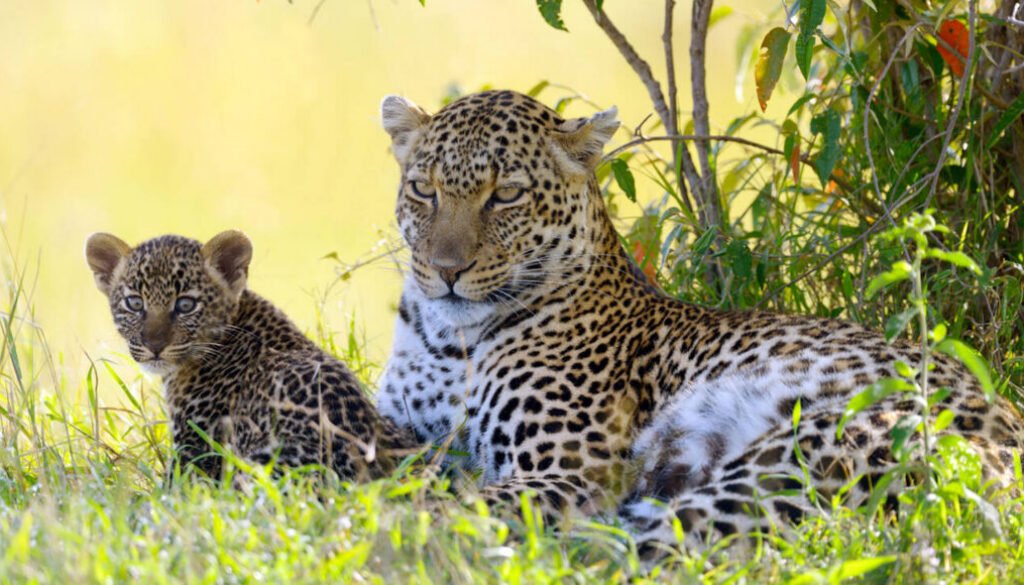
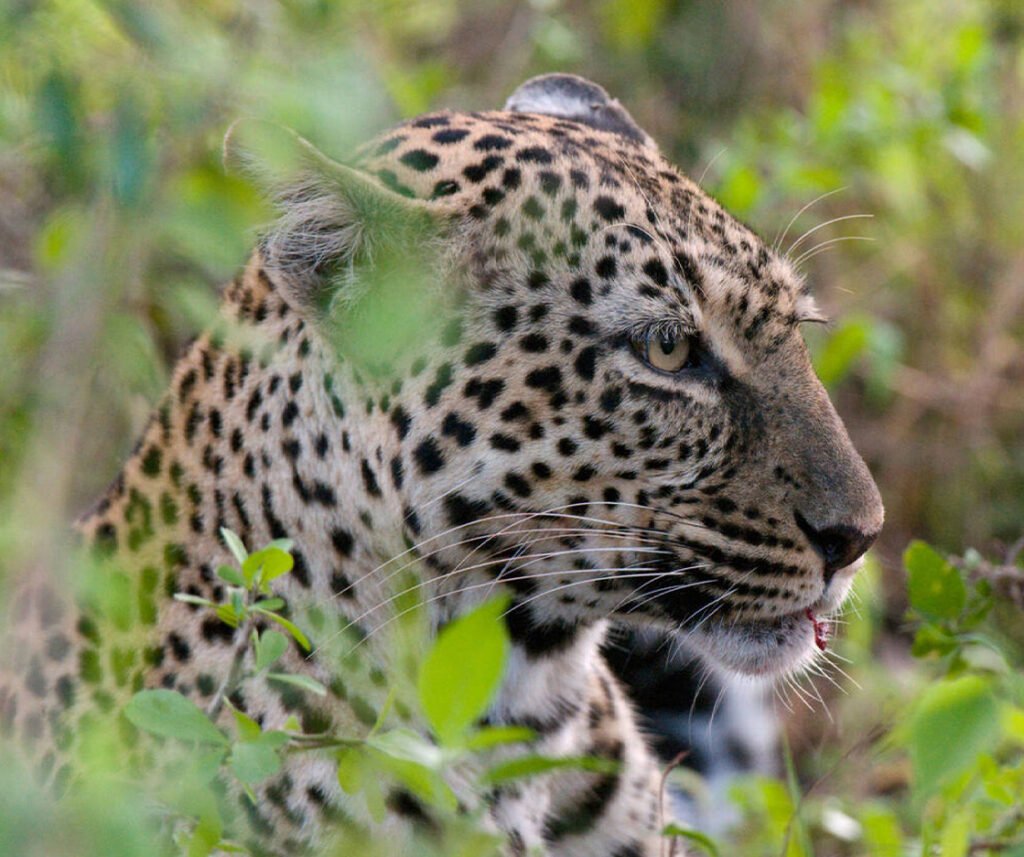
One of the most striking African leopard facts is the complexity of their coat. Unlike the solid spots of a cheetah, leopards possess “rosettes”—jagged, rose-like black markings that surround a darker tawny center. These patterns are as unique as a human fingerprint, allowing researchers to identify individual cats in the wild.
This coat isn’t just for show; it is an evolutionary masterpiece of camouflage. In the dappled light of a forest canopy or the dry, golden grass of the veld, a motionless leopard is virtually invisible. This allows them to stalk within a few meters of their prey before launching a lethal, explosive ambush.
Quick Profile: African Leopard at a Glance
-
Common Name: African Leopard
-
Scientific Name: Panthera pardus pardus
-
Type: Mammal (Carnivore)
-
Diet: Carnivorous (Opportunistic)
-
Average Life Span In The Wild: 10 to 12 years (up to 20+ in captivity)
-
Size (Head and Body): 91 to 191 cm (3 to 6.3 feet) plus a 58 to 110 cm tail
-
Weight: Males: 50–90 kg (110–200 lbs); Females: 37–60 kg (82–132 lbs)
Unrivaled Strength: The Ultimate Climber
If there is one thing that defines the African leopard, it is their relationship with trees. Pound-for-pound, they are the strongest of all big cats. A leopard is capable of killing an antelope twice its own weight and hauling the carcass straight up a vertical tree trunk to keep it away from scavengers like hyenas and lions.
Their anatomy is specially designed for this:
-
Powerful Scapulae: Their shoulder blades have specialized attachment sites for massive climbing muscles.
-
Retractable Claws: These 2.5 cm curved talons provide a vice-like grip on bark.
-
Balance: A long, heavy tail acts as a rudder, allowing them to navigate thin branches with the grace of a tightrope walker.
A Highly Adaptable Diet
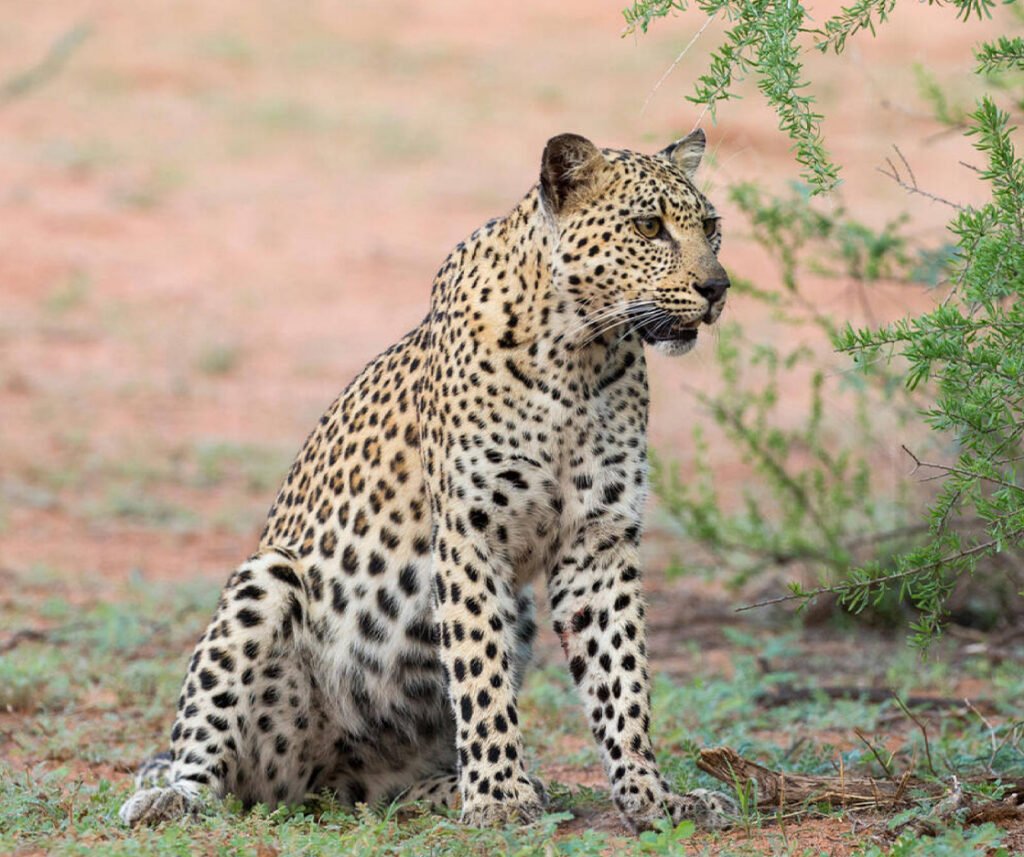
While many predators are “specialists,” the African leopard is a proud “generalist.” Their diet is incredibly broad, consisting of over 90 different species. While they prefer medium-sized ungulates like impala or Thomson’s gazelles, they are not above eating:
-
Primates (Baboons and vervet monkeys)
-
Reptiles (Snakes and lizards)
-
Large birds
-
Even dung beetles and rodents when larger prey is scarce.
This dietary flexibility is the primary reason why leopards have the largest geographic range of any wild cat. They can survive in environments ranging from the fringes of the Sahara Desert to the lush rainforests of the Congo.
The Solitary Life of the “Ingwe”
In many African cultures, the leopard is known as Ingwe, a name signifying “pure sovereignty.” This fits their solitary nature perfectly. Except for mating or a mother raising her cubs, these cats spend their entire lives alone.
A male African leopard will defend a massive territory that may overlap with several smaller female territories. They mark their boundaries using a combination of:
-
Scent Marking: Sprays of urine on bushes.
-
Visual Signs: Deep claw marks on “rubbing trees.”
-
Vocalizations: A unique territorial call that sounds like a raspy, rhythmic “sawing” of wood.
Secretive Parenting: Raising the Next Generation
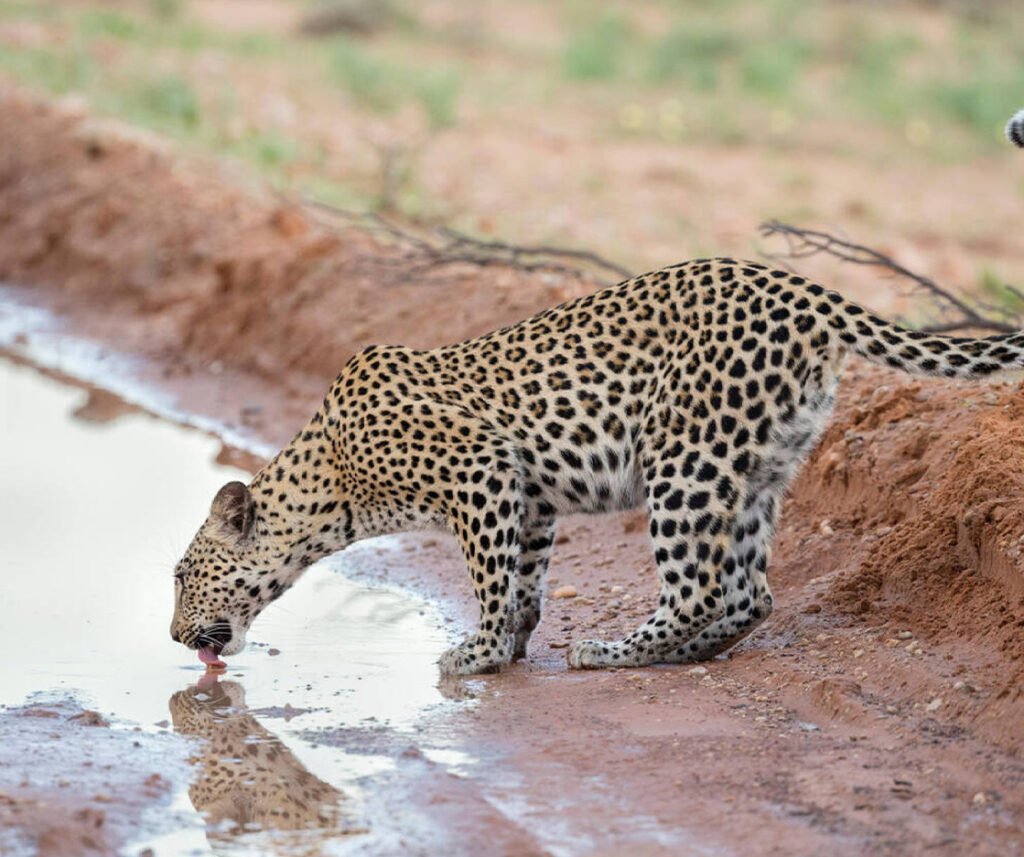
A female African leopard is a fiercely protective mother. After a gestation period of about 100 days, she typically gives birth to two or three cubs. Because the cubs are born blind and helpless, she must hide them in dense thickets, rock crevices, or abandoned aardvark holes.
To prevent predators like lions or hyenas from tracking the scent, she moves the “den” every few days. The cubs stay with their mother for nearly two years, during which time they learn the complex art of the silent stalk and the vertical haul.
Night Vision and Sensory Mastery
As predominantly nocturnal hunters, the African leopard possesses incredible sensory adaptations. Their eyes have a specialized layer behind the retina called the tapetum lucidum, which reflects light back through the eye. This gives them night vision that is roughly seven times more effective than a human’s.
Furthermore, their long whiskers (vibrissae) act as sophisticated sensors. These whiskers are located on the muzzle, above the eyes, and even on the backs of their legs, allowing them to “feel” their way through dense, thorny bush in total darkness without making a sound.
Conservation Status: A Silent Struggle
Despite their adaptability, the African leopard faces significant threats. They are currently listed as Vulnerable on the IUCN Red List. Their populations are declining due to:
-
Habitat Fragmentation: As human settlements expand, the “corridors” leopards use to travel are being cut off.
-
Human-Wildlife Conflict: Leopards occasionally prey on livestock, leading to retaliatory killings by farmers.
-
Illegal Wildlife Trade: Their beautiful skins remain a target for poachers.
Conservation efforts, such as the use of “faux” leopard skins in traditional ceremonies and the creation of protected wildlife corridors, are essential to ensuring that these magnificent cats continue to roam the African wilderness.