African Elephant Facts: A Journey to the Tusked Giants
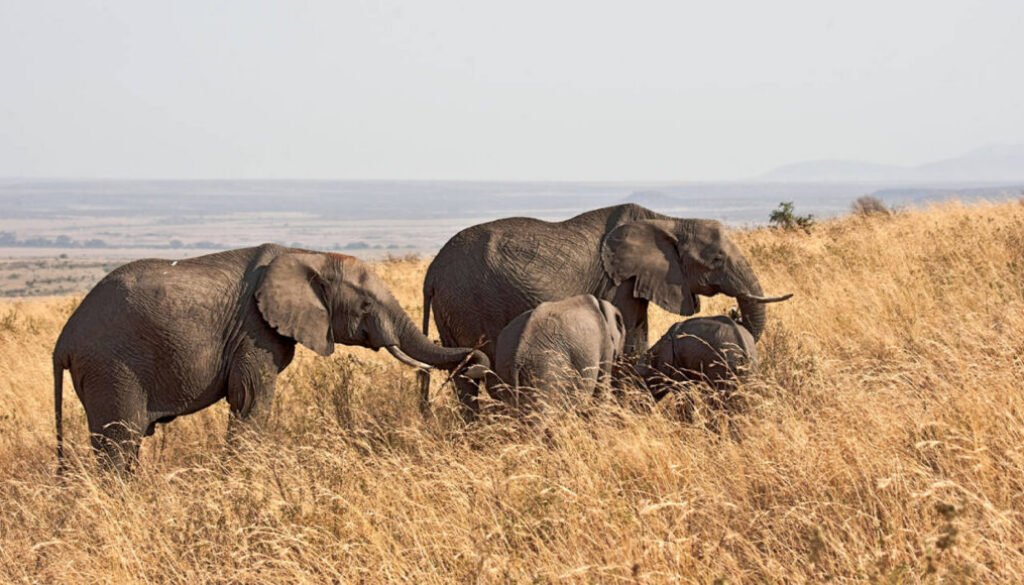
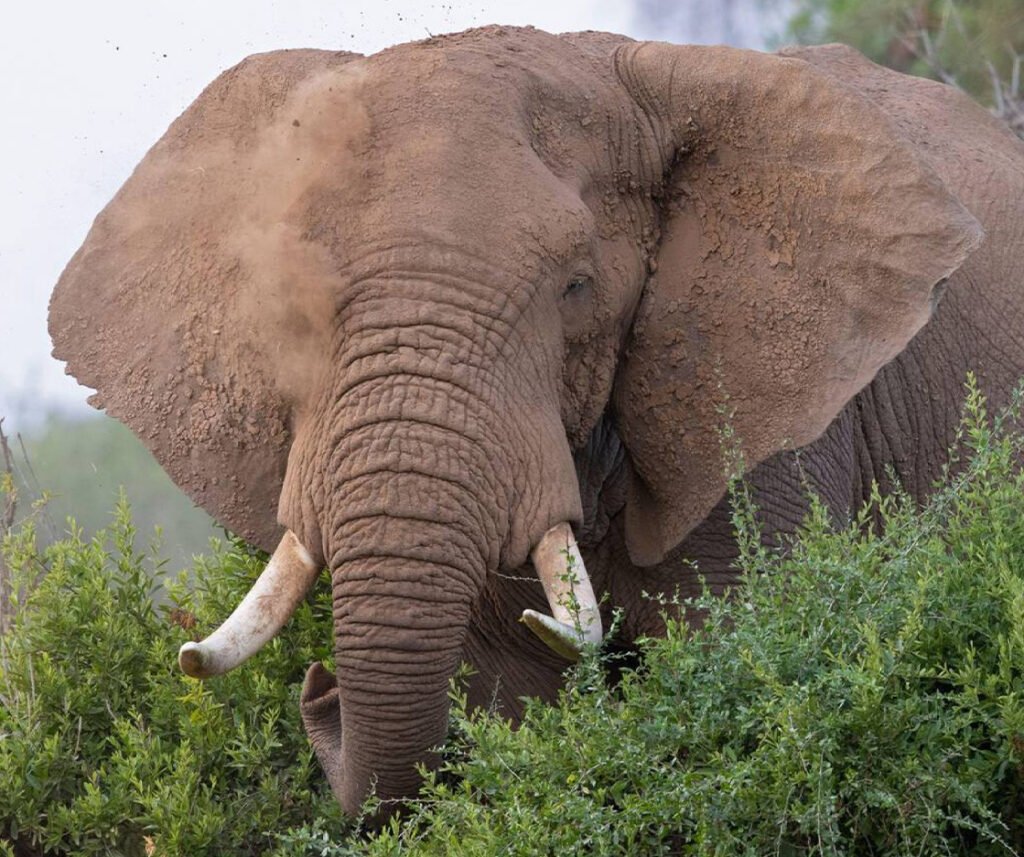
One of the most charming African elephant facts is a literal geographical coincidence. If you look closely at their massive ears, they are shaped almost exactly like the continent of Africa. These ears aren’t just for show; they act as a built-in air conditioning system.
African Elephant Profile at a Glance
Before we dive into the narrative of their lives, let’s look at the hard data that makes the African elephant so impressive:
-
Common Name: African Elephant (includes Savanna and Forest species)
-
Scientific Name: Loxodonta africana (Savanna) and Loxodonta cyclotis (Forest)
-
Type: Mammal
-
Diet: Herbivore (Roots, grasses, fruit, and bark)
-
Average Life Span In The Wild: Up to 70 years
-
Size: Head and body: 19 to 24 feet; Height at shoulder: 8 to 13 feet
-
Weight: 2.5 to 7 tons (approx. 5,000 to 14,000 lbs)
The Two Distinct Species
One of the most important African elephant facts is that “African elephant” is actually an umbrella term for two different species. For decades, scientists grouped them together, but genetic testing has proven they are as different from each other as lions are from tigers.
-
The African Savanna Elephant: These are the giants we often see in documentaries, roaming the open plains of Sub-Saharan Africa. They are larger, with tusks that curve outwards.
-
The African Forest Elephant: Residing in the humid basins of Central and West Africa, these elephants are smaller, darker, and possess straighter, downward-pointing tusks that allow them to move easily through dense undergrowth.
Understanding this distinction is vital for conservation efforts, as both species face unique environmental pressures.
The Engineering of an Icon
When discussing African elephant facts, we have to mention their role as “ecosystem engineers.” They don’t just live in the bush; they create it. By knocking down trees to eat bark, they create clearings that allow light to reach the forest floor, promoting new growth.
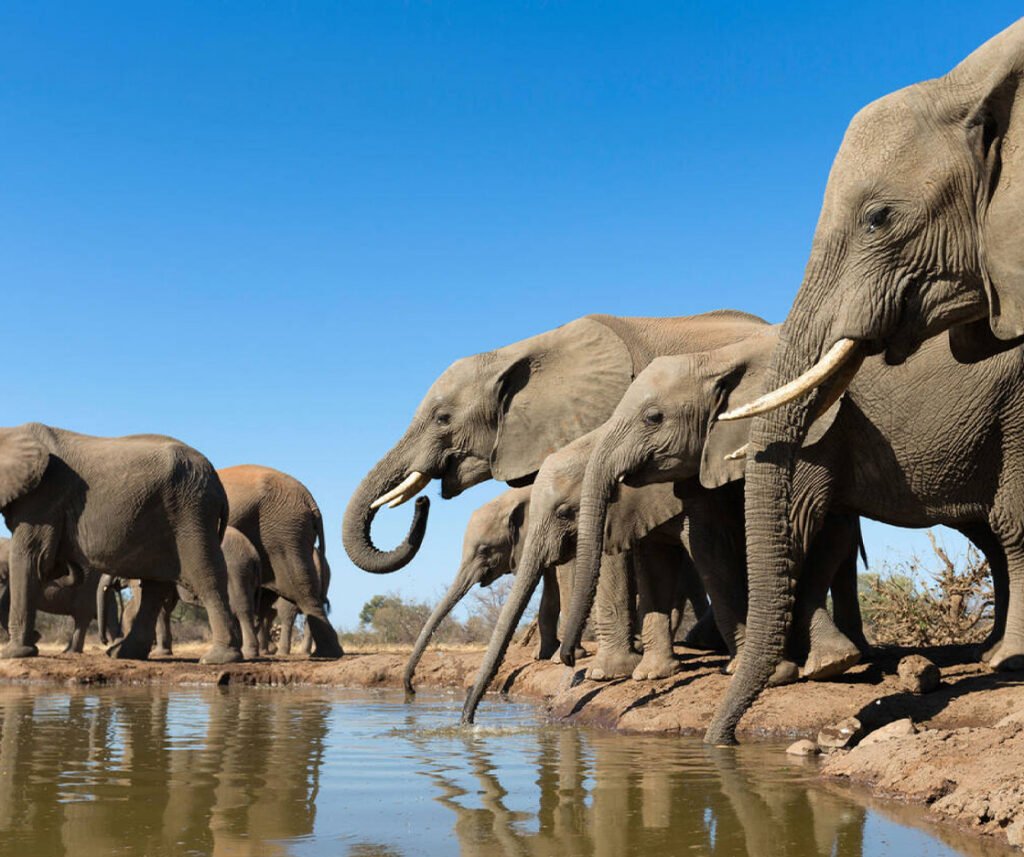
During the dry season, elephants use their tusks to dig for water in dry riverbeds. This creates water holes that provide a life-saving resource for smaller animals like zebras, antelopes, and birds. Without the African elephant, the African landscape would look entirely different—and many other species would struggle to survive.
Social Intelligence and Matriarchy
Perhaps the most touching African elephant facts relate to their mental capacity. Elephants have the largest brain of any land mammal, and their intelligence is legendary. They are one of the few species on the planet capable of recognizing themselves in a mirror, a sign of self-awareness.
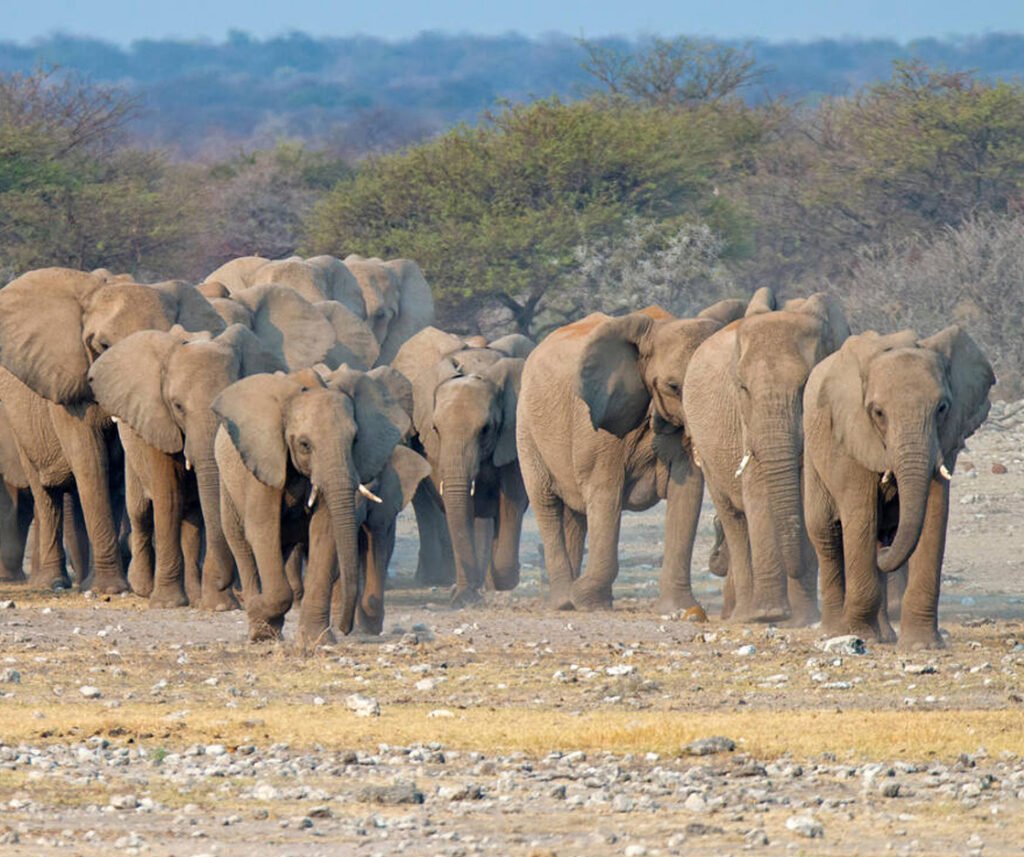
Their emotional lives are equally profound. Elephants live in matriarchal societies led by the oldest, wisest female. These groups are incredibly tight-knit. When a member of the herd dies, elephants have been observed “mourning”—staying by the body for days and even touching the bones of deceased relatives with their trunks.
The Multi-Tool of the Animal Kingdom
The trunk is arguably the most famous feature of the African elephant. It contains roughly 40,000 muscles (for comparison, the entire human body has fewer than 700). This incredible appendage serves as a nose, a hand, an extra foot, a signaling device, and a tool for gathering food.
-
Dexterity: An elephant can use its trunk to pick up a single blade of grass or pull down a heavy tree branch.
-
Suction: A trunk can hold up to 2 gallons of water at a time.
-
Greeting: Much like humans shake hands, elephants use their trunks to caress and greet one another, reinforcing social bonds.
Diet and the 18-Hour Feast
Because they are so massive, African elephant facts regarding their diet are staggering. An adult elephant needs to consume between 300 and 350 pounds of vegetation every single day. To meet this caloric requirement, they spend nearly 16 to 18 hours of their day eating.
They aren’t picky eaters, either. Their diet consists of grasses, small thorny trees, bark, and juicy fruits like Marula. Because their digestive system is only about 40% efficient, they produce a massive amount of dung—up to 300 pounds a day! This dung is rich in undigested seeds, making elephants the ultimate long-distance seed dispersers.
Conservation: A Fragile Future
Despite being the kings of the savanna, the African elephant faces a perilous future. Habitat loss and the illegal ivory trade remain the biggest threats. A century ago, there were roughly 10 million elephants across Africa; today, that number has dwindled to approximately 415,000.
The African savanna elephant is currently listed as Endangered, while the African forest elephant is Critically Endangered. Conservation efforts, such as anti-poaching patrols and the creation of wildlife corridors, are essential to ensure these magnificent creatures don’t disappear in our lifetime.
Why We Must Protect Them?
The African elephant is more than just a “big animal.” It is a cultural icon, a biological marvel, and a keystone of the African wilderness. From their thundering footsteps to the gentle rumble of their infrasonic communication (sounds so low humans can’t even hear them), they represent the soul of the continent.
Learning these African elephant facts is the first step toward appreciating why their survival matters. They remind us that even the strongest among us are vulnerable and that a world without these gentle giants would be a much emptier place.