Facts About the Tomato Frog
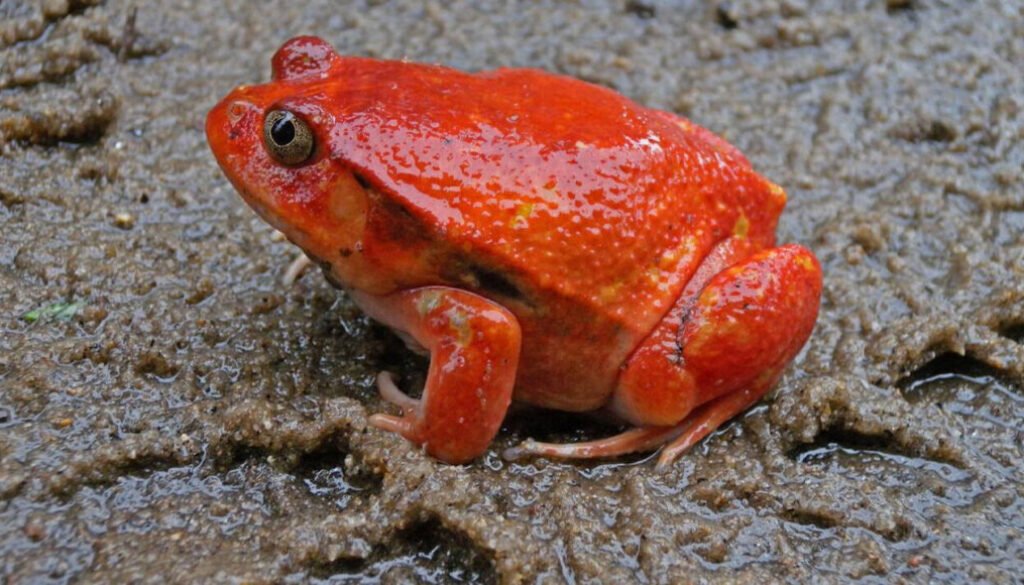
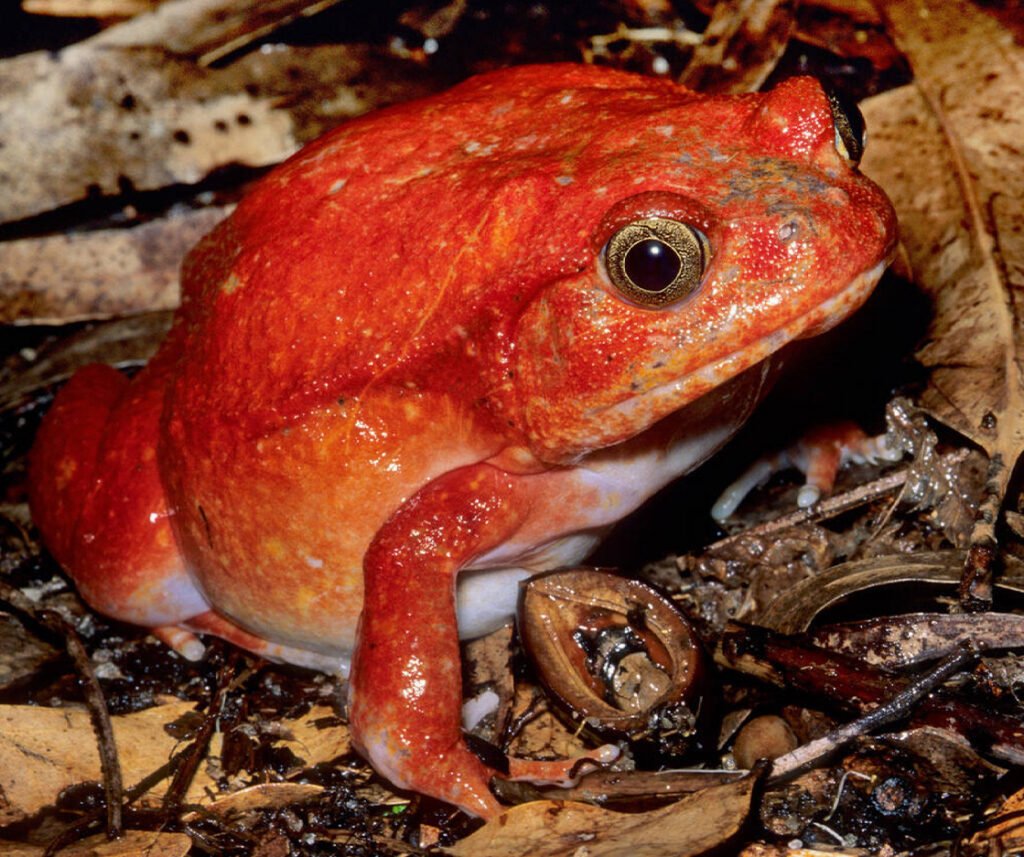
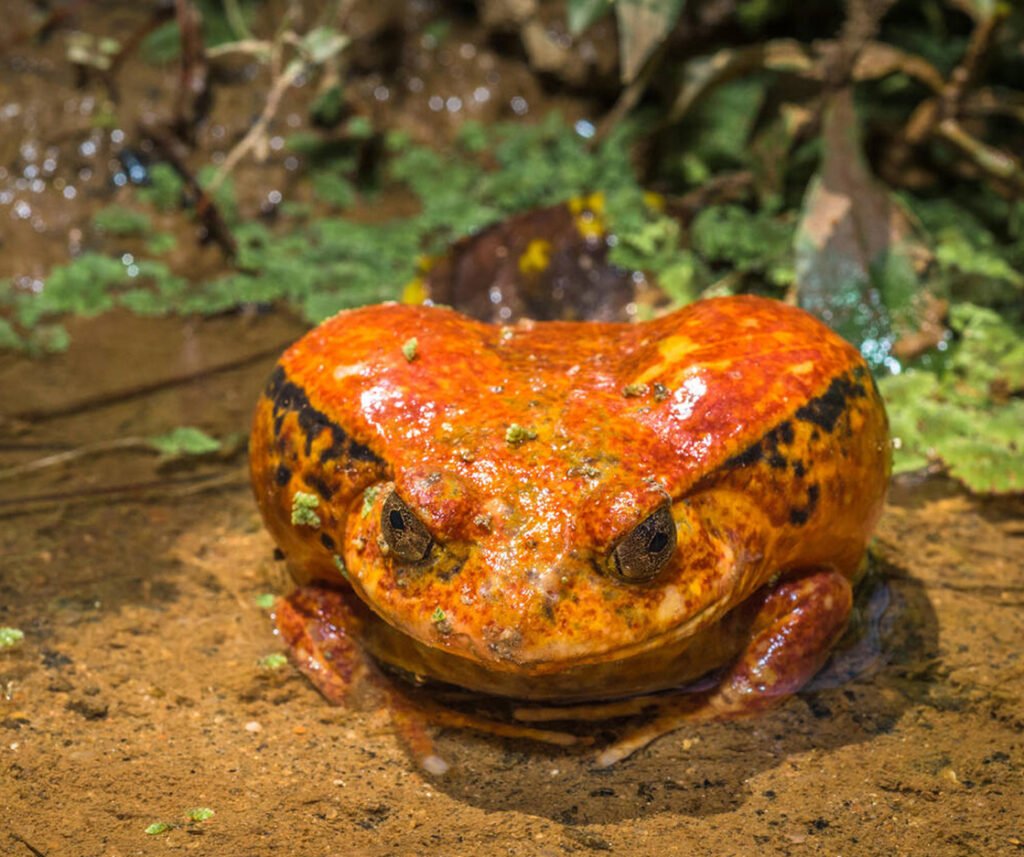
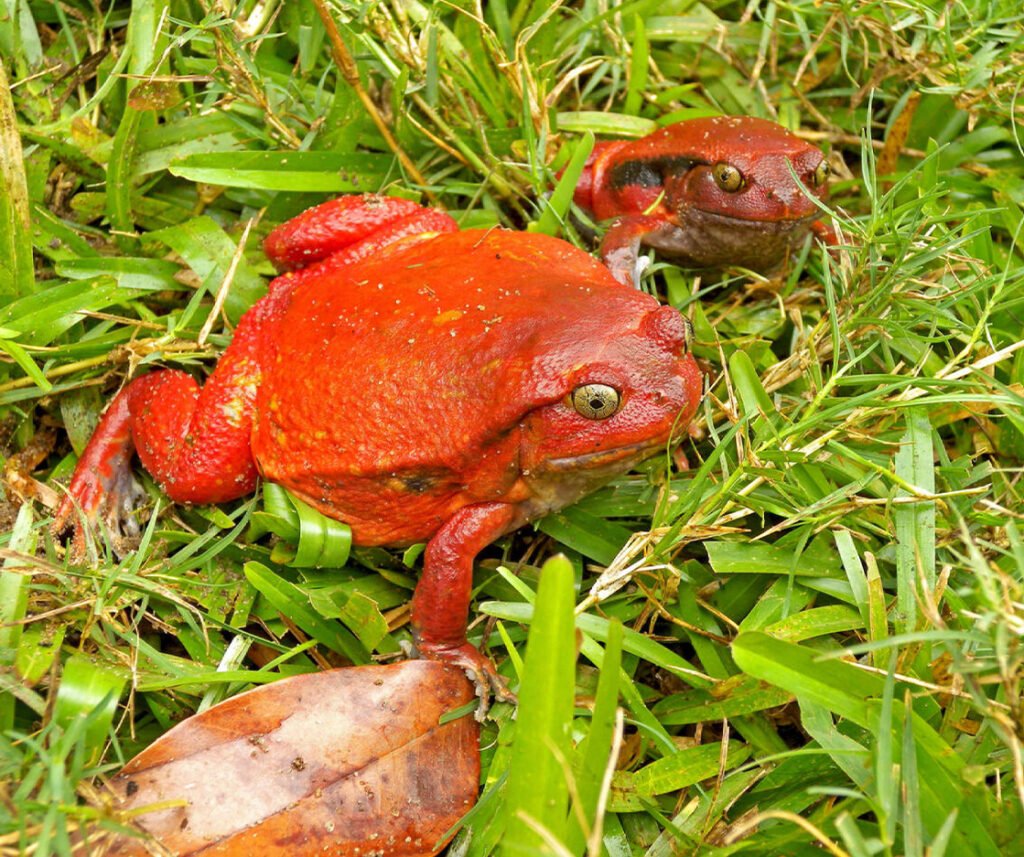
One of the most immediate facts about the Tomato Frog is its brilliant coloration. While we might find the bright red or orange hue “cute,” in the wild, this is a clear signal of aposematism. This biological phenomenon uses bright colors to warn predators that the animal is either toxic or unpalatable.
While the Tomato Frog isn’t lethal to humans, it produces a thick, glue-like mucus when threatened. This substance can numb the mouth of a predator or even cause an allergic reaction, allowing the frog to make a slow but steady escape.
Essential Facts About the Tomato Frog
-
Common Name: Tomato Frog
-
Scientific Name: Dyscophus antongilii
-
Type: Amphibian
-
Diet: Carnivore (primarily insects, small invertebrates, and occasionally small mammals)
-
Average Life Span in the Wild: 6 to 10 years
-
Size (Head and Body): 2.5 to 4 inches (Females are significantly larger than males)
-
Weight: Approximately 1.4 to 8 ounces (40 to 230 grams)
Sexual Dimorphism: The Size Gap
In the world of Dyscophus antongilii, the females are the undisputed heavyweights. While males tend to be a more muted orange or yellowish-brown and stay around 2.5 inches, the females reach the full 4-inch mark and display the iconic deep red “tomato” color. This size difference is crucial during the breeding season, as females must carry a significant number of eggs.
Habitat and Range
These frogs are endemic to Madagascar, specifically the humid lowlands and rainforests in the northeast of the island. They are highly adaptable, often found in shallow pools, swamps, and even slow-moving drainage ditches near human settlements. Despite their “aquatic” look, they are primarily terrestrial and spend much of their time burrowed into the forest floor.
Hunting and Diet
The Tomato Frog is a “sit-and-wait” predator. Instead of chasing down its prey, it remains perfectly still, camouflaged by leaf litter, until an unsuspecting cricket, beetle, or worm wanders by. Their tongues are lightning-fast, snapping out to pull the prey into their cavernous mouths.
Life Cycle and Reproduction
When the heavy rains of Madagascar arrive, the Tomato Frogs head to stagnant or slow-moving water to breed. A single female can lay up to 10,000 to 15,000 eggs at once. These eggs hatch into small, dark tadpoles within just 36 hours.
The transition from tadpole to froglet (metamorphosis) takes about 45 days. Interestingly, the young frogs are not red; they start as a dull brown and only develop their signature “tomato” radiance as they mature and their skin chemistry changes.
Conservation Status
While the Tomato Frog is currently listed as Least Concern by the IUCN, this was not always the case. For years, they were threatened by the illegal pet trade and habitat loss. Thanks to successful captive breeding programs and trade regulations, their wild populations have stabilized, though deforestation remains a persistent threat to their unique Malagasy home.
Fun Facts for Enthusiasts
-
Eye Contact: They have distinct black masks behind their eyes, which helps break up their silhouette in the wild.
-
Vocalization: During the rainy season, males produce a deep, “clucking” sound to attract mates, which can be surprisingly loud when a chorus begins.
-
Self-Defense: If the sticky mucus doesn’t work, they can puff their bodies up with air to appear much larger and harder to swallow.