Facts About the Marabou Stork
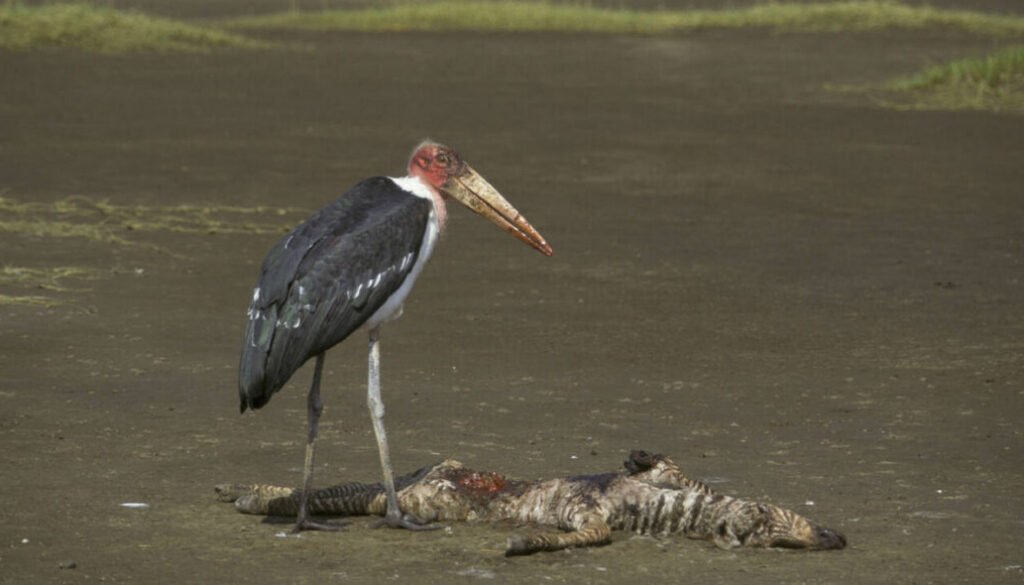
One of the most impressive facts about the Marabou Stork is its sheer scale. Boasting one of the largest wingspans of any land bird—reaching up to 9 or 10 feet—it rivals the Andean Condor in aerial presence. When it spreads its wings, it can cast a shadow that rivals a small aircraft, allowing it to soar effortlessly on thermal currents while searching for its next meal.
Essential Facts About the Marabou Stork
- Common Name: Marabou Stork
-
Scientific Name: Leptoptilos crumenifer
-
Type: Bird
-
Diet: Carnivore/Scavenger
-
Average Life Span in the Wild: 25 years
-
Size (Head and Body): 47 to 60 inches
-
Weight: 9 to 18 pounds
Why the “Undertaker” Moniker?
The nickname “undertaker bird” comes from its appearance when viewed from behind. Its black wings and back look like a formal tailcoat, and its white underparts resemble a dress shirt. Coupled with its slow, deliberate gait and the habit of hanging around carcasses, the name fits perfectly.
A Unique Cooling System
You might notice these birds often have white legs, but that isn’t their natural pigment. In a process called urohidrosis, the Marabou Stork voids excrement onto its legs. As the moisture in the waste evaporates, it cools the blood vessels in the legs, helping the bird regulate its body temperature in the scorching African heat.
The Massive Gular Sac
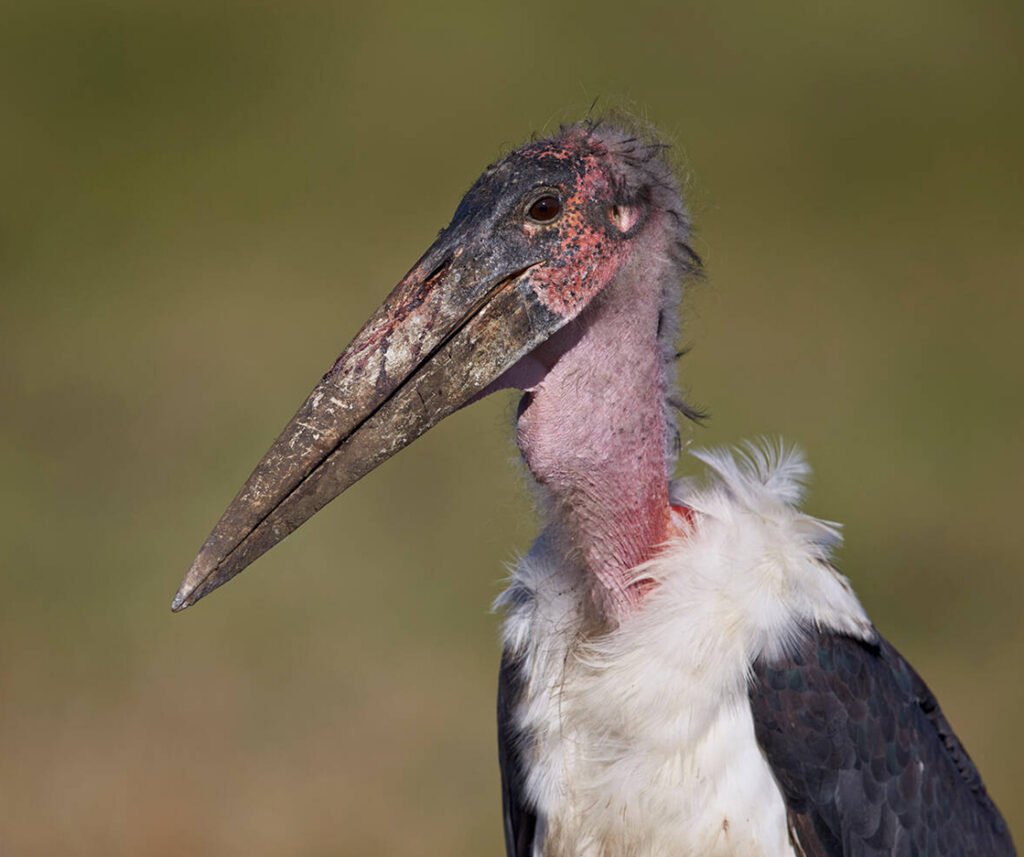
Perhaps the most distinct physical feature is the large, reddish-pink pouch hanging from its neck. Contrary to popular belief, this sac is not used for storing food. Instead, it is a gular sac used primarily during courtship displays and to indicate dominance. It is connected to the left nostril and can be inflated to produce a variety of sounds
Nature’s Essential Clean-Up Crew
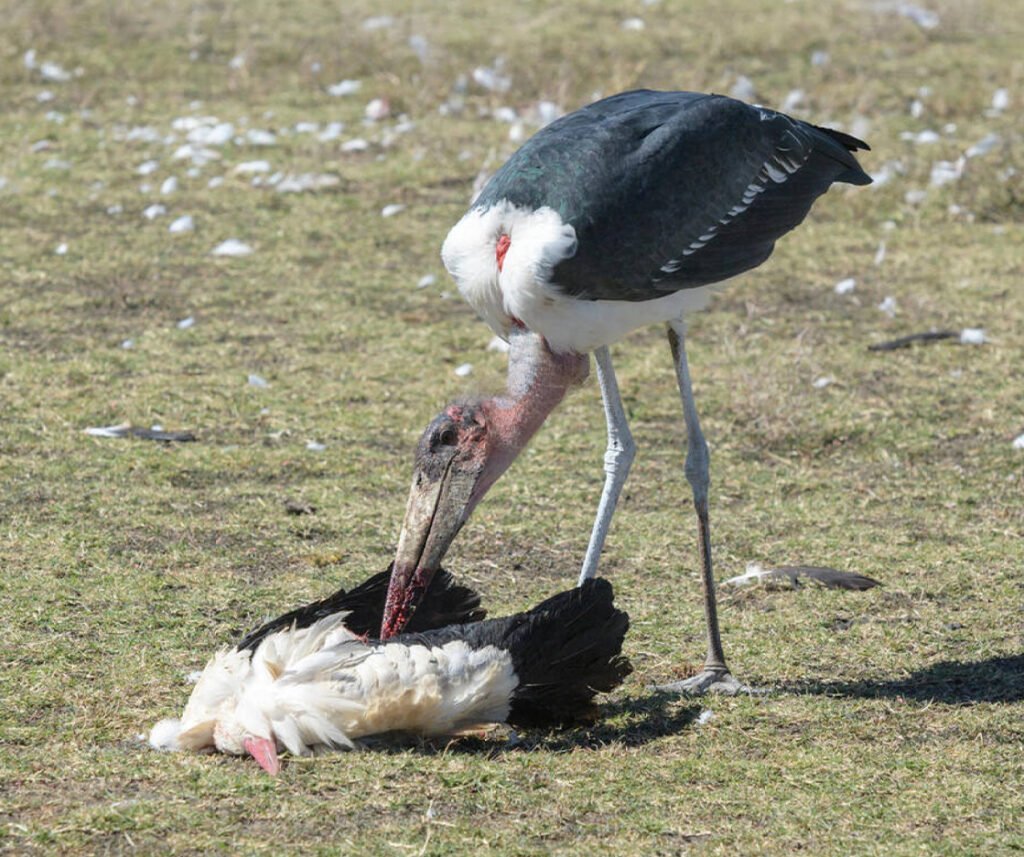
While they are skilled hunters, they are primarily scavengers. Among the crucial facts about the Marabou Stork is its role as a “sanitation officer.” By eating carrion and organic waste, they prevent the spread of diseases like anthrax and rabies in the wild. They often follow vultures to a kill, using their massive, powerful beaks to pull apart tough hides that smaller birds cannot penetrate.
Surprisingly Light Bones
Despite their bulky appearance, these birds are built for flight. Like many birds, their bones are hollow (pneumatized). Interestingly, their toe and leg bones are particularly light, which is an evolutionary necessity to keep their massive frame airborne without requiring an impossible amount of energy.
An Opportunistic Predator
When they aren’t scavenging, they are formidable hunters. They have been known to eat termites, locusts, frogs, lizards, snakes, and even small mammals. In some regions, they are frequent visitors to fishing villages, where they scavenge offal, and even urban landfills, demonstrating their incredible adaptability.
Breeding and Nesting Habits
Marabou Storks are colonial nesters, meaning they live in large groups. They often build their massive stick nests high in trees or on rocky cliffs, sometimes even in the middle of busy towns. They are known to be quite “messy” neighbors, as their nesting sites are often covered in droppings, which can eventually kill the trees they inhabit.
Lack of a Voice Box
Unlike many other birds, the Marabou Stork lacks a syrinx (the vocal organ of birds). Because they cannot “sing,” they communicate through bill-clattering. They also use the aforementioned gular sac to produce guttural croaks and grunts, especially during the breeding season.
The Beauty in the “Ugly”
While they are often ranked among the world’s “ugliest” animals due to their bald, scabrous heads and fleshy wattles, these features are functional. A feathered head would become dangerously matted with blood and bacteria while feeding inside a large carcass. A bald head is much easier to keep clean, proving that in nature, function always trumps fashion.
Conservation Status
Currently, the Marabou Stork is listed as “Least Concern” by the IUCN. Their population is actually increasing in some areas because they have learned to thrive alongside humans, feeding on the waste produced by growing urban centers.