Facts About the Hadada Ibis
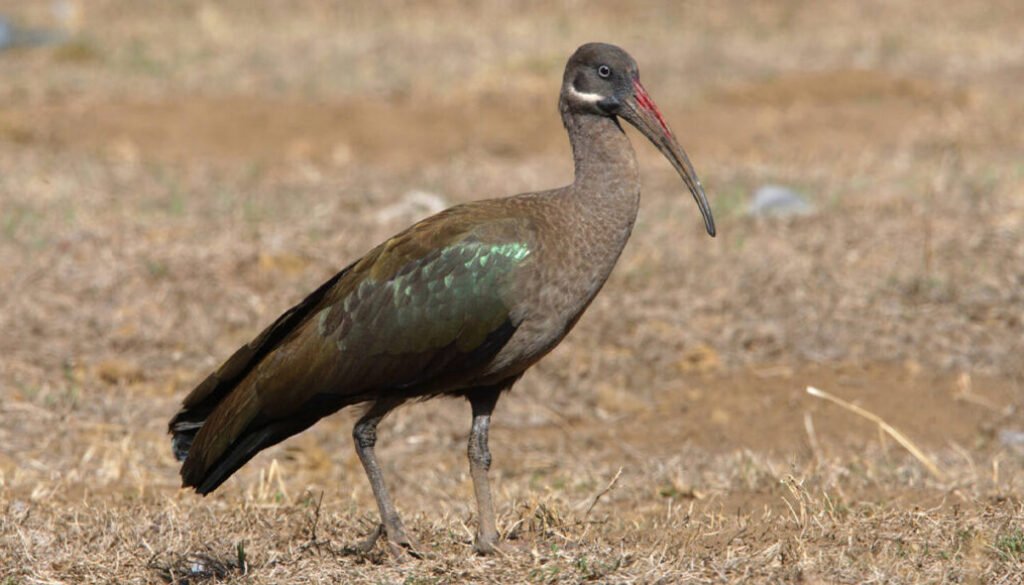
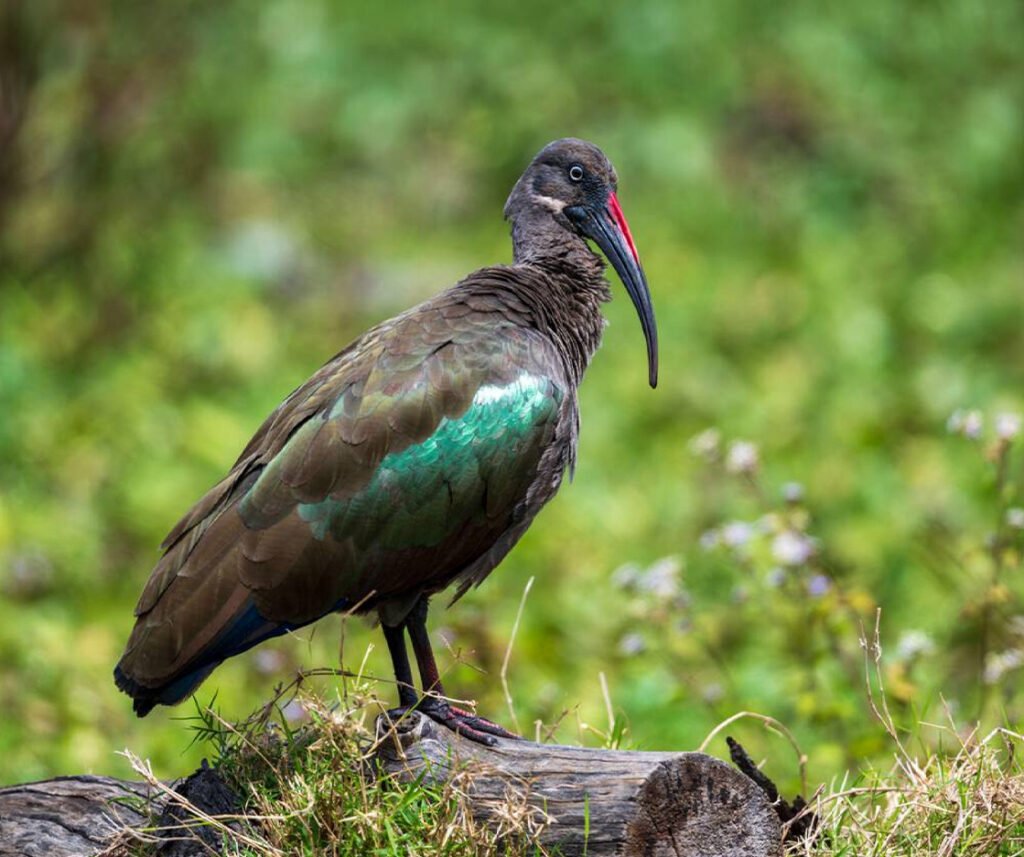
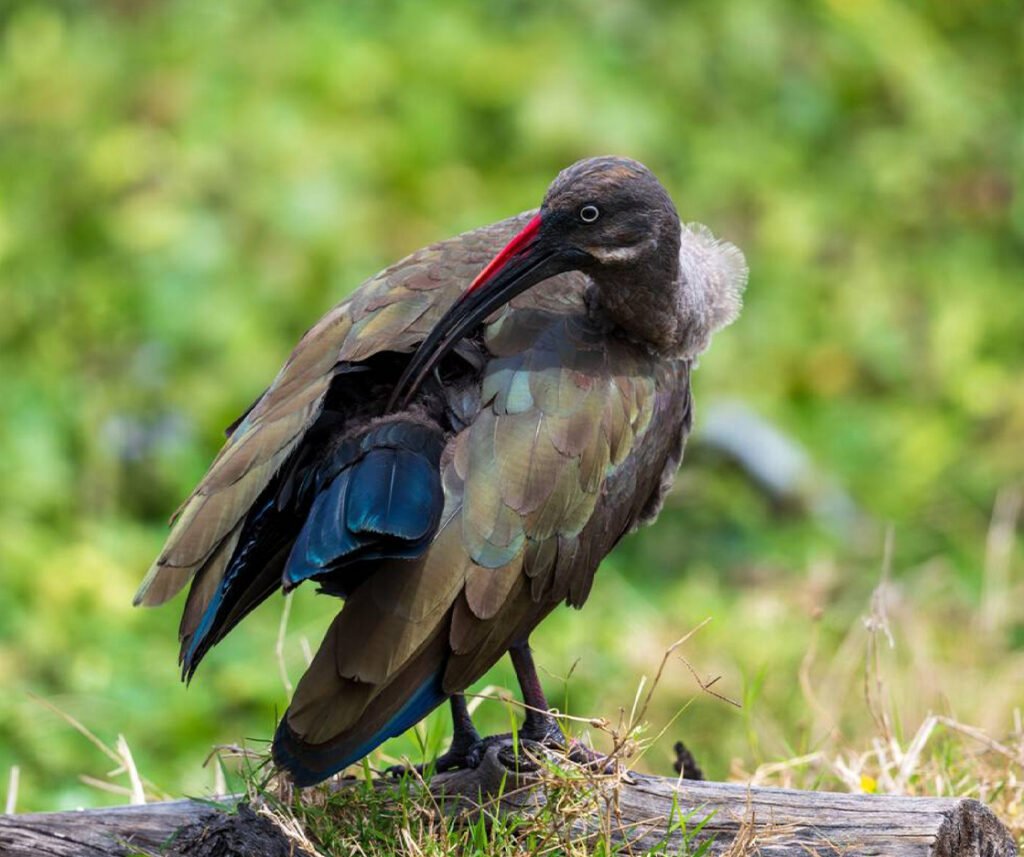
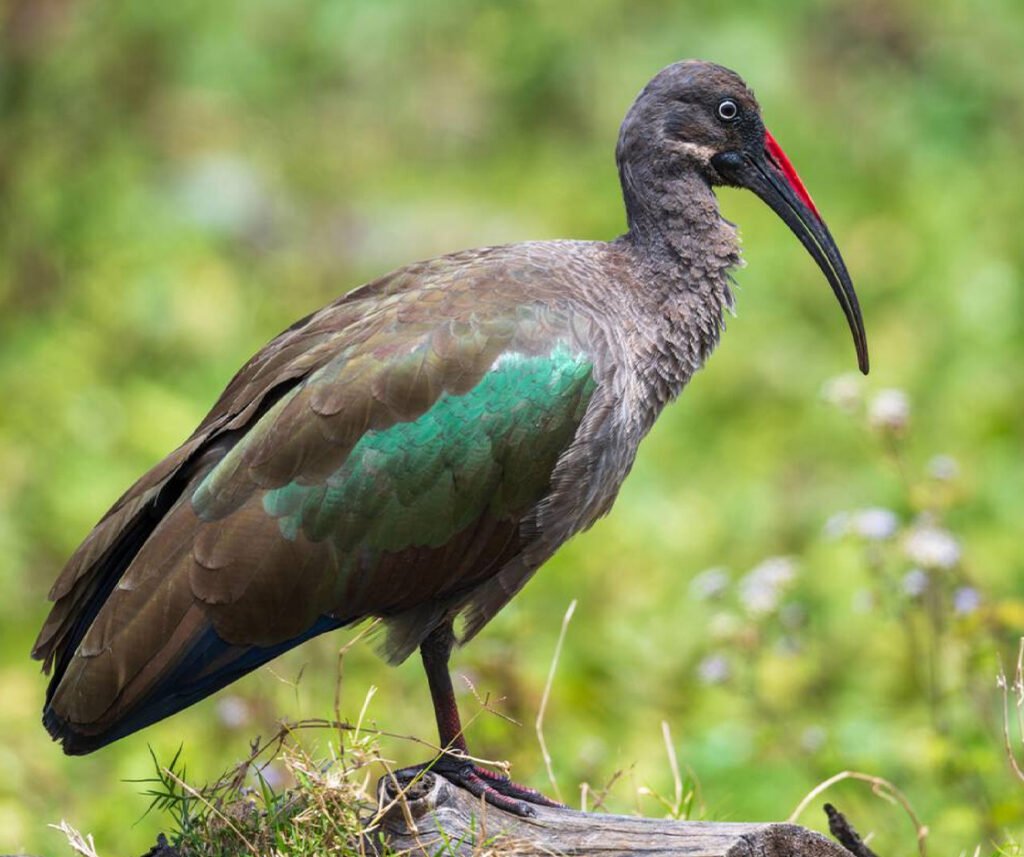
One of the most striking facts about the Hadada Ibis is the secret iridescence of its plumage. Their wing coverts shimmer with a metallic green or purple sheen, a stark contrast to their otherwise earthy tones.
Unlike their famous cousin, the Sacred Ibis, the Hadada doesn’t have a bald head. They are fully feathered, sporting a distinctive white “moustache” stripe across their cheeks. Their legs are relatively short for an ibis, and their bill is long, decurved (curved downward), and perfectly engineered for their specific hunting style.
Essential Facts About the Hadada Ibis
- Common Name: Hadada Ibis
-
Scientific Name: Bostrychia hagedash
-
Type: Birds
-
Diet: Carnivore (Invertebrates)
-
Average Life Span in the wild: 15 to 20 years
-
Size: Head and body: 65 to 76 cm
-
Weight: 1 to 1.3 kg
Where Do They Live?
The Hadada Ibis is incredibly adaptable. While they were historically restricted to riverine forests and wetlands, they have become the ultimate urban survivors. You can find them across most of Sub-Saharan Africa, from the tip of South Africa up through East Africa and into West Africa.
Another interesting fact about the Hadada Ibis is how much they love human-modified landscapes. They adore well-watered suburban lawns, golf courses, and city parks. Why? Because soft, damp soil is the perfect pantry for their favorite snacks.
The Diet of a Master Prober
If you see a Hadada walking across a lawn with a rhythmic, bobbing motion, it is on a mission. These birds are specialized carnivores that focus on soil-dwelling macro-invertebrates.
-
The Primary Target: Earthworms.
-
The Secondary Menu: Crickets, spiders, snails, and the larvae of beetles (often called “white grubs”).
-
The Technique: They use their long bills as sensory probes. The tip of the bill is highly sensitive, allowing them to feel the vibrations and movement of insects deep underground without having to see them.
This diet makes them a favorite for gardeners, as they act as a natural pest control service, pulling out larvae that would otherwise munch on grass roots.
Social Behavior and the Infamous Call
We cannot discuss facts about the Hadada Ibis without mentioning the noise. Their name is an onomatopoeia of their call: a loud, nasal “HAA-daa-daa!” They are highly vocal, especially when flying to or from their roosting sites at dawn and dusk. This call serves as a contact signal to keep the group together. While they aren’t as colonial as some other waterbirds, they do roost in small groups in large trees. During the day, they usually forage in pairs or small family units.
Nesting and Family Life
When it comes to romance, the Hadada Ibis is generally monogamous. Their nesting habits are somewhat minimalist. They build a platform of sticks, usually positioned on a horizontal branch of a tree overhanging water (though in cities, they aren’t too picky about the water).
-
Clutch Size: Usually 1 to 3 eggs.
-
Incubation: Lasts about 25 to 28 days, with both parents sharing the duty.
-
Parenting: Both the mother and father feed the chicks via regurgitation. The young birds are quite “shaggy” looking and lack the iridescent sheen of the adults until they mature.
Conservation and Status
In a world where many species are struggling, the Hadada Ibis is a success story. They are currently listed as “Least Concern” by the IUCN. In fact, their population has expanded significantly over the last century.
The expansion of human irrigation, the creation of dams, and the planting of exotic trees in urban areas have provided the Hadada with an abundance of new habitats. They have moved into regions of South Africa where they were never previously seen, simply because humans started watering lawns and planting trees in formerly dry areas.