Facts About the Desert Rain Frog
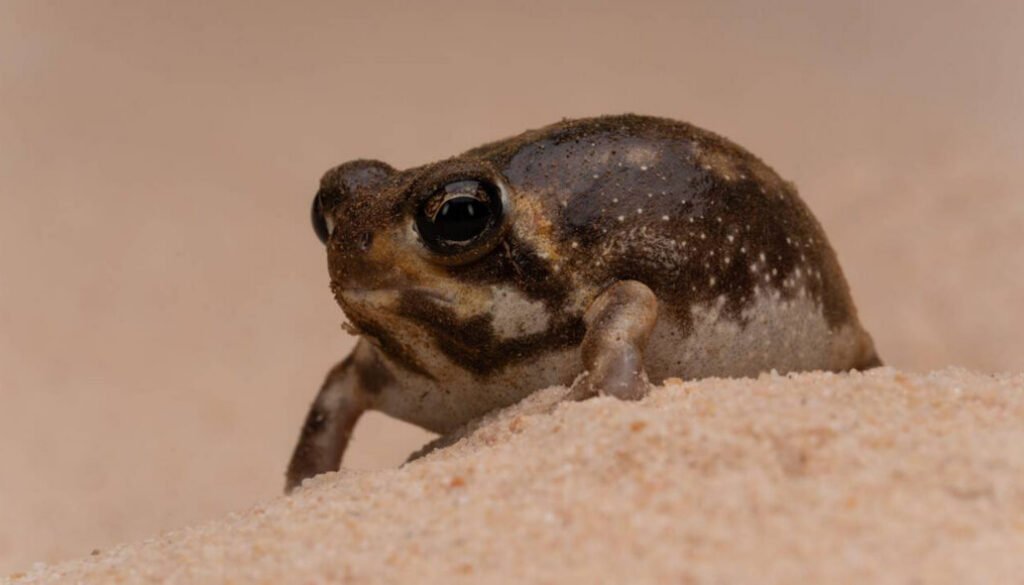
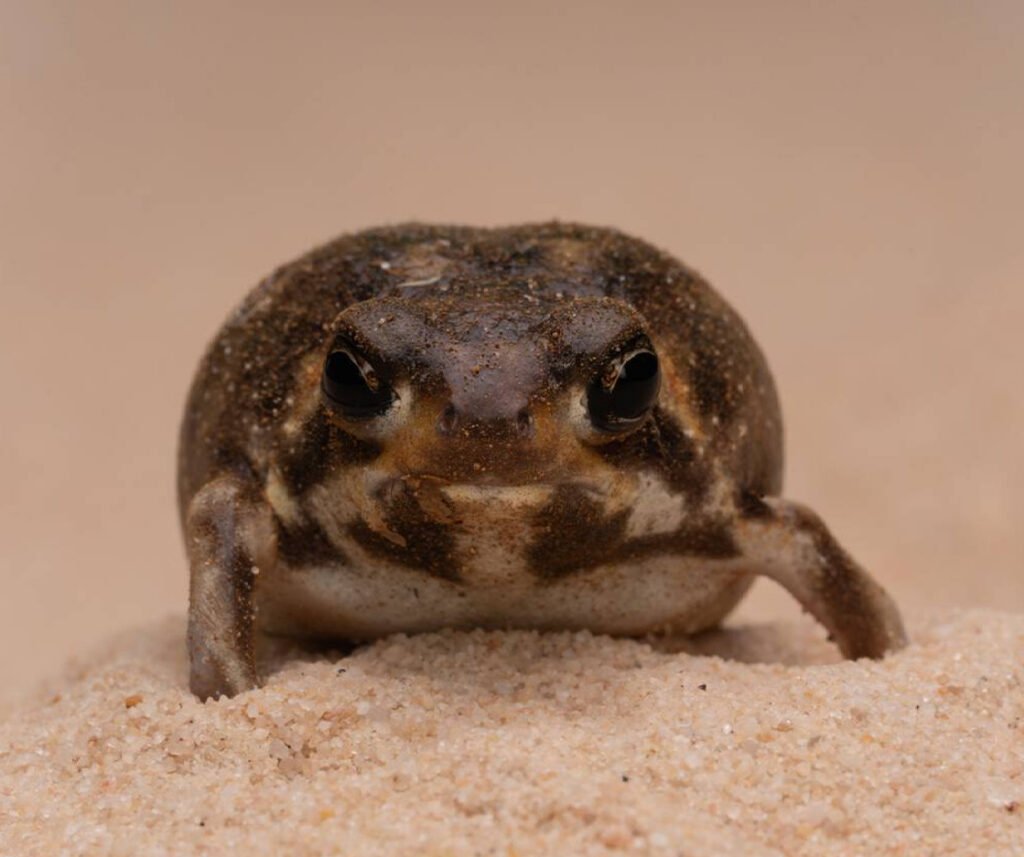
One of the most vital facts about the Desert Rain Frog is its avoidance of the sun. Because their skin must remain moist to facilitate breathing (cutaneous respiration), they cannot survive the scorching daytime heat of the dunes. Instead, they spend their days buried up to 10 to 20 centimeters deep in the sand.
They seek out the “moisture zone”—the layer of sand kept damp by the Atlantic fog. Their bodies perfectly evolved for this: they lack the long, powerful jumping legs of other frogs and instead possess shovel-like flanges on their hind feet, making them expert excavators.
Essential Facts About the Desert Rain Frog
-
Common Name: Desert Rain Frog
-
Scientific Name: Breviceps macrops
-
Type: Amphibian
-
Diet: Carnivore (Insectivore)
-
Average Life Span in the Wild: Approximately 4 to 15 years
-
Size (Head and Body): 1.6 to 2.4 inches
-
Weight: 0.2 to 0.7 ounces
The Famous Vocalization
If you’ve seen a video titled facts about the Desert Rain Frog, you have likely heard its voice. When threatened, the frog inflates its body with air to appear larger and lets out a piercing, high-pitched whistle. To a human, it’s adorable; to a predator, it’s meant to be a terrifying deterrent. This “squeak” is actually a defense mechanism used to startle birds or small mammals long enough for the frog to retreat back into its burrow.
Anatomical Oddities
The Desert Rain Frog doesn’t look like your typical frog. It is often described as a “sentient potato” or a “grumpy marshmallow.”
-
Webbing: Unlike aquatic frogs, their webbing is minimal. They don’t swim; they walk and burrow.
-
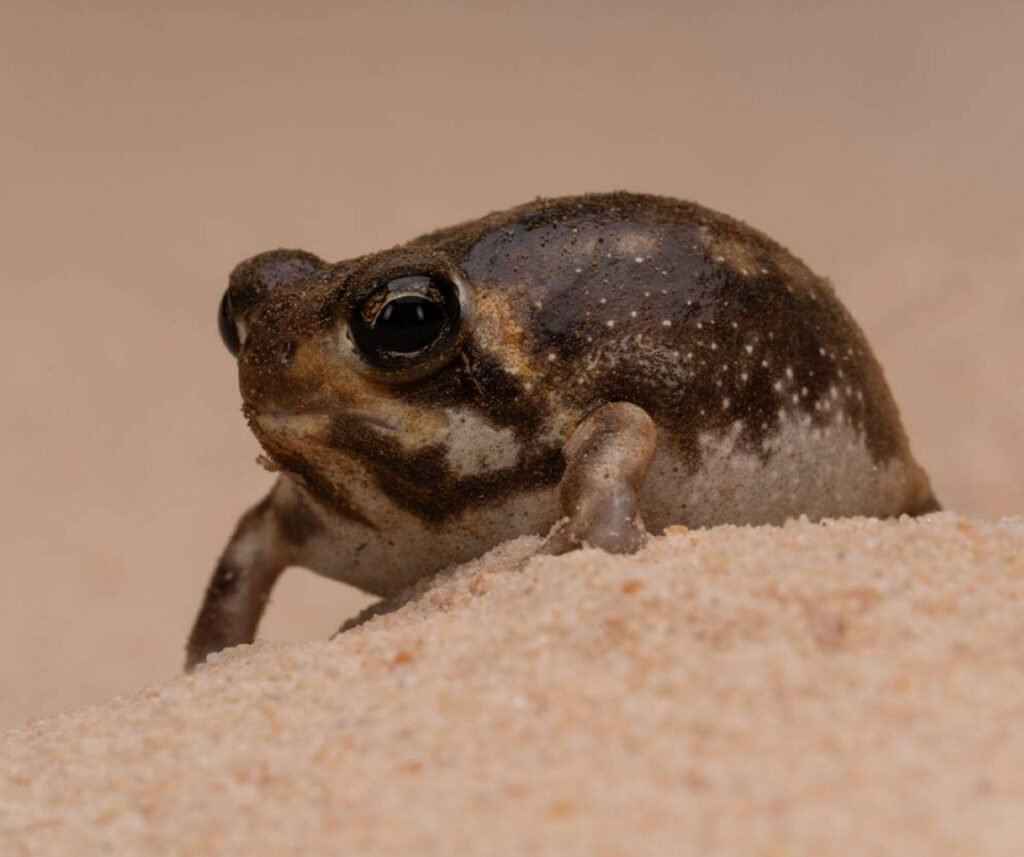
Transparent Patch: They have a transparent patch on their abdomen through which their internal organs can sometimes be seen. This specialized skin allows them to absorb moisture directly from the damp sand they sit on.
-
Bulging Eyes: Their eyes are disproportionately large and situated on the front of their face, giving them excellent night vision for hunting.
Diet and Hunting Habits
In terms of facts about the Desert Rain Frog and its diet, these creatures are nocturnal opportunists. Under the cover of darkness and fog, they emerge from the sand to forage. They primarily feast on beetles, ants, and small insects. Because they inhabit such a nutrient-poor environment, they aren’t picky eaters; if it’s small enough to fit in their mouths and it moves, it’s on the menu.
A Unique Approach to Reproduction
Most frogs lay eggs in water, which then hatch into tadpoles. However, in a desert, standing water is nonexistent. The Desert Rain Frog has evolved a fascinating workaround. They practice “direct development.”
The female lays her eggs in a burrow covered in a thick, jelly-like substance that keeps them moist. Instead of swimming as tadpoles, the young frogs develop entirely within the egg capsule, eventually emerging as fully formed, miniature versions of their parents. This bypasses the need for a pond or stream entirely.
Conservation Status and Threats
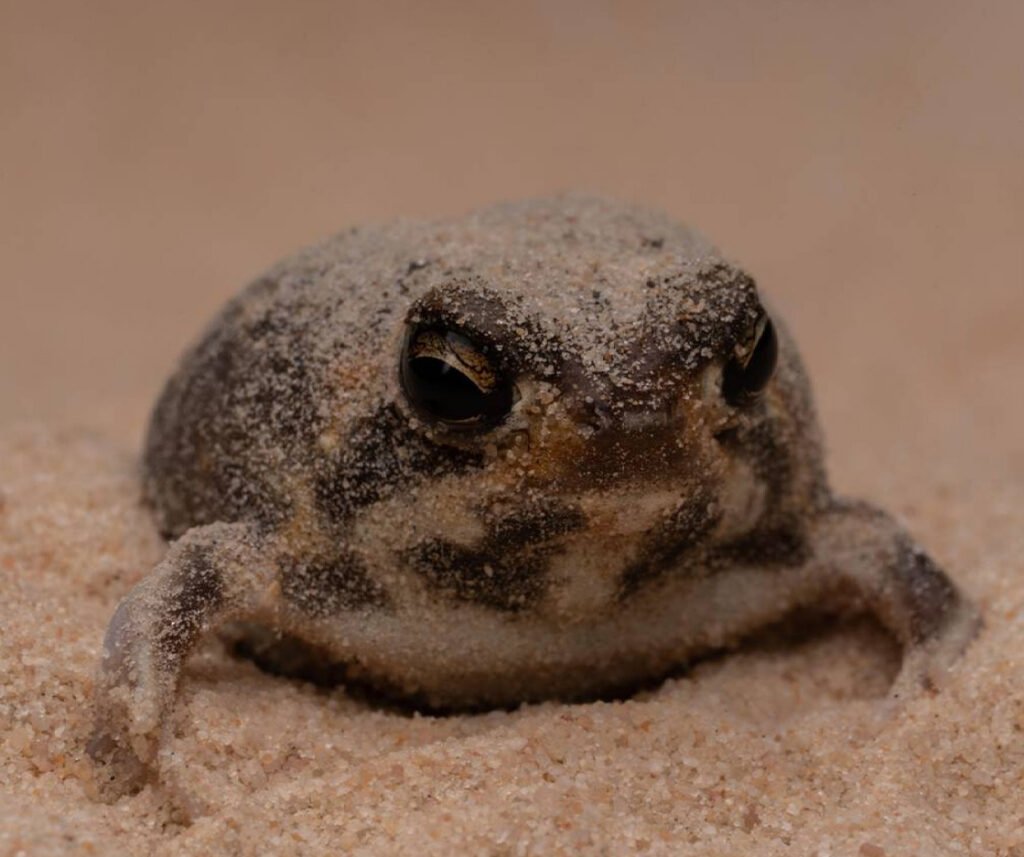
Perhaps the most sobering facts about the Desert Rain Frog relate to its survival. The IUCN (International Union for Conservation of Nature) currently lists the species as Near Threatened. Their habitat is incredibly small—a strip of land less than 10 kilometers wide.
The primary threats include:
-
Diamond Mining: Coastal mining operations frequently disrupt the dunes where these frogs live.
-
Road Construction: New infrastructure fragments their already limited habitat.
-
Human Encroachment: Increased foot traffic and off-road vehicles compact the sand, making it impossible for the frogs to burrow.
Why They Don’t “Hop”
If you watch a Desert Rain Frog move, you’ll notice it looks more like a slow-motion crawl. Their legs are short and stout, built for stability and digging rather than propulsion. This “walking” gait is a key adaptation; jumping requires a massive expenditure of energy and moisture, two things that are in very short supply in the Namibian dunes. By walking, they conserve the water stored in their bodies.