Facts About the Black Kite
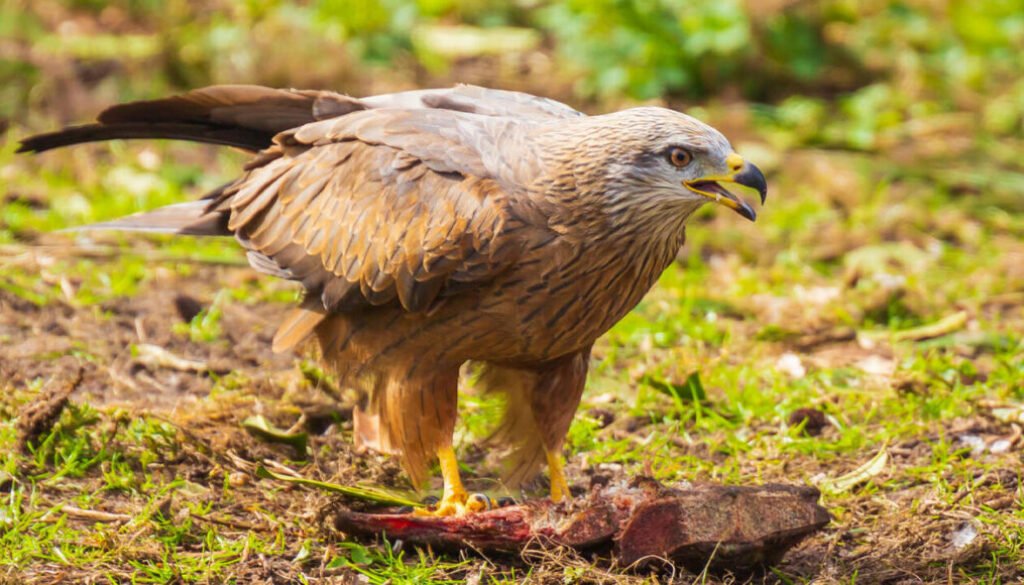
When researching facts about the black kite, the first thing you notice is their staggering range. They are found across Africa, Europe, Asia, and Australia. Their success lies in their lack of “pickiness.” While a Peregrine Falcon might insist on a fresh avian kill, a black kite is perfectly happy with a discarded sandwich, a dead fish washed ashore, or insects stirred up by a tractor.
Essential Facts About the Black Kite
-
Common Name: Black Kite
-
Scientific Name: Milvus migrans
-
Type: Birds (Raptor)
-
Diet: Carnivore/Opportunistic Scavenger
-
Average Life Span in the Wild: Up to 24 years
-
Size (Head and Body): 18 to 24 inches
-
Weight: 22 to 34 ounces
Physical Characteristics and Identification
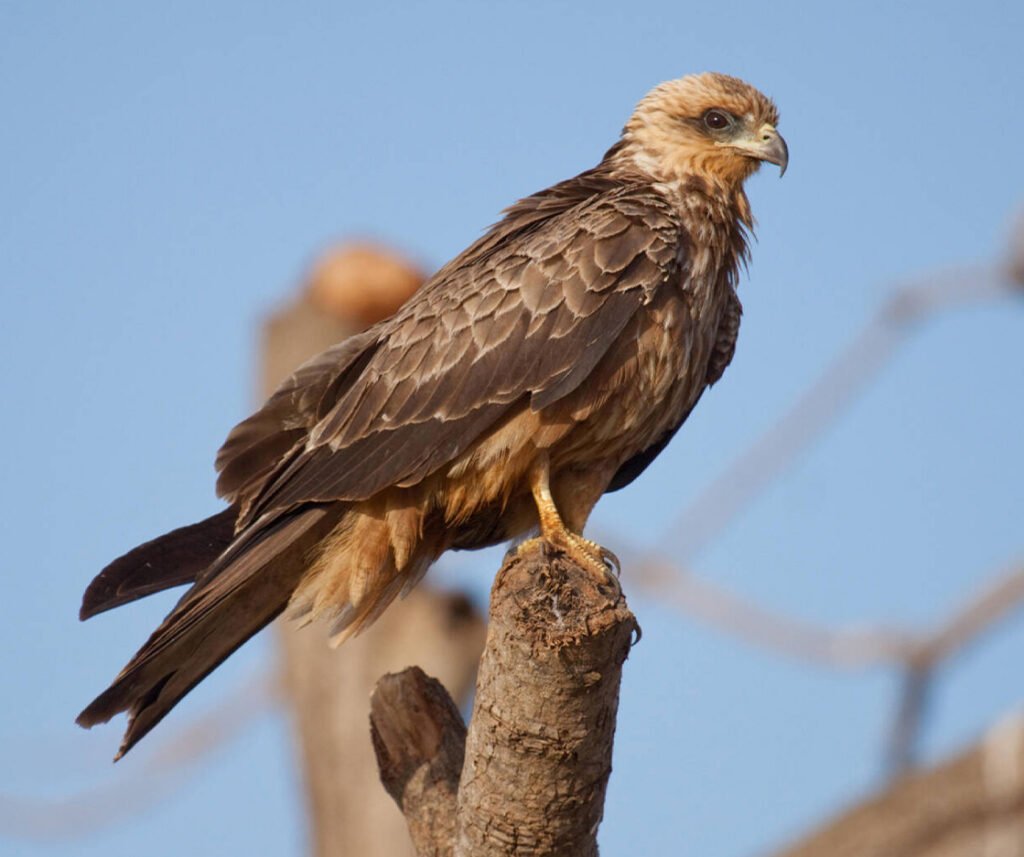
Despite the name, the black kite isn’t actually black. Their plumage is a dark, dusky brown, often appearing rufous or pale on the underparts depending on the subspecies.
The most defining feature of the black kite—and a key point among facts about the black kite—is its forked tail. Unlike the deeply deeply forked tail of its cousin, the Red Kite, the Black Kite’s tail is more “shallowly” forked or even slightly convex when fully spread. In flight, they are incredibly buoyant, using their tail like a rudder to navigate tight urban spaces or turbulent thermal winds.
Firehawks: The Birds That Command Flame
One of the most mind-blowing facts about the black kite involves their relationship with fire. In the Australian savanna, indigenous people have long known what scientists only recently confirmed: black kites (along with whistling kites) are “firehawks.”
These birds have been observed picking up smoldering sticks from active wildfires and dropping them into unburnt patches of grass. Why? To flush out prey. As the new fire spreads, small mammals, lizards, and insects flee the flames—straight into the waiting talons of the kites. This intentional use of fire suggests a level of cognitive complexity rarely attributed to birds of prey.
Diet and Foraging Habits
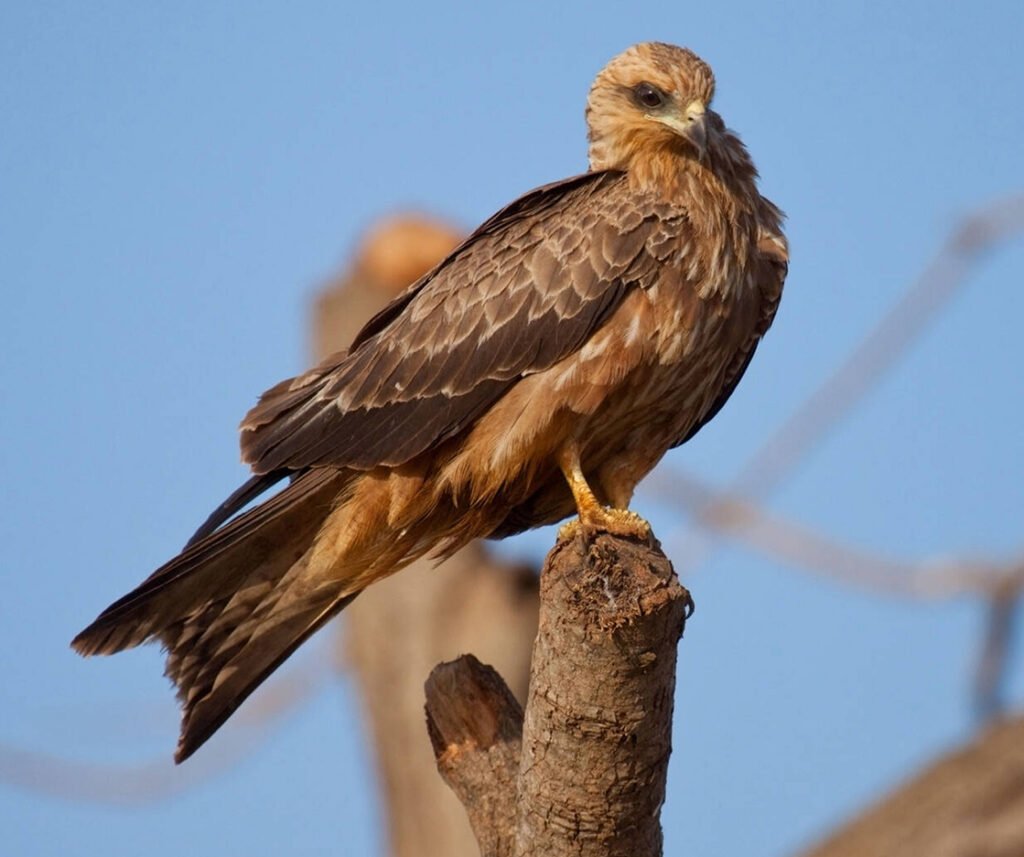
The diet of the black kite is the definition of “varied.” They are agile hunters but lazy enough to prefer scavenging whenever possible.
-
Urban Scavenging: In many Asian cities, they are the primary “clean-up crew,” circling meat markets and landfills.
-
The “Kite Catch”: They are famous for their ability to snatch food in mid-air or from the surface of the water without landing.
-
Insectivore Tendencies: During termite swarms, hundreds of black kites may gather to feast on the winged insects in flight.
Because they are so comfortable around humans, they have been known to swoop down and snatch food directly from people’s hands—a daring feat that adds a bit of “infamy” to the facts about the black kite.
Nesting and Urban Survival
Black kites are surprisingly social for raptors. While they are territorial during the peak of the breeding season, they often nest in loose colonies.
The Decoration Strategy
Interestingly, black kites are known to “decorate” their nests. Research in Europe has shown that kites often weave bits of white plastic or bright trash into their nests. This isn’t just for aesthetics; it’s a signal of status. Higher-quality individuals with stronger territories tend to have more “bling” in their nests, warning rivals that the occupant is fit and ready to defend their home.
Migration Patterns
Not all black kites stay put. Many populations are highly migratory. European breeders, for example, travel thousands of miles to spend the winter in sub-Saharan Africa. Their ability to navigate diverse climates is another one of those essential facts about the black kite that explains their global dominance.
Conservation and Human Interaction
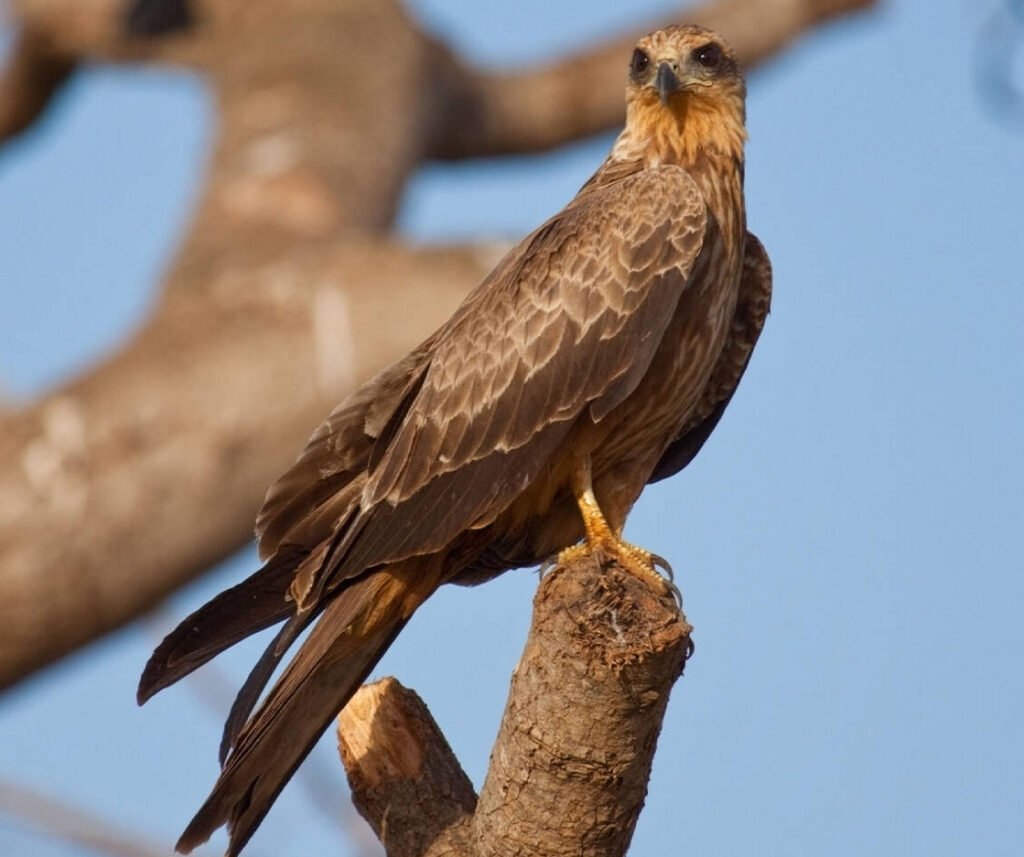
Currently, the black kite is listed as Least Concern by the IUCN. Their population is estimated to be in the millions. However, they aren’t immune to threats.
-
Poisoning: As scavengers, they are highly susceptible to secondary poisoning from pesticides or lead shot found in carcasses.
-
Electrocution: In urban areas, power lines pose a significant risk to these wide-winged flyers.
Despite these hurdles, the black kite remains a symbol of resilience. While other species face extinction due to habitat loss, the black kite simply adjusts its coordinates and finds a new way to survive.