Facts About the African Fish Eagle
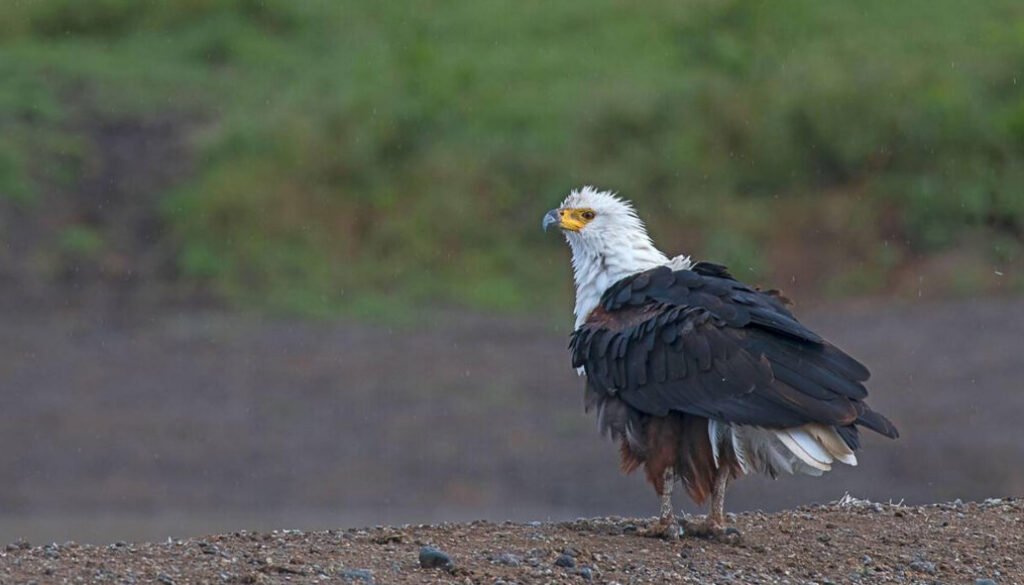
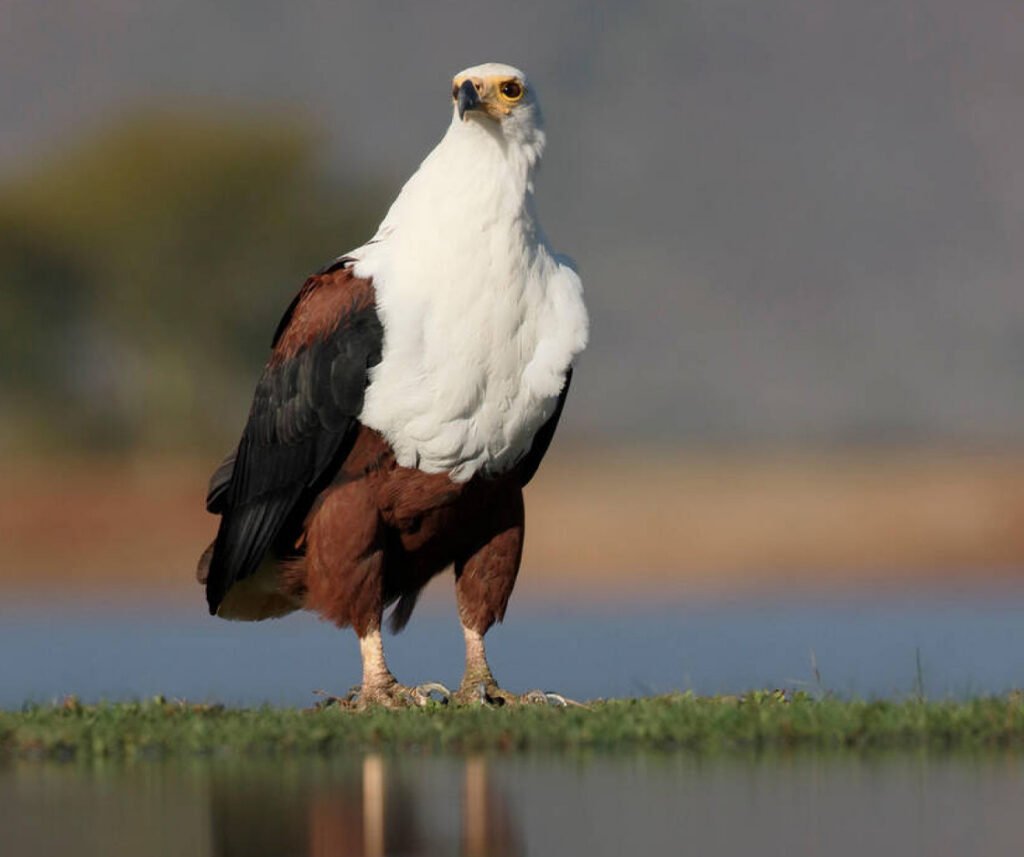
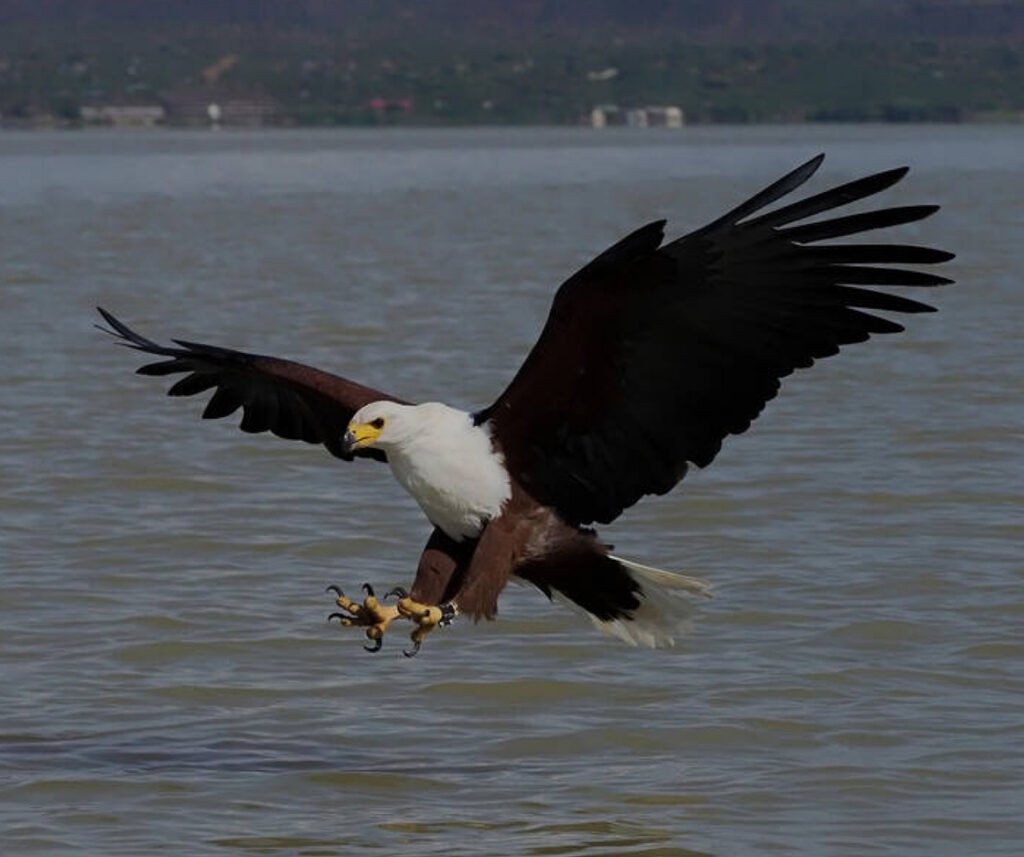
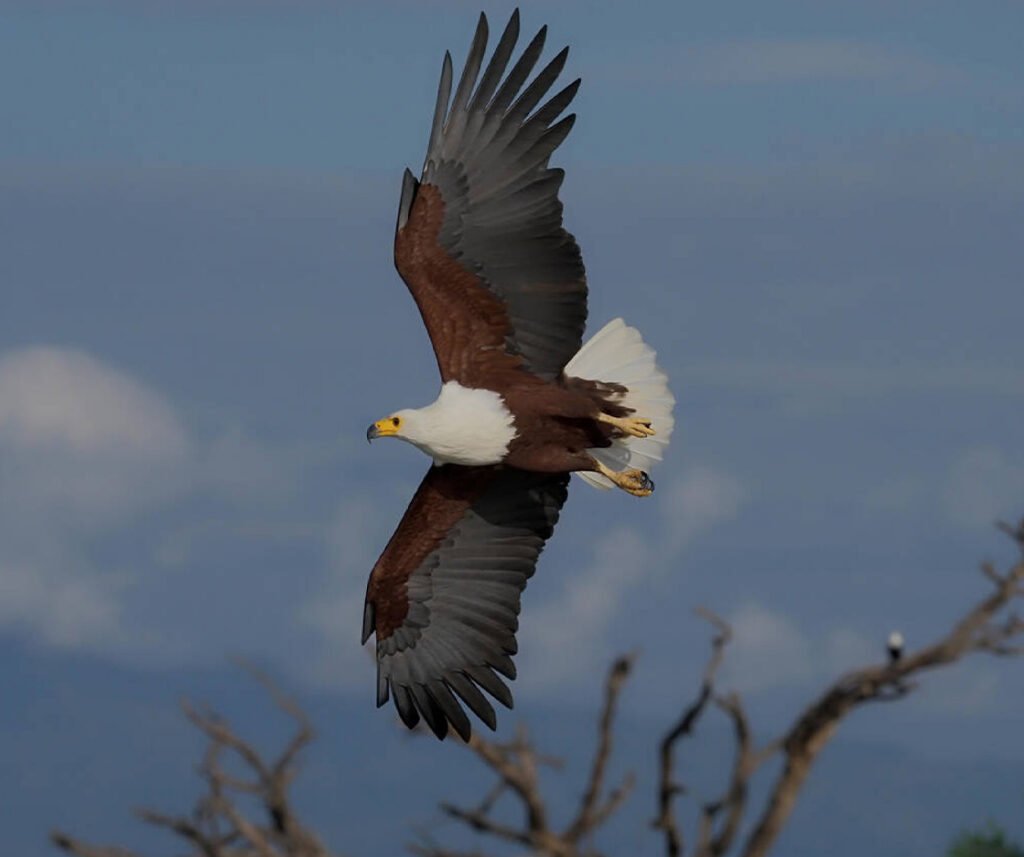
One of the most striking facts about the African Fish Eagle is its unmistakable plumage. Adults possess a snow-white head, neck, and breast, which contrasts sharply with their chocolate-brown body and black wings. Their large, powerful beak is hooked and yellow at the base (the cere) with a black tip.
Interestingly, there is a significant size difference between the sexes—a phenomenon known as reverse sexual dimorphism. Females are generally larger and heavier than males, often boasting a wider wingspan that can reach up to 2.4 meters (nearly 8 feet). Juveniles, however, look quite different, sporting a messy brown and white mottled appearance that takes about five years to transition into the sleek adult plumage.
Essential Facts About the African Fish Eagle
-
Common Name: African Fish Eagle
-
Scientific Name: Haliaeetus vocifer
-
Type: Birds (Raptor/Eagle)
-
Diet: Carnivore (Piscivore)
-
Average Life Span in the wild: 12 to 24 years
-
Size: Head and body: 63 to 75 cm; Wingspan: 2 to 2.4 meters
-
Weight: 2 to 3.6 kg
Vocalization: The Sound of the Continent
The call of the African Fish Eagle is legendary. It is a high-pitched, ringing “weee-ah, hyo-hyo-hyo.” When calling while perched, the bird often throws its head all the way back, nearly touching its back with its crown. When calling in flight, it maintains a more level posture. This vocalization isn’t just for show; it is used to define territories and communicate with mates.
Breeding and Social Life
These eagles are generally monogamous, often mating for life. They build massive nests, known as eyries, out of sticks and pieces of wood. Because they reuse these nests year after year, adding new material each season, the structures can grow to over 2 meters in diameter and 1.2 meters deep
-
Incubation: The female lays 1 to 3 white eggs. While she does most of the incubating, the male will take over when she leaves to hunt.
-
Siblicide: Unlike some other raptors, “Cainism” (where the older chick kills the younger) is less common in this species, provided food is abundant.
Comparison with the Bald Eagle
People often confuse the African Fish Eagle with the American Bald Eagle. While they are cousins (both belong to the genus Haliaeetus, the “sea eagles”), there are distinct differences:
-
Color: The African variety has a white breast, whereas the Bald Eagle has a dark breast and only a white head/tail.
-
Size: The Bald Eagle is generally larger and heavier.
-
Geography: Their ranges never overlap in the wild.
Fascinating Behavioral Adaptations
One of the more overlooked facts about the African Fish Eagle is its role as a “kleptoparasite.” This means they often steal food from other birds. They frequently harass Goliath Herons or Ospreys, forcing them to drop their catch so the eagle can swoop in and claim an easy meal. This behavior highlights their dominance in the avian hierarchy.
Another adaptation is their specialized feet. The undersides of their toes are covered in sharp barbs called spicules (or spiriculae), which help them maintain a death-grip on slippery, slimy fish.
Conservation Status and Human Interaction
Currently, the African Fish Eagle is listed as “Least Concern” by the IUCN. They have a vast range and a relatively stable population. However, they face threats from habitat loss, water pollution (which affects fish stocks), and the use of pesticides like DDT, which can thin their eggshells.
In many cultures, they are highly revered. The African Fish Eagle is the national bird of Zimbabwe, Zambia, and South Sudan, appearing prominently on flags and coats of arms. This reflects the bird’s status as a symbol of strength, freedom, and the natural beauty of the African landscape.