Facts About the Golden Mantella
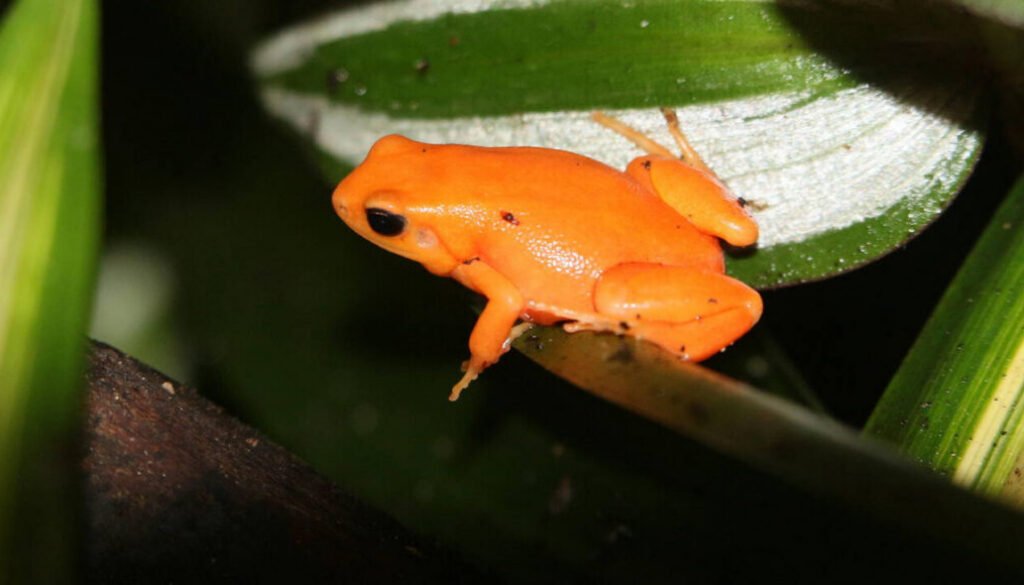
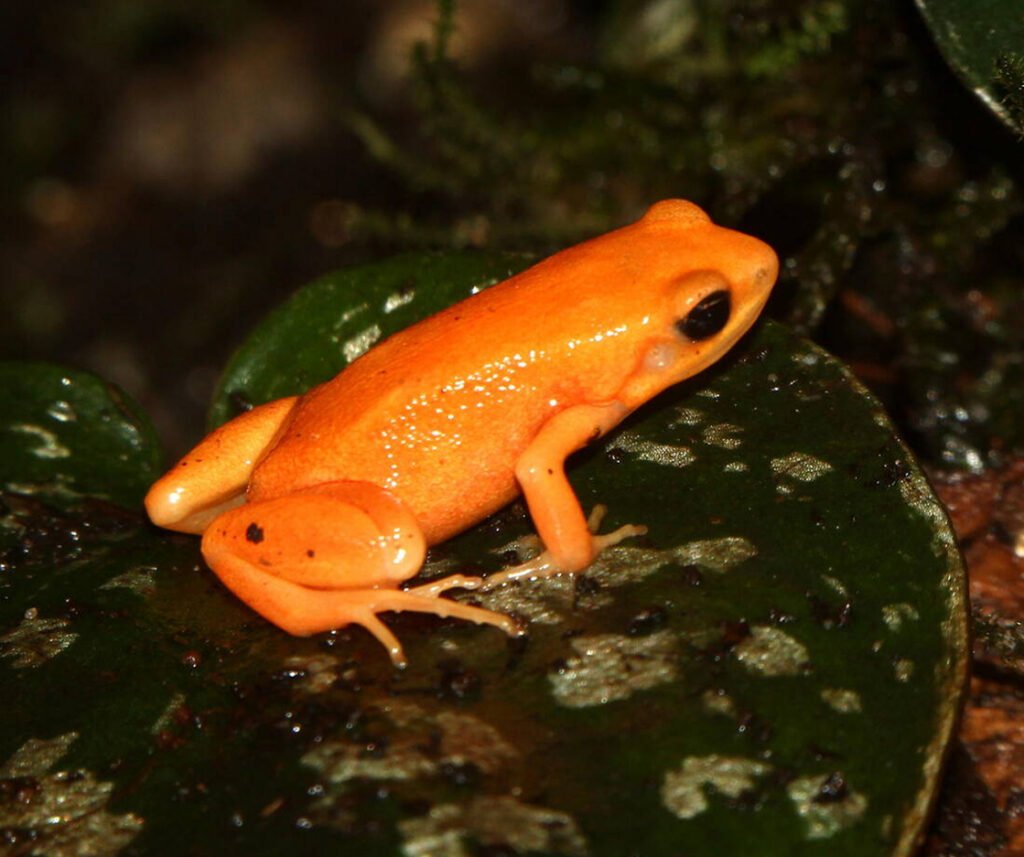
One of the most immediate facts about the Golden Mantella is its color. Unlike many frogs that rely on greens and browns to blend into the foliage, the Golden Mantella is unapologetically bright orange or yellow
This is a biological strategy known as aposematism, or warning coloration. In nature, looking this delicious is a way of telling predators, “I am toxic, and eating me is a mistake.” While they aren’t as lethal as some of the South American Poison Dart Frogs, they do secrete lipophilic alkaloids through their skin, which they derive from their diet of ants and termites.
Essential Facts About the Golden Mantella
-
Common Name: Golden Mantella
-
Scientific Name: Mantella aurantiaca
-
Type: Amphibian
-
Diet: Carnivore (Insectivore)
-
Average Life Span in the Wild: 8 years
-
Size (Head and body): 0.8 to 1.2 inches (20 to 31 mm)
-
Weight: Approximately 0.1 ounces (3 grams)
The Great Impersonators: Convergent Evolution
If you think the Golden Mantella looks like a Poison Dart Frog, you’re right—but they aren’t actually related. This is a classic example of convergent evolution.
The Golden Mantella (native to Madagascar) and the Poison Dart Frog (native to the Americas) evolved similar traits—small size, bright colors, and skin toxicity—independently of each other because they occupy similar ecological niches. It’s a fascinating look at how nature often finds the same solution to a problem twice.
A Very Tiny Kingdom
Perhaps the most sobering facts about the Golden Mantella involve their habitat. They are endemic to a very specific, high-altitude region of East-Central Madagascar, specifically around the town of Moramanga.
-
Habitat Type: Humid Pandanus forests and swampy areas.
-
Total Range: Their entire natural range is estimated to be less than 10 square kilometers.
-
Breeding Grounds: They depend on seasonal ponds and wet crevices to lay their eggs.
Because their range is so restricted, any localized disaster—like a forest fire or a new mining project—could potentially wipe out the entire species in the wild.
Diet and Hunting Habits
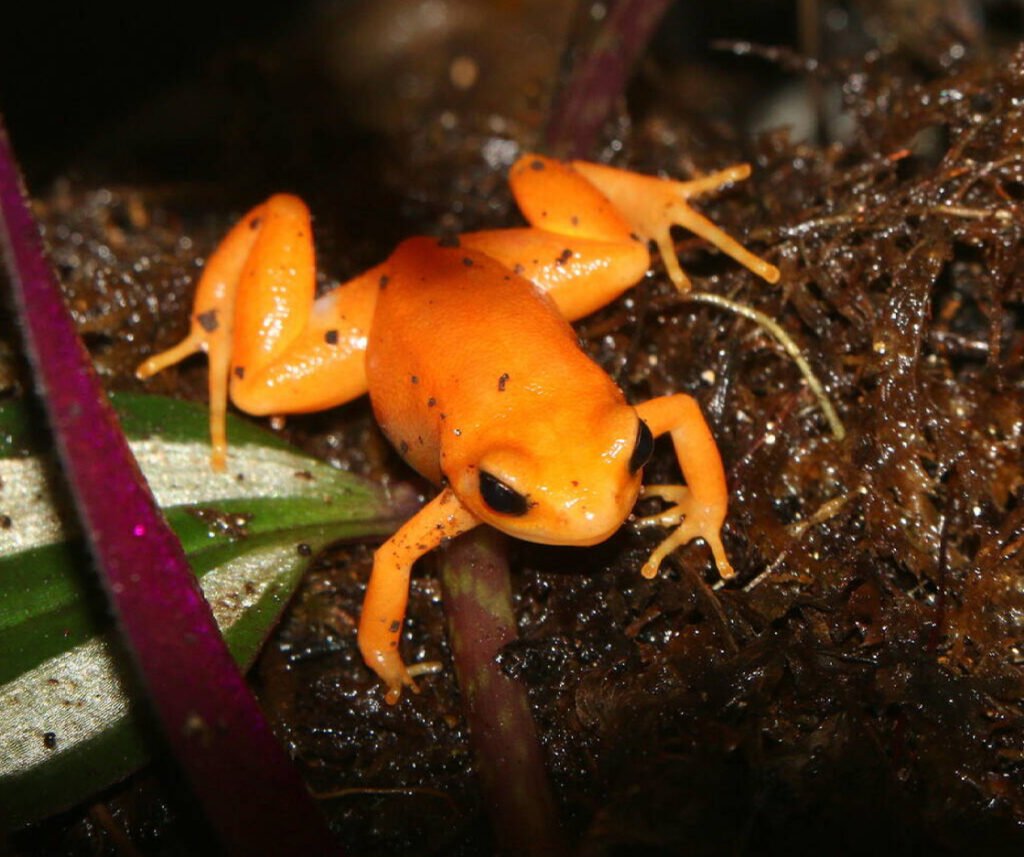
As carnivores, these frogs are the “lions” of the leaf litter. Their diet consists almost exclusively of tiny invertebrates. When studying facts about the Golden Mantella, researchers found that their toxicity is directly linked to what they eat.
-
Primary Prey: Ants (the source of their alkaloids), termites, and fruit flies.
-
Hunting Style: They are diurnal (active during the day), using their keen eyesight to spot movement among the fallen leaves.
In captivity, if they are fed a diet lacking these specific toxic ants, they eventually lose their chemical defenses.
Social Dynamics and Communication
Unlike many frog species that call from high in the trees, the Golden Mantella stays low. The males are highly territorial and use a series of “clicks” to defend their patch of the forest floor.
The call of a Golden Mantella consists of a series of short, double-note pulses. If a rival male enters his territory, the resident male will escalate his clicking or even engage in a wrestling match. When you research facts about the Golden Mantella, you’ll find they are surprisingly feisty for their size!
Reproduction: The Secretive Spawners
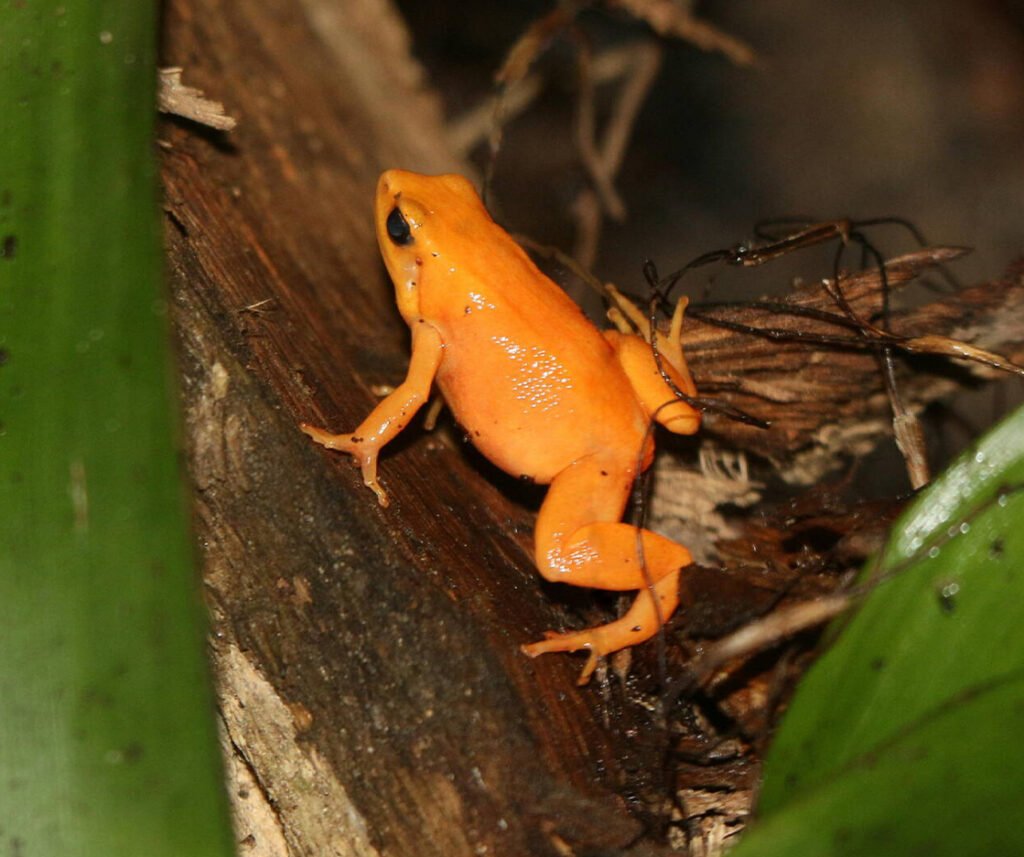
Their breeding cycle is tied to the arrival of the rainy season. Interestingly, they don’t lay their eggs in the water. Instead, the female lays a clutch of 20 to 60 white eggs in damp leaf litter or moss near a water source.
When the heavy rains come, the newly hatched tadpoles are washed into nearby pools and puddles to complete their metamorphosis. This “terrestrial-to-aquatic” transition is a delicate balance; if the rains are too light, the tadpoles never reach the water; if the rains are too heavy, the eggs can be swept away too early.
Why They Are Critically Endangered
No list of facts about the Golden Mantella is complete without addressing their conservation status. They are currently listed as Critically Endangered by the IUCN.
-
Habitat Loss: Logging and agriculture are shrinking their tiny forest home.
-
The Pet Trade: Historically, thousands were collected for the exotic pet market. While trade is now strictly regulated, illegal poaching remains a threat.
-
Climate Change: Changes in rainfall patterns affect their ability to breed successfully.
-
Chytrid Fungus: Like many amphibians, they are vulnerable to the Batrachochytrium dendrobatidis fungus, which has devastated global frog populations.
The Role of Captive Breeding
There is a glimmer of hope. Because they are popular in zoos, there is a robust captive breeding program (an ex-situ population) around the world. These “insurance populations” ensure that even if the Golden Mantella disappears from the wild, the species will not go extinct. Organizations like the Mitsinjo Association in Madagascar are also working on the ground to protect the local habitats that these frogs call home.