Facts About the African Clawed Frog
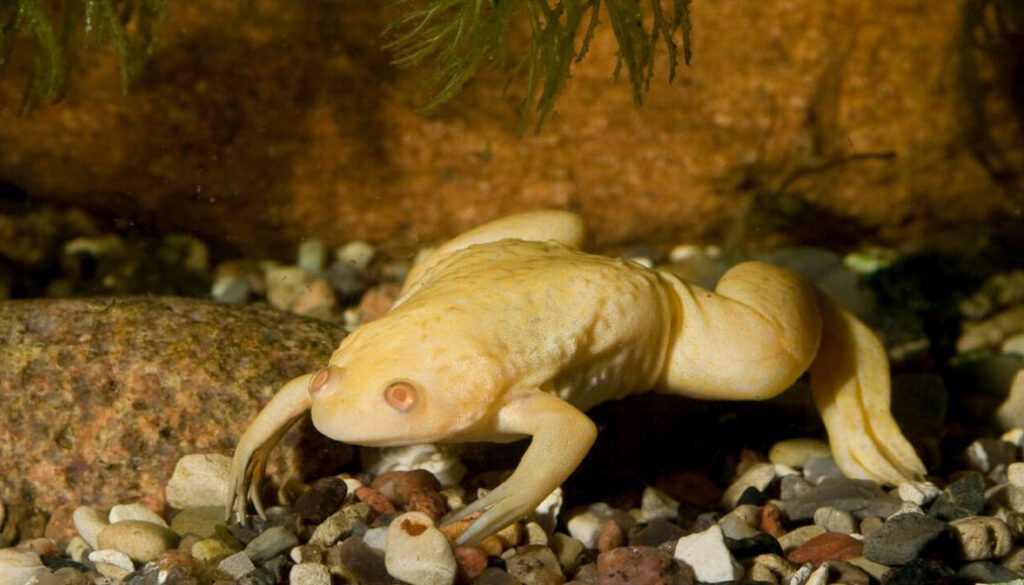
One of the most striking facts about the African Clawed Frog is that it lacks a tongue and visible ears. Unlike the stereotypical frog that flickers a sticky tongue to catch flies, the Xenopus laevis is strictly aquatic. Instead of ears with external drums (tympana), they have internal structures that allow them to sense vibrations through the water.
The “clawed” part of their name comes from the three short, black claws on their hind feet. These aren’t just for show; the frogs use these tiny talons to stir up mud to hide from predators or to help tear apart larger pieces of food that they hold in their toothless mouths.
Essential Facts About the African Clawed Frog
-
Common Name: African Clawed Frog
-
Scientific Name: Xenopus laevis
-
Type: Amphibian
-
Diet: Carnivore (Insects, small fish, worms, other frogs)
-
Average Life Span in the Wild: 10 to 15 years in the wild (up to 25+ in captivity)
-
Size (Head and Body): 2 to 5 inches
-
Weight: Approx. 7 ounces
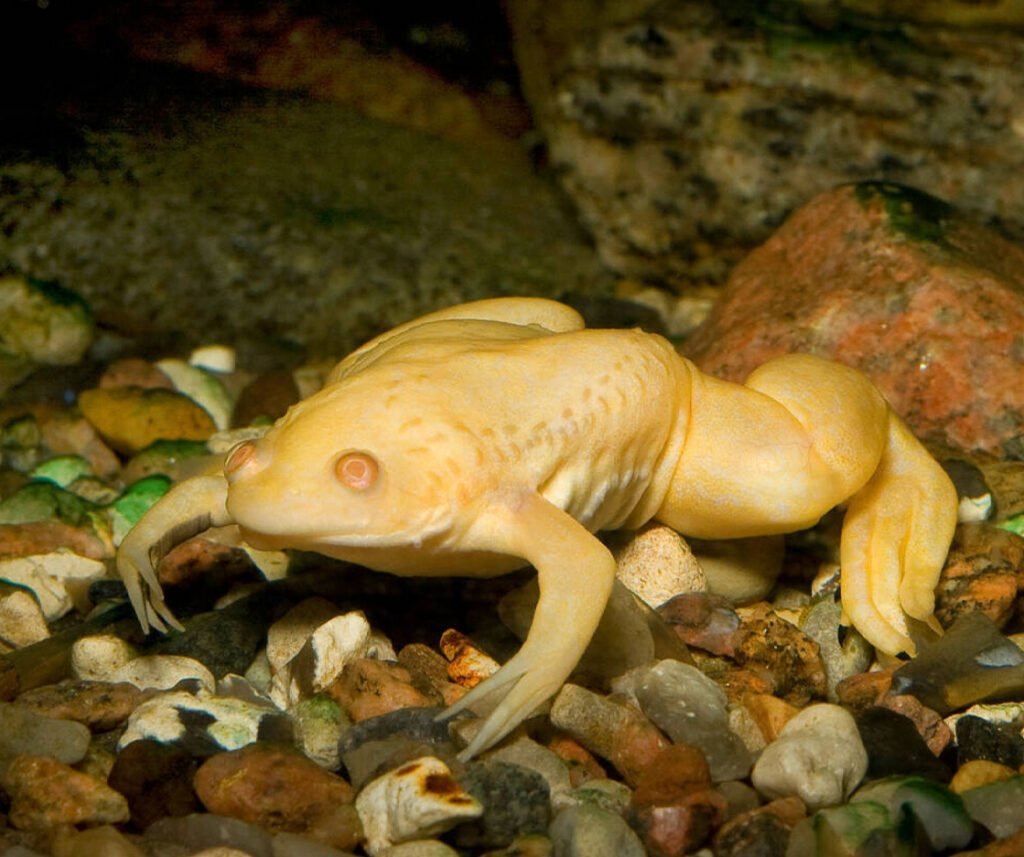
The Original Pregnancy Test
Perhaps the most incredible historical nugget among facts about the African Clawed Frog is their role in human reproductive health. In the 1940s and 50s, these frogs were the primary method for pregnancy testing.
Doctors discovered that if they injected a woman’s urine into a female Xenopus, and that woman was pregnant, the hormones (hCG) would cause the frog to ovulate and lay eggs within 12 to 24 hours. This led to a massive global trade in the species, which eventually contributed to their spread across the world.
A Voracious and Opportunistic Diet
When it comes to eating, these frogs are not picky. They are scavengers and predators that will consume almost anything they can fit into their mouths. Their diet primarily consists of:
-
Water insects and larvae
-
Earthworms and small crustaceans
-
Small fish and even other amphibians (including their own kind)
Because they lack a tongue, they use their front limbs to “shovel” food into their mouths in a frantic, almost comical rowing motion.
They Breathe Air but Live in Water
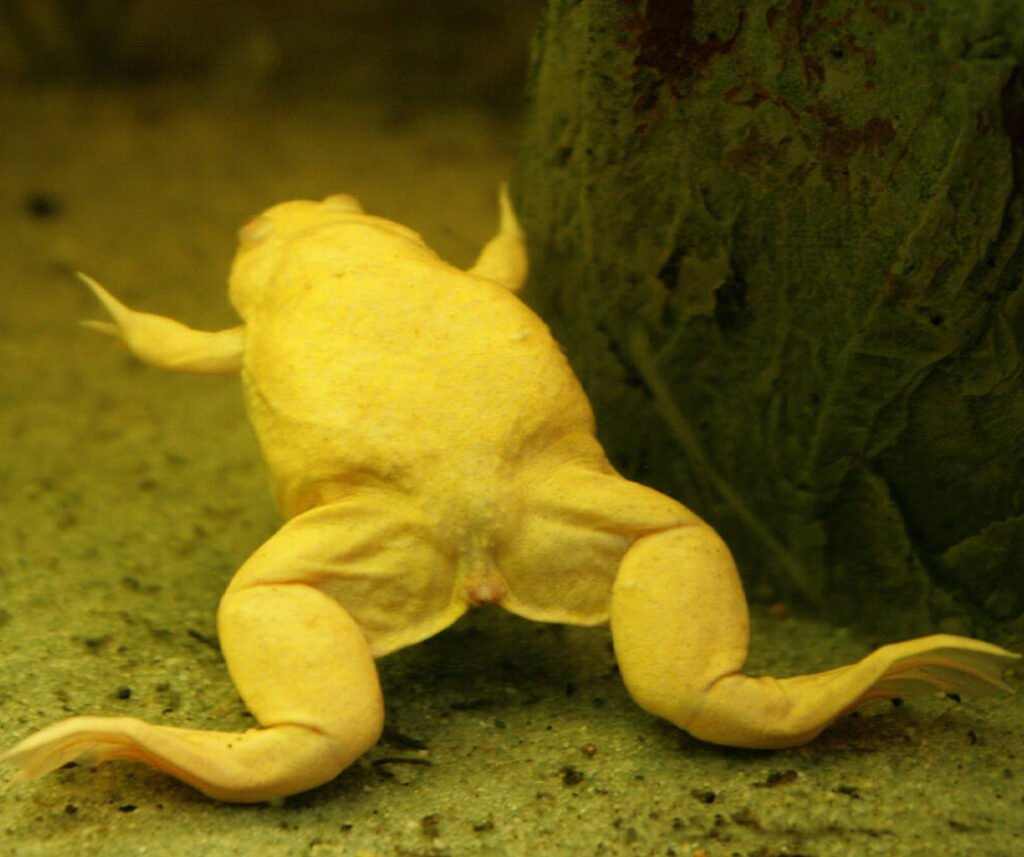
While they spend 100% of their lives submerged, the African Clawed Frog is a lung-breather. They must swim to the surface periodically to gulp air. However, they are also capable of absorbing oxygen through their highly vascularized skin. This dual-threat respiratory system allows them to survive in stagnant, low-oxygen pools where other aquatic life might perish.
Survival in Extreme Conditions: Aestivation
The African Clawed Frog is a master of survival. If the pond they live in dries up during a harsh African summer, they don’t simply give up. They burrow into the mud and enter a state of dormancy called aestivation. They can survive for a year or more in a dehydrated state, waiting for the rains to return and replenish their habitat.
The “Lateral Line” Sensing System
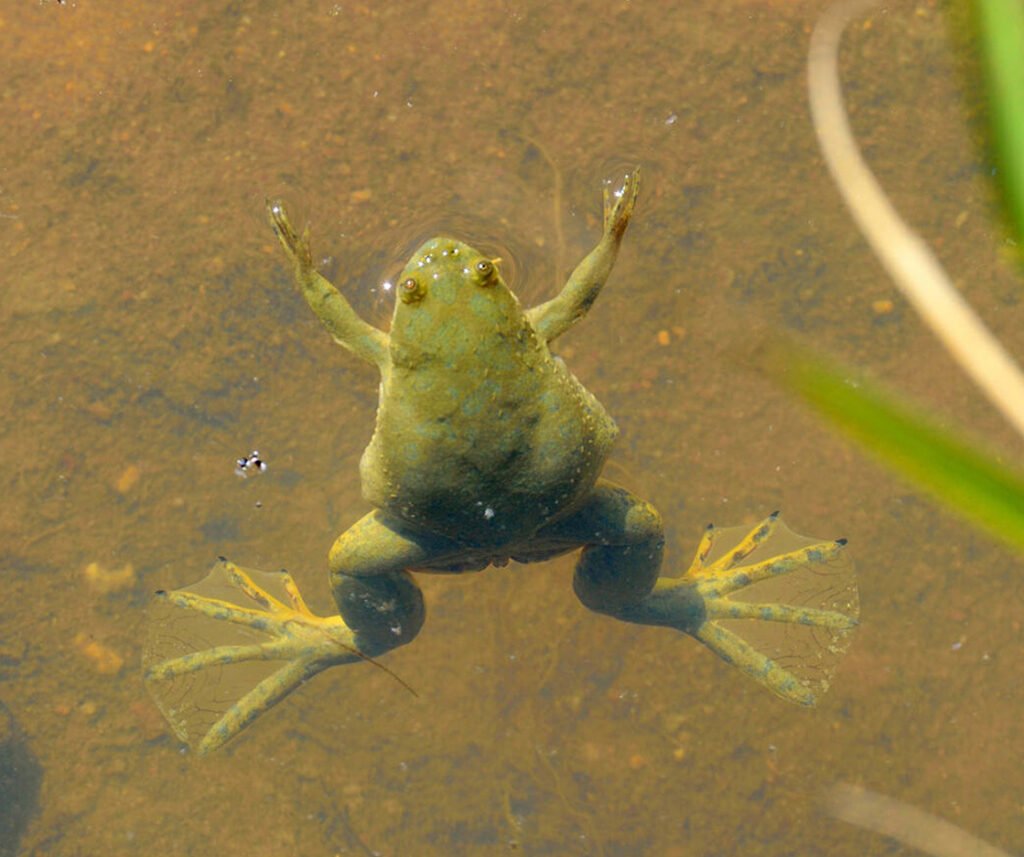
Much like fish, these frogs possess a lateral line system—a series of tiny, hair-like sensory organs along their sides. This allows them to detect minute vibrations and pressure changes in the water. This “sixth sense” is vital for hunting in murky or dark waters where visibility is near zero. It’s one of the most specialized facts about the African Clawed Frog that sets them apart from terrestrial toads and frogs.
A Global Invasive Species
Because they are so hardy and were distributed so widely for lab use and the pet trade, the African Clawed Frog has become a significant invasive species in places like California, Chile, and parts of Europe. They are incredibly difficult to eradicate because they can survive varied temperatures and have few natural predators in these new environments. Their presence often threatens local ecosystems as they outcompete and eat native frog species.