Facts About the African Bullfrog
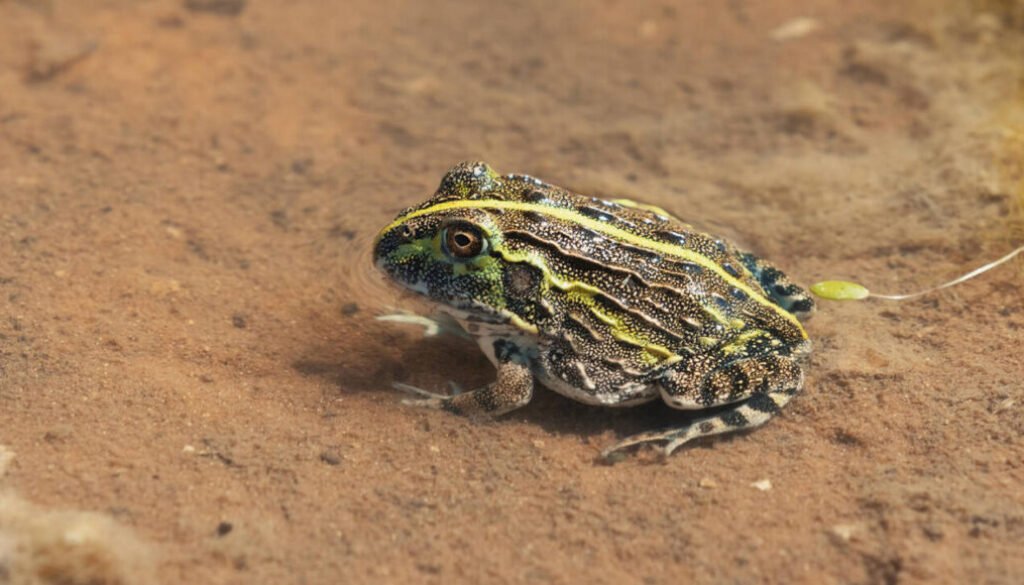
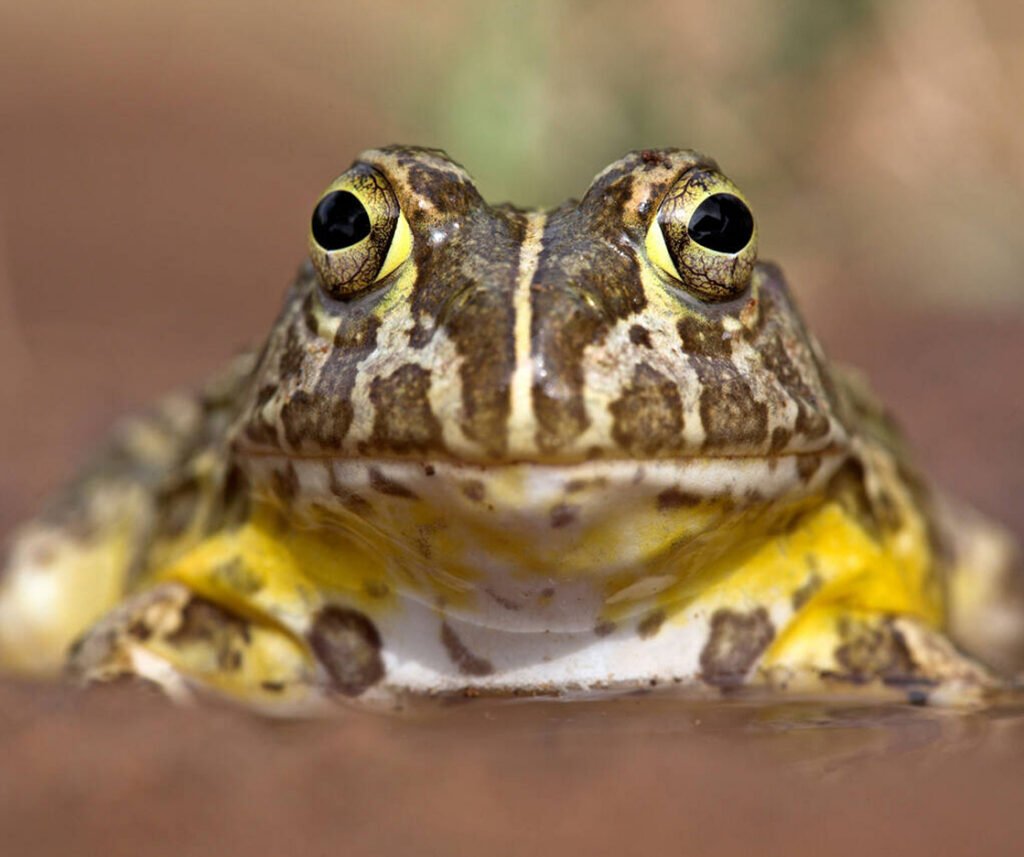
One of the most striking facts about the African Bullfrog is its size. It is the second-largest frog on the African continent. Unlike most amphibian species where females are larger, the African Bullfrog exhibits reversed sexual dimorphism. The males are significantly bigger than the females, sometimes weighing twice as much. This is largely due to the male’s role in defending territory and offspring, requiring a bulkier frame for physical combat.
Essential Facts About the African Bullfrog
-
Common Name: African Bullfrog
-
Scientific Name: Pyxicephalus adspersus
-
Type: Amphibian
-
Diet: Carnivore
-
Average Life Span in the Wild: Up to 20 years (longer in captivity)
-
Size (Head and Body): 9 to 10 inches
-
Weight: Up to 3.1 lbs
An Apex Predator with “Teeth”
When researching facts about the African Bullfrog, their diet is always a highlight. These frogs are opportunistic carnivores with an insatiable appetite. They are famous for eating anything they can overpower, including insects, rodents, small birds, reptiles, and even other frogs.
What makes them particularly effective hunters are their “odontodes”—bony, tooth-like projections on their lower jaw. These act like serrated spikes, allowing the frog to grip struggling prey firmly. They don’t just swallow; they restrain and crush.
The Incredible Survival Strategy: Estivation
The African Bullfrog lives in regions that experience extreme drought. To survive, they have developed a biological “pause button” called estivation. When the ground dries up, the frog burrows 6 to 10 inches underground.
It secretes a mucus-based cocoon that hardens around its body, leaving only the nostrils exposed. In this state, the frog’s metabolism slows down drastically. It can remain in this underground slumber for several years, waiting for a heavy rainstorm to soften the earth and signal that it is safe to emerge.
Aggressive Territorial Combat
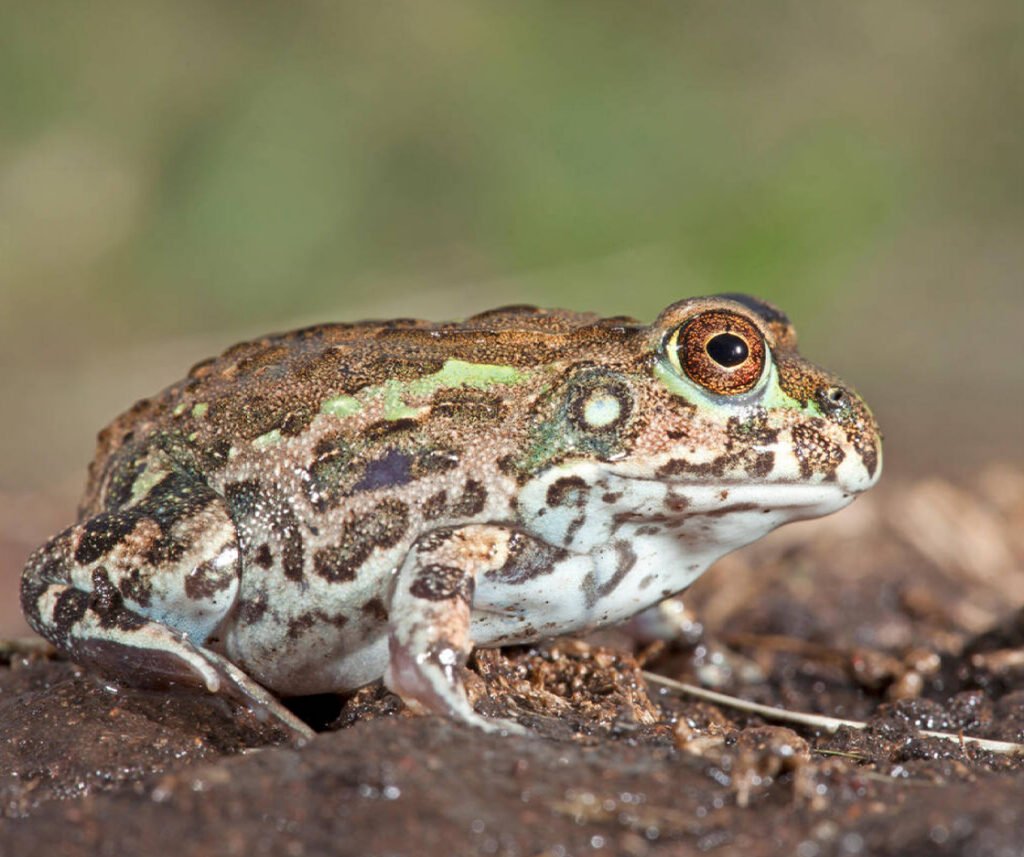
During the breeding season, which is triggered by heavy rains, males gather in shallow pools to form “leks.” This is where some of the more intense facts about the African Bullfrog come to light. The dominant “bulls” take the center of the pool and fiercely defend their space.
They will jump at, bite, and even toss rival males to maintain their position. This aggression ensures that only the strongest males get the opportunity to mate with the visiting females, who lay thousands of eggs at a time.
Devoted Fathers and Canal Builders
In the world of amphibians, parental care is rare, but the African Bullfrog is a notable exception. After the eggs are fertilized, the male stays to guard the tadpoles. He will fight off any predator—from birds to snakes—that threatens the nursery.
If the pool where the tadpoles are living begins to dry up, the male will use his powerful hind legs to dig a canal. He clears a path through the mud to lead his offspring from the shrinking puddle to a larger, more stable body of water. This level of engineering and dedication is unique among frogs.
A Unique Vocalization
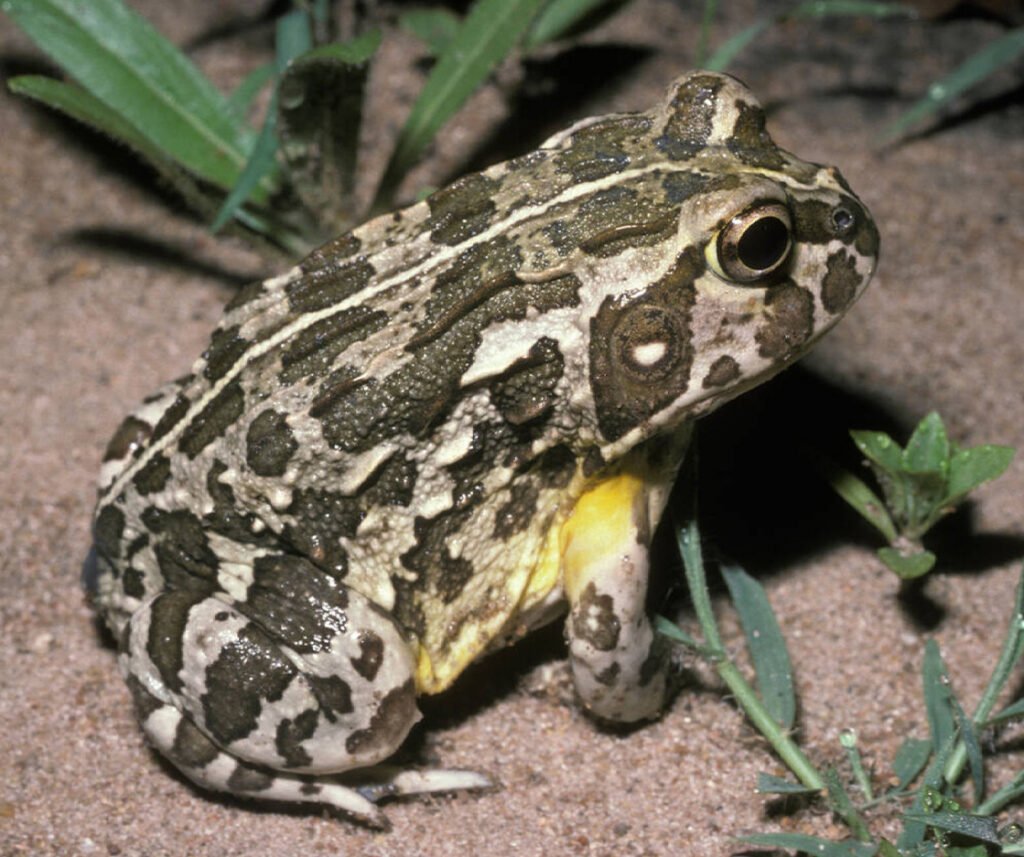
You might expect a frog of this size to have a high-pitched croak, but the African Bullfrog sounds more like a low-frequency roar or a deep bellow. This sound is used primarily by males to attract mates and warn off rivals. In the quiet of the African night after a rainstorm, the collective booming of these frogs can be heard from over a mile away.
Skin and Defense Mechanisms
The skin of the African Bullfrog is thick and covered in longitudinal ridges. While many frogs rely on camouflage alone, the Bullfrog uses its olive-green and yellow coloration to blend into the muddy banks of its habitat. If a predator manages to find them, the frog will inflate its body with air to appear even larger and more intimidating, often letting out a sharp “screaming” sound to startle the attacker.