What Is a Maasai Cultural Village Tour Like?
What is a maasai cultural village tour like? In short, it is an immersive, sensory-rich journey into the heart of one of the world’s most iconic semi-nomadic tribes—a rare invitation to step beyond the window of a safari jeep and experience daily life, ancestral wisdom, and living history firsthand. A well-planned maasai cultural village tour connects travelers directly with living traditions that have endured for centuries across East Africa.
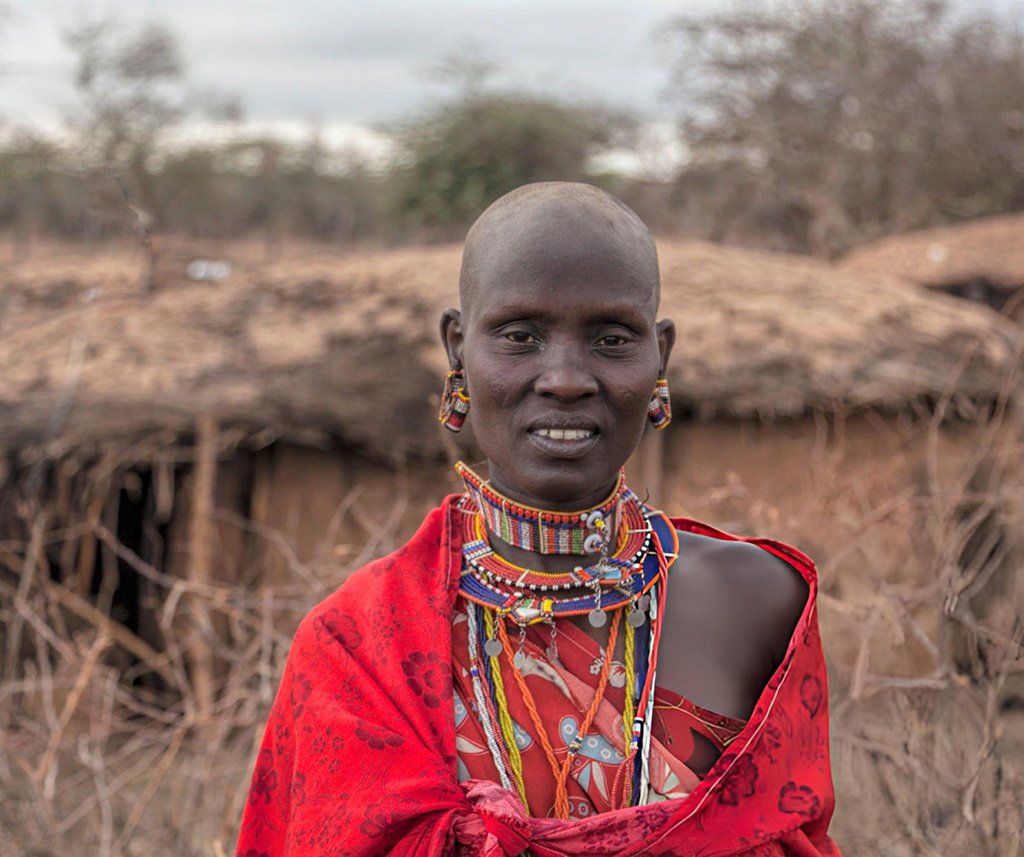
Long before you even set foot inside a village, the surrounding landscape hints at the presence of the Maasai. Across the sweeping plains of Kenya and Tanzania, you see flashes of brilliant scarlet and deep cobalt blue cutting through the golden acacia brush. These vibrant cloth wraps, known as shúkàs, are far more than mere clothing; they are enduring symbols of identity, pride, and survival in a wilderness shared with lions, elephants, and leopards. As your vehicle pulls up to the edge of a traditional village, or boma, the noise of the modern world quietly slips away. You are met not by formal guides in standardized uniforms, but by the villagers themselves, dressed in their finest attire, their complex beaded jewelry shimmering beneath the bright equatorial sun.
An Energetic Welcome and the Adumu Dance
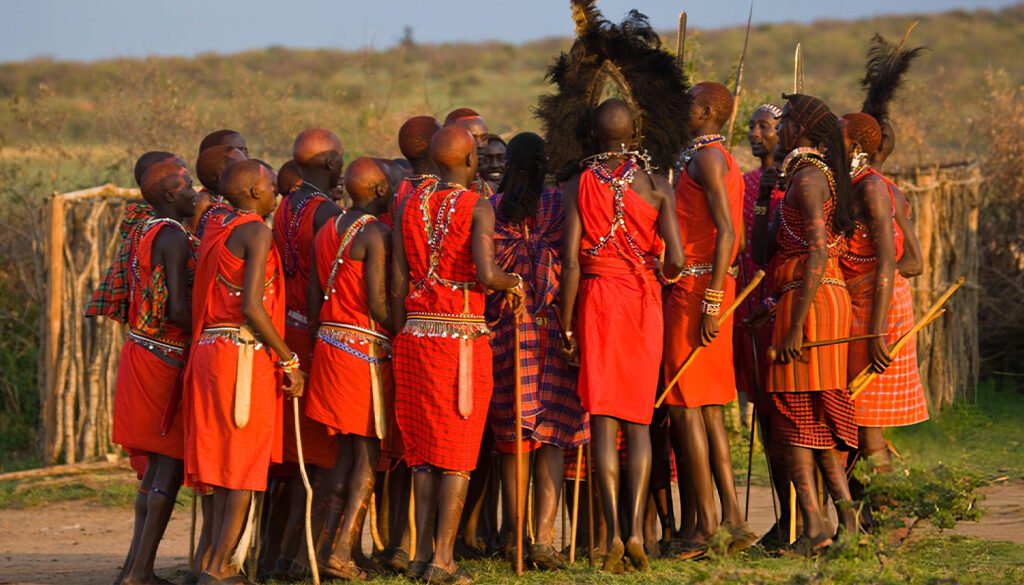
The experience begins immediately with an exhilarating burst of sound and movement. A group of Maasai warriors, known as Moran, alongside the women of the village, form a welcoming line and begin to sing. There are no musical instruments here; the music is created entirely by the human voice—a rich blend of low, resonant throbbing hums and high-pitched call-and-response melodies.
As the rhythm builds, the men step forward to perform the famous Adumu, or traditional jumping dance. Standing in a semi-circle, young warriors take turns stepping into the center, springing straight up into the air with extraordinary grace and power, keeping their heels off the ground and their posture perfectly upright. This hypnotic ritual is both a display of physical stamina and a traditional courtship ritual, demonstrating to the village the strength and vitality of its young protectors. Guests on a maasai cultural village tour are often warmly invited to join in, attempting to match the impressive leaps while sharing in the universal language of laughter and joint celebration.
Inside the Boma Architecture
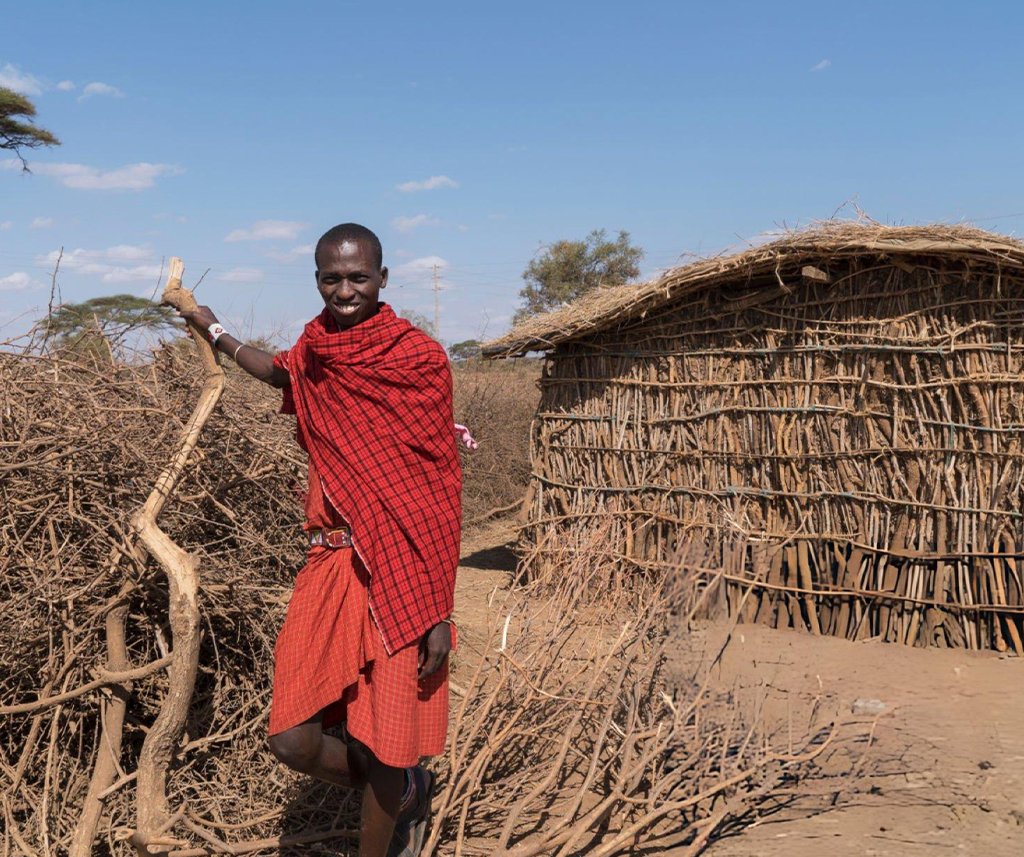
Once the welcoming ceremonies conclude, you are guided past a thick, circular outer fence built entirely from dense, thorny acacia branches. This protective barrier, engineered by generations of trial and error, serves a vital purpose: keeping apex predators like lions, leopards, and hyenas far away from both the villagers and their precious livestock during the dark night.
Passing through the narrow entrance of the boma reveals an inner ring of small, dome-shaped homes known as inkajijik. Stepping closer, you quickly notice that these dwellings are a marvel of sustainable, pastoral architecture. Traditionally built entirely by the women of the community, the huts are constructed using a woven framework of wooden branches, plastered over with an organic mixture of mud, sticks, grass, and cow dung. This combination hardens under the African sun into a durable, surprisingly rainproof shell that keeps the interior remarkably cool during the scorching heat of the afternoon and cozy during chilly nights.
Exploring the Intimate Hearth
Bending down to cross the low threshold of an inkajijik, your eyes take a moment to adjust to the dim interior. Lit only by a tiny window opening and the soft glow of a small central cooking fire, the atmosphere inside is remarkably intimate and tranquil.
During this portion of your maasai cultural village tour, a host explains how the cozy living space is thoughtfully divided—one side for sleeping, another for preparing meals, and a small area set aside to protect vulnerable newborn livestock during severe stormy nights. Sitting beside the central hearth, listening to the gentle crackle of burning wood, you gain a deep appreciation for a lifestyle rooted in daily necessity, minimalism, and balance with nature.
Cattle, Wealth, and Ancient Bushcraft
Emerging back into the bright sunlight, the journey transitions to the true core of Maasai existence: cattle. For the Maasai, cattle are not merely livestock or a source of food; they are a gift from the divine, the ultimate measure of wealth, and the main anchor of social standing. A person’s status, dignity, and ability to support a family are tied directly to the size of their herd.
Villagers will happily explain how every cow is named and recognized individually, and how traditional diets historically revolved around milk, blood, and meat. You might even witness a live demonstration of ancient bushcraft, such as starting a fire without matches. Using two simple pieces of wood—a hard stick rotated rapidly against a softer wooden board—a warrior can generate a glowing ember in less than a minute, a vital survival skill in the African bush.
Symbolic Beadwork and Community Life
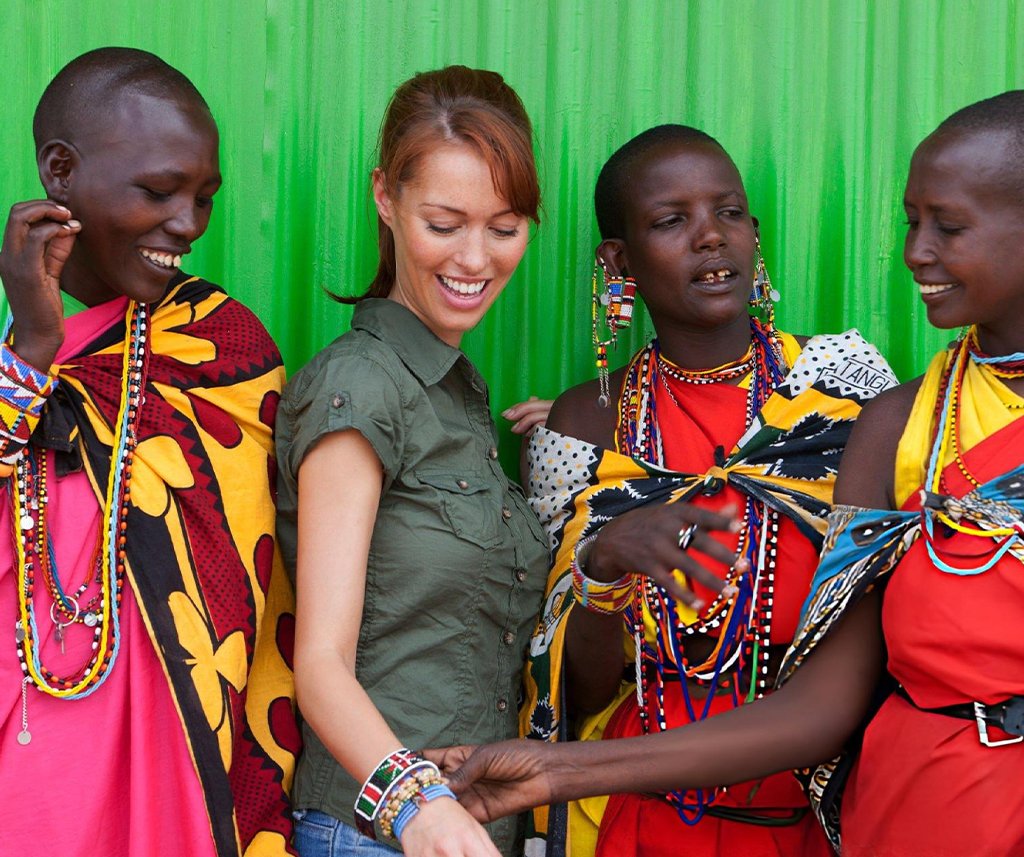
As you wander further through the grounds, you meet the women whose detailed craftsmanship breathes color into everyday life. While beadwork from East Africa is famous worldwide, taking part in a maasai cultural village tour reveals that every color carries a specific, symbolic meaning:
-
Red: Represents bravery, unity, and the blood of cattle.
-
Blue: Signifies the sky and precious rain.
-
White: Symbolizes purity and peace.
-
Yellow: Reflects fertility and the sun.
Sitting alongside the women as they string tiny glass beads into intricate necklaces, bracelets, and wide collars provides a rare moment of personal connection and authentic cultural exchange. Before concluding your maasai cultural village tour, many visitors spend time at the local village school, where young children enthusiastically practice their daily lessons, singing songs in Maa, Swahili, and English. Seeing the younger generation balance their rich ancestral heritage with modern education leaves a lasting impression. Participating in a maasai cultural village tour ultimately offers far more than a simple holiday excursion; it provides a transformative window into human resilience, community bonds, and timeless African traditions.