Facts About the Speckled Mousebird
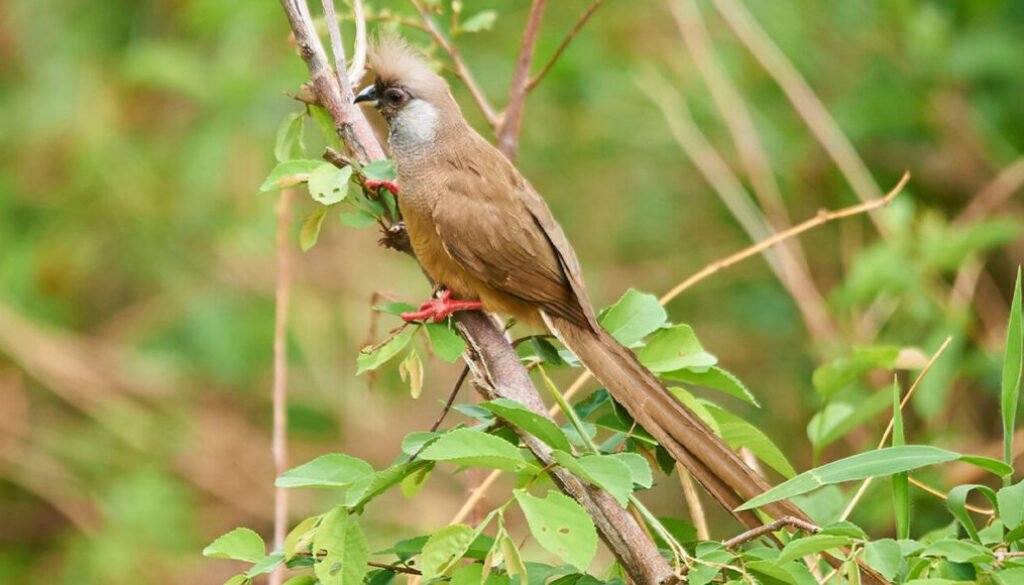
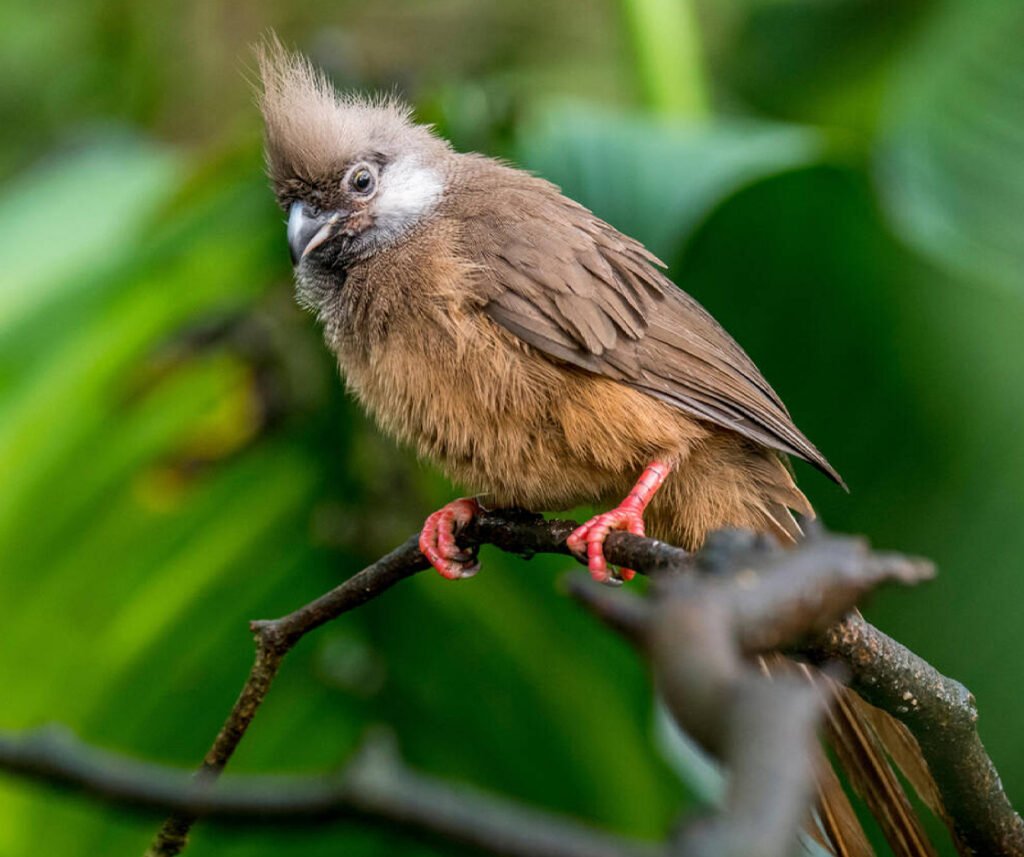
When looking for facts about the Speckled Mousebird, their physical appearance is the first thing people notice. They are medium-sized birds, but their extremely long, thin tails make them appear much larger than they actually are. Their plumage is a dull, earthy brown or grayish color, which provides excellent camouflage against the bark of trees and dry shrubbery.
One of their most defining features is the prominent crest on their head, which they can raise or lower depending on their mood or level of alertness. The “speckled” part of their name comes from the fine, dark barring on the neck and breast, which gives them a textured, mottled appearance. Unlike many other birds, they have pamprodactyl feet, meaning they can rotate all four toes to face forward, allowing them to hang upside down and scurry through branches with the agility of a rodent—hence the name “mousebird.”
Essential Facts About the Speckled Mousebird
- Common Name: Speckled Mousebird
-
Scientific Name: Colius striatus
-
Type: Bird (Order Coliiformes)
-
Diet: Herbivore (Frugivore/Folivore)
-
Average Life Span in the Wild: 8 to 12 years
-
Size (Head and Body): 30 to 36 cm (roughly half of which is tail)
-
Weight: 36 to 80 grams
Distribution and Habitat
These birds are incredibly hardy and adaptable. You will find them throughout Central, Eastern, and Southern Africa. They aren’t particularly picky about their real estate; as long as there is thick cover and a steady supply of food, they are happy.
Common habitats include:
-
Open woodlands
-
Riverine thickets
-
Orchards and suburban gardens
-
Edge-of-forest environments
They generally avoid dense, primary rainforests and extremely arid deserts, preferring the “middle ground” where shrubs and fruit-bearing trees are plentiful.
Social Behavior: The Ultimate Team Players
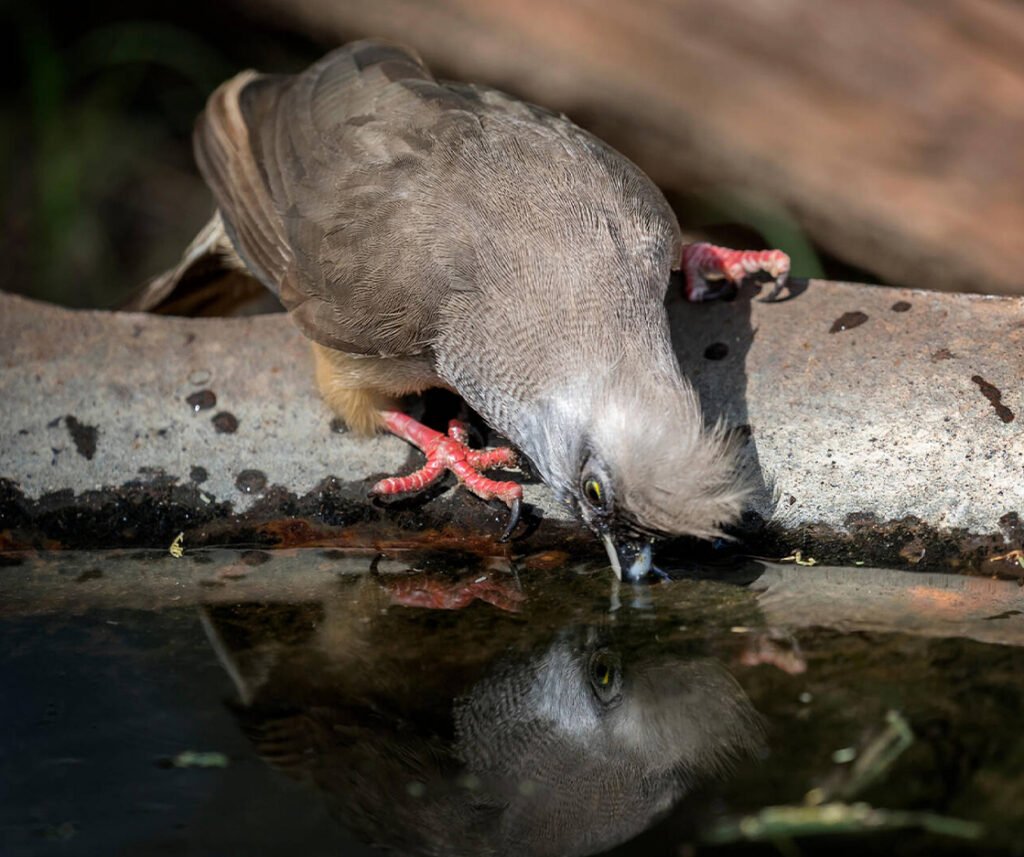
One of the most heartwarming facts about the Speckled Mousebird is their intense commitment to social bonding. You will almost never see a Speckled Mousebird alone. They live in tight-knit groups, usually consisting of 5 to 20 individuals.
Allopreening and Huddling
To maintain social harmony and keep their feathers clean, group members engage in allopreening—grooming one another’s feathers. More importantly, they are known for “clustering.” On cold nights, the entire group will huddle together in a giant ball of feathers to conserve body heat. Because they have a relatively low metabolic rate for birds, this communal huddling is a vital survival strategy.
Cooperative Breeding
The Speckled Mousebird takes the “it takes a village” approach to parenting. While a specific pair will lead the nesting process, other members of the group (often offspring from previous seasons) act as helpers. These helpers assist in defending the territory and feeding the chicks, which significantly increases the survival rate of the brood.
Diet and Nutritional Habits
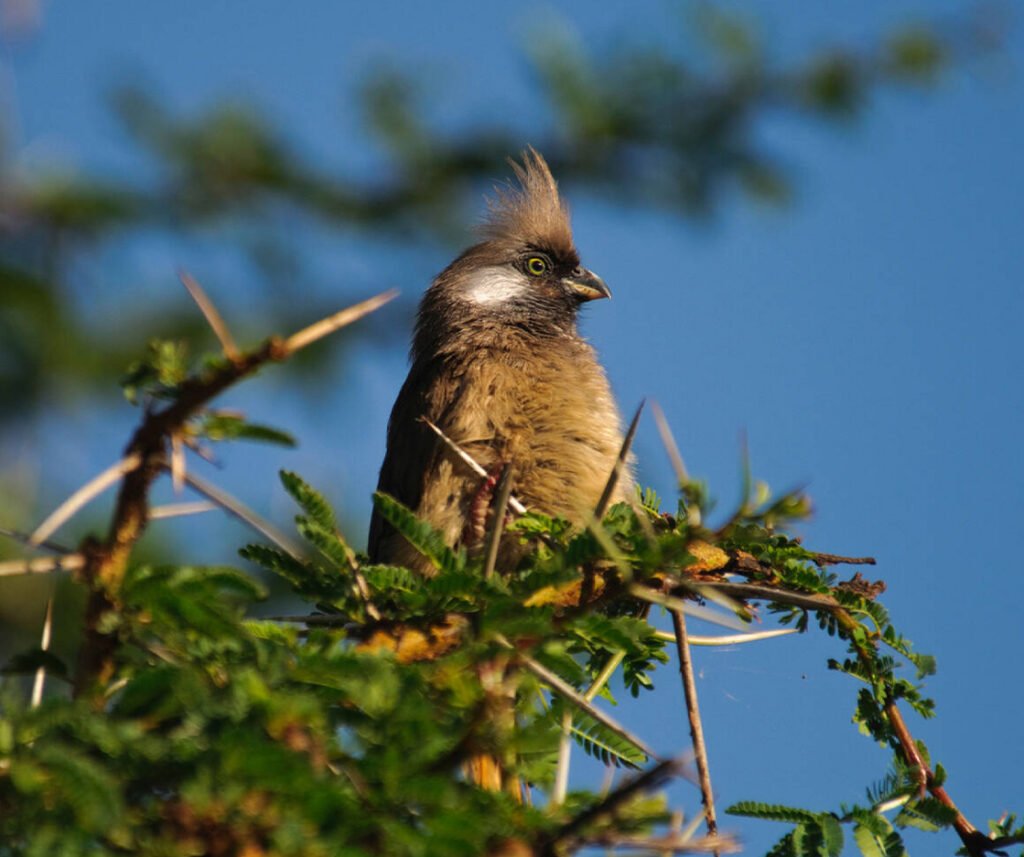
If you are a gardener in Africa, your facts about the Speckled Mousebird might include the fact that they are notorious fruit thieves. They are primarily frugivores, meaning their diet consists largely of berries and fruits. However, they are also “folivores” to an extent, consuming leaves, buds, and nectar.
-
Fruits: They love guavas, figs, and berries.
-
Flowers: They frequently consume nectar and petals.
-
Leaves: They can digest plant matter that many other birds cannot, thanks to a specialized digestive tract.
-
Soil: Occasionally, they are seen eating soil (geophagy) to help neutralize toxins found in the unripe fruits or leaves they consume.
The Mousebird Life Cycle
The nesting habits of the Speckled Mousebird are relatively simple. They build a cup-shaped nest made of grass, roots, and twigs, usually hidden deep within a thorny bush for protection.
-
Clutch Size: Usually 2 to 4 eggs.
-
Incubation: Both parents share the duty for about 12 to 15 days.
-
Fledging: The chicks grow remarkably fast, often leaving the nest after just 10 to 12 days, though they remain dependent on the group for food for several weeks longer.
The young are born relatively naked but quickly develop the characteristic crest and long tail that make the adults so recognizable.
Conservation Status
Currently, the Speckled Mousebird is listed as Least Concern by the IUCN. Their ability to thrive in human-altered landscapes, such as gardens and farms, has allowed their population to remain stable even as natural forests are cleared. In fact, in some areas, they are considered pests because of their appetite for commercial fruit crops.
However, they play a crucial role in the ecosystem as seed dispersers. By eating fruit in one location and depositing the seeds in another, they help ensure the regeneration of African woodlands.