Facts About the Sokoke Scops Owl
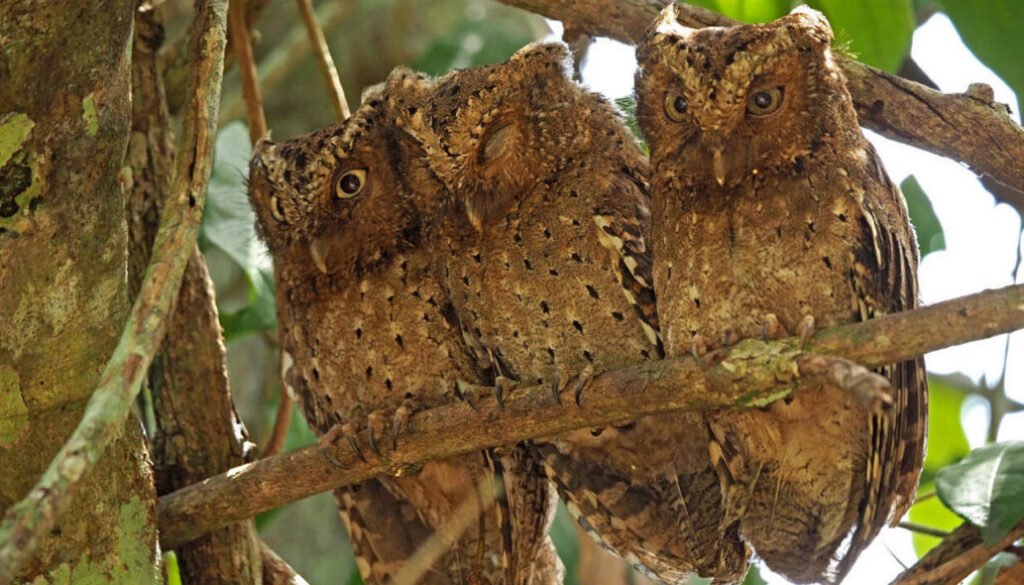
One of the most critical facts about the Sokoke Scops Owl is its extremely limited range. It was first discovered in the Arabuko-Sokoke Forest in Kenya, which remains its primary stronghold. Smaller populations have since been found in the East Usambara Mountains of Tanzania. This tiny distribution makes the species incredibly vulnerable to any localized environmental changes.
Essential Facts About the Sokoke Scops Owl
- Common Name: Sokoke Scops Owl
-
Scientific Name: Otus ireneae
-
Type: Bird (Raptor)
-
Diet: Insectivorous (primarily beetles and crickets)
-
Average Life Span in the Wild: Approximately 5–10 years (estimated)
-
Size (Head and Body): 15 to 18 cm (6 to 7 inches)
-
Weight: 45 to 55 grams (roughly the weight of a golf ball)
A Master of Disguise
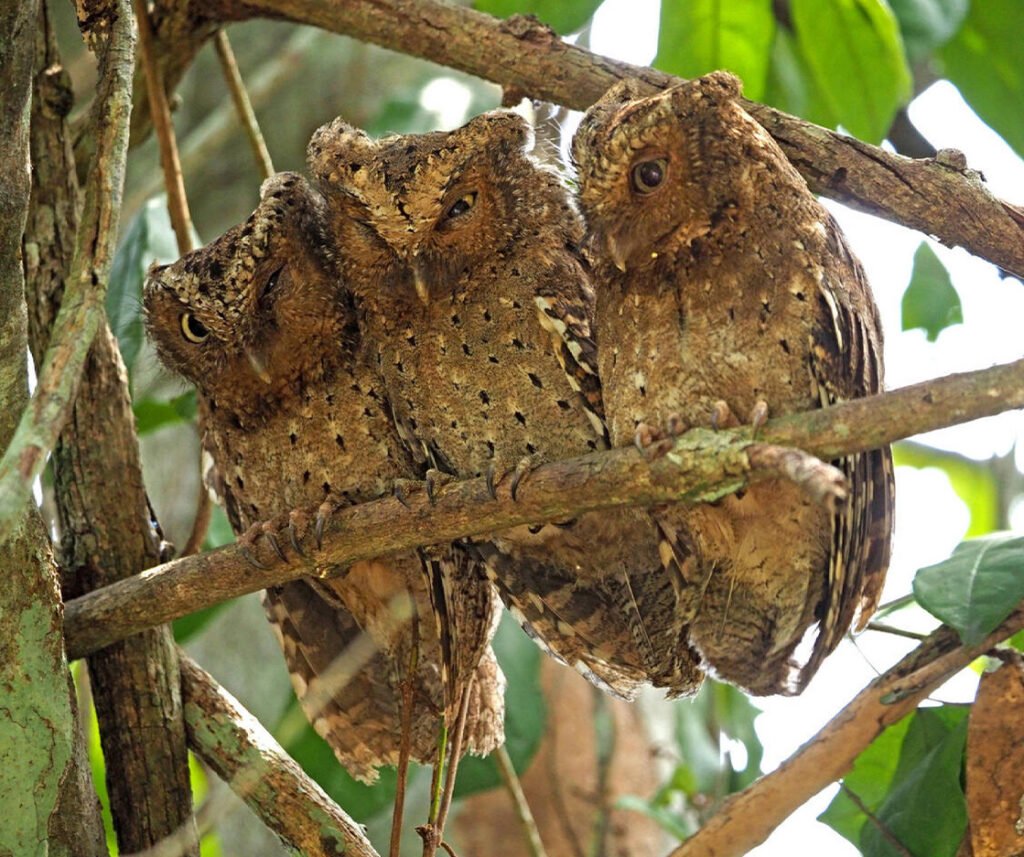
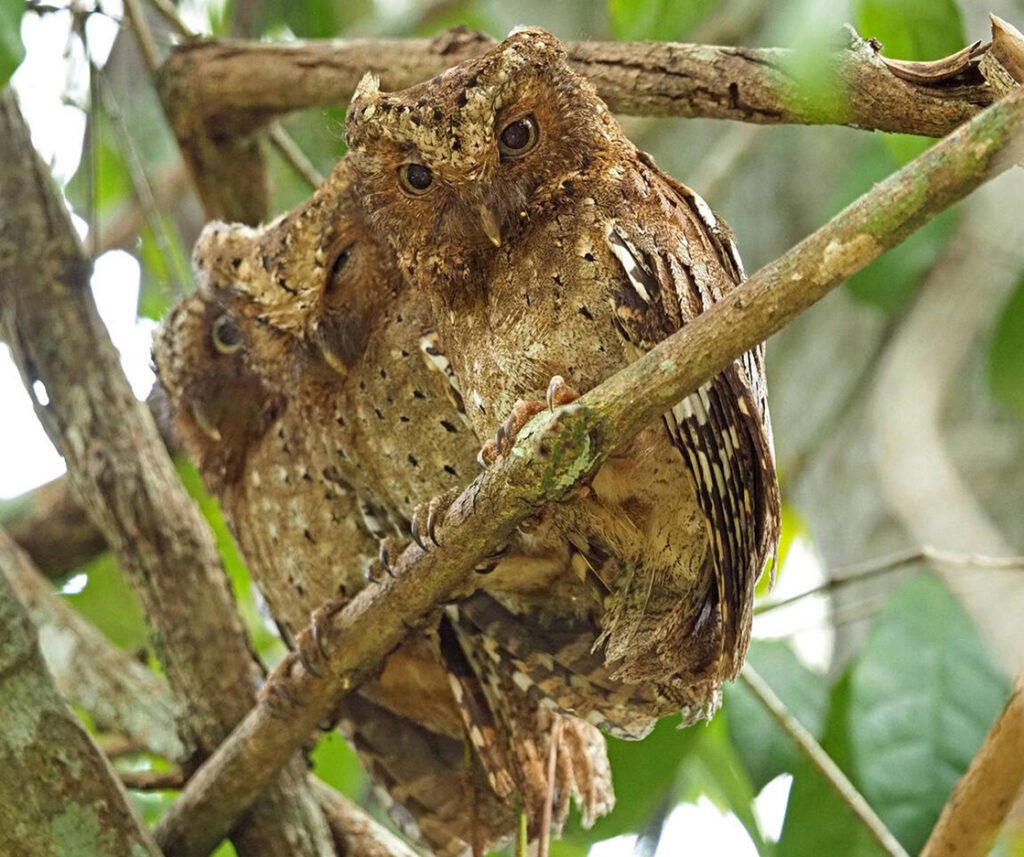
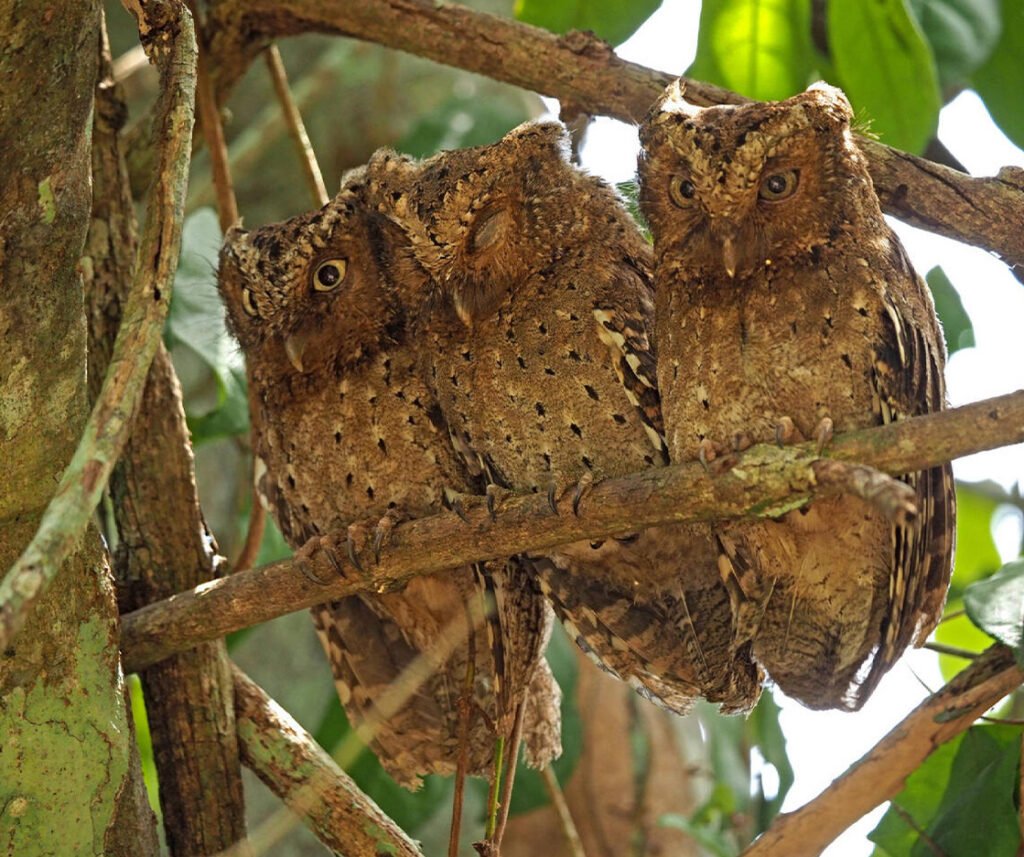
The Sokoke Scops Owl is legendary for its “bark-like” appearance. Its feathers are a complex mosaic of rufous, grey, and brown, allowing it to vanish against the trunks of Cynometra trees. Unlike many other owls, it lacks prominent ear tufts, giving it a more rounded, inconspicuous silhouette during the day.
The Insect Specialist
While many associate owls with hunting mice or rats, the Sokoke Scops Owl is almost exclusively insectivorous. It spends its nights scanning the forest floor and lower branches for beetles, moths, and crickets. It uses a “sit-and-wait” hunting strategy, diving silently from a low perch to snatch its prey from the leaf litter.
Distinctive Vocalizations
Despite its small size, this owl has a voice that carries through the dense canopy. Its call is a repetitive “whu-whu-whu,” usually delivered in long sequences. For researchers, these calls are often the only way to track the population, as seeing the bird in the pitch-black forest is nearly impossible.
Breeding and Life Cycle
Reliable facts about the Sokoke Scops Owl regarding its breeding habits are still being gathered because it is so secretive. We know they are cavity nesters, often utilizing natural holes in old-growth trees. They typically lay 1 to 2 eggs. The survival of the chicks is heavily dependent on the density of the insect population during the rainy season.
Taxonomy and Discovery
This species was only formally described by science in the 1960s. Its scientific name, Otus ireneae, honors Irene Morden, who supported the expedition that led to its discovery. It is a member of the Otus genus, which contains over 50 species of scops owls found across the Old World.
The Fight for Survival
The most sobering of the facts about the Sokoke Scops Owl is its status on the IUCN Red List: Endangered. Because it relies so heavily on undisturbed coastal and montane forests, habitat loss is its greatest threat. Illegal logging and the clearing of land for agriculture shrink its world every year.
Why Conservation Matters?
The presence of the Sokoke Scops Owl is often used as a “bio-indicator.” This means that if the owl population is healthy, the forest ecosystem is likely functioning well. Because they are at the top of their specific insect-based food chain, their disappearance would signal a collapse in the local insect and plant life balance.
Efforts by organizations like Nature Kenya and the Kenya Forest Service are working to protect the remaining 420 square kilometers of the Arabuko-Sokoke Forest. By supporting eco-tourism and community-led conservation, there is hope that these “little ghosts of the forest” will continue to hoot for generations to come.