Facts About the Secretary Bird
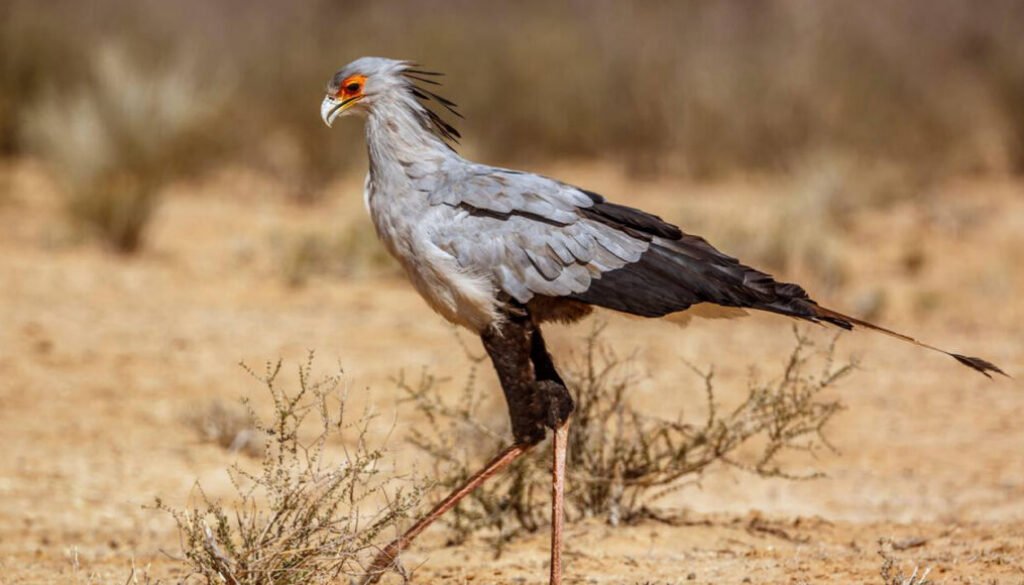
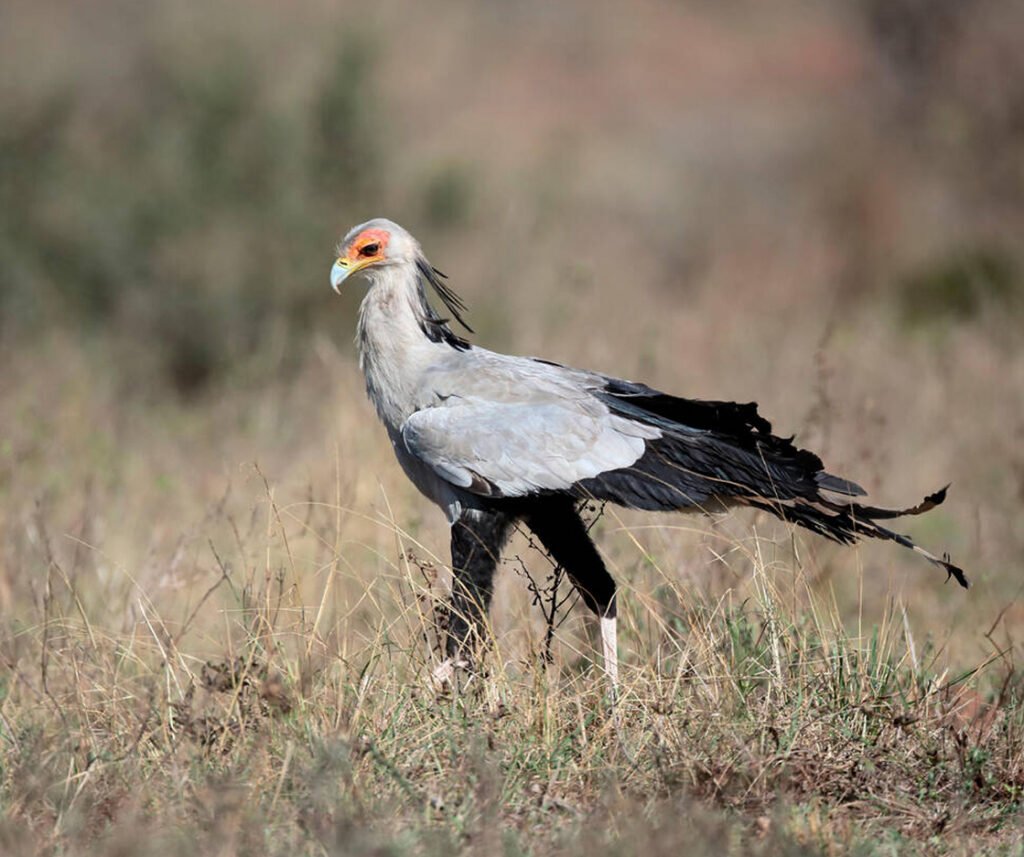
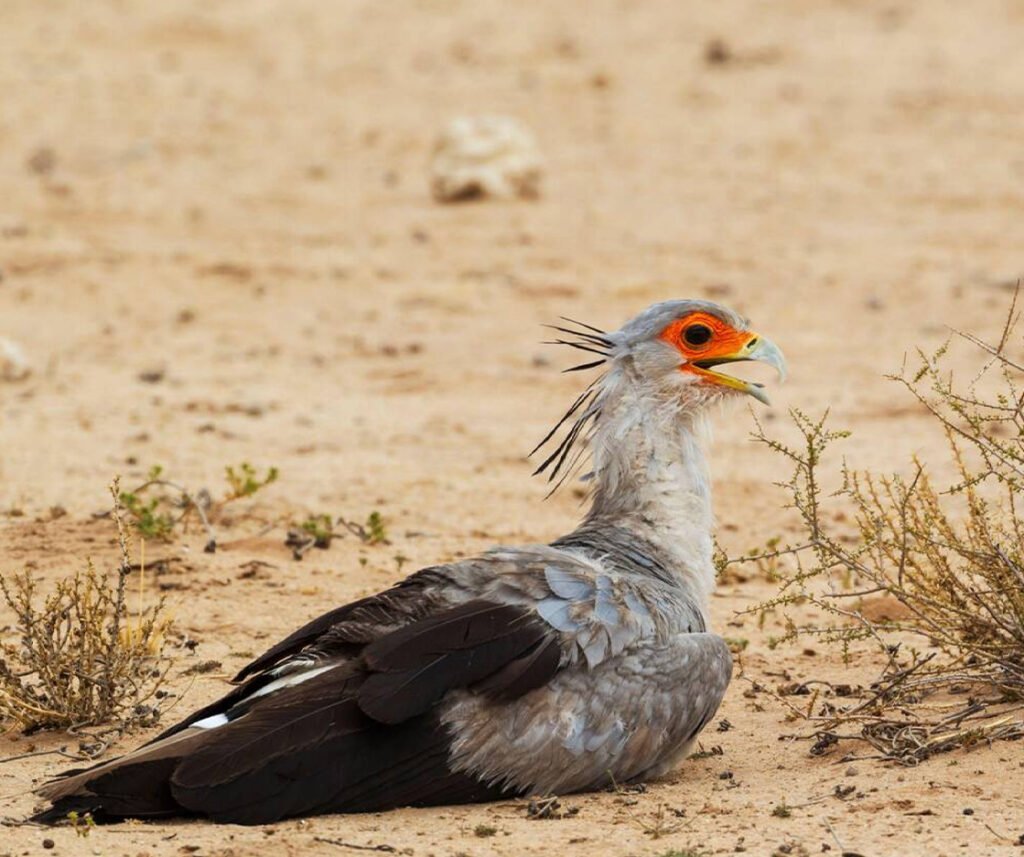
One of the most debated facts about the Secretary Bird is the origin of its name. For decades, the popular theory was that the bird’s crest—a series of long black feathers sticking out from the back of its head—resembled the quill pens that 19th-century legal secretaries tucked behind their ears.
However, modern historians suggest a more linguistic origin. It is likely derived from the Arabic saqr-et-tair, which translates roughly to “hunter bird.” When French explorers attempted to translate this, it eventually morphed into “secrétaire.” Regardless of the origin, the name stuck, and it perfectly suits the bird’s “professional” appearance, complete with grey plumage that looks like a tailored frock coat and black “trousers” on its thighs.
Essential Facts About the Secretary Bird
- Common Name: Secretary Bird
-
Scientific Name: Sagittarius serpentarius
-
Type: Bird (Raptor/Bird of Prey)
-
Diet: Carnivore (Insects, small mammals, lizards, and snakes)
-
Average Life Span in the Wild: 10 to 15 years
-
Size (Head and Body): 1.2 to 1.5 meters (roughly 3.9 to 4.9 feet)
-
Weight: 2.3 to 4.5 kilograms (5 to 10 lbs)
A Raptor That Prefers the Ground
Most raptors, like hawks or eagles, hunt from the sky, using their talons to snatch prey in a high-speed dive. The Secretary Bird turns this strategy on its head. While they are capable flyers and often soar at great heights, they spend the vast majority of their day walking.
In fact, a single bird can cover over 30 kilometers (about 20 miles) in a single day searching for food. This terrestrial lifestyle is why their legs are so long and powerful. Interestingly, unlike other birds of prey, they do not use their feet to carry items; their talons are relatively blunt and better suited for running and striking than for grasping and lifting.
The Deadly “Stomp” Technique
If you are looking for the most impressive facts about the Secretary Bird, look no further than its hunting style. It is a specialist in “terrestrial stalking.” When it finds a target—often a snake, lizard, or small mammal—it delivers a kick with incredible precision and force.
The force of a Secretary Bird’s kick can be five times its own body weight, delivered in just 15 milliseconds. To put that in perspective, that is about a tenth of the time it takes for a human to blink. This rapid-fire strike is essential when dealing with venomous snakes like cobras or puff adders, as it allows the bird to stun or kill the reptile before it has a chance to bite back.
Anatomy of a Specialized Hunter
The scientific name, Sagittarius serpentarius, translates to “the archer of snakes.” Every inch of the bird is designed for this task.
-
The Legs: Their long legs keep their vulnerable body and vital organs far away from the striking range of a snake.
-
The Scales: The lower parts of their legs are covered in thick, protective scales that act like armor against bites.
-
The Wings: While hunting, they often spread their large wings to act as a shield or a distraction, confusing the prey and making it difficult for a snake to find a clear target.
Social Life and Lifelong Bonds
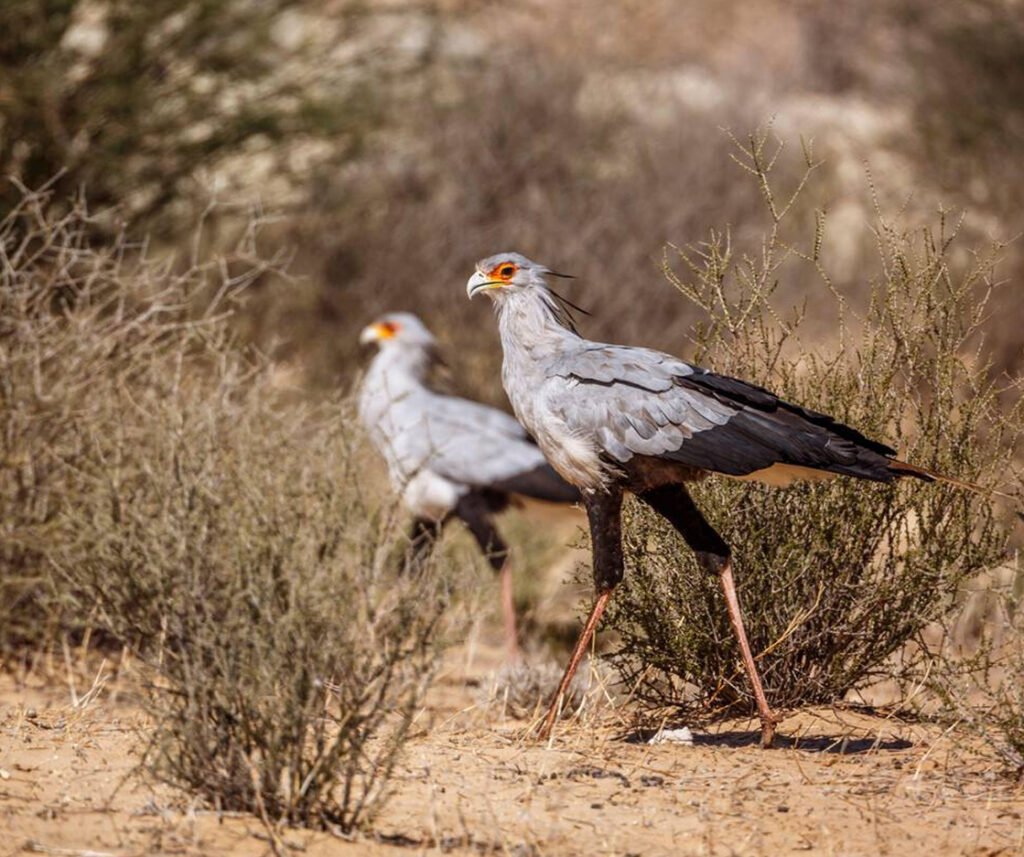
Secretary Birds are generally monogamous and form pair bonds that can last a lifetime. They are also highly territorial. A pair will claim an area that can span up to 50 square kilometers.
Unlike many other birds that nest in hidden thickets, Secretary Birds build massive, flat nests on the tops of thorny acacia trees. These nests can be over eight feet wide. From this vantage point, they can keep an eye on their territory and spot any approaching predators or rivals. Despite their fierce reputation as hunters, they are dedicated parents, with both the male and female sharing the duties of incubating eggs and feeding the chicks.
Conservation Status: A Call to Action
One of the more sobering facts about the Secretary Bird is that their populations are currently in decline. They are listed as Endangered by the IUCN. The primary threats include habitat loss due to agricultural expansion and the degradation of the grasslands they rely on for hunting. Because they require such large territories, even small-scale land development can disrupt a breeding pair’s ability to survive.
Conservation efforts are currently focused on protecting large swathes of the African savannah and educating local communities on the benefits these birds provide—specifically, their role in controlling pest populations like rodents and venomous snakes.
Cultural Significance in Africa
The Secretary Bird is a symbol of pride across the African continent. It is featured prominently on the coat of arms of both South Africa and Sudan. In South Africa, the bird is depicted with wings outspread, symbolizing protection and the “ascendance of the nation.” Its presence in national iconography underscores the respect that humans have for this bird’s strength, poise, and unique place in the ecosystem.