Facts About the Grey Crowned Crane
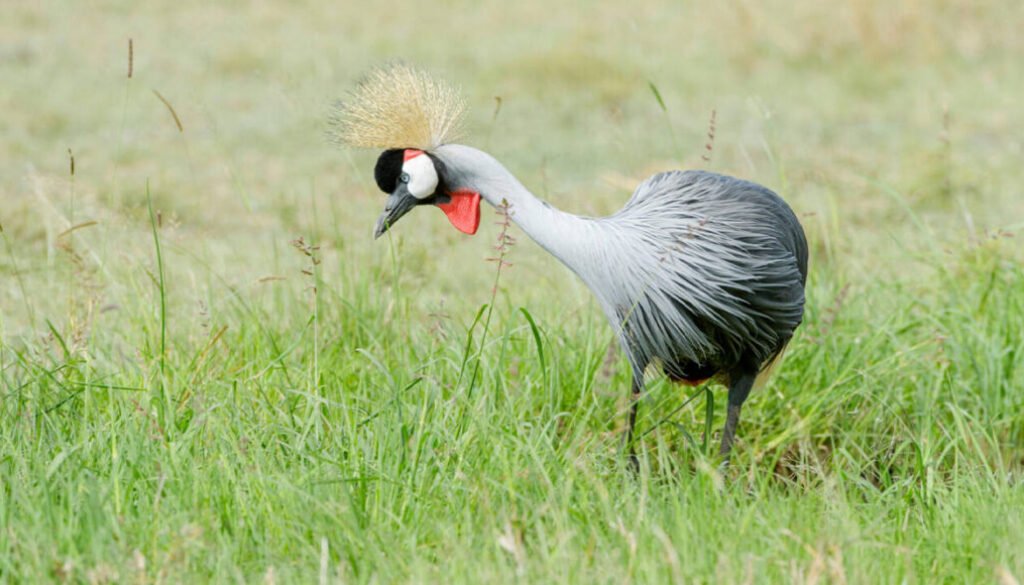
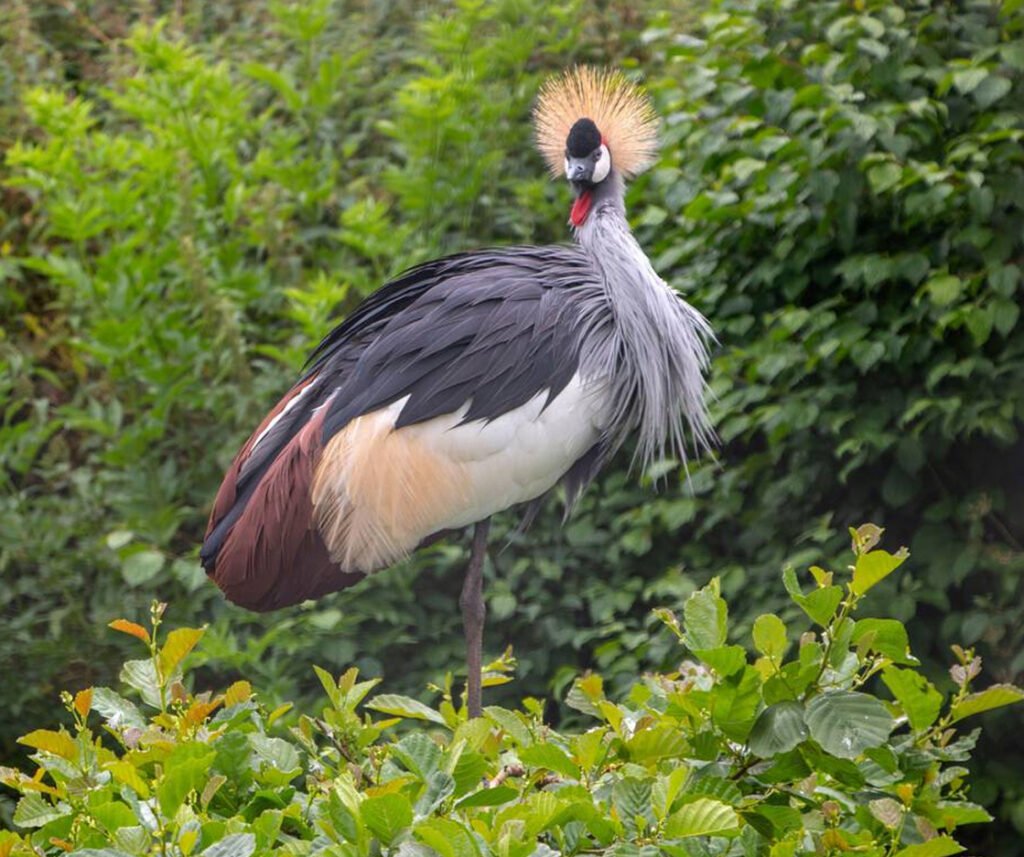
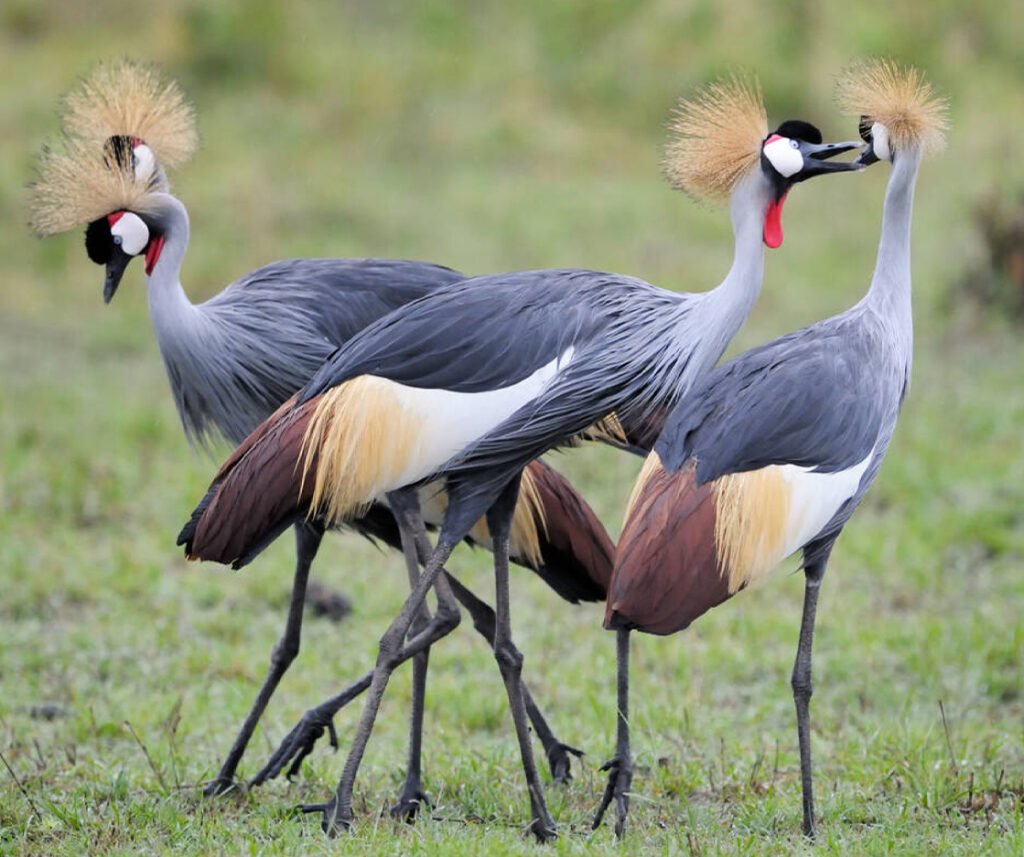
One of the most fascinating facts about the Grey Crowned Crane is its distinct physical appearance. Unlike any other crane species, the Grey Crowned Crane (and its close relative, the Black Crowned Crane) possesses a “crown” of stiff, golden feathers that radiate from the back of its head.
Its body is covered in slate-grey plumage, contrasted by white wings with feathers ranging from brown to gold. Perhaps its most striking feature is the bright red gular sac—a throat pouch that can be inflated to make booming sounds during mating rituals. Their faces are a canvas of white and red patches, making them one of the most photogenic birds in the animal kingdom.
Essential Facts About the Grey Crowned Crane
- Common Name: Grey Crowned Crane
- Scientific Name: Balearica regulorum
- Type: Bird
- Diet: Omnivore
- Average Life Span in the Wild: Up to 22 years
- Size (Height): Approximately 3.3 feet (1 meter)
- Weight: 7.7 pounds (3.5 kilograms)
Habitat and Distribution
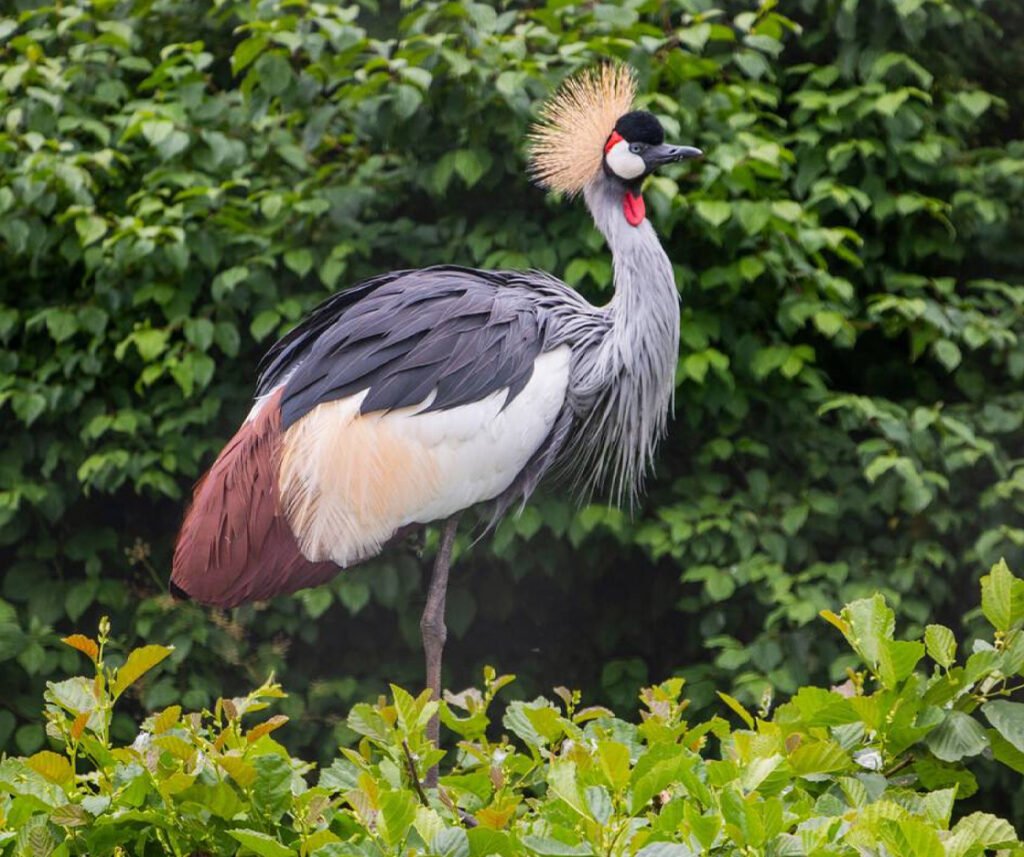
These birds are primarily found in the dry savannahs of Africa, specifically in the eastern and southern regions. However, they rely heavily on wetlands for nesting and foraging. You can find them in countries like Uganda (where they are the national bird), Kenya, South Africa, and Zimbabwe.
They are non-migratory, though they may move locally depending on the availability of water and food. They are often seen following large herbivores like elephants or cattle, catching insects stirred up by the larger animals’ movement.
Diet and Foraging Habits
As omnivores, their diet is incredibly diverse. These birds are not picky eaters, which helps them survive in varying African climates. Their diet typically includes:
-
Insects: Grasshoppers, crickets, and locusts.
-
Small Animals: Lizards, frogs, and small fish.
-
Plants: Grass seeds, young grain, and aquatic plants.
One of the more unique facts about the Grey Crowned Crane is their hunting technique. They are known to “stomp” their feet as they walk through tall grass. This vibration flushes out insects and small vertebrates, making them easy prey.
The Famous Mating Dance
If you have ever seen a video of these birds, you likely saw them dancing. The Grey Crowned Crane is famous for its elaborate courtship displays. This involves:
-
Bowing: Lowering the head to the ground.
-
Jumping: Leaping several feet into the air with wings spread wide.
-
Tossing: Picking up sticks or grass and throwing them into the air.
While this dance is essential for pair-bonding between mates, it isn’t strictly for romance. Young cranes often dance to develop social skills, and the behavior is observed year-round, not just during the breeding season.
Conservation Status: An Urgent Warning
While we celebrate the beauty of these birds, it is crucial to address the sobering facts about the Grey Crowned Crane regarding their survival. Currently, they are listed as Endangered on the IUCN Red List.
Major Threats
-
Habitat Loss: The drainage of wetlands for agriculture and human settlement is the primary threat.
-
Illegal Trade: Because of their beauty, they are frequently captured for the illegal pet trade or for display in private menageries.
-
Poisoning: In some areas, they are viewed as pests by farmers and are accidentally or intentionally poisoned.
In the last few decades, the population has plummeted by over 50%. Conservationists are working tirelessly to protect wetland corridors and educate local communities on how to coexist with these birds.
Cultural Symbolism
The Grey Crowned Crane holds a place of honor in many African cultures. In Uganda, the bird appears on the national flag and the coat of arms. It is a symbol of grace, beauty, and the nation’s natural heritage. Many local myths depict the crane as a protector of water sources, emphasizing the deep-rooted connection between the people and the land.