Facts About the Lilac-breasted Roller
The Lilac-breasted Roller is widely considered one of the most photographed and breathtaking birds in the world. Often referred to as the “jewel of the African skies,” this bird is a master of aerial acrobatics and a symbol of the untamed savanna. Below is a quick snapshot of their vital statistics before we dive into the details of their colorful lives.
Essential Facts About the Lilac-breasted Roller
- Common Name: Lilac-breasted Roller
- Scientific Name: Coracias caudatus
- Type: Bird
- Diet: Carnivore (Insectivore)
- Average Life Span in the Wild: Approximately 10 years
- Size (Head and Body): 36 to 38 cm (14 to 15 inches)
- Weight: 104 to 135 grams (3.7 to 4.8 ounces)
The Technicolor Sentinel of the Savanna
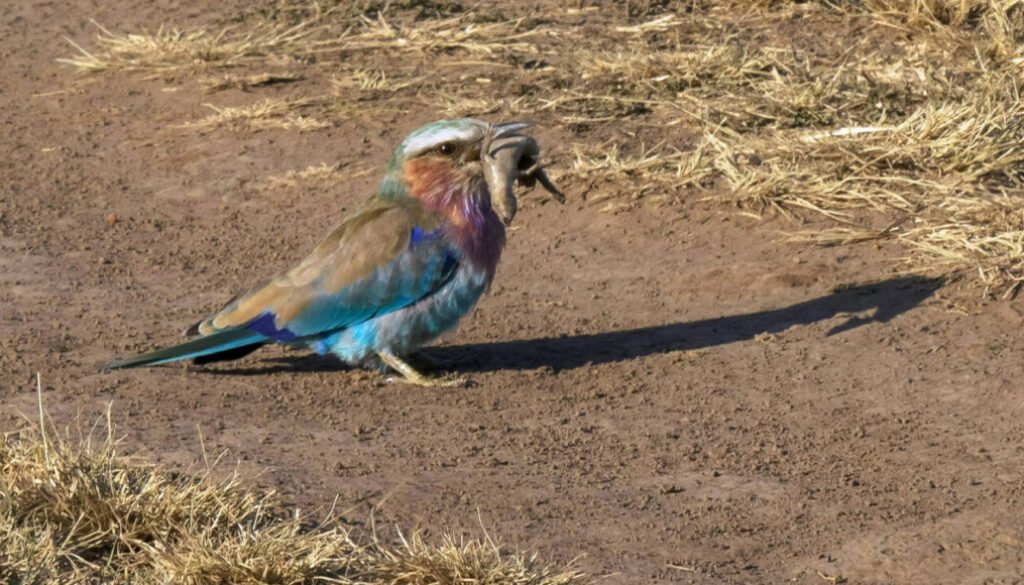
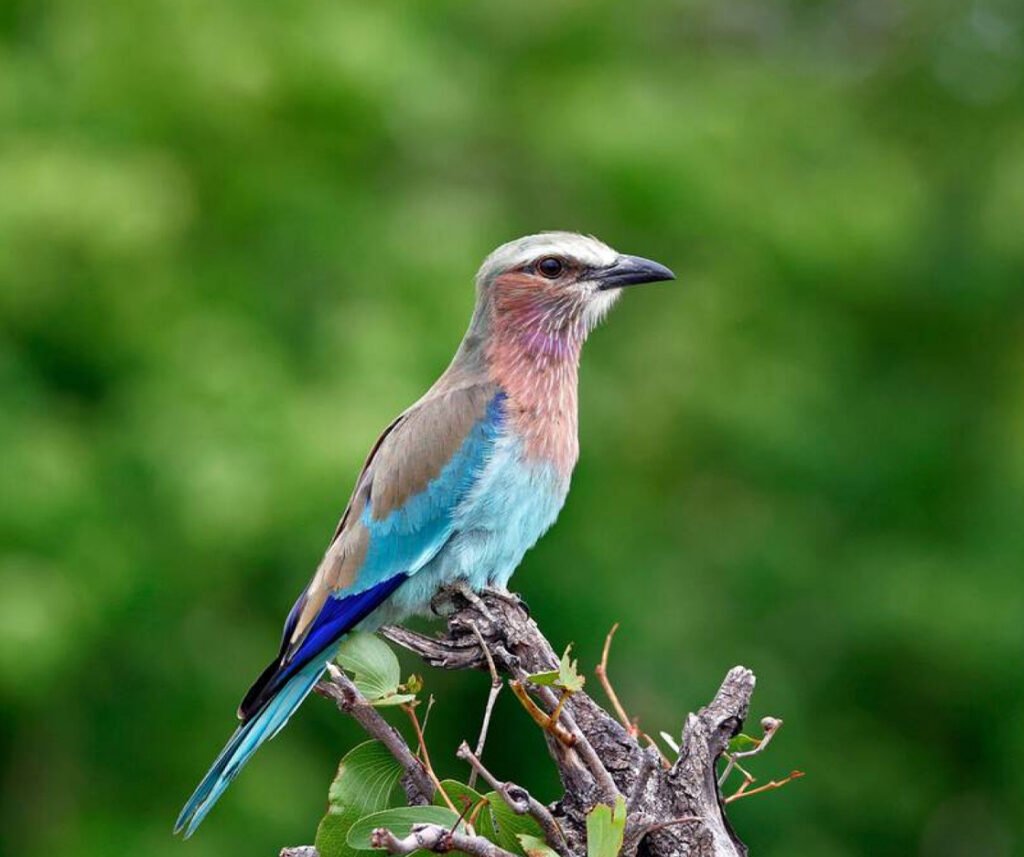
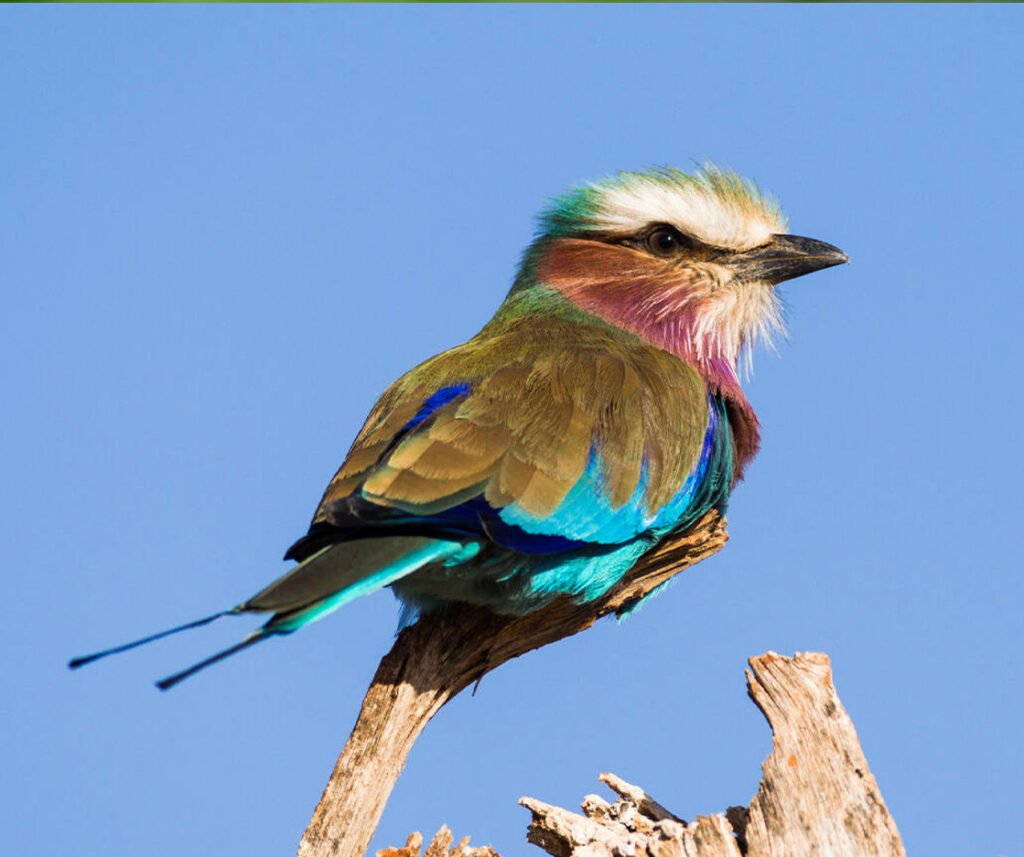
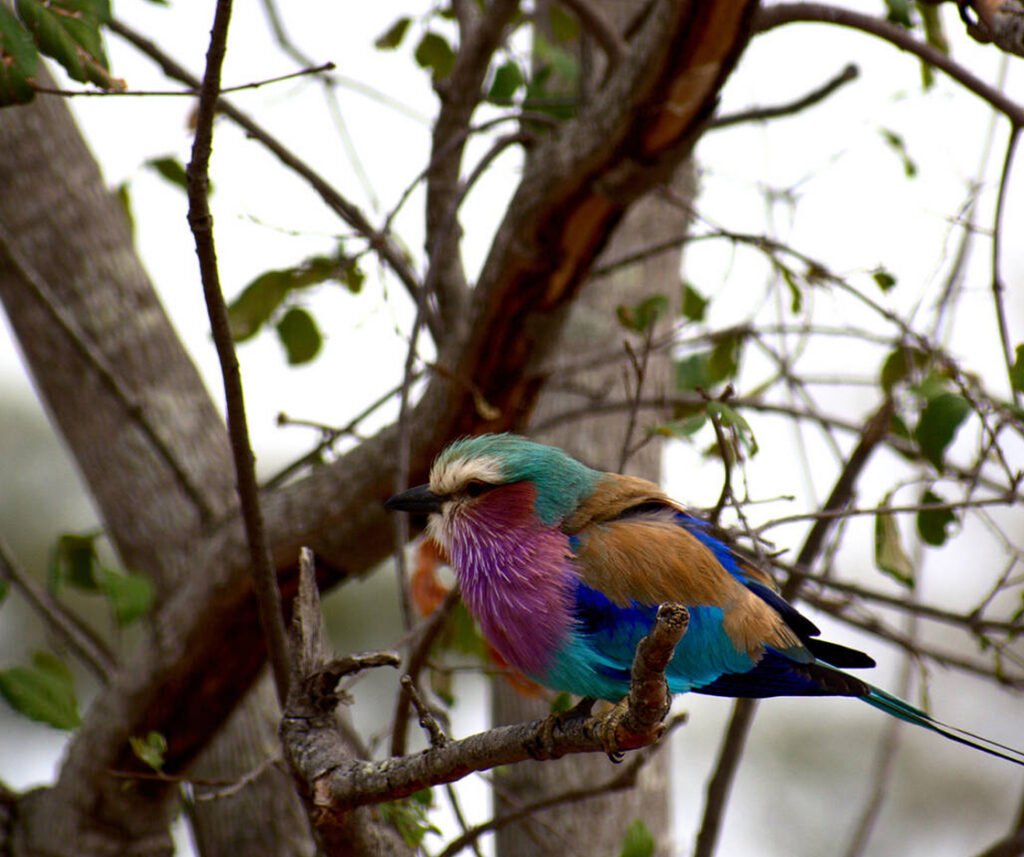
If you find yourself on a safari in Eastern or Southern Africa, the Lilac-breasted Roller is almost impossible to miss. Unlike many birds that rely on camouflage to hide from predators, this species perches boldly on the highest branches of acacia trees or telephone wires. Their plumage is a dizzying array of at least eight distinct colors, including a rich lilac throat (hence the name), turquoise belly, royal blue wing feathers, and a tawny-colored back.
One of the most interesting aspects of the Lilac-breasted Roller is that there is no sexual dimorphism. In many bird species, the male is flashy while the female is dull; however, both male and female Rollers sport the same vibrant wardrobe. This makes it nearly impossible for a casual observer to tell them apart without observing specific nesting behaviors.
Hunting Tactics and Diet
The Lilac-breasted Roller is a patient and lethal predator. As a “sit-and-wait” hunter, it scans the ground from an elevated perch. Once it spots movement—be it a beetle, a grasshopper, or even a small lizard—it dives with incredible speed to snatch the prey.
Their diet is surprisingly diverse:
-
Insects: Scorpions, snails, and large beetles.
-
Reptiles: Small snakes and lizards.
-
Amphibians: Occasionally small frogs.
-
Special Interest: They are known to frequent the edges of bushfires. While other animals flee the flames, the Lilac-breasted Roller swoops in to catch the insects and small rodents flushed out by the heat.
Aerial Acrobatics and Breeding
The name “Roller” comes from their spectacular courtship displays. To impress a mate, the Lilac-breasted Roller will fly to great heights and then plummet toward the earth in a series of fast, rolling dives and swoops, accompanied by a harsh, cackling call.
They are generally monogamous and highly territorial. They don’t build elaborate nests; instead, they prefer to take over existing holes in trees, often those abandoned by woodpeckers or kingfishers. They will defend their nesting site with extreme aggression, often chasing away much larger birds of prey.
Conservation Status
Currently, the Lilac-breasted Roller is listed as “Least Concern” by the IUCN. They are widespread across sub-Saharan Africa and the Arabian Peninsula. Their biggest threats are habitat loss and, occasionally, the illegal pet trade, though their specialized diet makes them difficult to keep in captivity.
Why They Matter?
Beyond their beauty, the Lilac-breasted Roller plays a vital role in the ecosystem by controlling insect populations. They are the unofficial national bird of both Kenya and Botswana, deeply embedded in local folklore as a sign of peace and a bridge between the heavens and the earth.
To see a Lilac-breasted Roller take flight—revealing the brilliant sapphire of its wings—is a highlight of any bird-watching journey. Their presence is a reminder of the vibrant, resilient beauty found in the African wilderness.